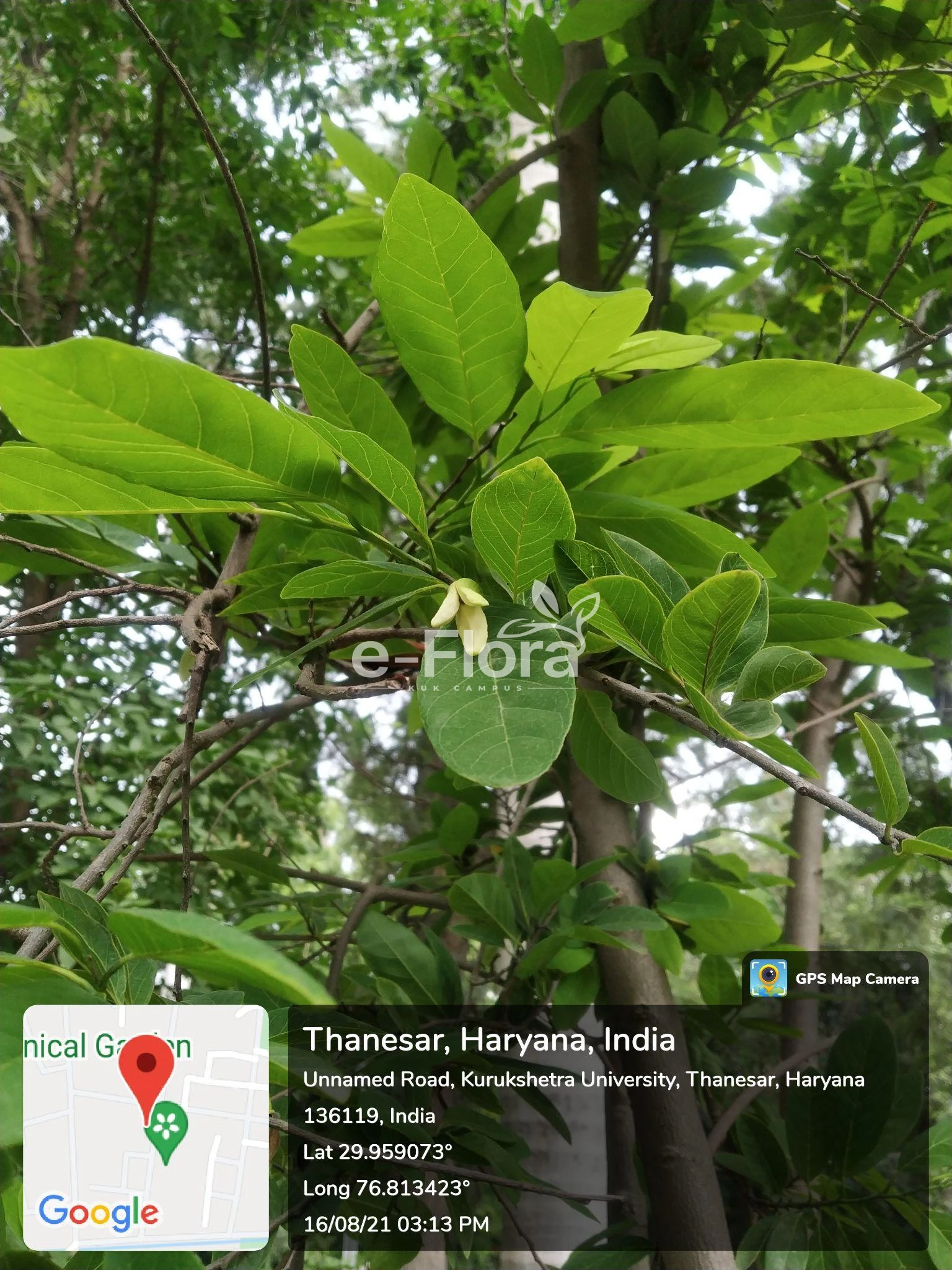
Rauvolfia serpentina (L.) Benth. ex Kurz
Vernacular name: Sarpagandha, Indian snakeroot (Hindi: सर्पगंधा)
Species Name: Rauvolfia serpentina (L.) Benth. ex Kurz
Family: Apocynaceae
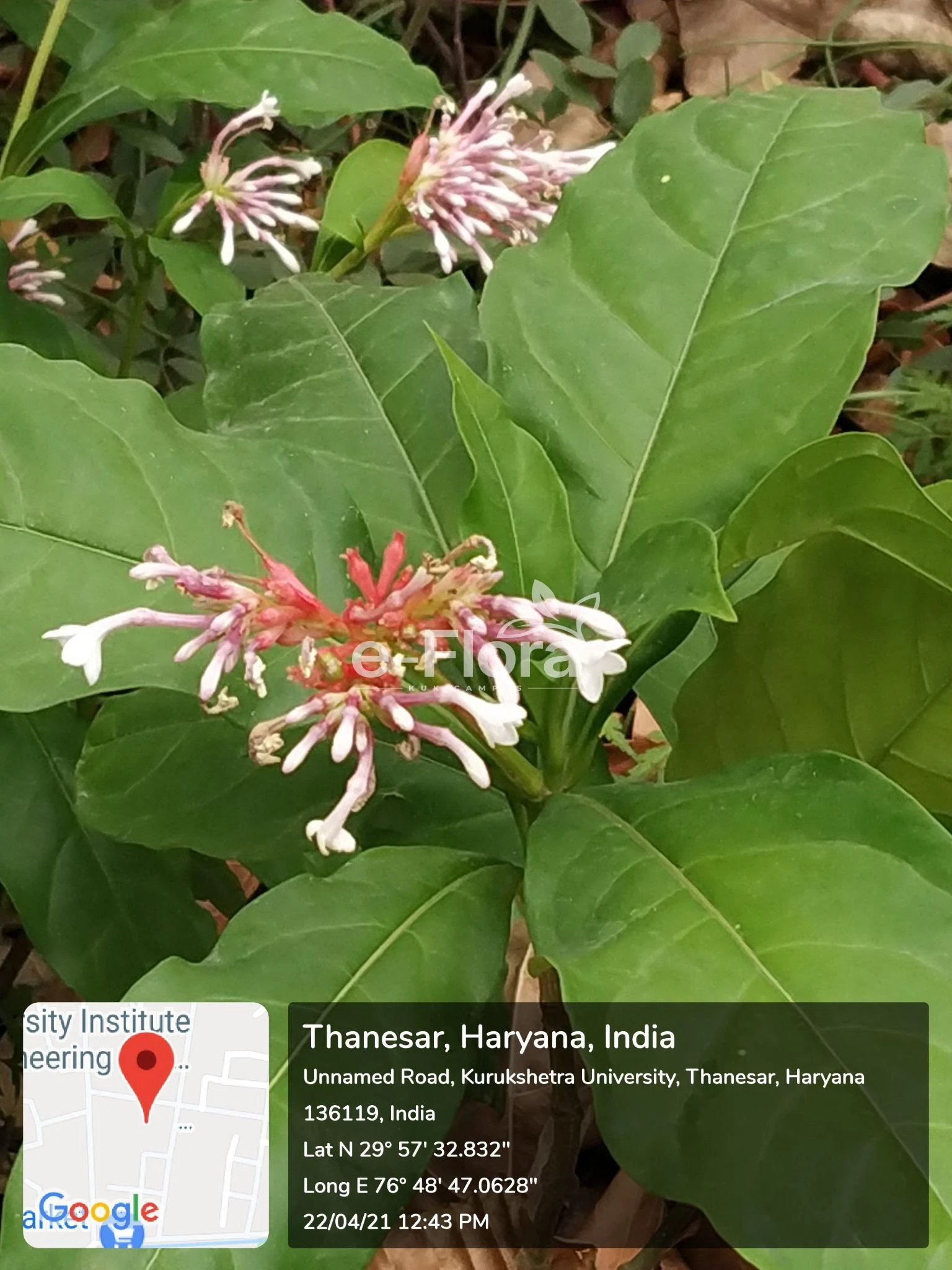
Habit: Evergreen undershrub
Stem: Erect, branched, pale brown
Leaf: Whorls of 3-4 elliptic-lanceolate shining leaves
Flowering: May-August
Flowers: Umbellate cymes; small white-pink salverform corolla tube; 5-lobed limb; included stamens; bicarpellary superior ovary
Fruit: Black-purple paired stony syncarp
Uses:
- Plant acts as a traditional sedative managing sleep disturbances, calm nerves and ease irritability and anxiety.
- In folk remedies, it is used as antidote against snakebite.
- Traditional known to help with migraines, menstrual cramps, stomach cramps and loose stools.
- It is used as uterine stimulant and hypochondria cure in Ayurveda but in small dose.
- Roots are source of reserpine and ajmaline that have antihypertensive and antipsychotic properties and help to treat schizophrenia, hypertension and help managing blood flow.
- Shaded forest understory; Indo-Himalayan native; alkaloid-rich roots repel herbivores
- “Sarpagandha” = serpent’s smell; Charaka Samhita mentions; overharvested/endangered.
- High dose of extracts can cause digestive distress, nasal congestion, depression and lethargy.