Vitex trifolia L.
Vernacular name: Three-leaved chaste tree, Beach vitex, Lagundi
Species Name: Vitex trifolia L.
Family: Lamiaceae
Habit: Evergreen or semi-evergreen shrub, usually 1–5 m tall, much-branched.
Stem: Erect to spreading, woody, greyish-brown, young branches densely hairy.
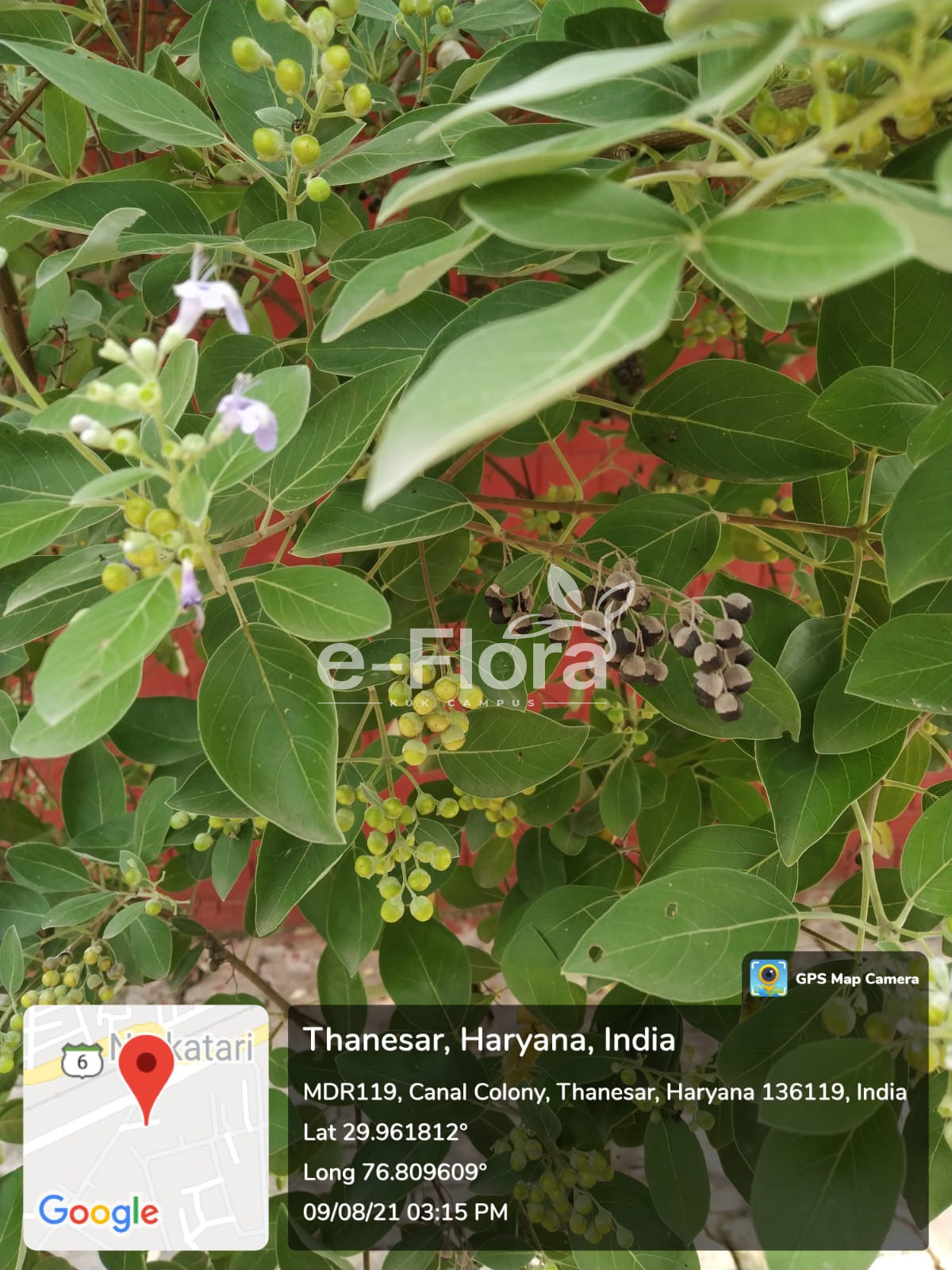
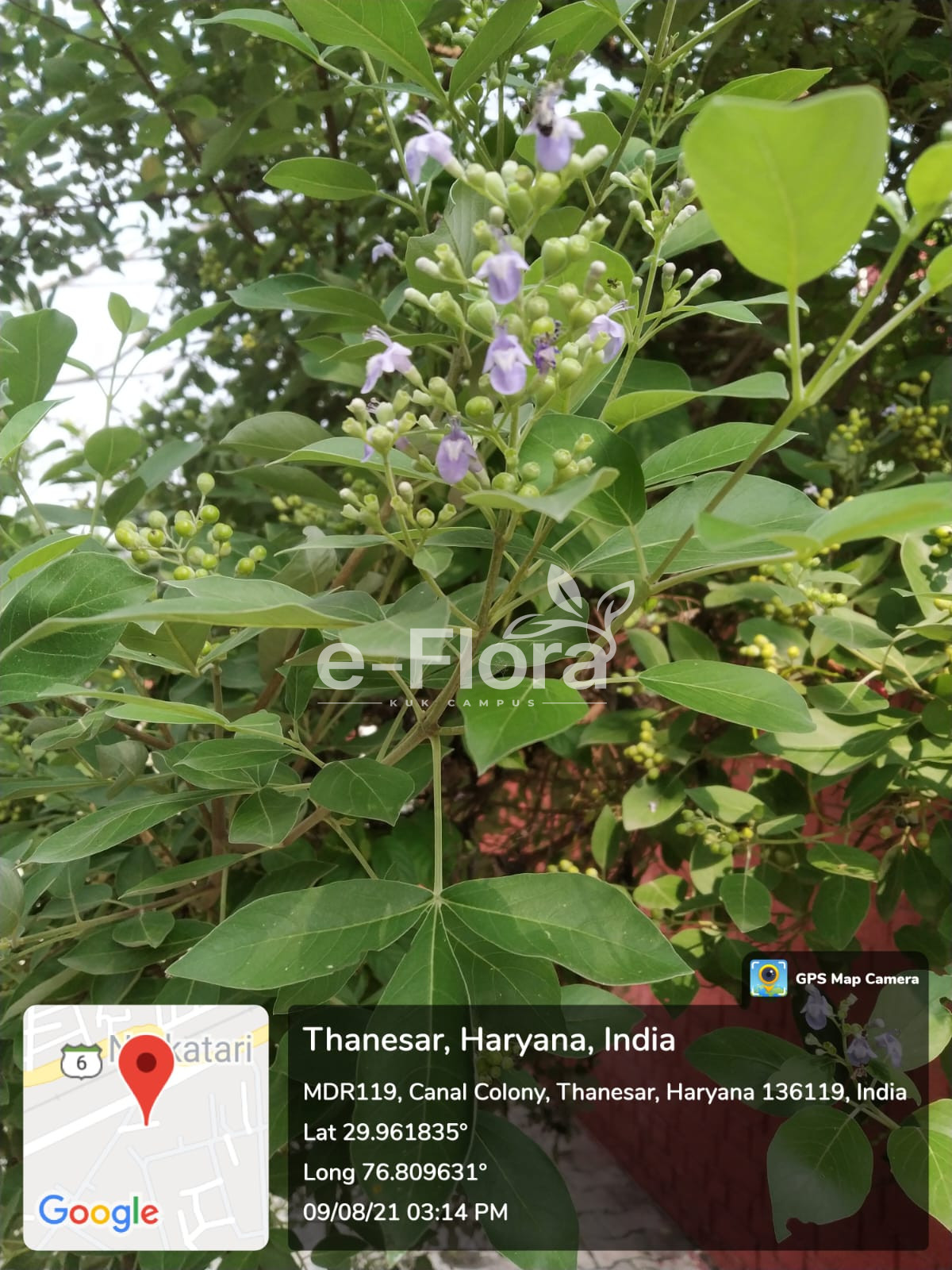
Leaf: Opposite, palmately trifoliate; leaflets elliptic to lanceolate, entire, grey-green and finely hairy, with the terminal leaflet usually larger.
Flowering: July–October
Flowers: Small, bluish-purple to violet, bisexual, borne in terminal or axillary panicles; corolla 5-lobed, bilabiate; stamens 4, didynamous.
Fruit: Small, globose drupe, turning blackish-purple when mature, usually containing a single seed.
Uses:
- Traditional practices uses the topical application of plant extracts and poultices to reduce joint pain, rheumatic aches, ease muscle stiffness and sprains
- Ayurveda and folk medicines uses the decoction of plant for its mild expectorant property to manage symptoms of common cold, bronchitis and asthma.
- Leaf pastes and oils have antiseptic properties and are topically applied for treating wounds, minor cuts, eczema and skin infections.
- Traditionally, infusions of roots and leaves are used for antipyretic activities and helps to lower intermittent fevers and relieve associated discomfort.
- Lagundi is used to manage and regulate menstrual cycle and ease pre-menstrual symptoms.
- Lagundi consists of 180 bioactive compounds including terpenoids (diterpenes) and flavonoids (casticin, vitexin) that inhibits inflammatory pathways like COX-2, it also suppresses inflammatory cytokines, contributes for anti-inflammatory, antioxidant, antimicrobial and analgesic activities.
- Commonly grown as an ornamental and hedge shrub and traditionally used in herbal medicine. Its leaves and fruits have also been used in traditional preparations in South and Southeast Asia.