Vicia sativa L.
Vernacular name: Common vetch, Spring vetch, Tare; Ankara, Aktha (Hindi: अंकरा, अखथा)
Species Name: Vicia sativa L.
Family: Fabaceae
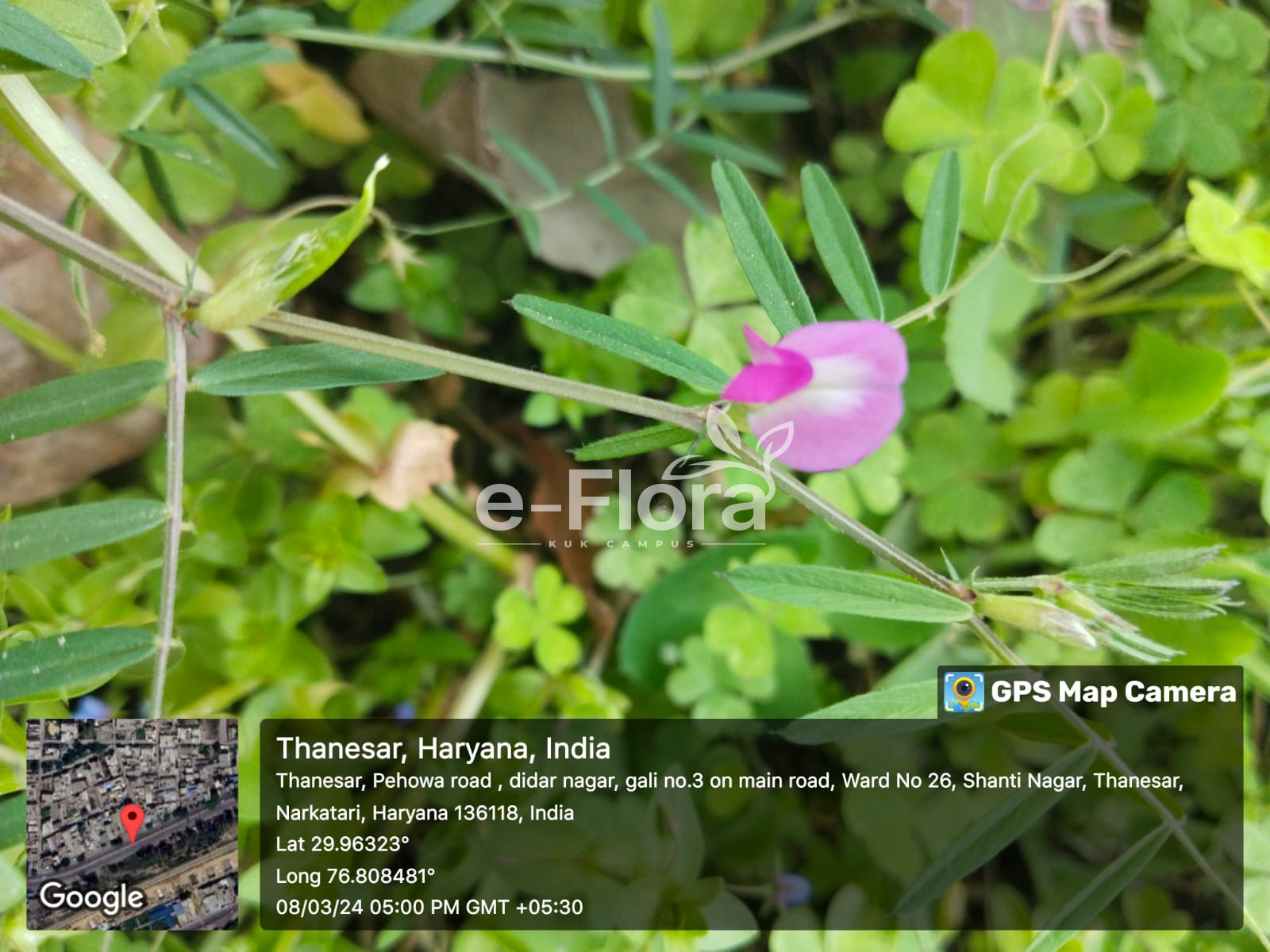
Habit: Annual, slender, scrambling or climbing herb.
Stem: Weak, slender, angular, glabrous to sparsely hairy, climbing with tendrils.
Leaf: Alternate, pinnate; usually 4–8 pairs of obovate to elliptic leaflets; terminal leaflet modified into a branched tendril; stipules conspicuous.
Flowering: December–March in India.
Flowers: Axillary, usually solitary or paired; purple, violet or reddish-purple, papilionaceous; standard broad, wings and keel distinct; stamens 10, diadelphous; ovary superior.
Fruit: Flattened linear-oblong pod, several-seeded, becoming dark at maturity.
Uses:
- Vicia sativa is an important forage and fodder legume for cattle, horse due to protein rich content and is also used as a green manure and cover crop because of its nitrogen-fixing ability. It is also used in crop rotation. It is also recorded as a food plant and has traditional medicinal uses.
- It attracts beneficial insects like ladybugs and parasitic wasps that prey on harmful garden pests.
- Seeds are cooked and grounded into flour to be mixed in soups, stews and bread as lentils substitute for human consumption.
- Caution with consumption of raw seeds as they contain toxins.