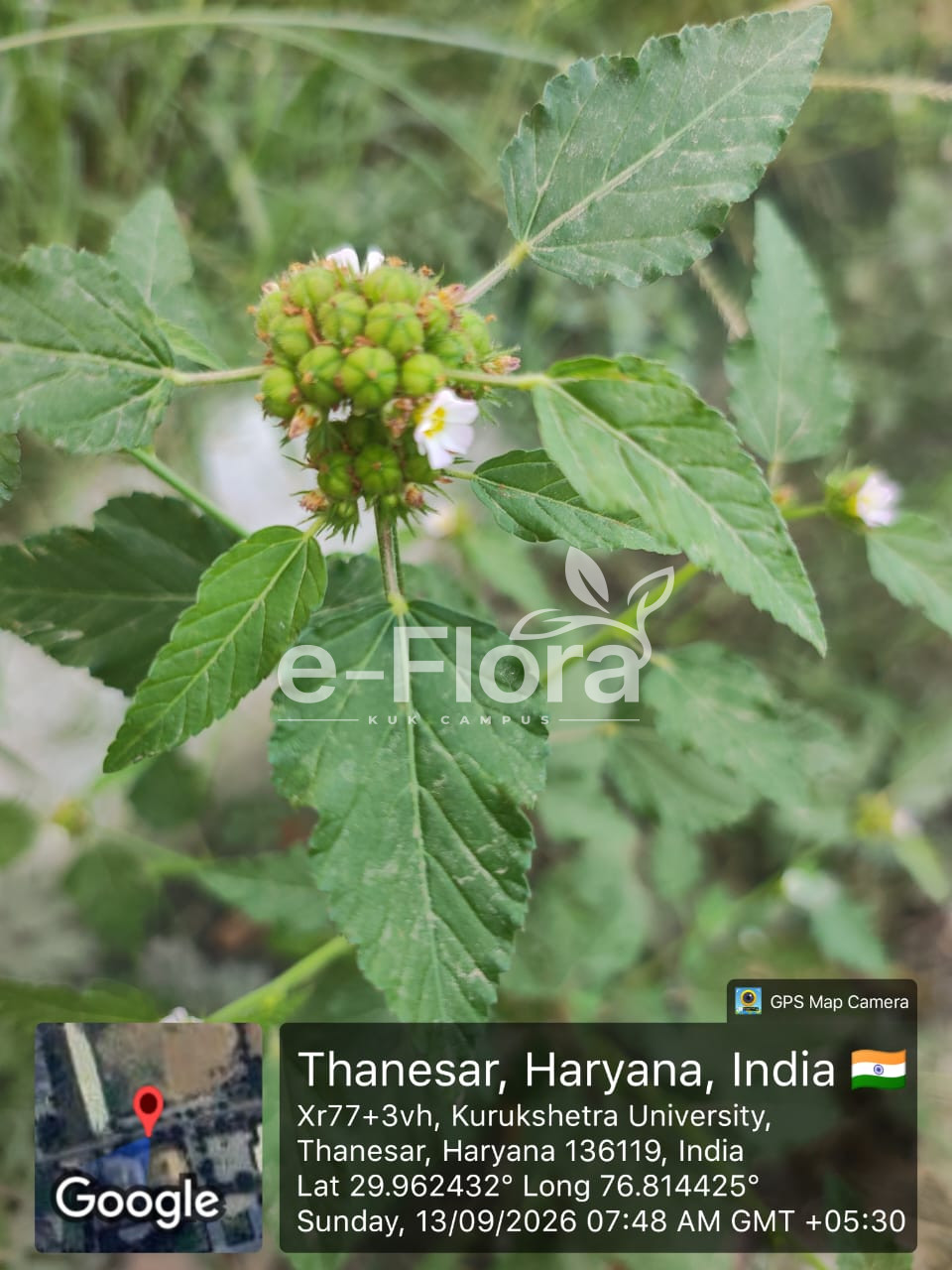
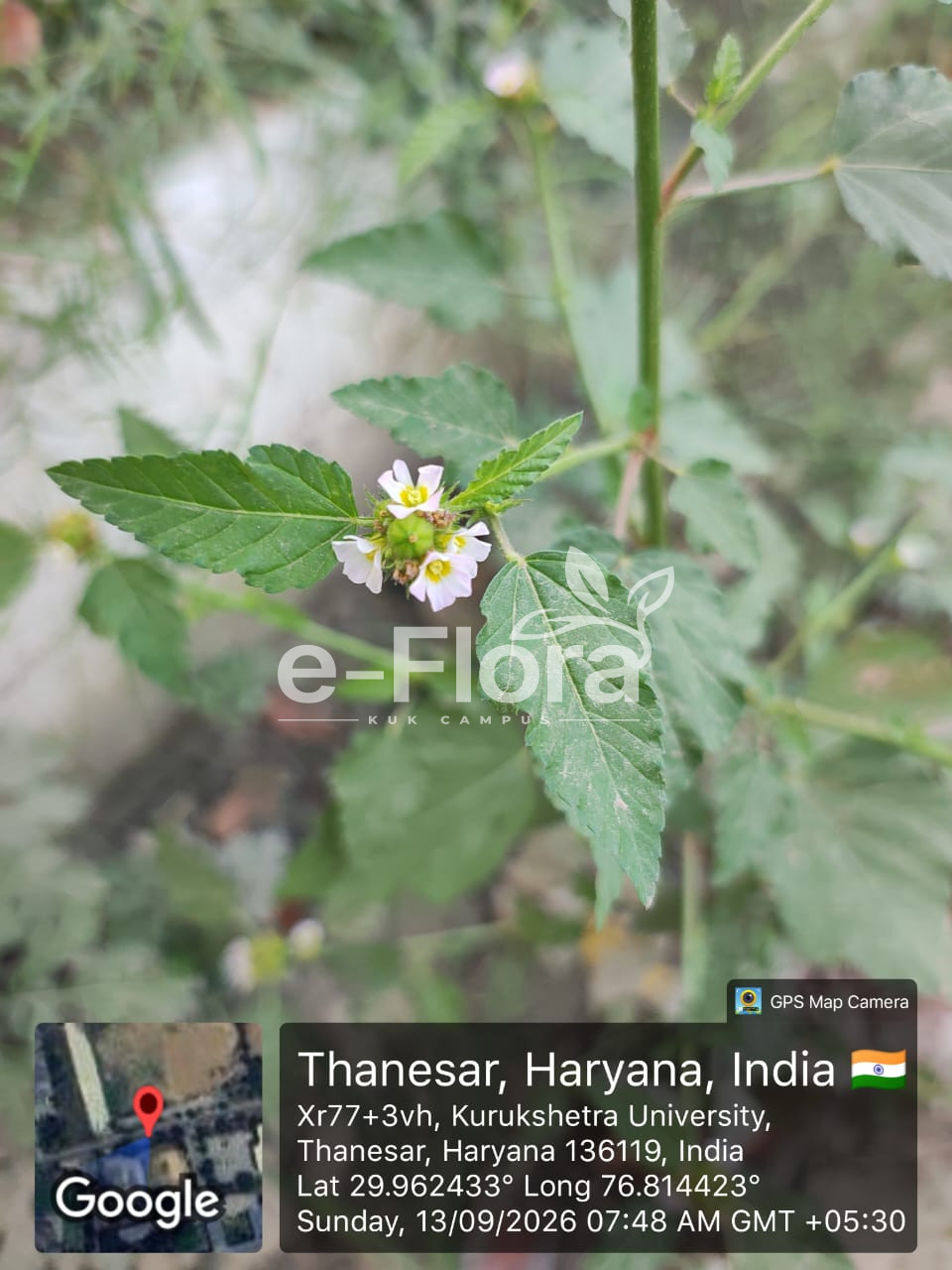
Melochia corchorifolia L.
Vernacular name: Chocolate weed, Teaweed, Broomweed; Hindi: Banpatta
Species Name: Melochia corchorifolia L.
Family: Malvaceae
Habit: Annual to short-lived perennial herb or undershrub, erect, branched, usually 0.5–1.5 m tall.
Stem: Erect, cylindrical, branched, green to reddish, pubescent, becoming somewhat woody towards the base.
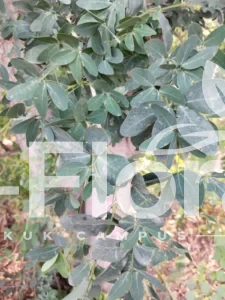
Leaf: Alternate, simple, ovate to lanceolate, 3–8 cm long, serrate to crenate margins, petiolate, usually hairy.
Flowering: August–November
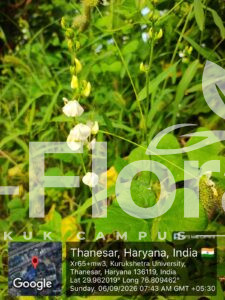
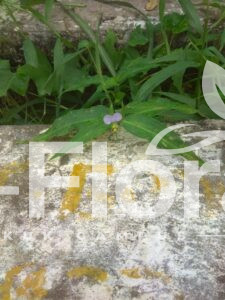
Flowers: Small, pink to mauve, bisexual, in axillary or terminal clusters; 5 petals, numerous stamens united into a staminal column.
Fruit: Small, globose to ovoid capsule, 3–5-lobed, enclosed partly by the persistent calyx; seeds several, brown.
Uses:
- Traditional practices uses tropical application of the poultices of leaves, roots and plant sap to treat arrow-poisoned wounds, snakebites and wasp or water snake stings.
- Folk medicines uses the decoction of fruits and leaves to ease stomach aches (gastralgia), treat dysentery and stop vomiting.
- Poultices of crushed leaves are used in local practices to treat swellings, abdominal sores and smallpox related pustules.
- Young leaves and shoots are used as a vegetable in some regions as leaves are rich in dietary fibers, calcium, sodium, potassium, magnesium and crude protein. It is also occasionally used as fodder and occurs commonly as a weed in cultivated and disturbed areas.
- A strong bast fiber is extracted from the bark of the plant that is used to make minor cordages in India and dillybags in Australia.
- Plants extracts in combination with need oil or karanj is used to control storage pests like Callosobruchus maculatus.