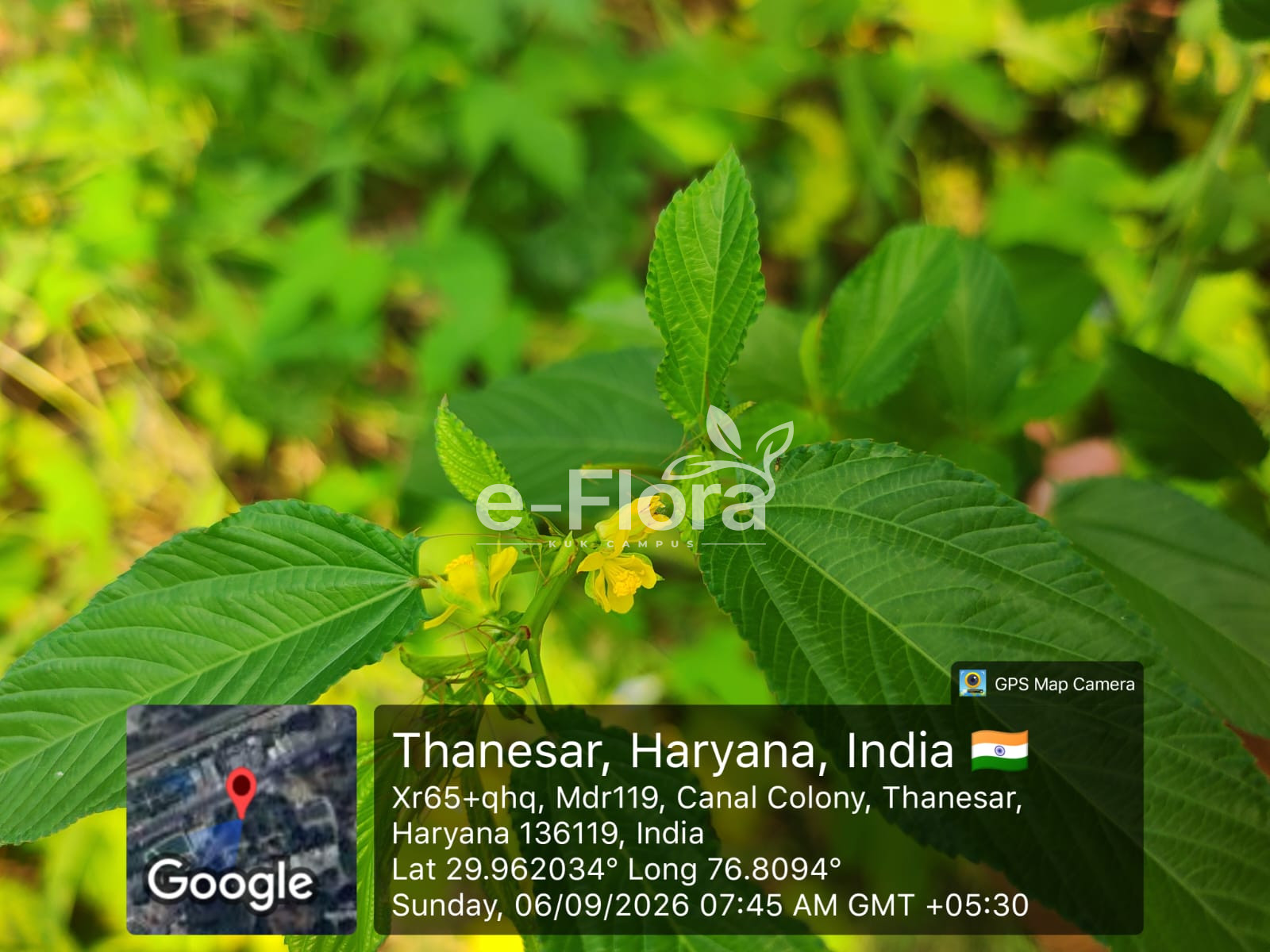
Corchorus aestuans L.
Vernacular name: Chunchu (Kannada); Bana-nalita, Buda nalita (Odia); East Indian mallow, Wild jute
Species Name: Corchorus aestuans L.
Family: Malvaceae
Habit: Annual, spreading or erect, much-branched herb, commonly found as a weed in cultivated fields, fallow land and wastelands.
Stem: Slender, branched and hairy, often reddish or green; plants may reach about 60 cm or more.
Leaf: Leaves alternate, simple, ovate-lanceolate to lanceolate, toothed along the margin, with characteristic small basal auricles.
Flowering: May–December
Flowers: Small, golden-yellow flowers, usually occurring in 2–3-flowered clusters opposite the leaves; sepals are hooded and awned at the apex.
Fruit: A distinctive elongated, ribbed 3-celled, 3-winged capsule, ending in a three-forked (3-fid) beak; fruits are around 2 cm long in Indian specimens.
Uses:
- Traditional remedies uses seeds as a febrifuge, stomachic, carminative, tonic and to treat dysuria, gonorrhea and pneumonia.
- Leaves are crushed to make paste or squeezed for sap and applied topically to treat fevers, headaches, inflammations and various skin conditions.
- Ayurveda uses this plant for its antimicrobial, antioxidant and cardioprotective activities.
- Leaves can be consumed raw in salads or can be cooked in soups and sauces where as roots can be consumed cooked only.
- Leaves and tender shoots can be used as fodder for livestock.
- Plant can be used to yield a coarse inferior grade jute fiber that is used to make rough ropes and cordage.
- Cosmetic industry uses the extracts of leaves in moisturizers for skin care.