Urena lobata L.
Vernacular name: Caesar Weed, Congo Jute (Hindi: वन भेंडी, ऊरेना)
Species Name: Urena lobata L.
Family: Malvaceae
Habit: Erect perennial herb or undershrub.
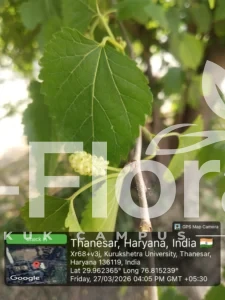
Stem: Branched, cylindrical, woody at base, densely stellate-pubescent, 0.5–2 m tall.
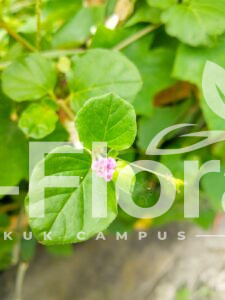
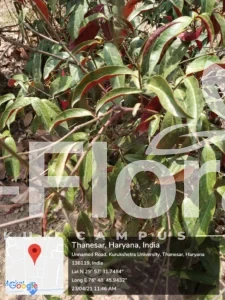
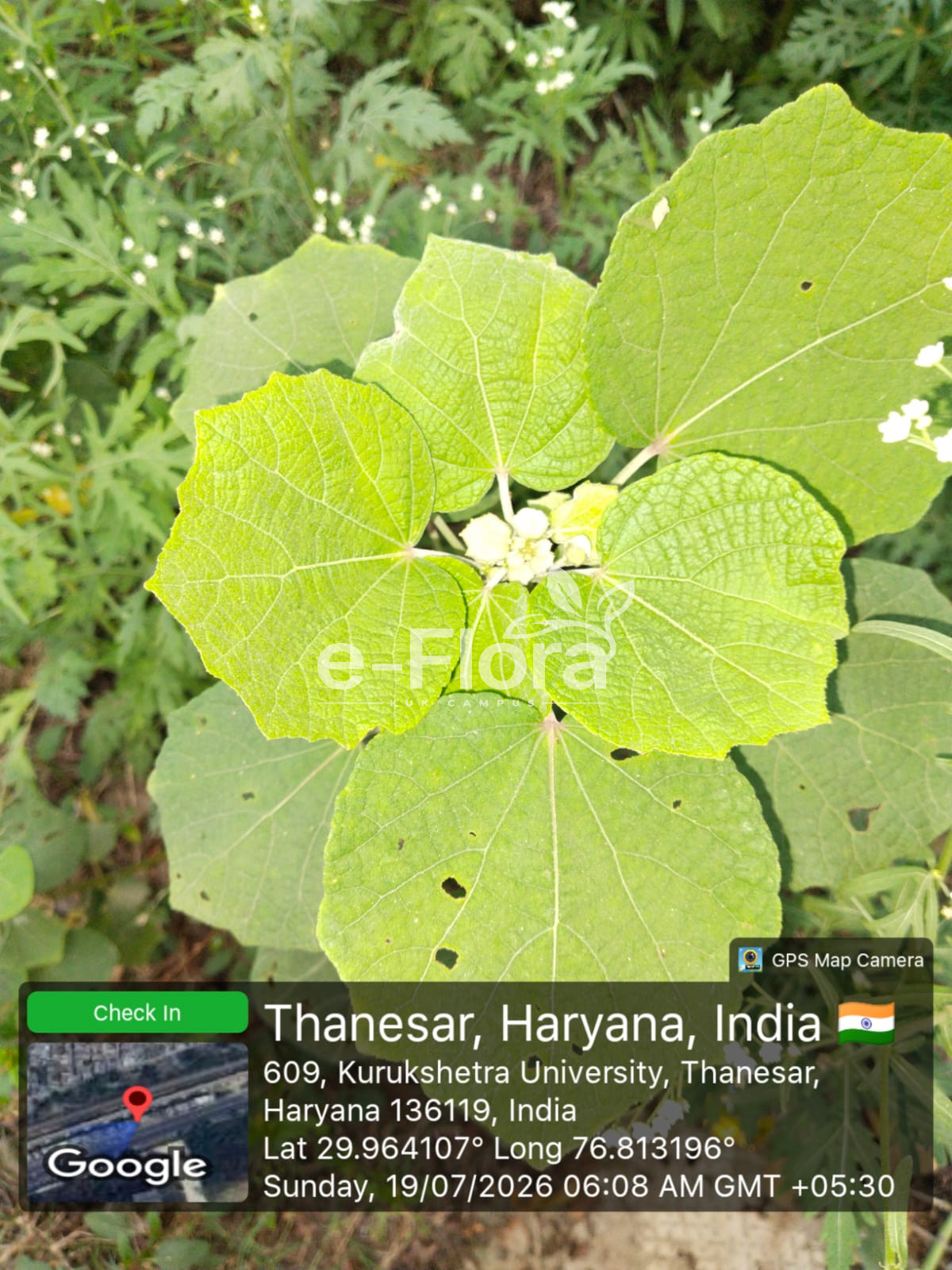
Leaf: Alternate, broadly ovate to orbicular, 5–15 × 4–14 cm, shallowly 3–5 lobed, serrate, cordate at base, stellate-pubescent, long-petiolate.
Flowering: Throughout the year, chiefly during the rainy season.
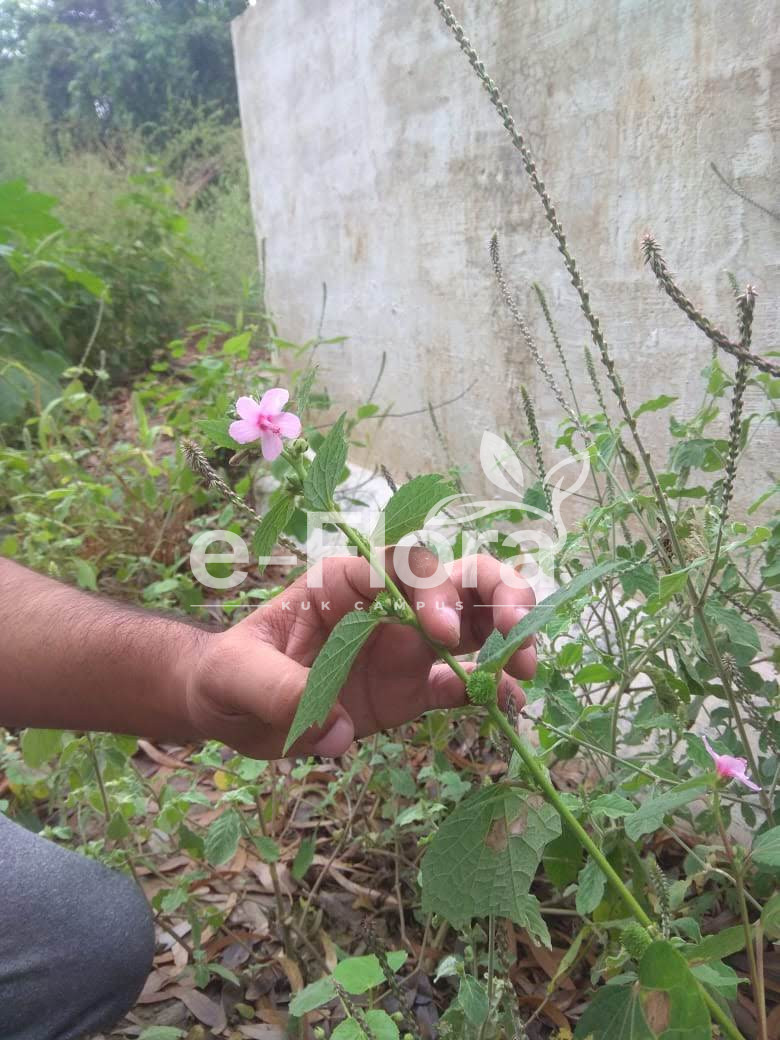
Flowers: Solitary or in small axillary clusters; petals 5, pink to rose-purple with a darker centre; epicalyx present; stamens numerous, united into a staminal column; ovary superior, 5-carpellary.
Fruit: Globose schizocarp, densely covered with hooked bristles, splitting into 5 one-seeded mericarps.
Uses:
- Root powder and infusions of flowers has expectorant properties and can be used to treat sore throats, asthma, cough and bronchitis.
- Decoction of roots are used to treat indigestion, colic, diarrhea, dysentery and urinary disorders.
- Extracts of plant is topically applied in traditional practices to manage and treat joint pain, wounds, fractures and rheumatism.
- Folk remedies used plants to treat gonorrhea, skin eruptions and malaria.
- Stem bark yields a strong yet soft durable fiber that is used for ropes, cordage, sacks, and coarse textiles.
- Plant biomass is processed to manufacture paper while seeds are used in soap manufacturing.
- Young leaves are consumed cooked as vegetable and seed serves as food during famine or used as additive in stews.
- The plant is rich in antioxidants and used as fodder and occasionally as green manure.