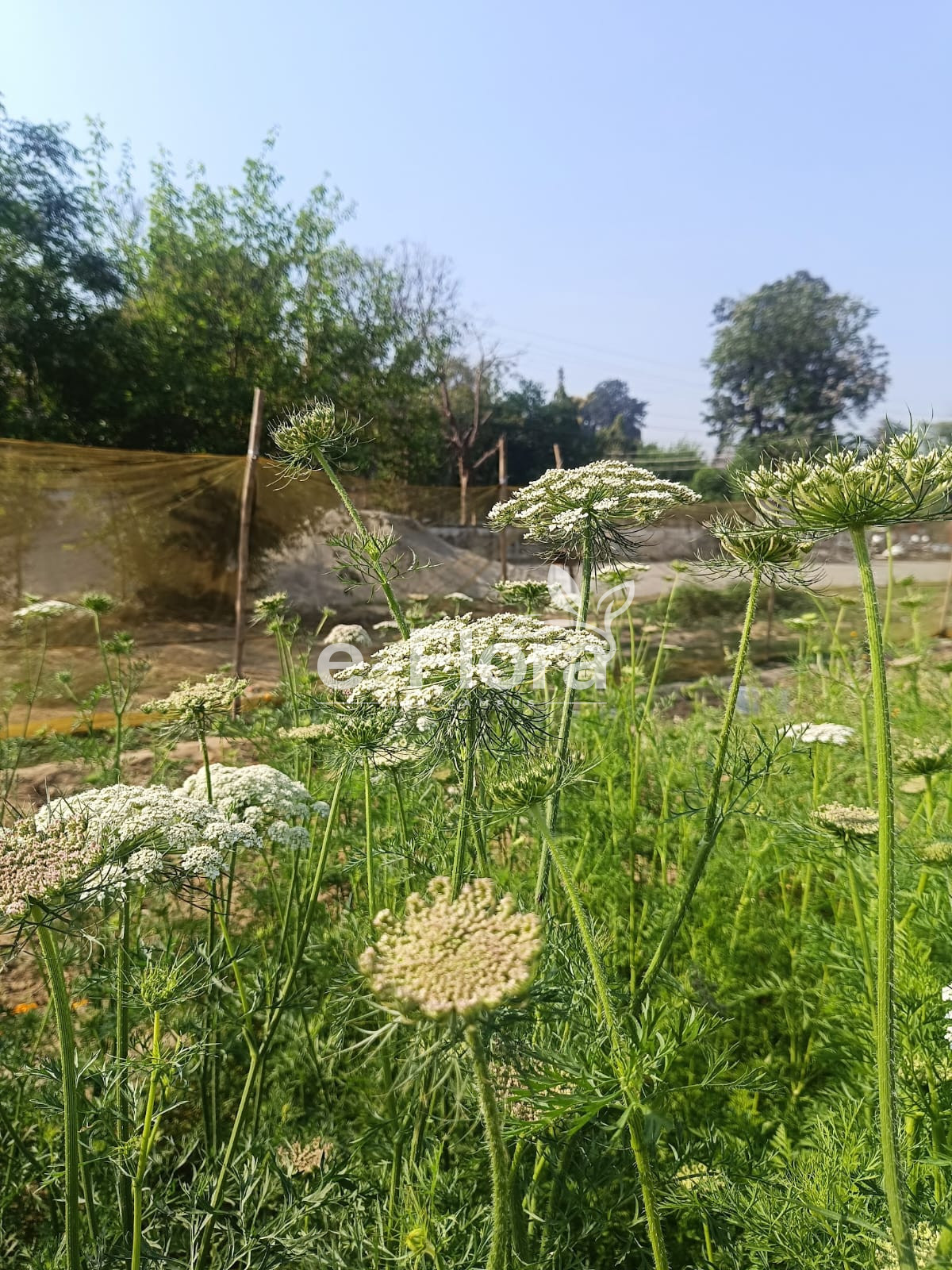
Daucus carota L.
Vernacular name: Gajar, Jangli Gajar, Carrot, Queen Anne’s Lace
Species Name: Daucus carota L.
Family: Apiaceae
Habit: Biennial herb; cultivated forms are grown primarily for their enlarged edible taproot, while wild forms generally have a slender, branched, non-fleshy taproot.
Stem: Erect, branched, hollow, and distinctly hispid (rough with stiff hairs).
Leaf: Alternate, long-petiolate, 2–3-pinnately divided, with narrow linear to deeply toothed segments; foliage is finely dissected and hairy.
Flowering: Mainly in the second year; throughout year
Flowers: Small, usually white, sometimes with a reddish or purplish central flower; bisexual; 5 petals, 5 stamens and an inferior ovary. Inflorescence compound umbel, often broad and flat when in flower; the whole inflorescence may become contracted and bird’s-nest-like during fruiting.
Fruit: Small, dry, ovoid schizocarp, splitting into two mericarps; about 2–3 mm long, with prominent spiny bristles and winged ribs.
Uses:
- Seeds and roots are used by traditional medicines for their diuretic properties to ease digestive discomforts and to treat anorexia.
- Carrot contains bioactive compounds like carotol and α-pinene that attributes to antimicrobial, antioxidant, antiseptic, diuretic, antibacterial, analgesic, antilithic, carminative and anti-inflammatory properties.
- Carrots are used to treat carious diseases like coughs, sore throats, gout, ulcers, diabetes, swellings, cold, gastric, flatulence, asthma, water retention, bladder ailments and jaundice.
- Root are consumed raw, cooked, boiled or juiced as it’s a good source of fibers, Vitamin C, Vitamin K, potassium and β-carotene. Different coloured variety provides specific compounds that are useful for general wellness like lycopene (red) and anthocyanins (purple).