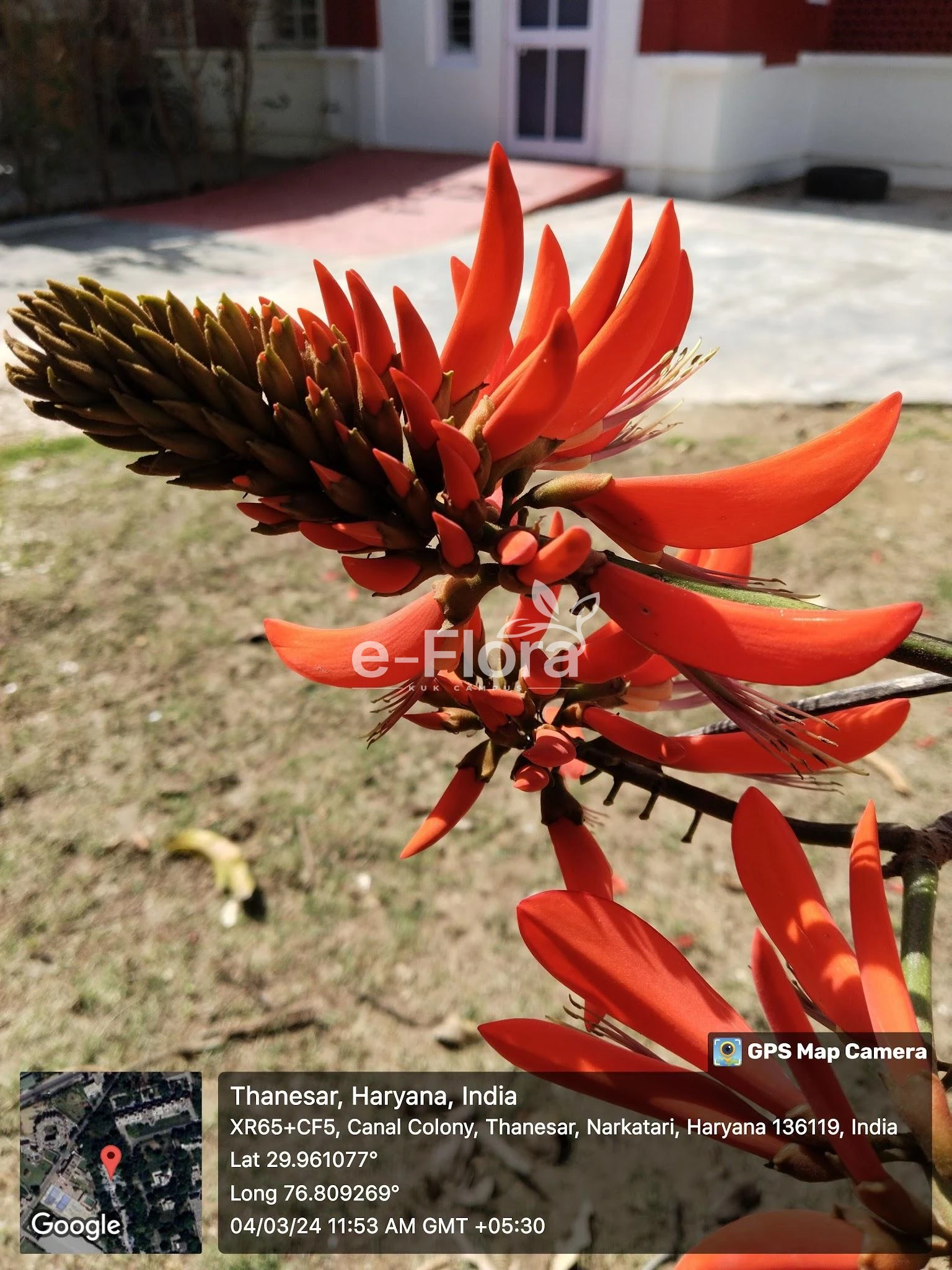
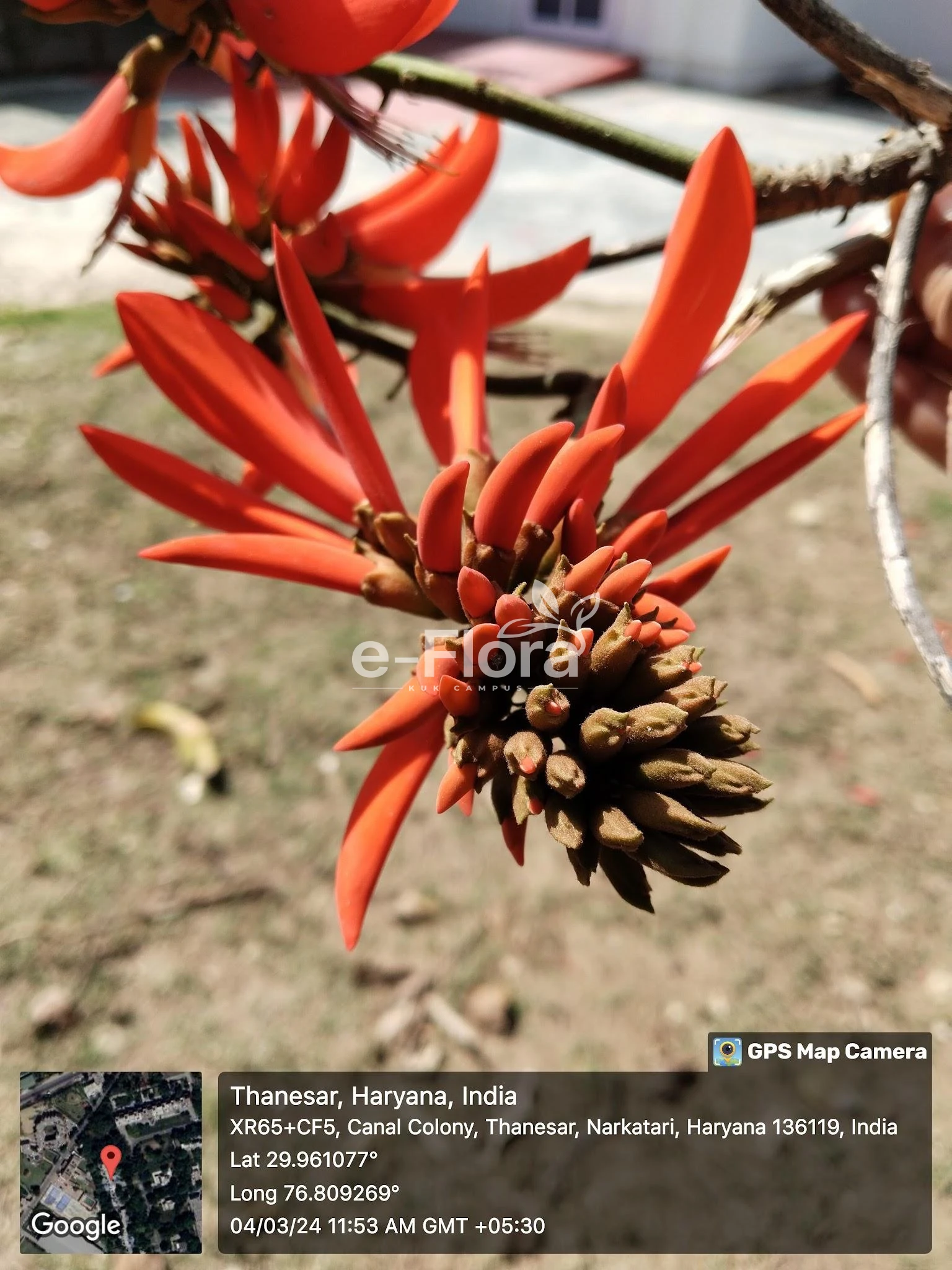
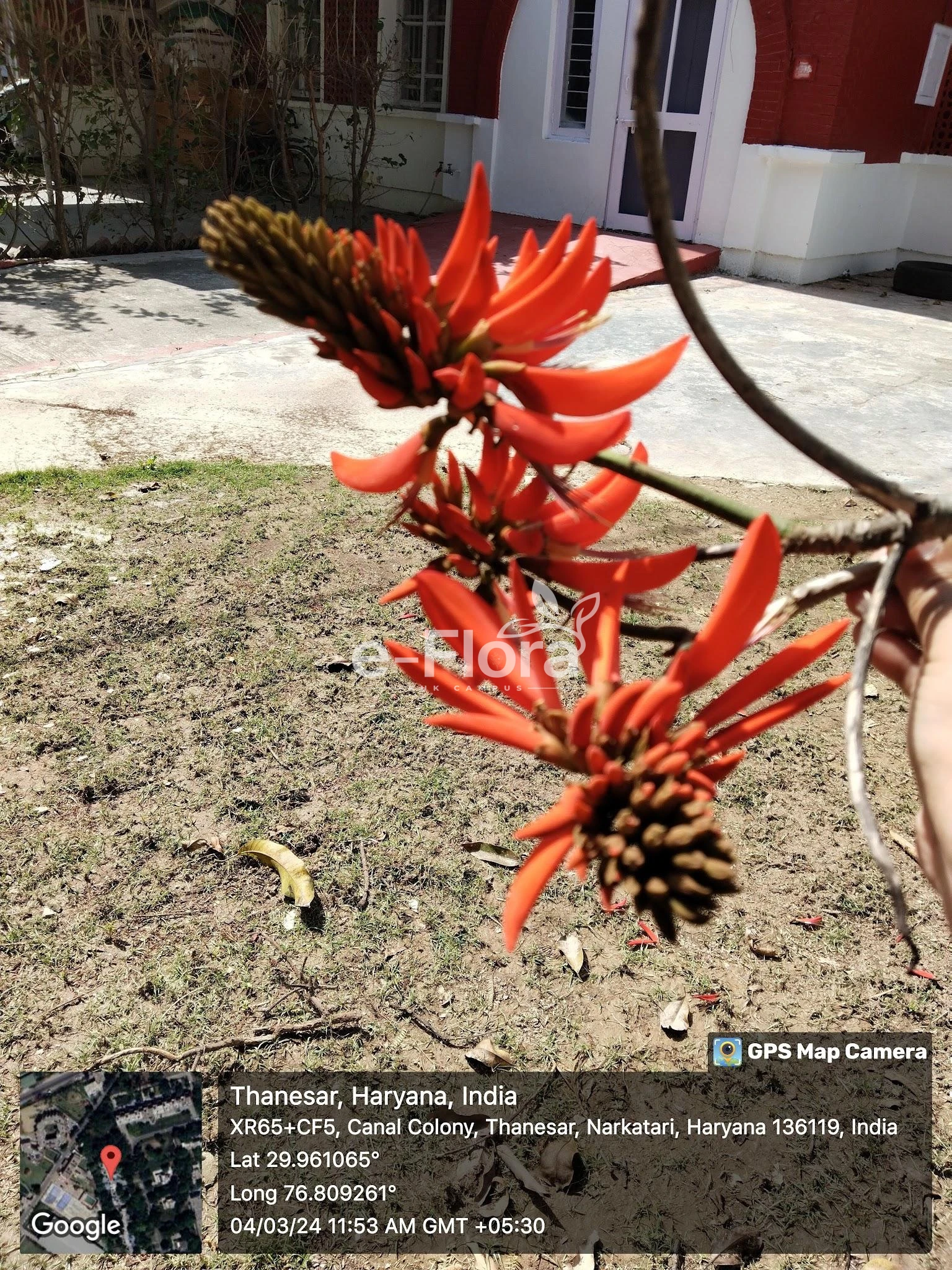
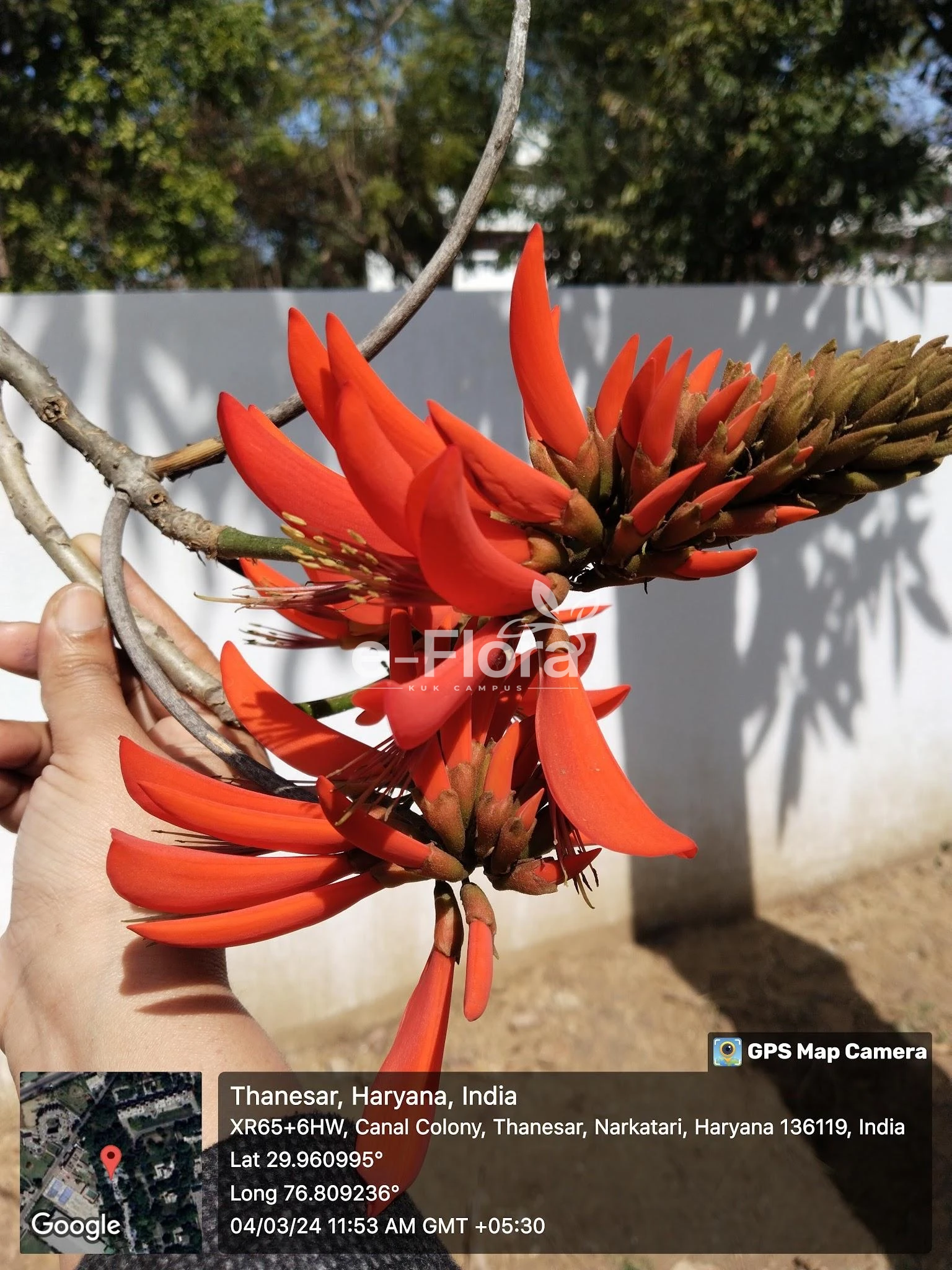
Erythrina variegata L.
Vernacular name: Indian coral tree, Pangara, Mandara
Species Name: Erythrina variegata L.
Family: Fabaceae
Habit: Deciduous thorny tree
Stem: Greenish, armed with conical spines, smooth bark peeling in patches.
Leaf: Trifoliolate, leaflets broadly ovate to orbicular, 10-20 cm, thinly coriaceous, glabrous above.
Flowering: February–April
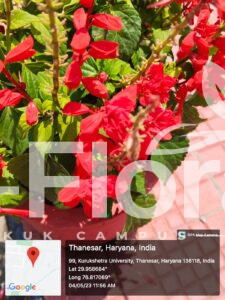
Flowers: Terminal racemes, scarlet-red, 5-8 cm long, keel petals reduced.
Fruit: Long strap-shaped pod, 10-20 cm, black seeds.
Uses
- Bark is used for fever and wounds treatment.
- Seeds are used as emetic to induce vomiting.
- Leaf paste is used to treat rheumatism.
- Plant is used as live fence, support for climbers, and ornamental plant.
- Flowers offered to Shiva during Holi.
- Tribally it is known as “blood tree” in Central India.
- It is planted as windbreak in Rajasthan villages.
- Nitrogen rich leaves can be used in compost or organic matter to improve soil quality.
- Plant has anti-inflammatory, sedative, anti-parasitic and antipyretic properties.
- Plant is used to manage cholesterol.
- Wood is used to craft photo frames, crates and rice-pounding mortars.
- Leaves are used as used as vegetables in cooking and wrapping fermented meals.
- Flowers are used to extract a natural dye that is used in textile industry.
- Bark can be used in making ropes.