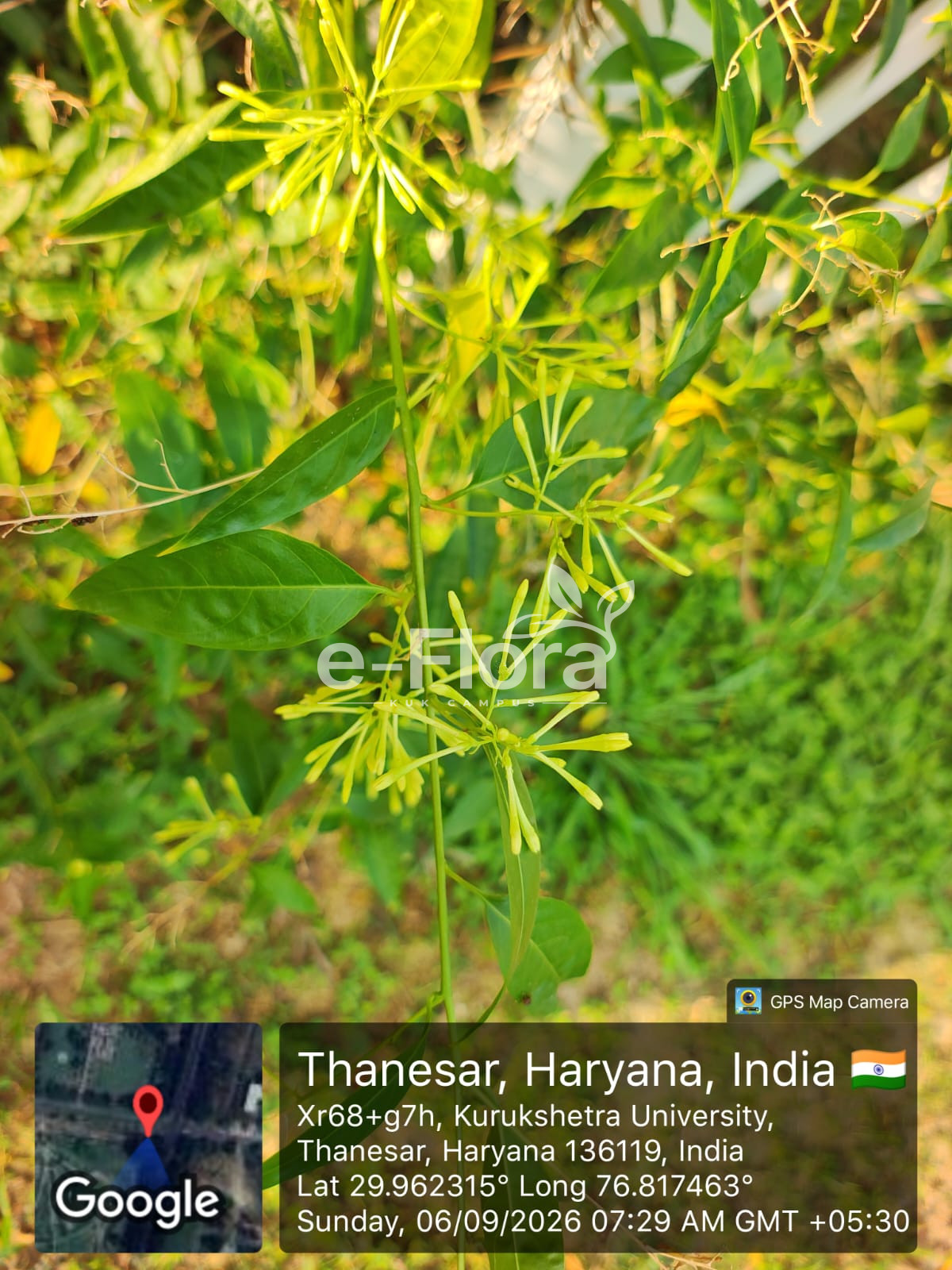
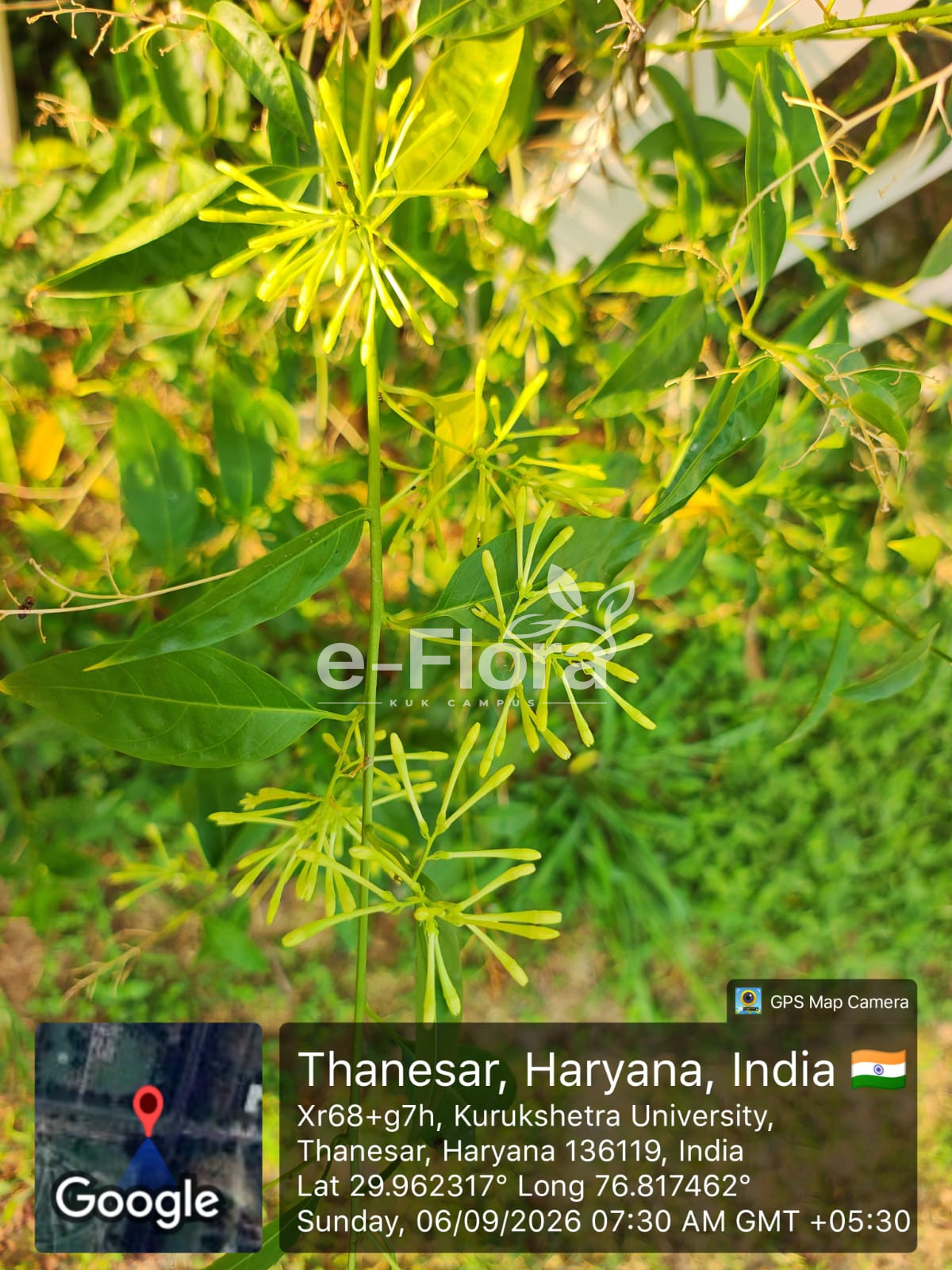
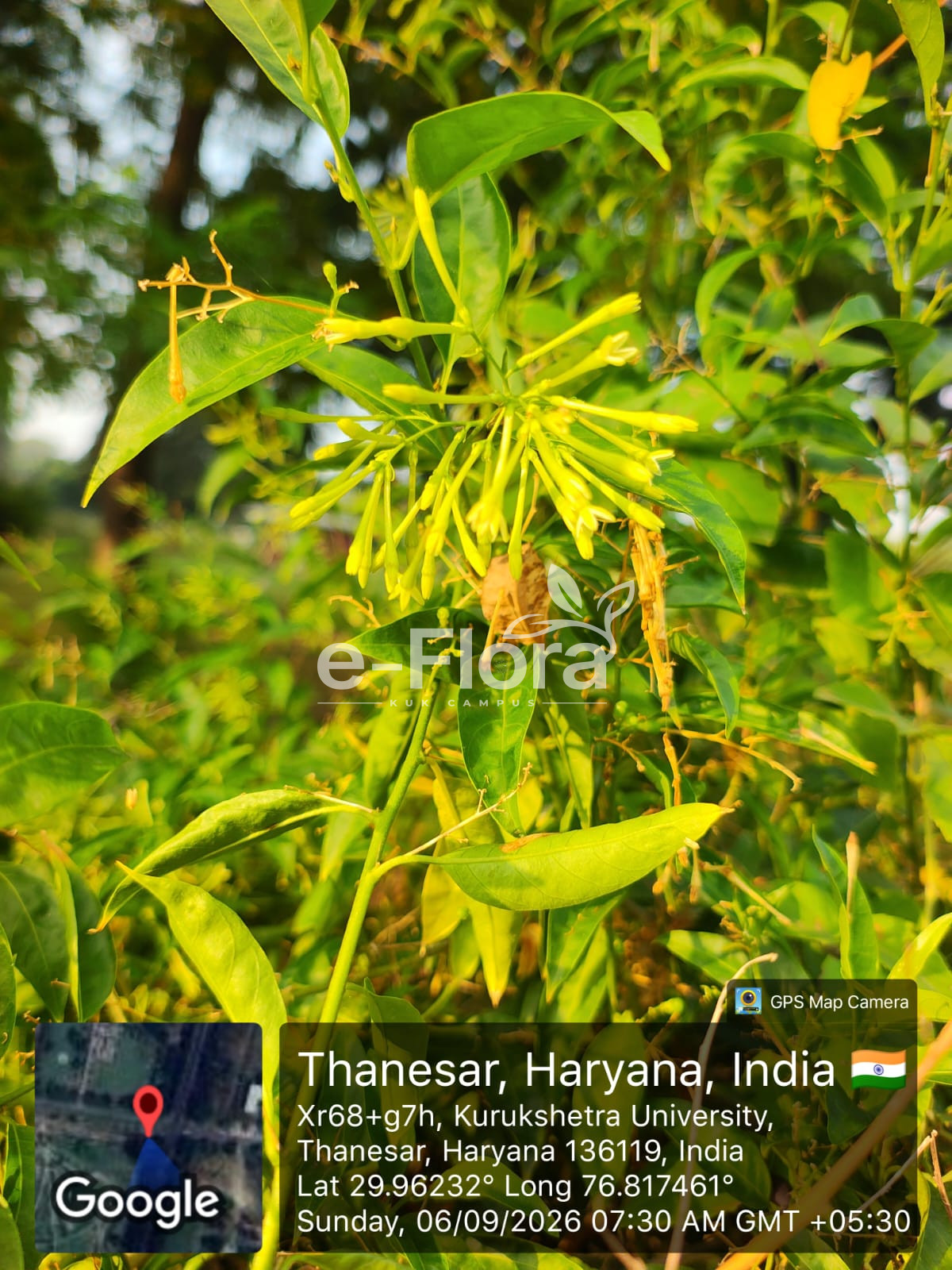
Cestrum nocturnum L.
Vernacular name: Raat ki Rani, Night-blooming jasmine, Queen of the night (Hindi: रात की रानी)
Species Name: Cestrum nocturnum L.
Family: Solanaceae
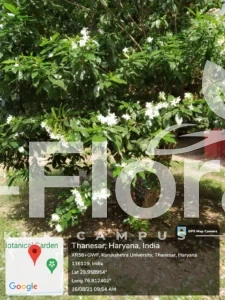
Habit: Evergreen, spreading shrub, usually 1–4 m tall.
Stem: Branched; young branchlets slender, smooth and angled, becoming woody with age.
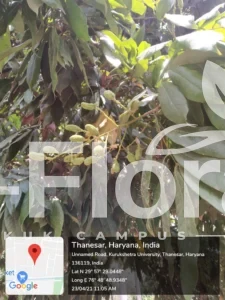
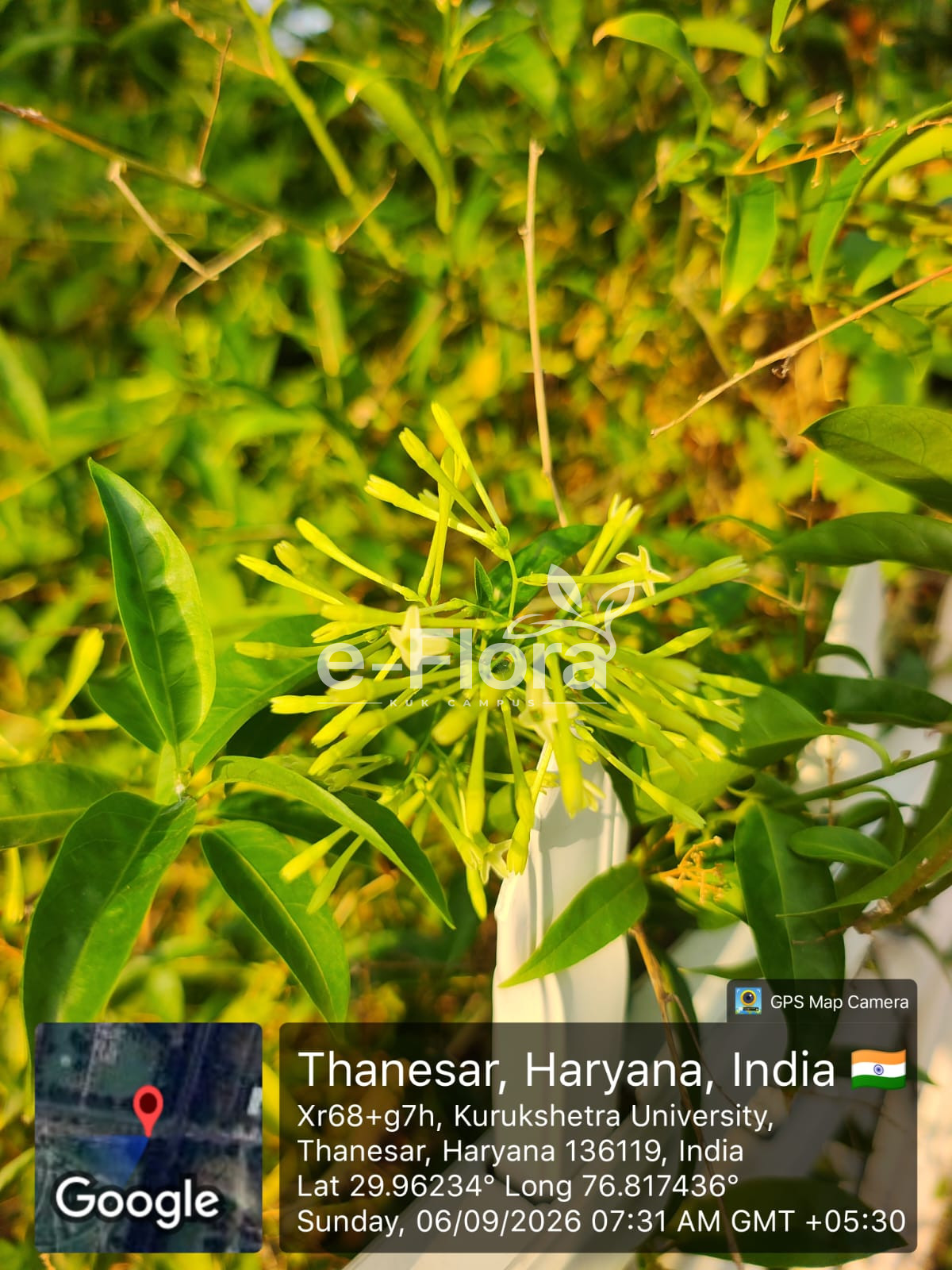
Leaf: Alternate, simple, ovate to elliptic-lanceolate, 8–20 × 2–6 cm, glossy, entire, shortly petiolate.
Flowering: Throughout the year, especially during warm periods.
Flowers: Axillary/terminal clusters; greenish-white to creamy, slender tubular flowers 2.5–3.5 cm long, 5-lobed; intensely fragrant at night; stamens 5, inserted within corolla tube.
Fruit: Small, ovoid to globose, fleshy berry, white when mature, containing several seeds.
Uses:
- Traditional remedies uses this plant to soothe swellings, minor wounds and joint pain.
- Herbal remedies uses the plant for its antipyretic properties to reduce fever and to treat cold and respiratory discomfort.
- Folk practice uses this plant in aromatherapy to ease mild anxiety. It is also used as natural deterrent against mosquito bites.
- Extracts of plants are found to be antispasmodic and helps in the treatment of the epilepsy.
- Widely cultivated as an ornamental for its exceptionally strong nocturnal fragrance. It is commonly planted in gardens, patios, balconies and windows or as dense green barrier for privacy in yards .
- Flowers attracts night time pollinators in gardens like specific moths and bees.
- However, the plant is toxic and should not be consumed.