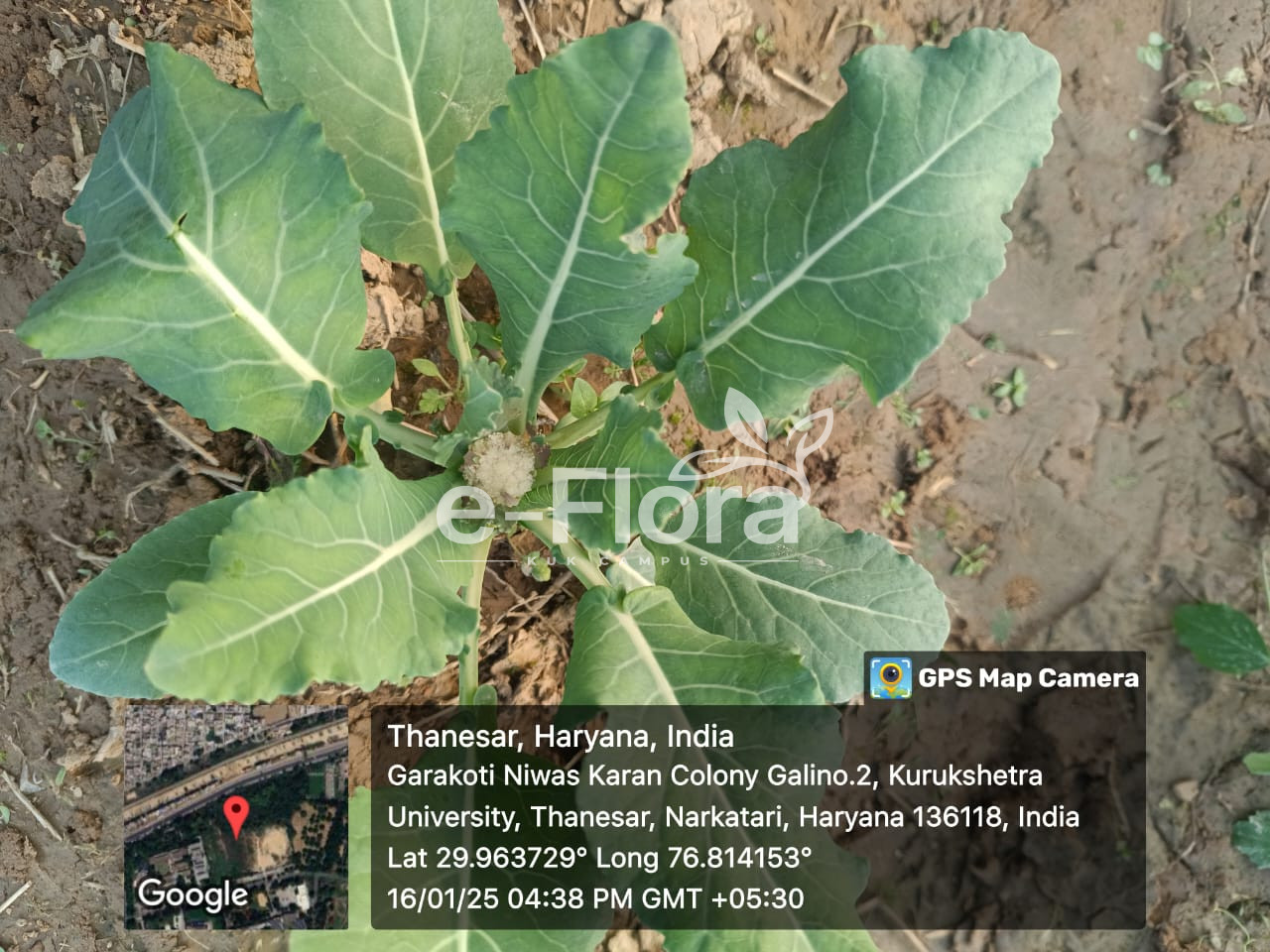
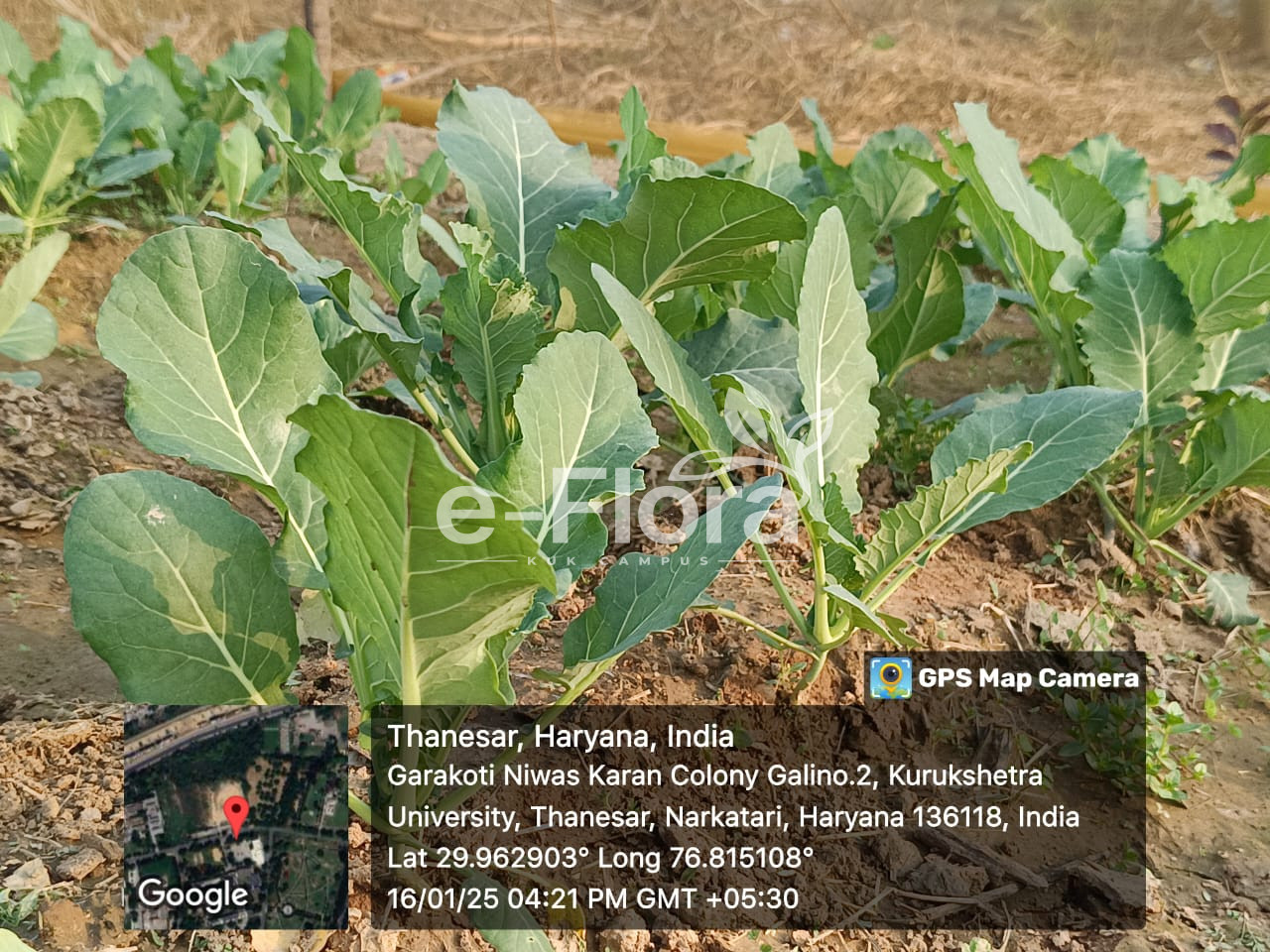
Brassica oleracea L.
Vernacular name: Cauliflower, Phool gobhi (Hindi: फूल गोभी)
Species Name: Brassica oleracea L. (Botrytis Group; traditionally B. oleracea var. botrytis L.)
Family: Brassicaceae
Habit: Biennial herb, cultivated as an annual vegetable.
Stem: Short, erect, stout, leafy, forming a compact terminal head.
Leaf: Alternate, large, oblong to oblanceolate, often waxy, entire to lobed, forming a basal rosette.
Flowering: Winter–spring; normally harvested before flowering.
Flowers: Yellow, 4-merous, arranged in racemes; sepals 4, petals 4, stamens 6 (tetradynamous); ovary superior, bicarpellary.
Fruit: Siliqua, elongated, containing numerous globose seeds.
Uses:
- Cauliflowers contains dietary fibers that helps with digestion and promotes gut health. It also contains high amount of Vitamin A, Vitamin K, Vitamin C and folates.
- Cauliflowers has antioxidant properties due to the presence of polyphenols and glucosinolates that helps with reducing inflammations and fight against cell damage.
- The leaves are cardiotonic and stomachic and help with the treatment of gout and rheumatism.
- Seeds have anthelmintic, laxative and diuretic properties.
- The compact immature inflorescence (curd) is the edible portion and is widely consumed as a vegetable.
- It can be consumed both as raw and cooked. As raw it is eaten in salads, wraps and slaws. Where as, it is boiled, steamed and roasted or added to soups and stir-fries when consumed as cooked.
- It can also be fermented to be processed in traditional foods like kimchi and sauerkraut.