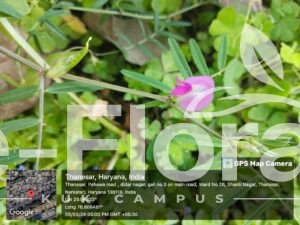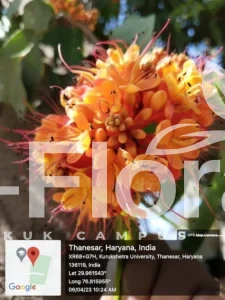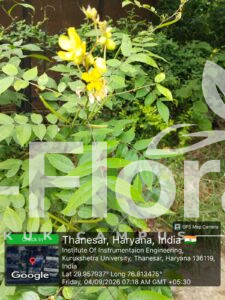
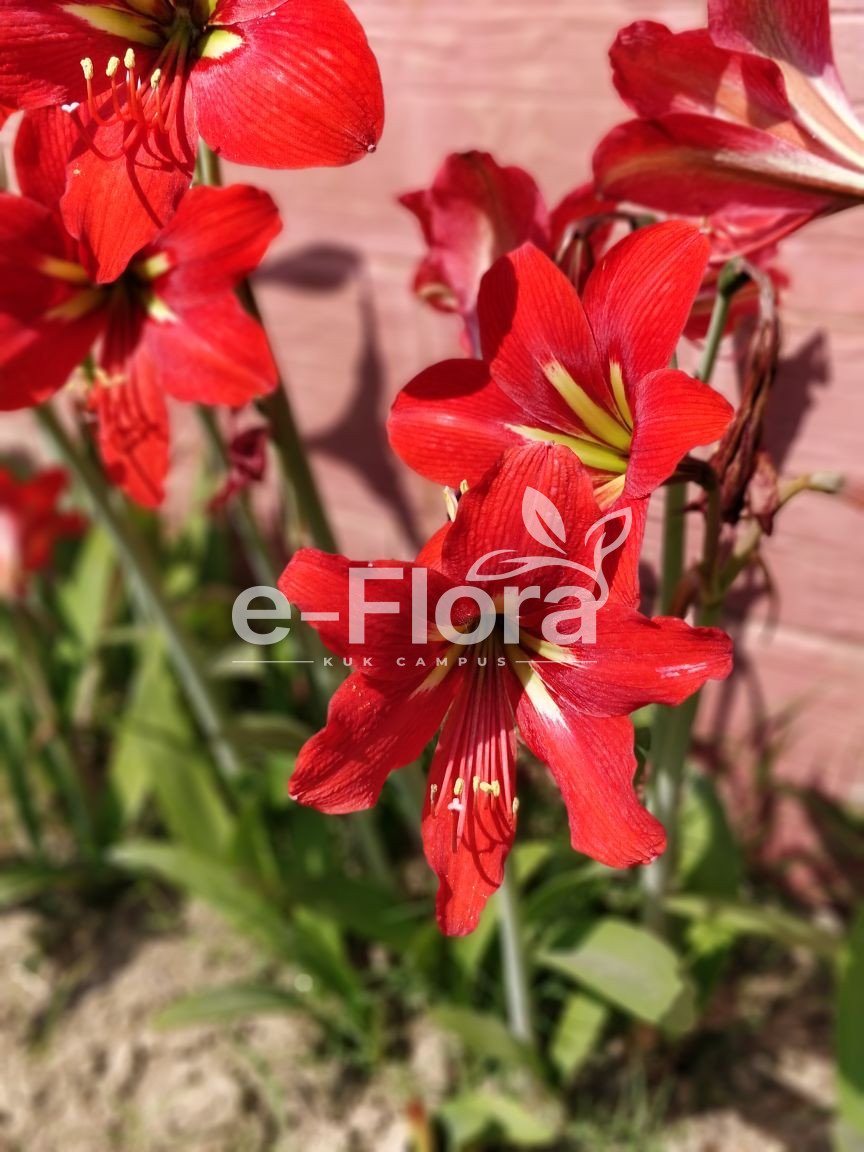
Amaryllis belladonna L.
Vernacular name: Red Amaryllis, Belladonna Lily, Jersey Lily, Naked Lady
Species Name: Amaryllis belladonna L.
Family: Amaryllidaceae
Habit: Perennial bulbous herb; cultivated as an ornamental flowering plant.
Stem: Underground bulb; flowering stalk (scape) erect, stout, leafless at flowering time, arising directly from the bulb.
Leaf: Long, narrow, strap-shaped, fleshy, green, usually appearing after flowering; leaves arise in a basal cluster from the bulb.
Flowering: August–September
Flowers: Large, showy, fragrant, funnel-shaped, usually pink to rosy-red; flowers with 6 tepals, 6 stamens and an inferior ovary. Inflorescence terminal umbel, borne on a tall, leafless scape; several large flowers arise together and are surrounded initially by papery bracts.
Fruit: Capsule, generally 3-lobed, containing several seeds.
Peculiar features: The most distinctive feature is the leafless flowering stalk appearing before the leaves—the flowers emerge from the dormant-looking bulb, followed later by the strap-shaped foliage. The large pink-red fragrant flowers form a conspicuous terminal umbel.
Uses:
- Traditional practices used plant for its anti-inflammatory, analgesic and antipyretic properties due to the presence of bioactive alkaloids like lycorine and galantamine. Different parts of plant helps to reduce fever and soothe and mange muscle pain and rheumatism.
- Tropical application of decoction and extracts of bulbs are used by South African indigenous communities to treat ulcers, wounds, swellings and skin infections.
- Extracts of stem, leaves and flowers have antioxidant properties and are used as soothing and anti-aging skin formulation.
- Precaution is needed as raw consumption of plant parts is poisonous.
- Widely cultivated as an ornamental bulb for its attractive trumpet-shaped pink-red flowers in boarders, flower beds and mass grouping. Due to its elegant tall stem, plant is widely used in floral arrangements.
- Plant is used rock gardens or drought-tolerant landscaping due to its lower water requirements.
- Fragrant flowers attracts pollinators like bees, butterflies and some other beneficial insects.