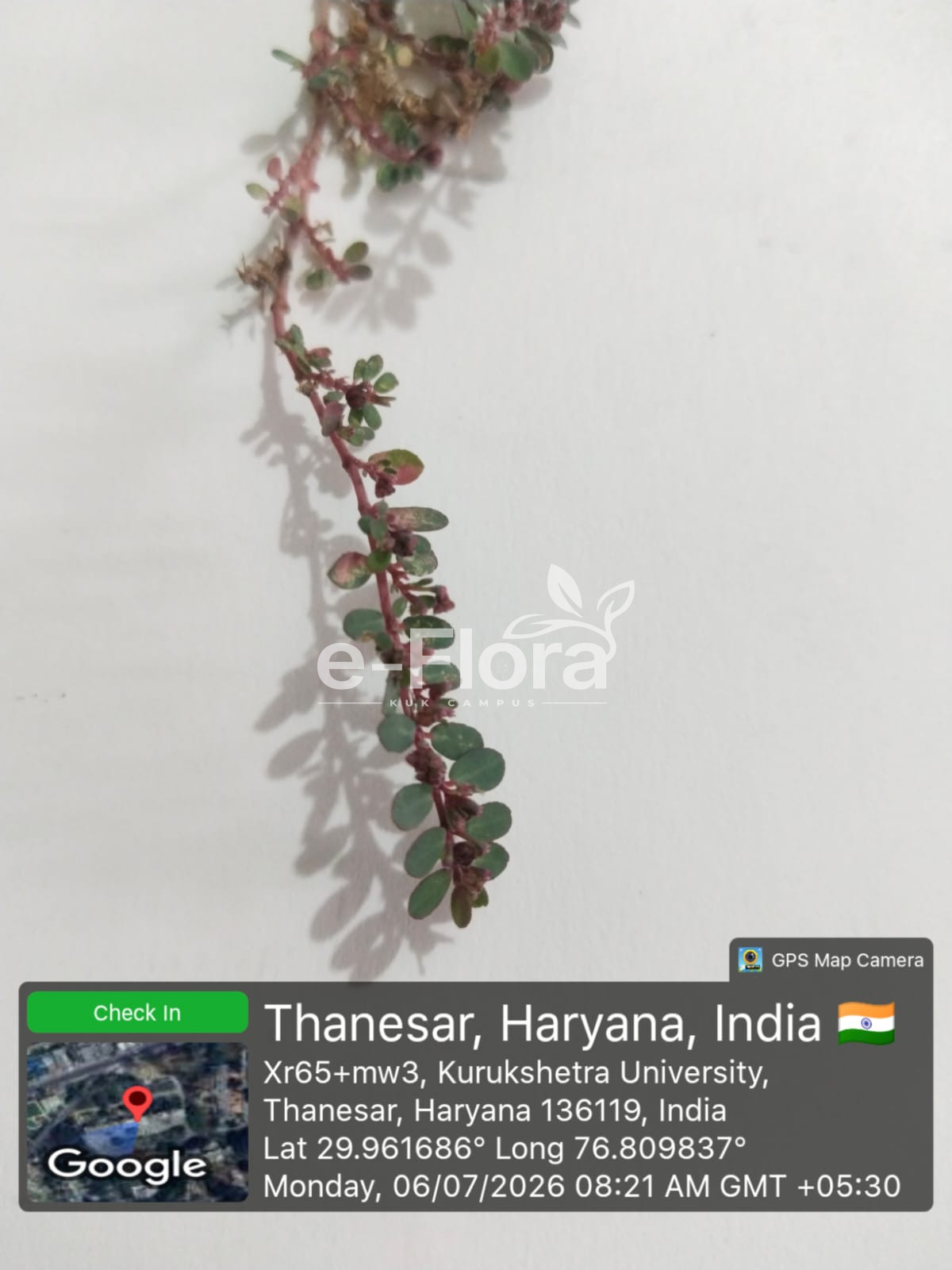
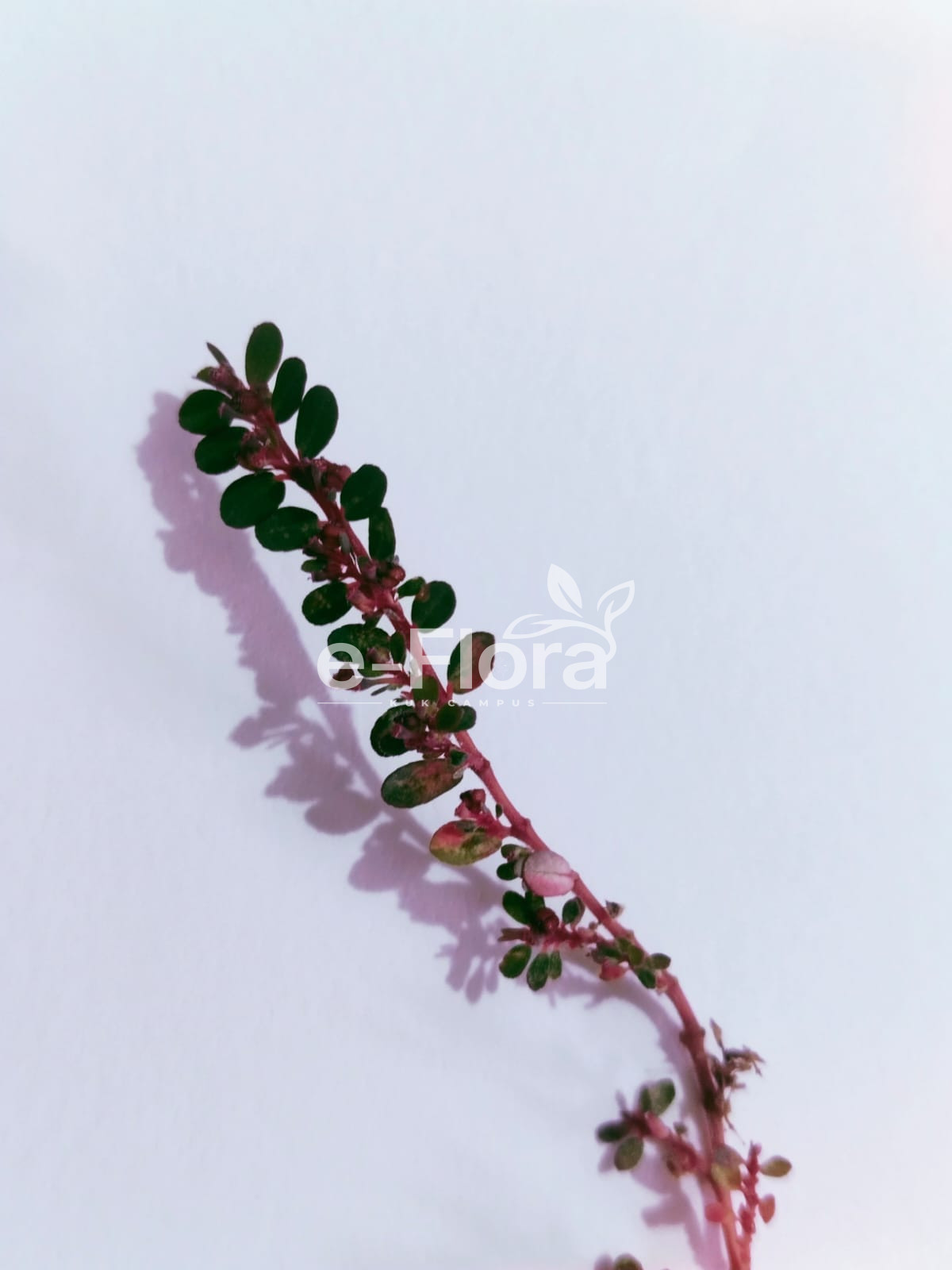
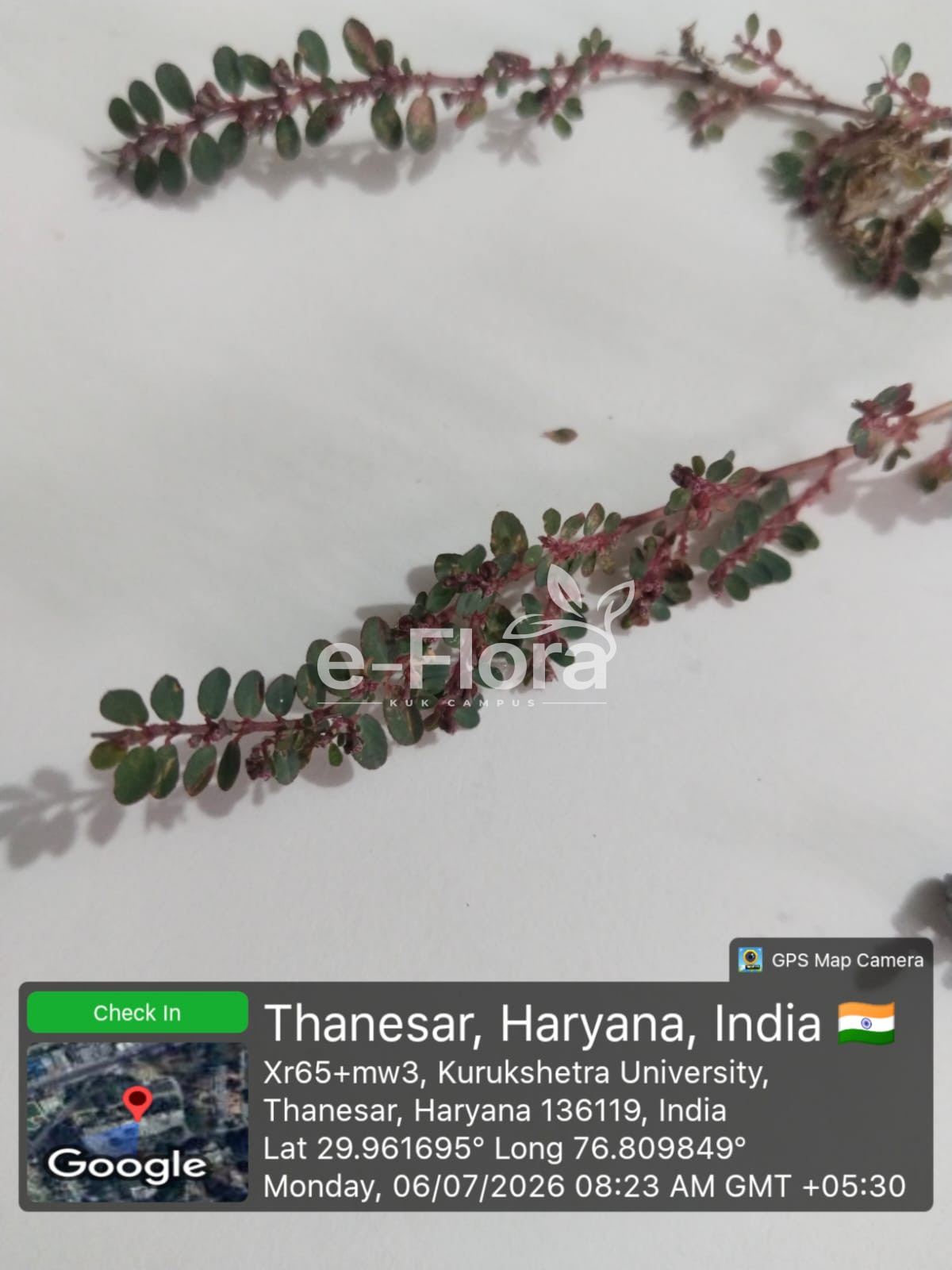
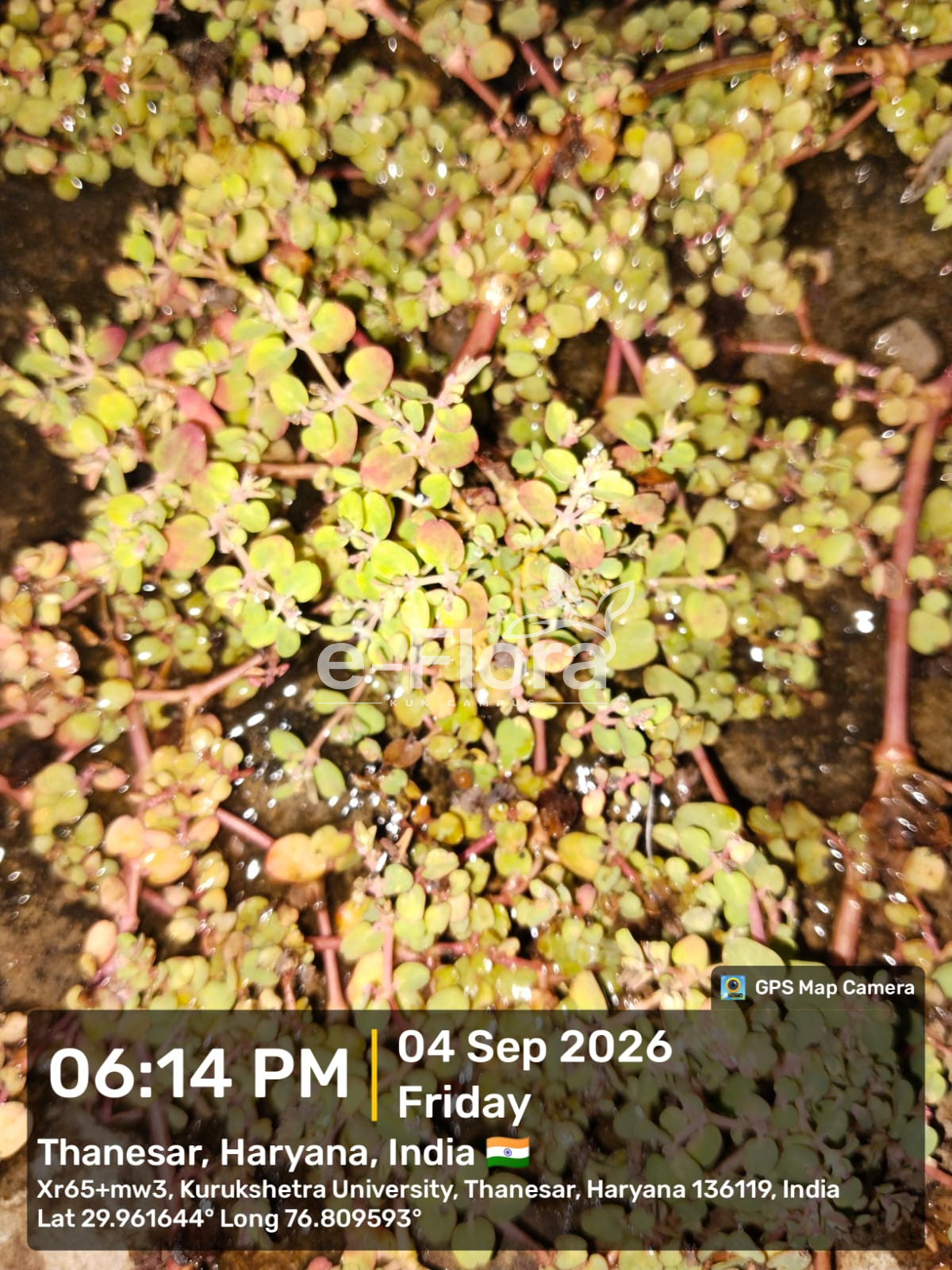
Euphorbia prostrata Aiton
Vernacular name: Prostrate Sandmat, Prostrate Spurge (Hindi: दूधिया)
Species Name: Euphorbia prostrata Aiton
Family: Euphorbiaceae
Habit: Prostrate annual herb.
Stem: Slender, reddish to purplish, extensively branched, prostrate, often rooting at lower nodes; exudes milky latex when injured.
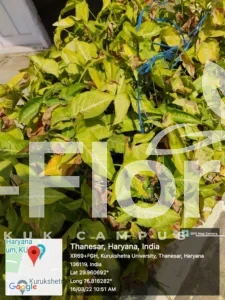
Leaf: Opposite, oblong to elliptic, 0.5–2 cm long, asymmetrical at base, finely serrulate, often with a reddish central blotch, short-petiolate.
Flowering: Throughout the year, chiefly during the rainy season.
Flowers: Minute, unisexual, highly reduced, arranged in axillary cyathia; glands usually 4 with small white appendages; male flowers represented by single stamens, female flower by a stalked tricarpellary ovary.
Fruit: Small, 3-lobed, glabrous capsule, splitting into three one-seeded cocci.
Uses:
- Traditionally taken as decoction for digestive complaints, diarrhoea, dysentery, inflammation, irritable bowel syndrome and wound healing. It is also used in some herbal preparations for haemorrhoids.
- Analgesic and anti-inflammatory properties help to treat minor swellings, tissue discomfort and irritations.
- Astringent property helps to soothe sores and minor skin eruptions.
- Plant is also used for its antifungal and antibacterial properties.
- Plant juice can be used at the time of child birth to induce labour.
- The milky latex may irritate skin and mucous membranes and cause blindness, so medicinal use should be approached cautiously. Latex is used as arrow poison by tribal communities.
- Plant accumulates or absorbs heavy metals from soil, very beneficial in improving soil fertility and helps with restorations.