Robinia pseudoacacia L.
Vernacular name: Black locust, False acacia (Hindi: विलायती कीकर)
Species Name: Robinia pseudoacacia L.
Family: Fabaceae
Habit: Medium deciduous tree
Stem: Thorny, dark brown ridged bark, paired stipular spines
Leaf: Pinnate, 7-19 pairs elliptic leaflets, no terminal leaflet
Flowering: May-June
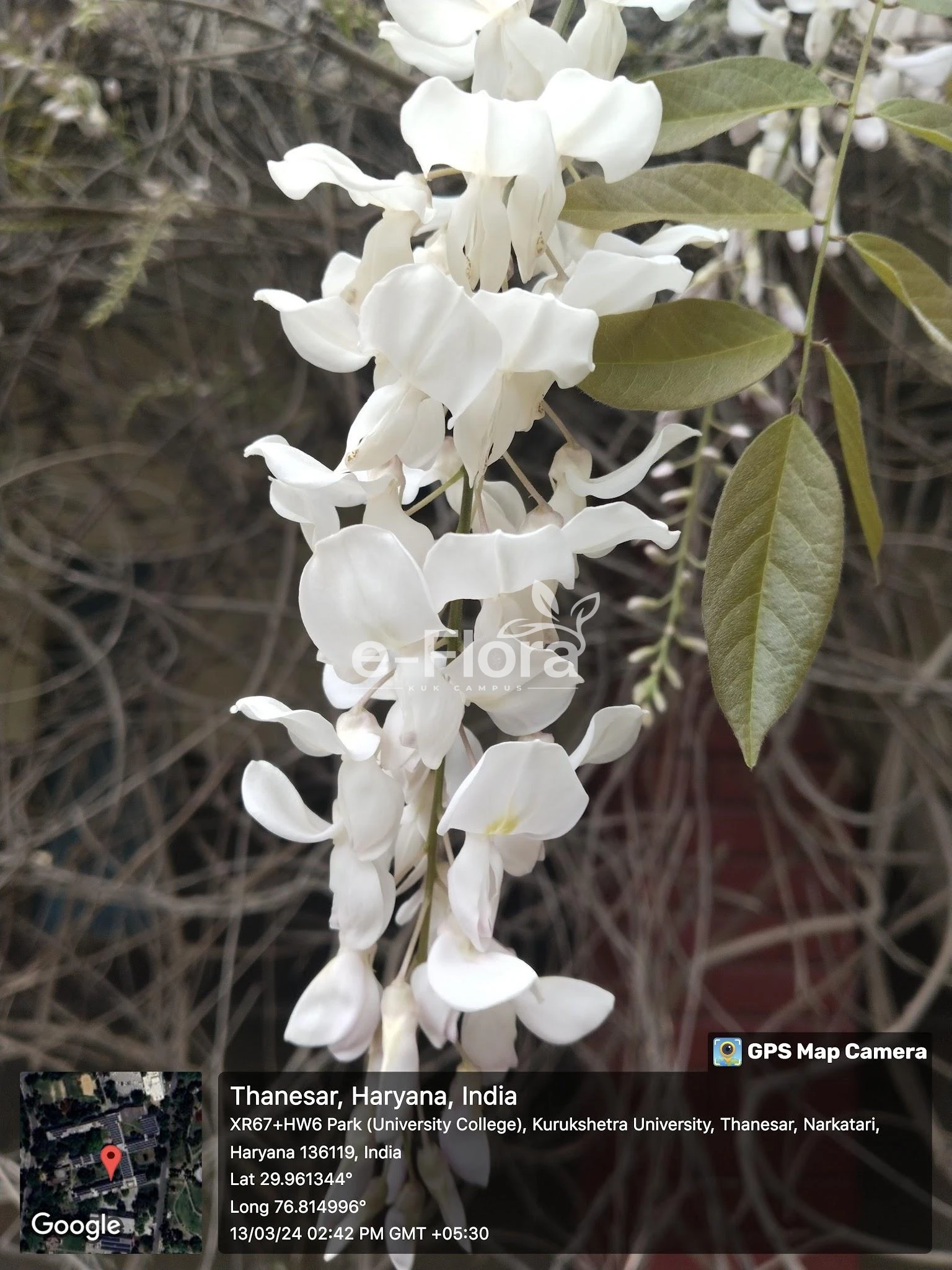
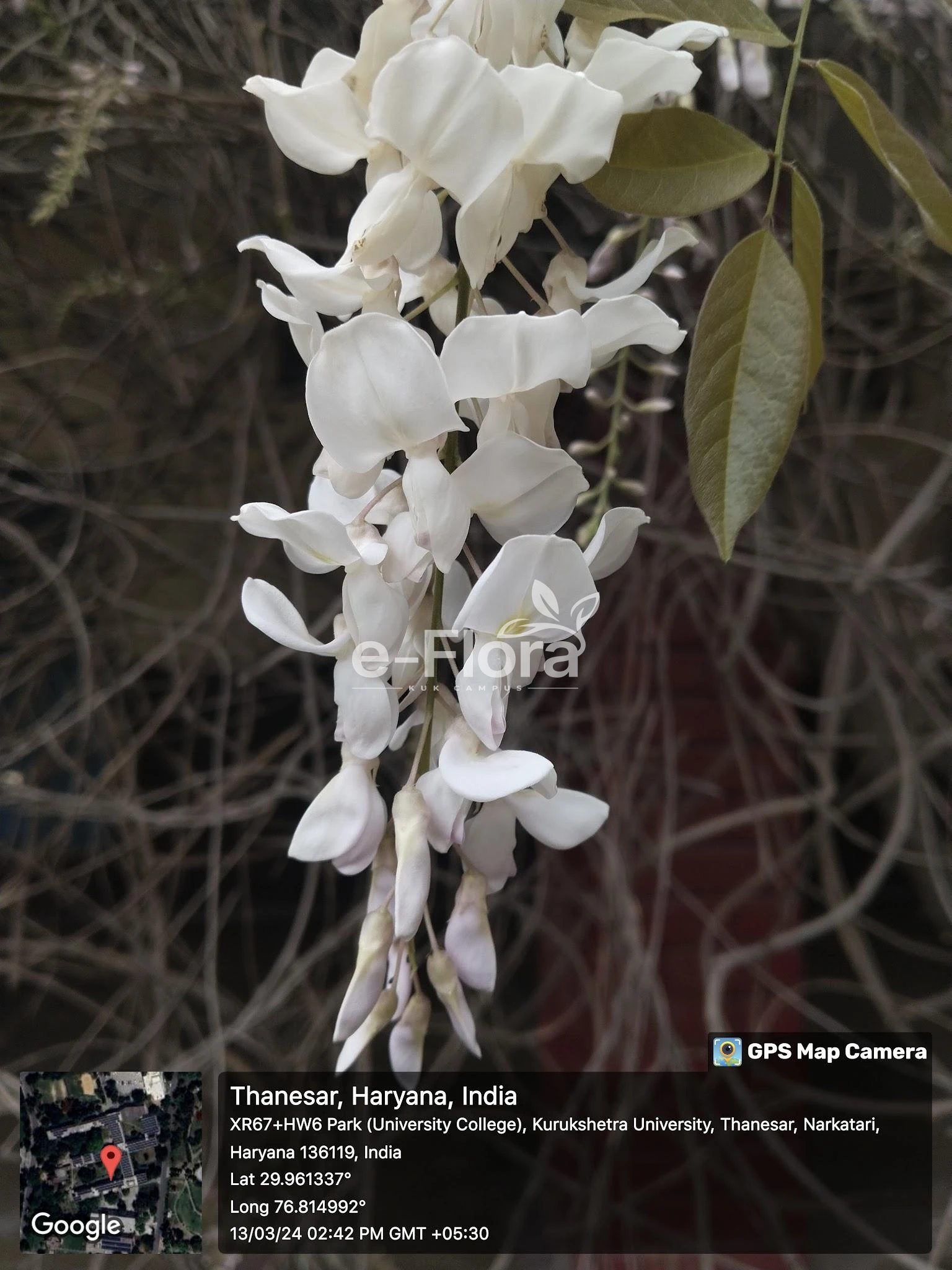
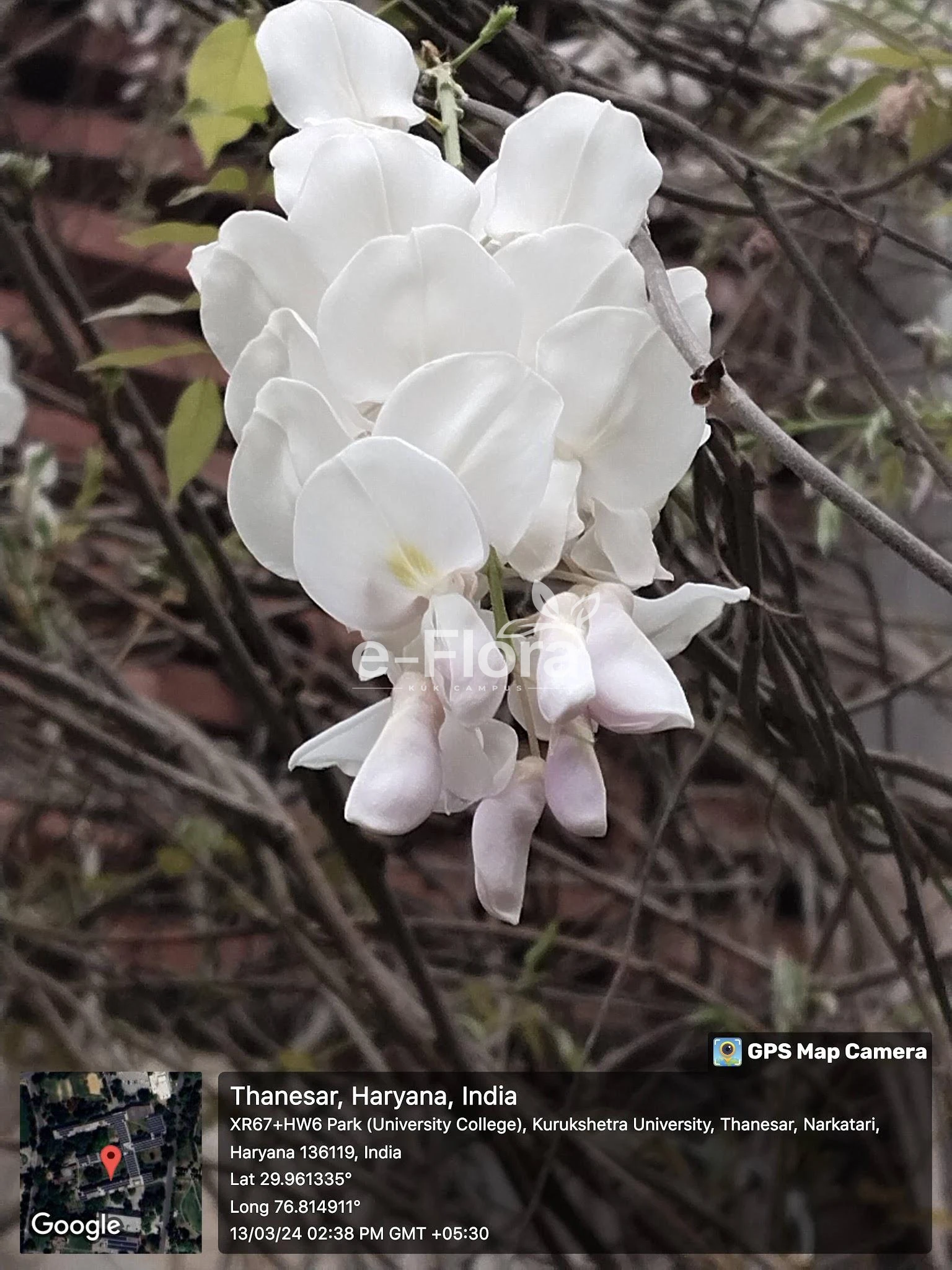
Flowers: Pendulous racemes 10-20 cm long; fragrant white pea-flowers with yellow blotch; 5 sepals, 5 petals (standard reflexed, wings/keel), 10 diadelphous stamens, superior ovary
Fruit: Flat dark brown linear pods 5-10 cm, 3-7 seeds
Uses:
- American pioneer “post locust” is an ornamental plant owing to its attractive cluster of white flowers.
- Highly invasive outside native range and forms dense thickets and suckers aggressively.
- Extremely hard rot-resistant and insect resistant wood is used for fence posts, mine timbers, outside furniture, railroad ties and decking.
- Wood also act as an excellent firewood as it burns slow.
- It is natural nitrogen fixer (symbiosis with bacteria) and has an extensive root system making it an excellent reclamation species for poor mine spoils, eroded land and hillsides.
- Monofloral dark honey (acacia honey or locust honey) is derived from fragrant flower’s nectar.
- Diluted extracts of plant are used in homeopathy to treat nausea, sore eructation (belching), heartburns, acid reflux, indigestion, gastric headaches and GERD symptoms.
- Concentrated extracts of bark, leaves and seeds are high;y toxic for human and animals.