Alternanthera brasiliana (L.) Kuntze
Vernacular name: Purple Joyweed, Brazilian Joyweed
Species Name: Alternanthera brasiliana (L.) Kuntze (syn. Alternanthera dentata (Moench) Stuchlík ex R.E.Fr.)
Family: Amaranthaceae
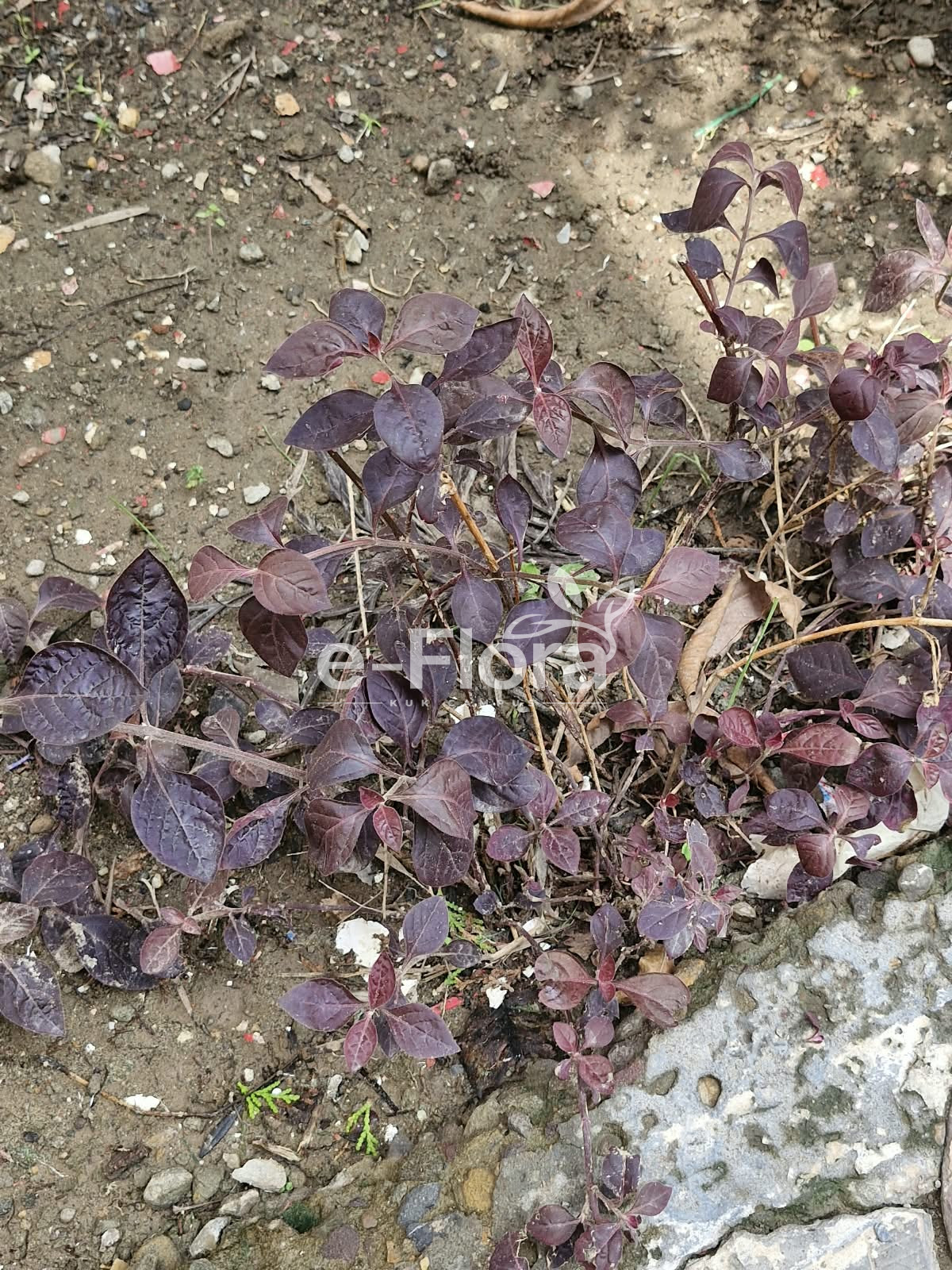
Habit: Perennial erect to spreading herb or subshrub.
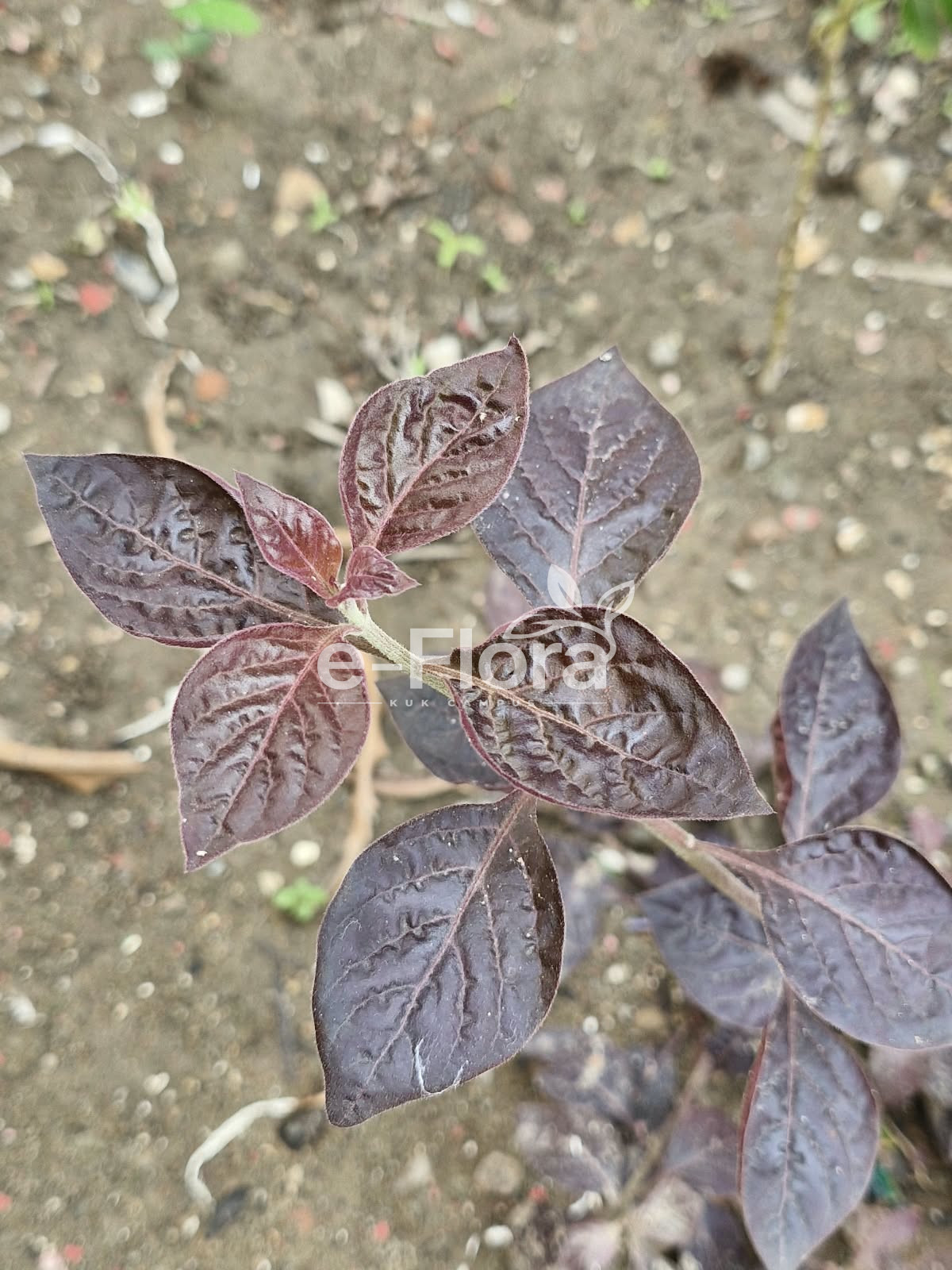
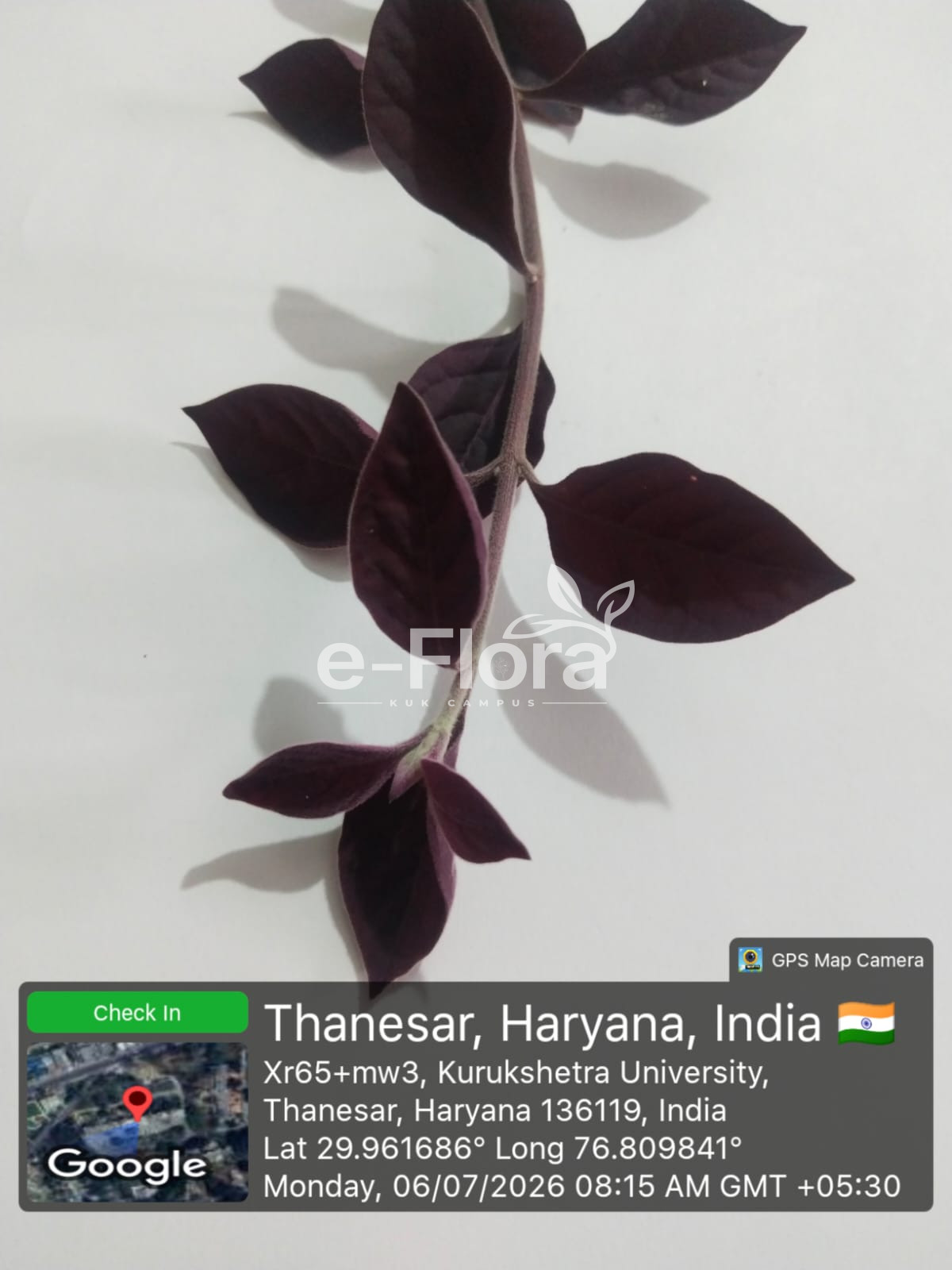
Stem: Much-branched, erect to ascending, often reddish-purple, cylindrical to slightly angular, glabrous or sparsely pubescent.
Leaf: Opposite, elliptic to obovate, entire, shortly petiolate; green to deep purple, especially in ornamental forms.
Flowering: Mainly throughout the warm and rainy seasons.
Flowers: Small, whitish, arranged in dense axillary or terminal globose heads; flowers bisexual, subtended by persistent bracts and bracteoles; perianth 5-parted; stamens usually 5, united at the base; ovary superior, one-ovuled. The generic floral characters are supported by Kew’s flora treatments.
Fruit: Small, indehiscent utricle containing a single lenticular seed.
Uses:
- Extracts of leaves are tropically applied in traditional medicines to speed up healing of cuts and sores.
- Folk medicines uses leaf infusions for their analgesic and anti-inflammatory properties to ease arthritis symptoms, soothe muscle aches and reduce swelling.
- In America, plant decoctions are used in traditional system to treat coughs, respiratory infections and digestive ailments.
- Plant can be used as antiviral agent and aphrodisiac.
- Vibrant purple and ruby foliage makes it a valuable ornamental plant, planted as border, hedges and ground cover.
- Young leaves are edible as fresh and cooked. These are used in salads, smoothies, sandwiches and soups.
- Plant can help to keep soil moist, suppress weeds and prevent erosion.