Livistona chinensis (Jacq.) R.Br. ex Mart.
Vernacular name: Chinese Fan Palm, Fountain Palm
Species Name: Livistona chinensis (Jacq.) R.Br. ex Mart.
Family: Arecaceae
Habit: Evergreen solitary palm.
Stem: Single erect trunk, 8–15 m tall, grey-brown, cylindrical, marked with prominent leaf-scar rings.
Leaf: Alternate, costapalmate (fan-shaped), 1–2 m wide, deeply divided into numerous drooping linear segments; petiole stout with spiny margins.
Flowering: Spring–summer.
Flowers: Small, creamy-yellow, bisexual, borne in large branched interfoliar panicles; perianth 6-lobed; stamens 6; ovary superior, tricarpellary.
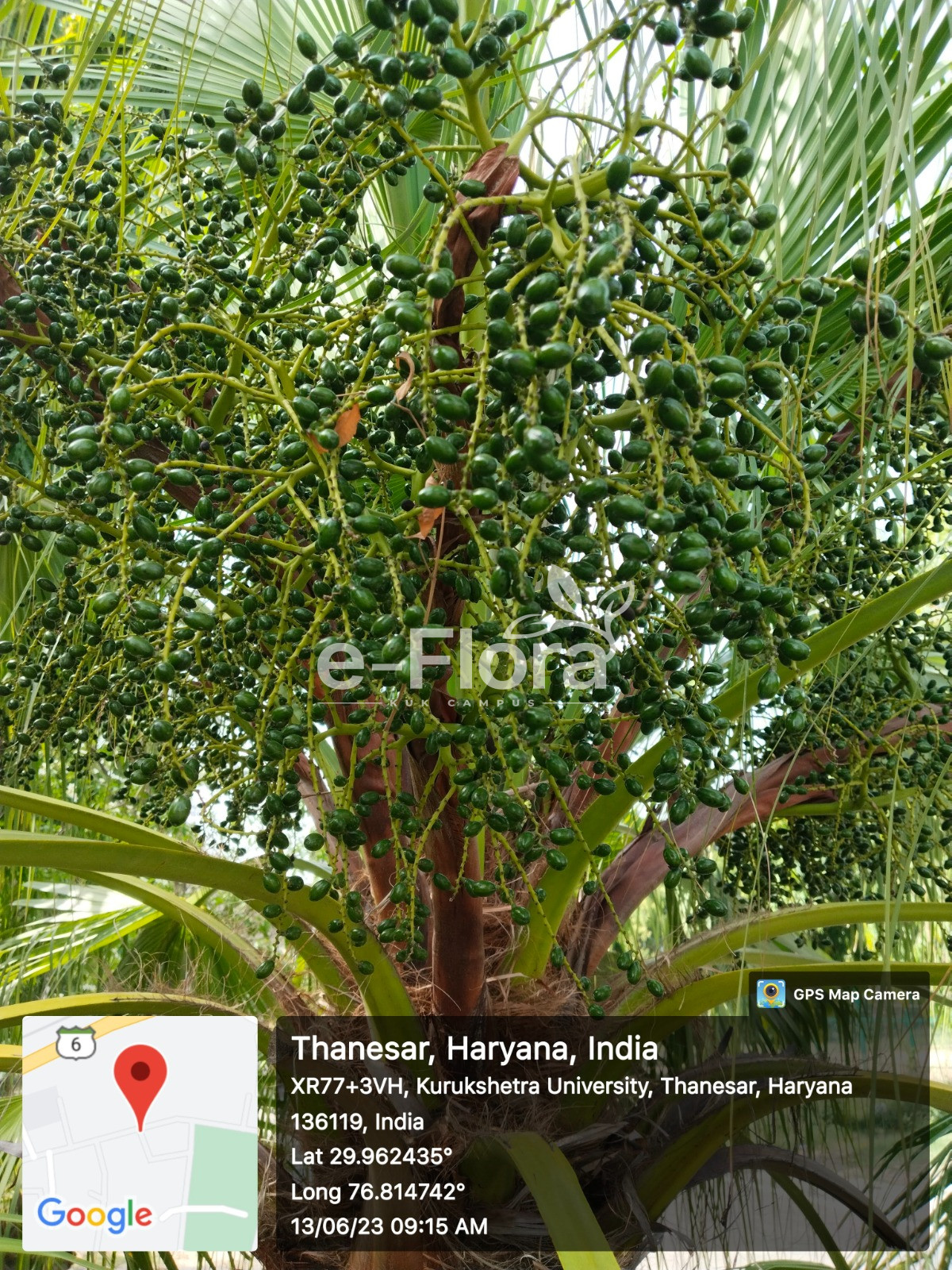
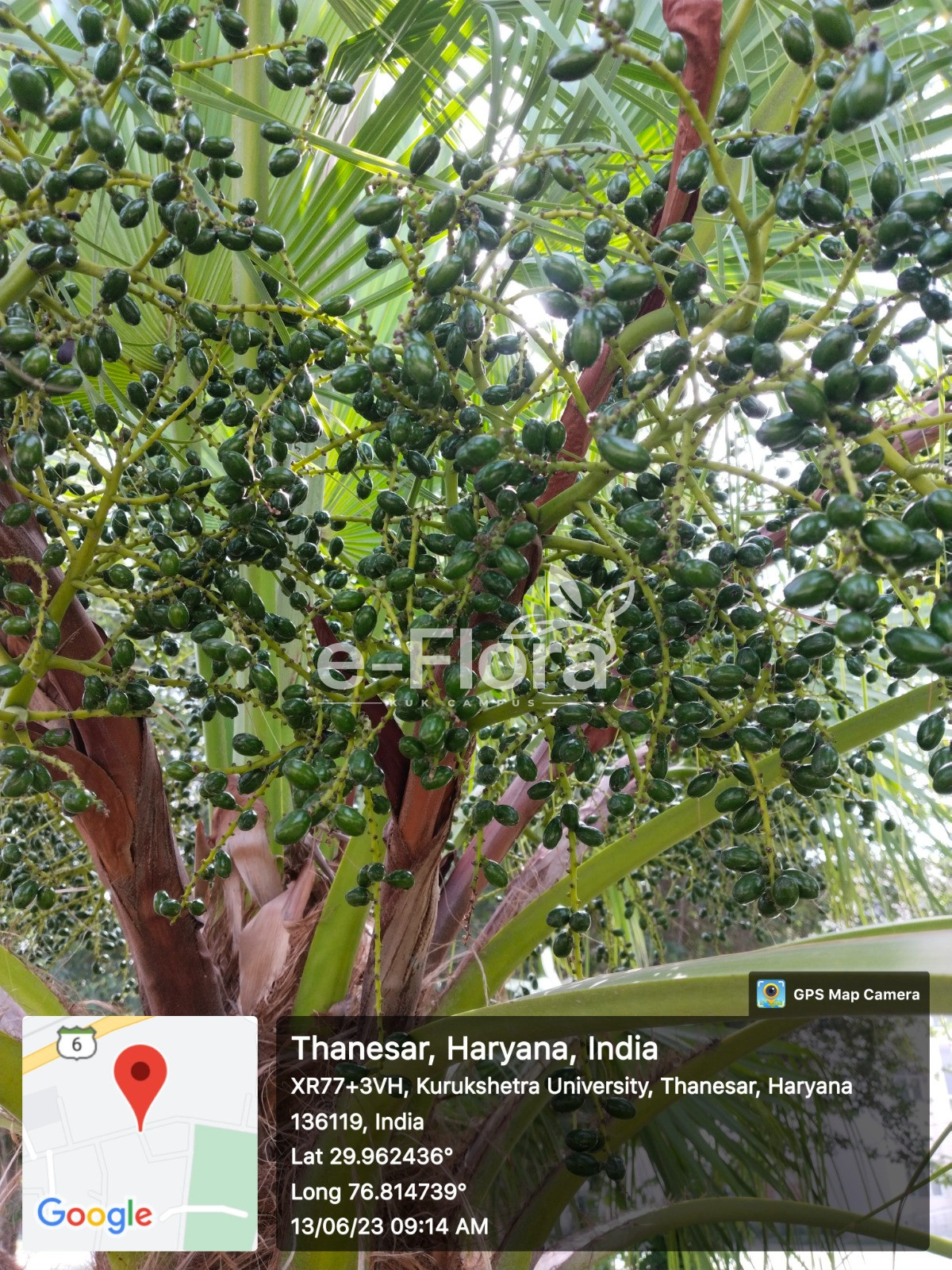
Fruit: Globose to ovoid drupe, 1.5–2.5 cm long, green turning bluish-green to black when ripe, one-seeded.
Uses:
- Seed extracts are used in traditional Chinese medicines to target various tumors and help treat specific cancers such as esophageal and nasopharyngeal cancer.
- Plant has antioxidant, hepatoprotective and anti-inflammatory properties due to the presence of bioactive compounds like flavonoids and polyphenols.
- Widely cultivated as an ornamental landscape and indoor palm because of its graceful fan-shaped foliage. Suitable for avenues, gardens, containers, and urban landscapes, and tolerant of shade and coastal conditions.
- Mature leaves are traditionally used for thatching, weaving hats, baskets, traditional raincoats, hand fans (pukuishan) and brooms.
- Ripe fruits are edible and has a sweet-savory nutty taste. Fruit can be consumed fresh or cooked with spices or blended into chutneys.