
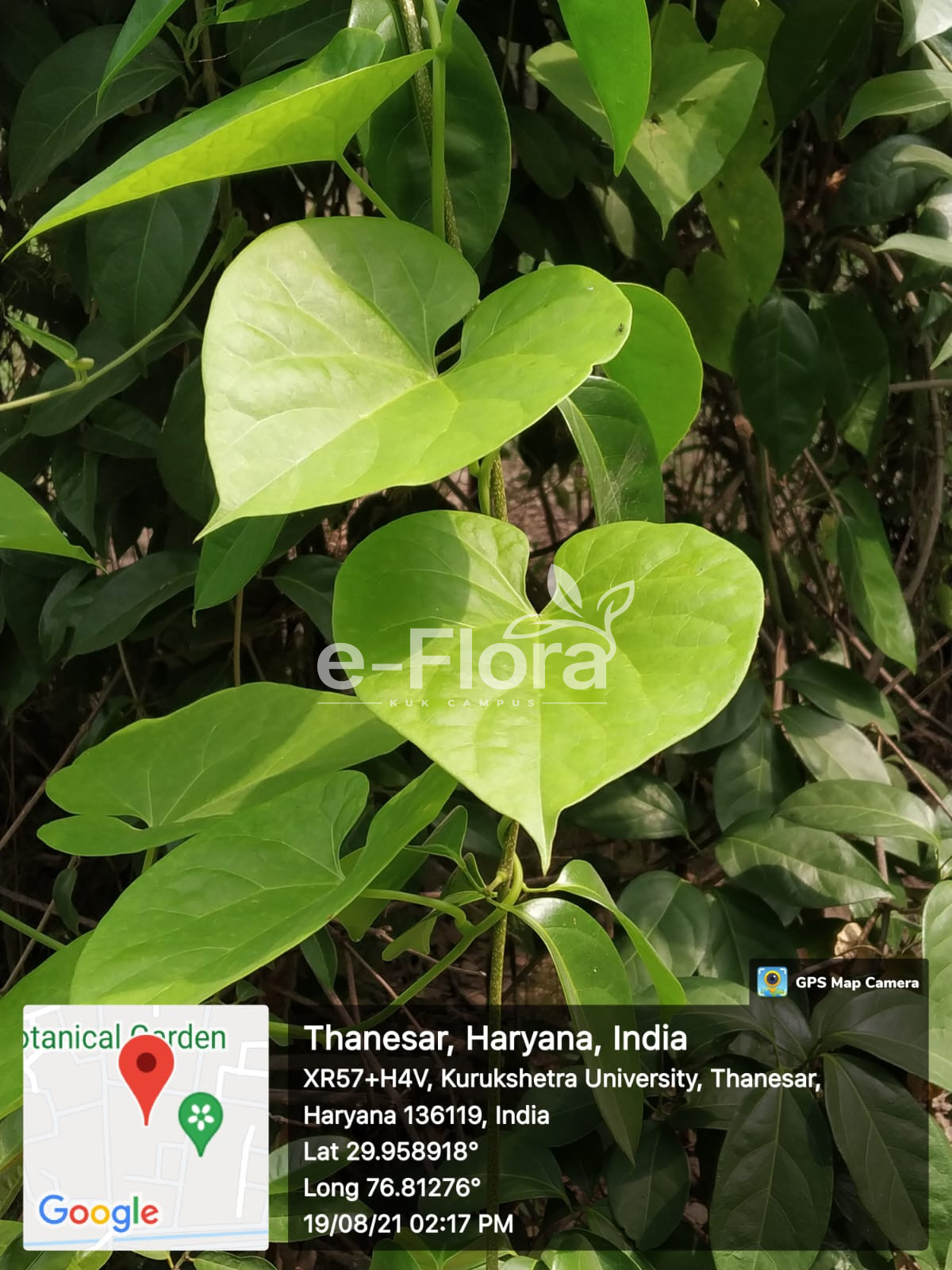
Tinospora cordifolia (Willd.) Hook.f. & Thomson
Vernacular name: Giloy, Guduchi, Amrita (Hindi: गिलोय)
Species Name: Tinospora cordifolia (Willd.) Hook.f. & Thomson
Family: Menispermaceae
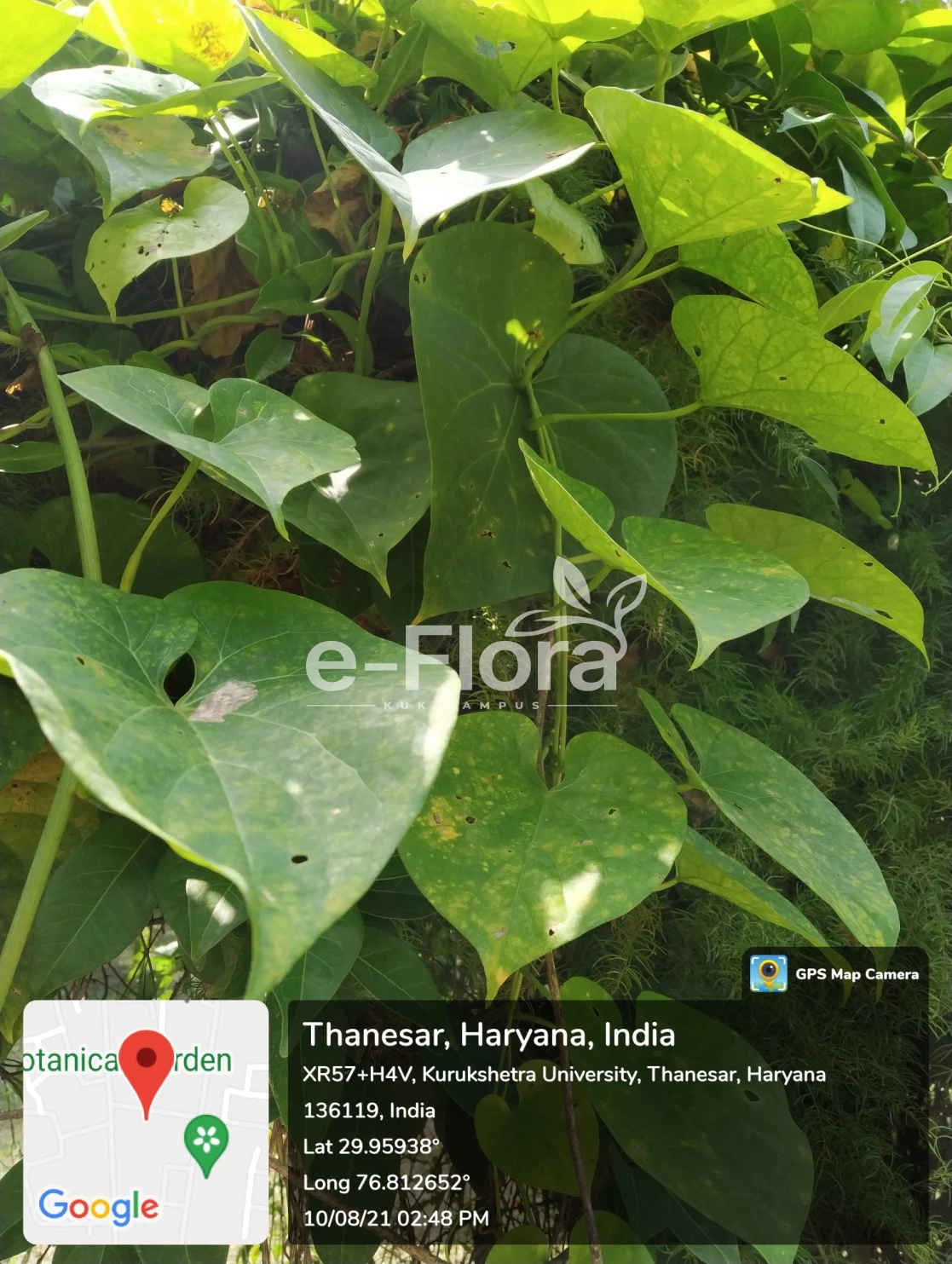
Habit: Large glabrous deciduous climbing shrub
Stem: Slender aerial roots; longitudinally ridged; cream-colored heartwood
Leaf: Cordate, peltate, membranous; 5-7 basal veins
Flowering: April-June
Flowers: Axillary racemes; greenish-yellow unisexual; 6 sepals in 2 whorls; no petals
Fruit: Smooth ovoid drupe, scarlet when ripe
Uses:
- Giloy is used in traditional or folk practices to reduce intermittent, chronic and viral fevers, relieve symptoms of hay fever (rhinitis), manage chronic coughs and asthma.
- Giloy helps in managing blood sugar levels, improves insulin sensitivity, protect liver functions, reduce acidity (helps with acid reflux) and promote gut health.
- Tropical application of poultices of Giloy leaves and roots helps in managing arthritis, eczema like skin conditions, burning, itching and reducing inflammations.
- Giloy also exhibits properties like antineoplastic and hypolipidemic.
- Oil extracted from seeds is used in the treatment of tuberculosis of the lungs.
- The dry stems powdered after drying in the shade are used to reduce high blood pressure and manage cholesterol levels.
- It helps to remove toxins from the body and treating gout, gonorrhea and syphilis.
- Giloy is used as immunomodulator (Rasayana) to boost immunity and vitality and popularly known as “Amrita” (nectar of immortality), one of Dashamoola, Charaka’s fever remedy, COVID-19 immunity booster.
- Accoding to Hindu beliefs, plant is believed to be sacred to Goddess Lakshmi.