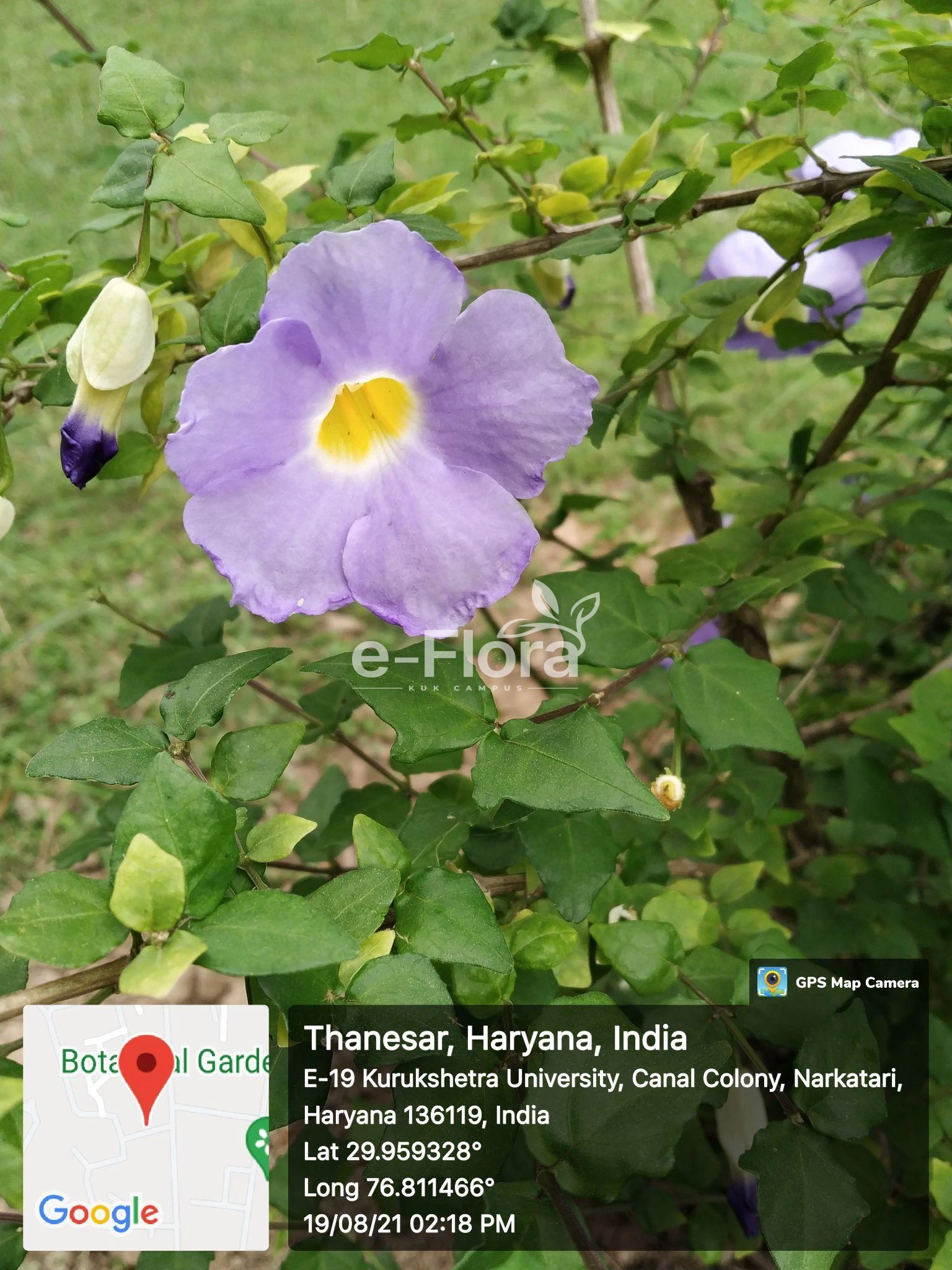
Thunbergia grandiflora (Roxb. ex Rottl.) Roxb.
Vernacular name: Sky vine, Bengal Clockvine, Blue Trumpet Vine
Species Name: Thunbergia grandiflora (Roxb. ex Rottl.) Roxb.
Family: Acanthaceae
Habit: Vigorous evergreen twining climber (15-20 m)
Stem: Woody at base; robust, deep taproot system
Leaf: Opposite, cordate-triangular to ovate, rough textured; toothed/lobed margins
Flowering: Summer-autumn
Flowers: Axillary pendulous racemes; trumpet-shaped lavender-blue (6-8 cm diam.); pale yellow throat; paired leafy bracts
Fruit: Rounded beaked capsule (2-5 cm); explosive seed dispersal
Uses:
- Leaf and root poultices and decoctions are used in traditional medicines to treat snakebites, wounds, inflammation, stomach issues and cramps.
- Folk practices uses bark decoction for treating diarrhea, and other parts of plant in various forms to treat malaria, diabetes and rheumatism.
- Leaves of sky vine are eaten as vegetables in some regions like Assam, India, whereas some regions uses leaves as fodder for domestic animals.
- Parts of fruit are used as natural container or vessel in some local cultures.
- It is considered sacred thus planted in temples, also a popular choice for fences, arbors, trellises and walls due to its large violet-blue flowers.
- It is an aggressive tropical invasive species owing to its dense growth and root structure that helps in stabilizing soil and preventing soil erosion.
- Flowers are good source of sucrose rich nectar that attracts pollinators like humming bird, butterflies, bees and sunbirds.