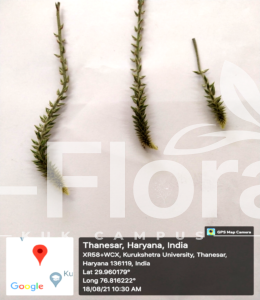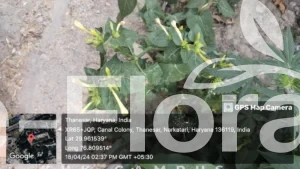
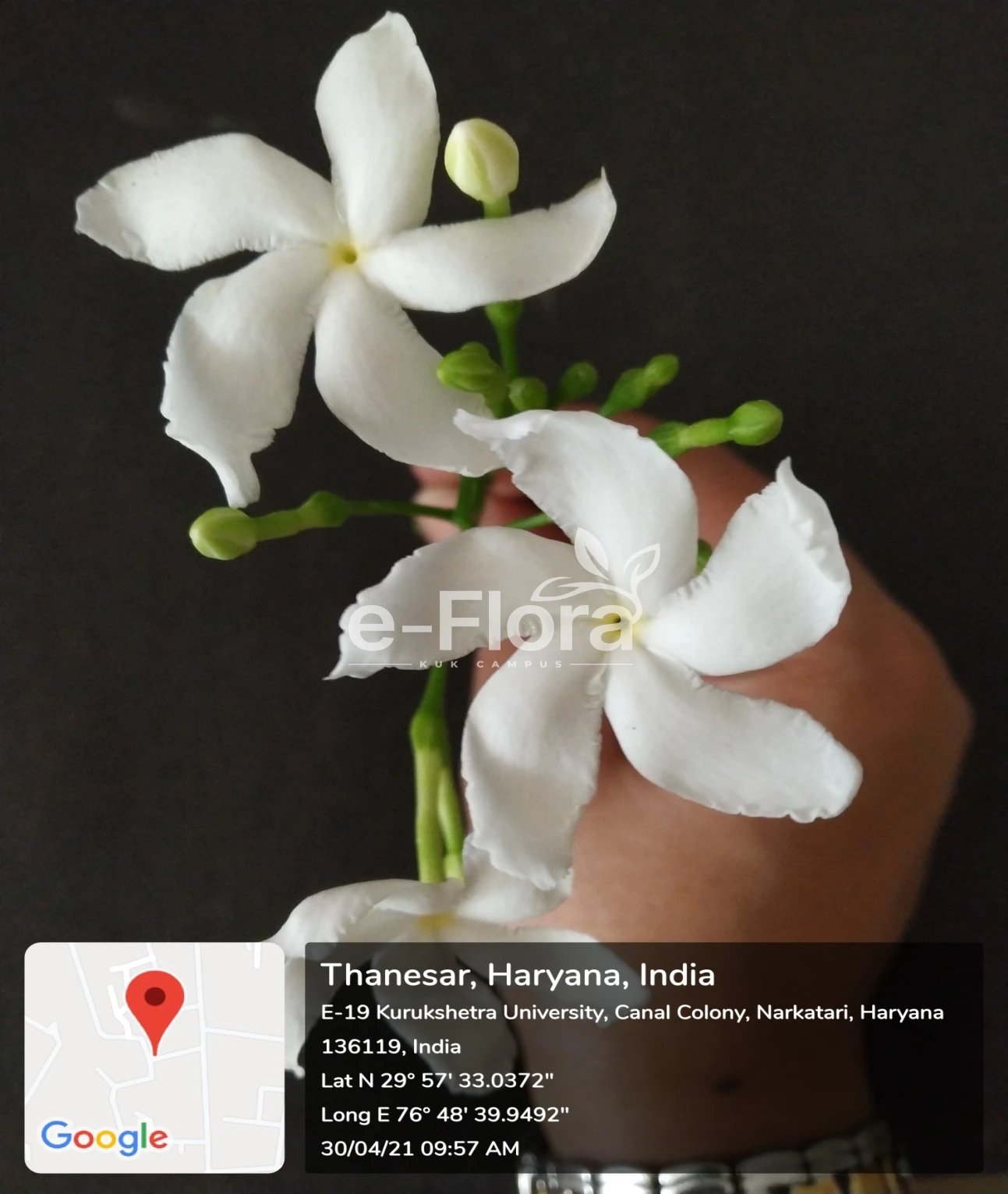
Tabernaemontana divaricata (L.) R. Br. ex Schult.
Vernacular name: Chandni, Moonbeam, Crepe Jasmine, Crape Jasmine (Hindi: चांदनी)
Species Name: Tabernaemontana divaricata (L.) R. Br. ex Schult.
Family: Apocynaceae
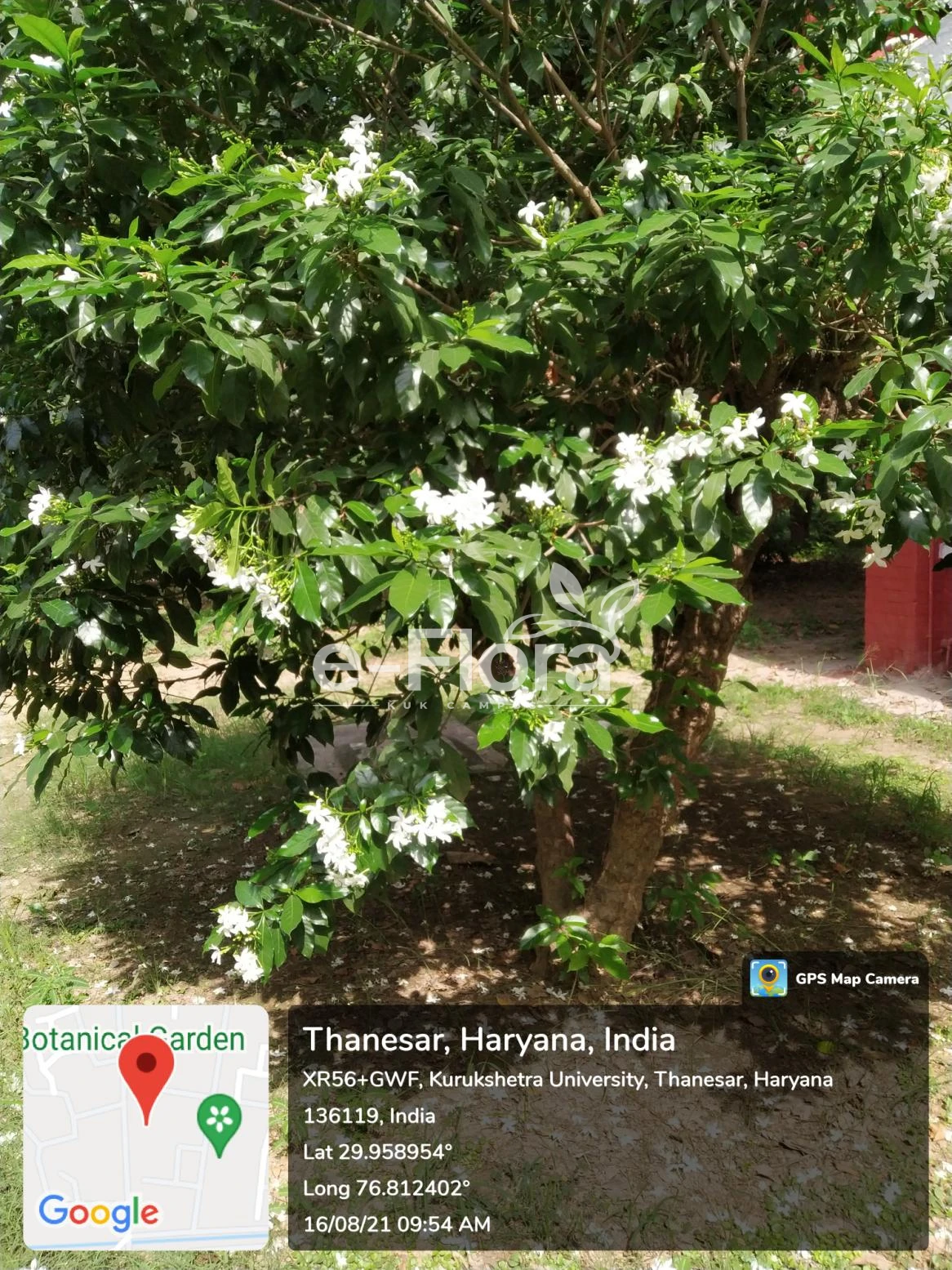
Habit: Evergreen shrub (1.5-6 ft tall)
Stem: Woody, branched, milky latex
Leaf: Opposite, glossy dark green, elliptic-obovate (6-12 × 2-5 cm), acute
Flowering: March-October (peak summer-monsoon)
Flowers: Terminal cymes; white pinwheel salverform; 5 spreading petals (2-3 cm diam.); 5-lobed green calyx; 5 included stamens; superior ovary; intensely fragrant (night)
Fruit: Paired green follicles splitting to reveal black seeds
Uses:
- Milky latex of plant is externally applied to treat corns wheresas bark is used in the treatment of scabies and syphilis. Plant contains an indole alkaloids (voacangine coronaridine) and has anti-cancerous, anti-inflammatory, anti-diabetic, antimicrobial, anti-infertility, antioxidant and analgesic properties.
- Roots have astringent properties and can also be used to treat snakebite, scorpion poison and psychosis.
- Ayurveda uses roots and leaves of this flowering plant to soothe toothaches, headaches and rheumatic pain.
- Tropical application of milk latex extracted from leaves and stems of this plant is used to prevent inflammation caused due to skin infection, wounds and minor cuts.
- Juice of leaves and paste of roots are mixed with oil or water and use to treat eyes related problems like conjunctivitis or corneal opacities.
- Leaves and bark are used to make decoctions that have antipyretic properties and also help to treat coughs and dysentery.
- Commonly cultivated everywhere in gardens for its beautiful white pinwheel-shaped flowers and used by malis for garland. Plant is also used as hedges and boarders.
- Flower is also known as “Nandivardhana” in India and is used as offering for worship as believed to symbolize purity.
- The wood is burnt as an incense and used in perfumery. Wood is also used to make charcoal.
- Seeds are used to derive a rich red dye.