Psidium guajava L.
Vernacular name: Guava, Amrud (Hindi: अमरूद)
Species Name: Psidium guajava L.
Family: Myrtaceae
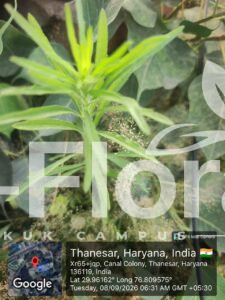
Habit: Small evergreen tree
Stem: Crooked branches, light reddish-brown bark peeling in flakes
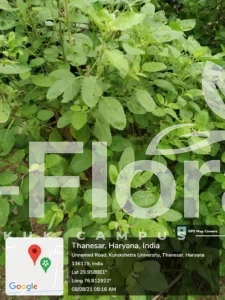
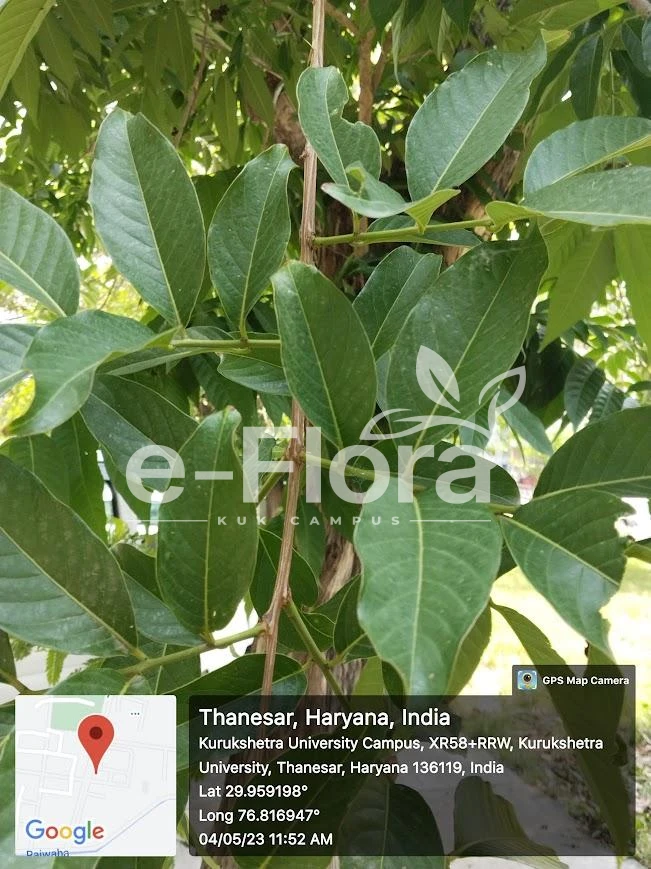
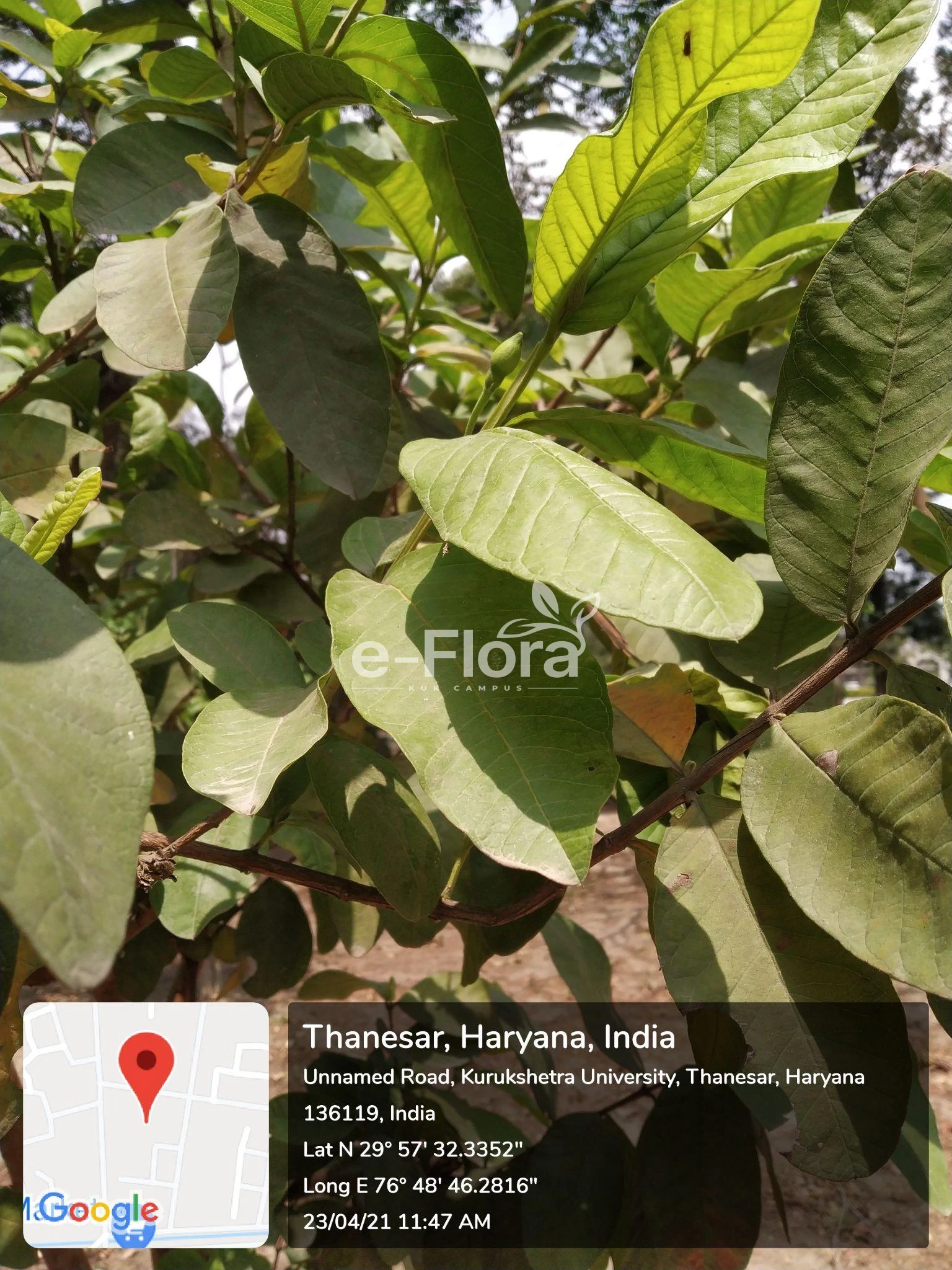
Leaf: Opposite, elliptic-oblong, leathery, glossy green above, hairy below
Flowering: Year-round, peaks rainy season (June-October)
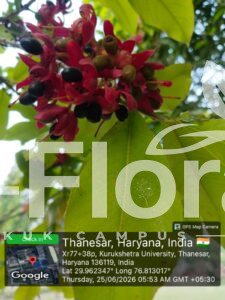
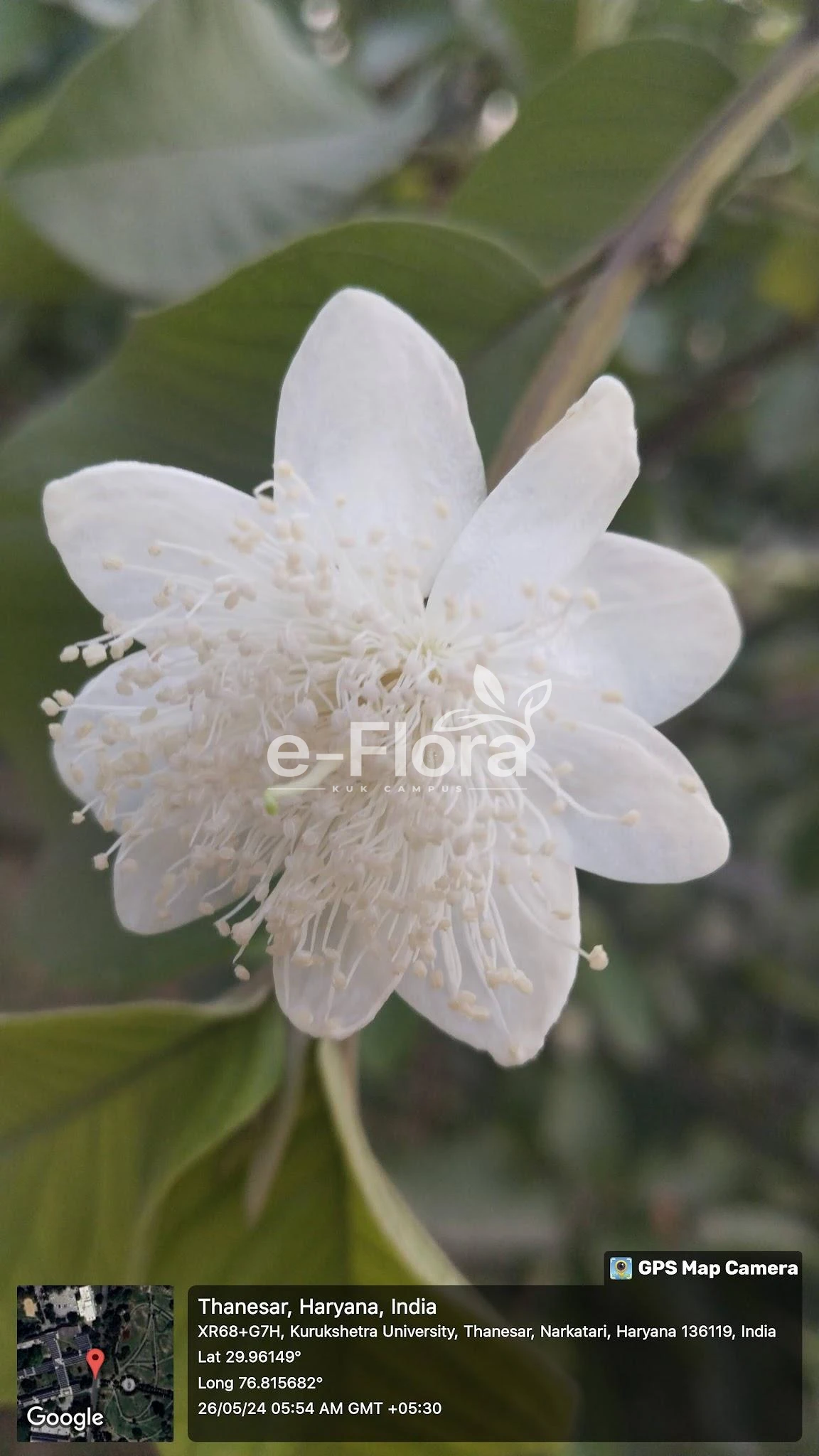
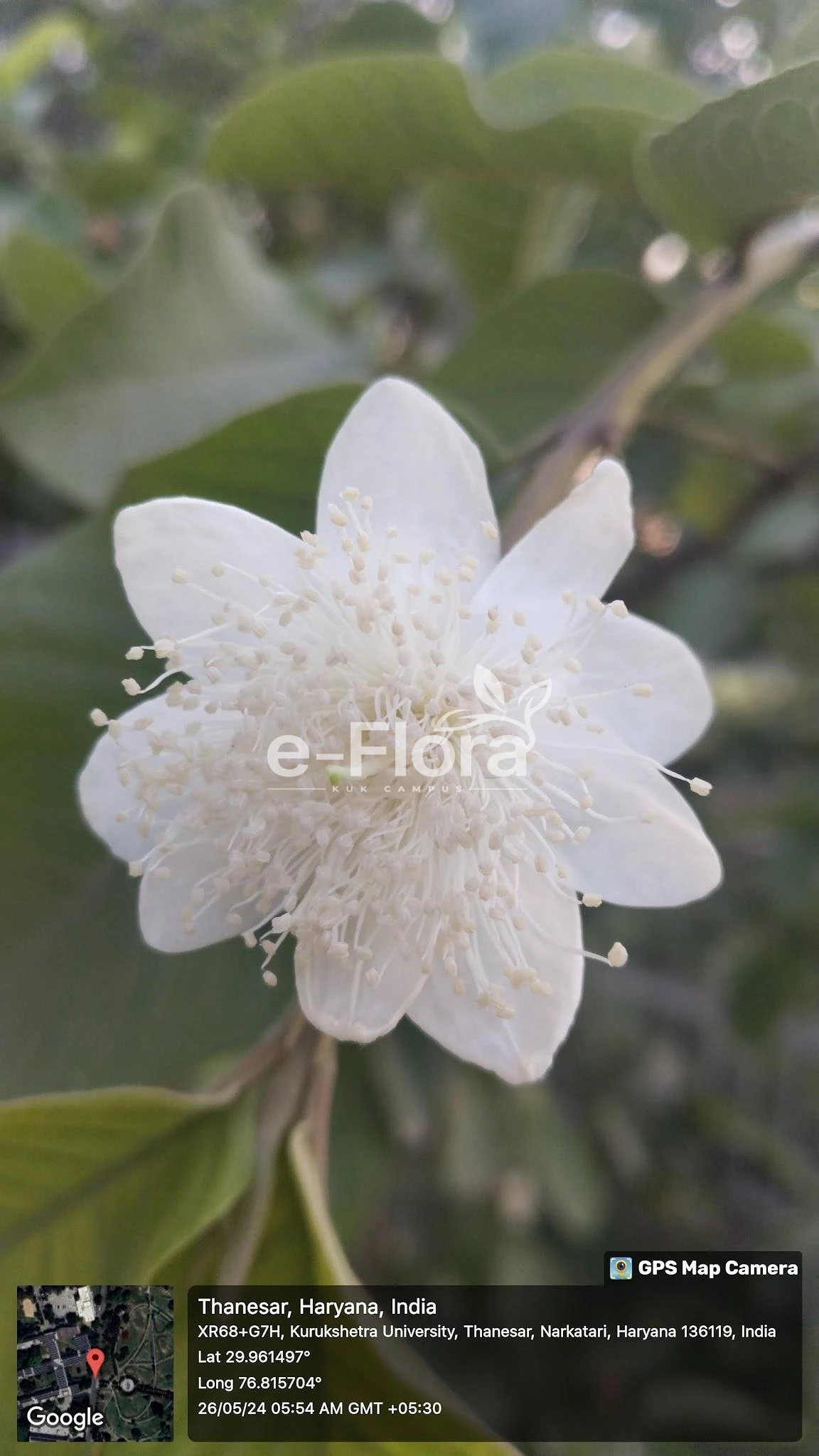
Flowers: Axillary 1-3 flowered cymes; white fragrant petals, numerous stamens, capitate stigma, green calyx splitting irregularly into 2-4 lobes
Fruit: Ovoid/pear-shaped berry, yellow-green skin, juicy white-pink pulp
Uses:
- Leaves decoction is used around Asia, Africa and Latin America used to treat cough, diarrhea, dysentery and stomach pain.
- Wood and leaf extracts are used to make sticks that helps to ease toothaches, oral ulcers and swollen gums.
- Leaves can be brewed into teas that can help to manage blood sugar levels as leaves has antidiabetic properties.
- Poultice of leaves can be applied tropically on wounds, sores and skin conditions.
- Naturalized pantropical weed and is drought-tolerant.
- Fruit is rich in Vitamin C, minerals, calcium, iron, phosphorus, fiber and antioxidants and can be eaten fresh and use to make juice, jam and jellies.
- It is known as “Poor man’s apple” in India and it originated in Central American.
- Wood is resistant to insects and fungi and used famously for smoking meat (in Hawaii) and light construction and roof trusses (in Nigeria).
- Essential oil is used in cosmetic industry due to its antioxidant property in shampoos and skincare products.
- Animal fodder can be prepared with guava leaves and by-products of fruits.