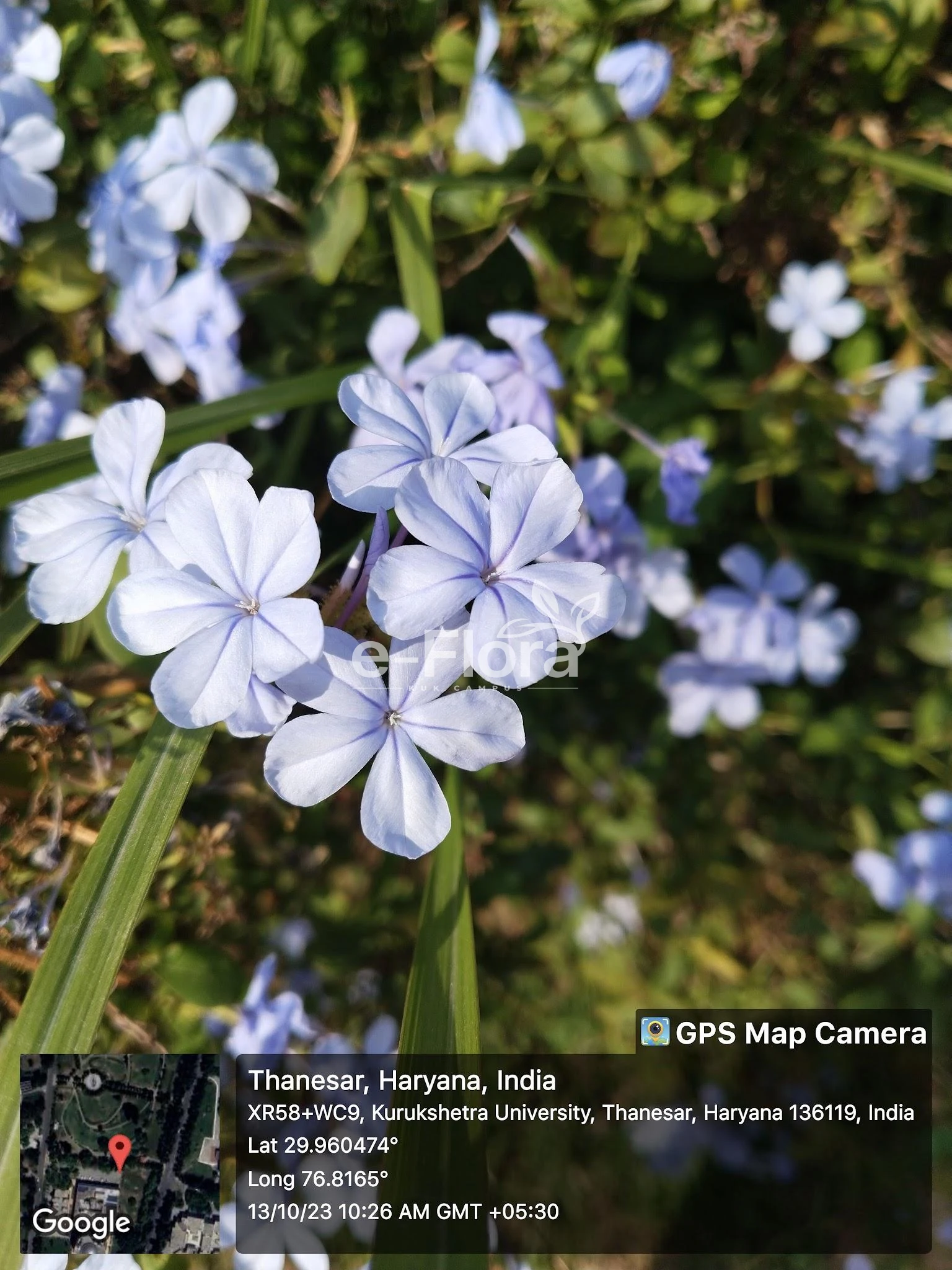
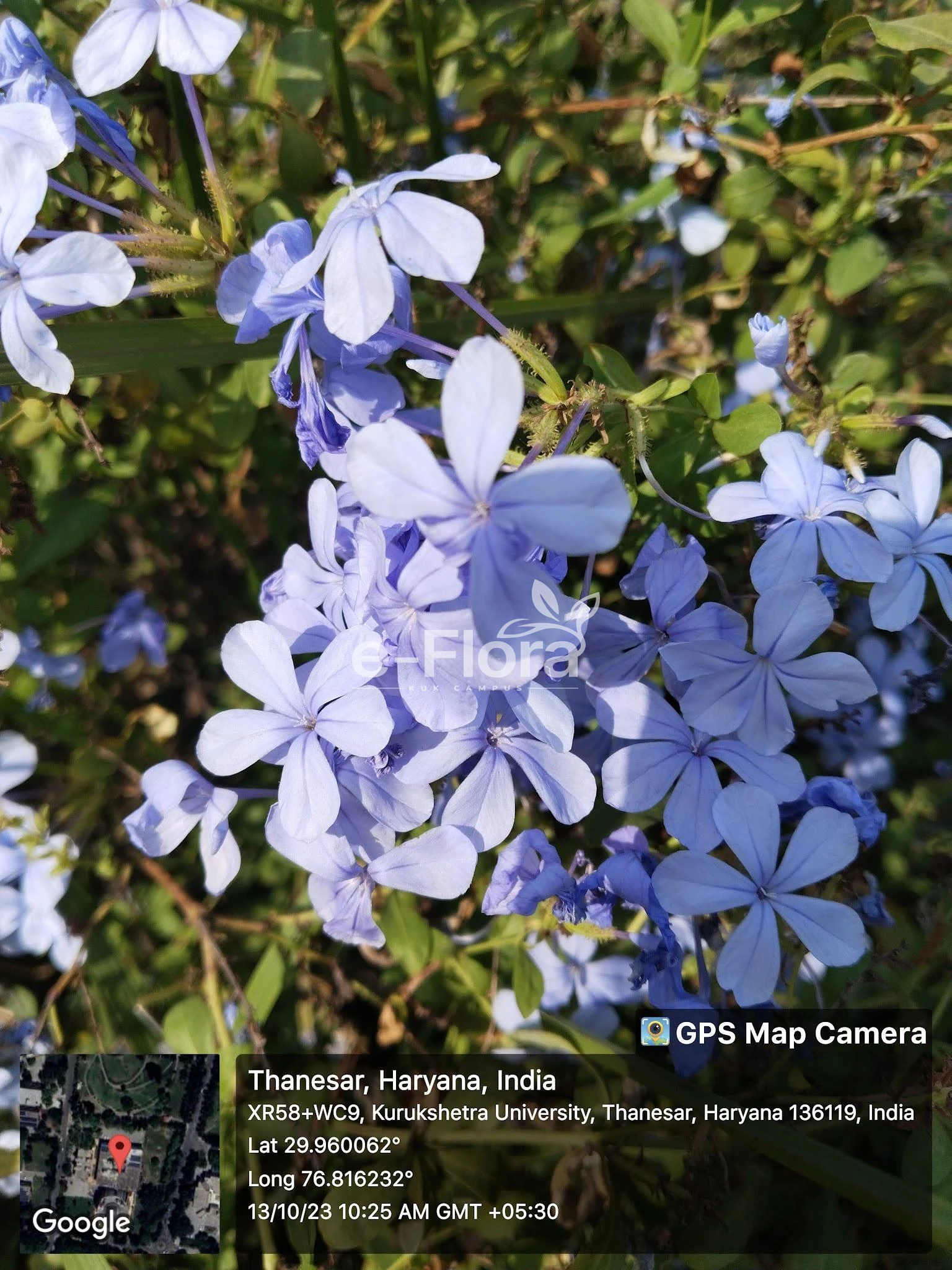
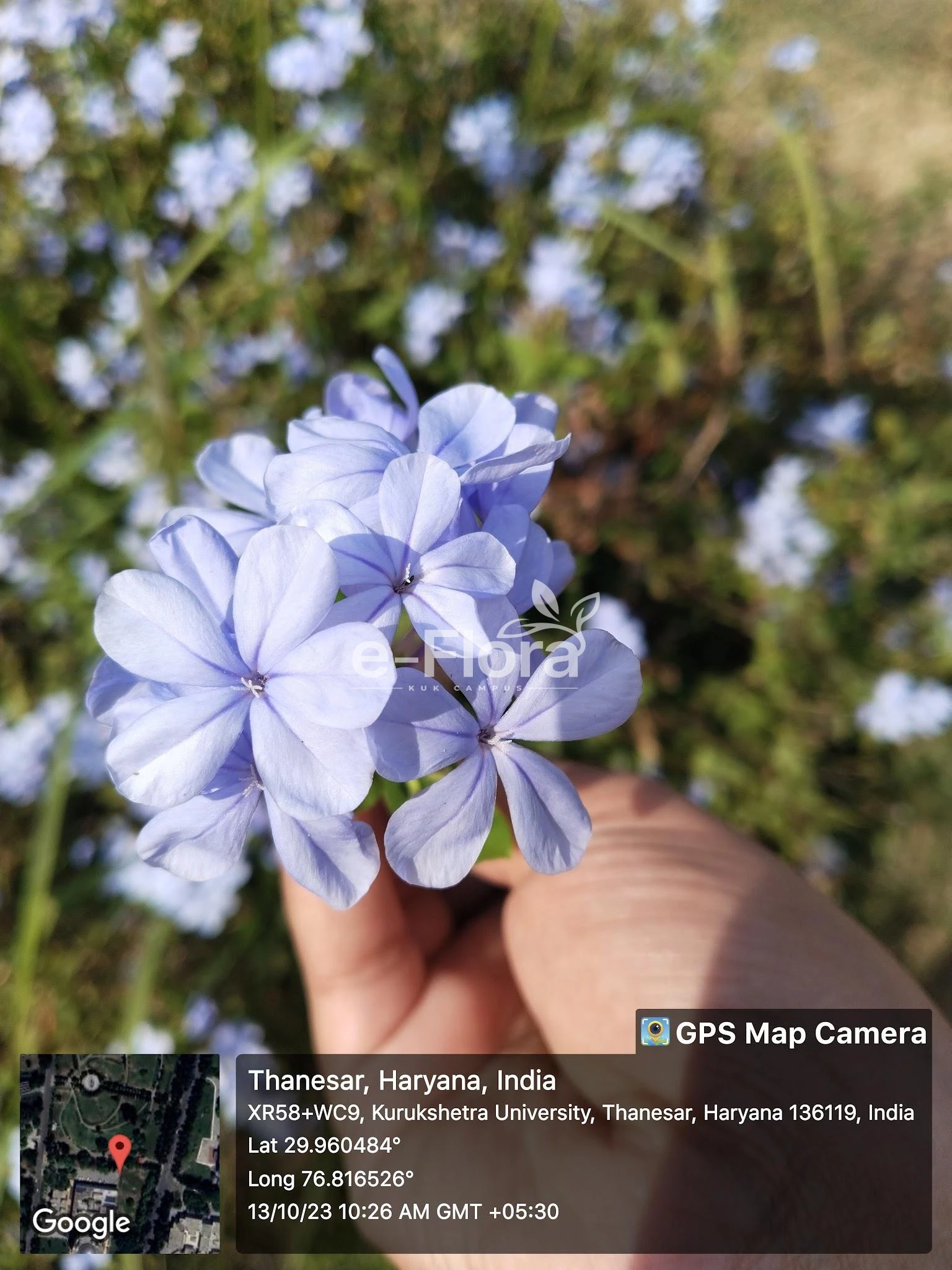
Plumbago auriculata Lam.
Vernacular name: Cape leadwort, Blue Plumbago (Hindi: नीला चित्रक)
Species Name: Plumbago auriculata Lam.
Family: Plumbaginaceae
Habit: Evergreen scrambling shrub/vine
Stem: Long slender scandent 2-6 m tall, hairless, new growth bright green.
Leaf: Alternate oblong 2-5×1-2 cm, glossy green above, greyish scales below, auriculate (ear-shaped) clasping winged petiole base.
Flowering: Summer-autumn (nearly continuous in tropics)
Flowers: Terminal racemes 10-20 cm; calyx 5-parted glandular-pubescent 1 cm (elongating), 5 pale sky-blue petals 1-1.5 cm obovate spreading, 5 stamens (anthers 2-locular dorsifixed), superior 1-locular ovary 5-styled.
Fruit: Cylindrical 5-valved capsule 1.5 cm enclosed in persistent calyx.
Uses:
- Roots has a derivative Plumbagin that has antitumour property. Traditionally, root and leaf extracts are applied to soothe psoriasis, warts and eczema.
- Poultice of crushed leaves has antiseptic property that is applied externally applied on wounds to stop bleeding and accelerate tissue repair.
- Analgesic property of root powder that helps with joint inflammation, back pain and toothaches.
- Root decoctions can be helpful with digestive and respiratory issues and has antipyretic property.
- It is an ornamental plant grown for its vibrant blue, violet and white nectar- rich flowers as climbing vine and sprawling hedge that attracts butterflies, bees and hummingbirds (pollinators).
- It helps with soil conservation by preventing soil erosion and stabilizing slopes with extensive and deep roots.
- Natural fabric dyes are yielded from leaves and flowers that can give gold, yellow or beige colour depending upon mordant usage in textile industry.
- Root are used by tribes tom extract a grey-blue sap that is used in temporary tattoos.
- Plumbagin can be toxic and vesicant if mishandled.