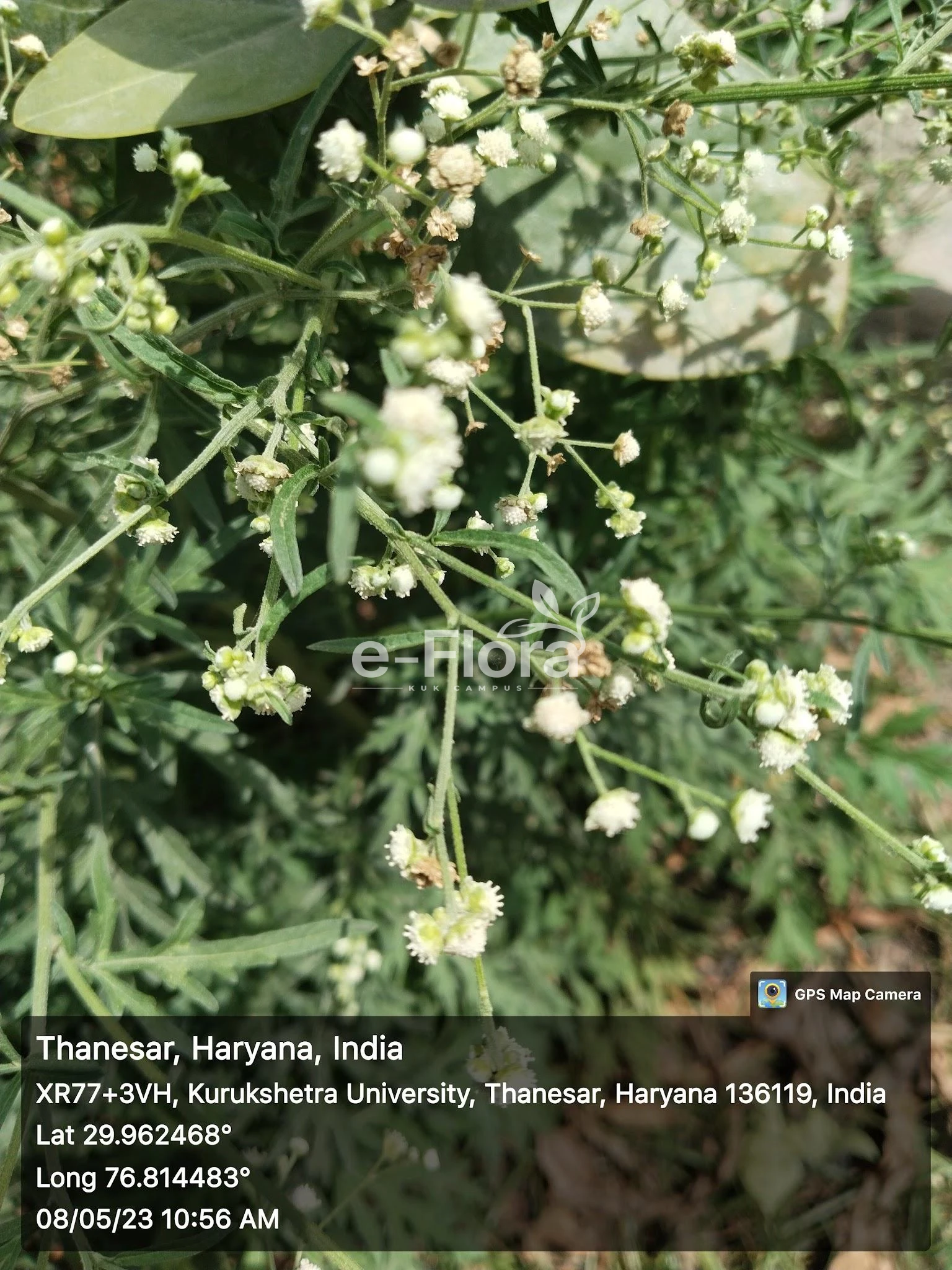
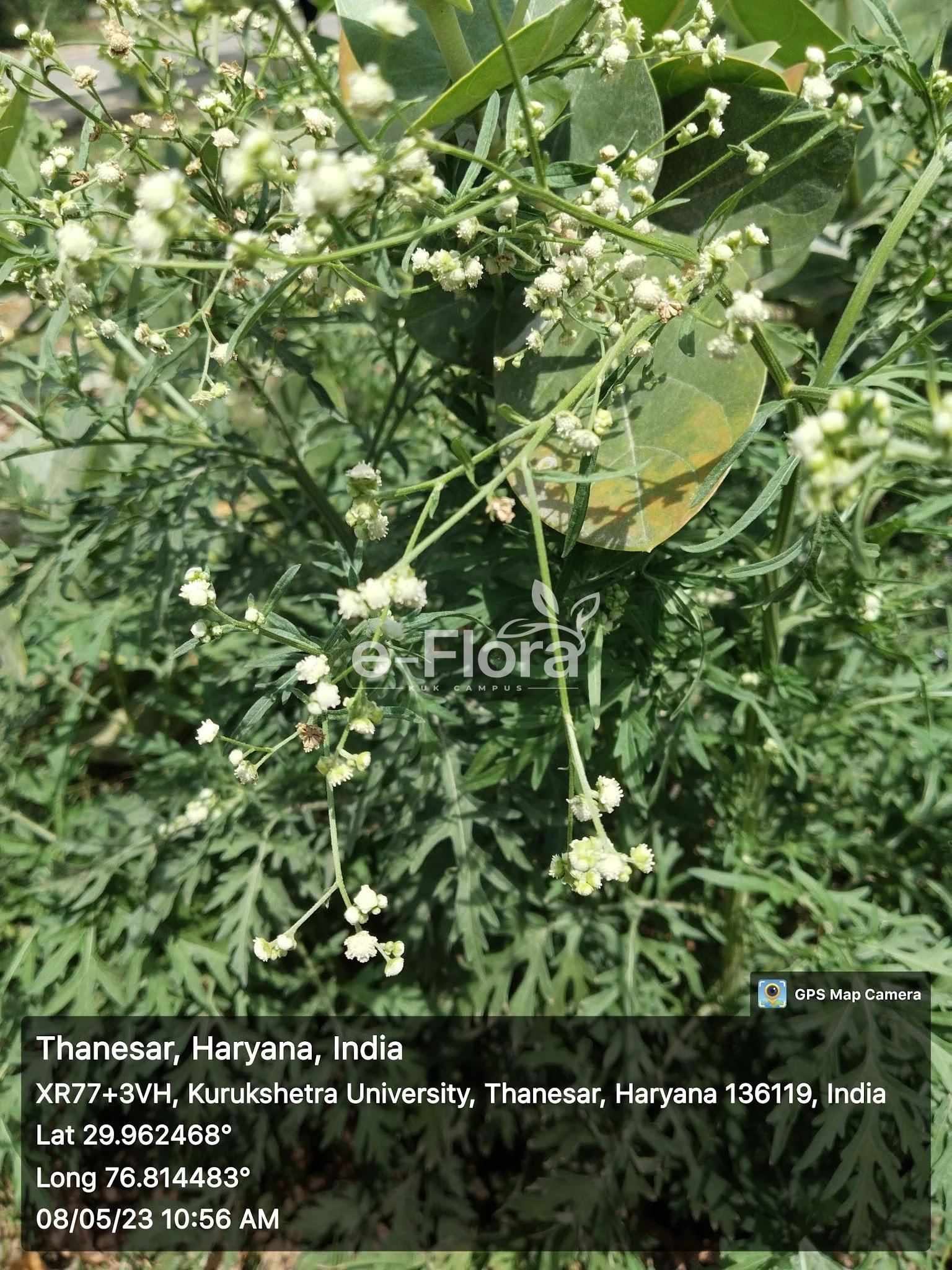
Parthenium hysterophorus L.
Vernacular name: Congress grass, Gajar Ghass, Feverfew, Whitetop Weed (Hindi: गajar danda)
Species Name: Parthenium hysterophorus L.
Family: Asteraceae
Habit: Erect annual herb, 30-180 cm tall
Stem: Erect, branched, striate, hairy, green to purplish
Leaf: Alternate, pinnatisect, 3-30 cm long, deeply lobed, covered with white hairs
Flowering: Throughout year, mainly rainy season (June-October)
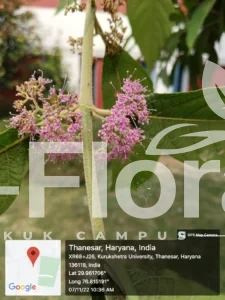
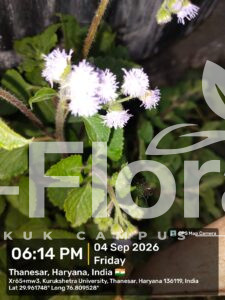
Flowers: Terminal capitula 3-5 mm diam.; 5 white ray florets, many yellow disc florets
Fruit: Achene 2 mm, dark brown, ribbed
Uses:
- Leaf decoction is used for fever, diarrhea and wounds.
- Anti-inflammatory and antioxidant extracts contains flavonoids and sesquiterpenes and have hypoglycemic potential.
- In traditional medicines, poultices of extracts that have anti-inflammatory and analgesic properties and are applied externally to alleviate rheumatic pain, muscular aches and joint swelling.
- Due to antibacterial property of flower pastes and leaf essential oils are applied externally to treat fungal infections, skin rashes and wounds.
- Zinc Oxide Nanoparticles (ZnO NPs) is synthesized from bioactive compounds of plant that is under study for its anti-cancerous and antibacterial properties.
- Composted biomass can serve as an effective soil fertilizer.
- Extracts have allelopathic properties that help in synthesizing natural insecticides and weed suppressants.
- Plant can reduces crop yields.
- Parthenin is toxic and causes contact dermatitis or other allergies.
- Methane-rich biogas can be generated by fermenting lignocellulosic biomass.
- It is native to America and is worst invasive plant in India and Australia.
- Waste of plant when treated with acid can be used as biosorbent to extract heavy metals and dyes (methylene blue) from wastewater.