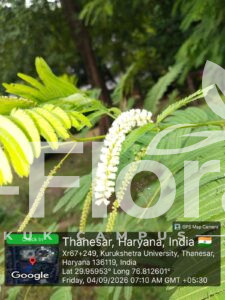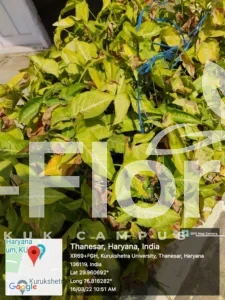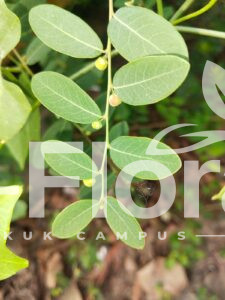
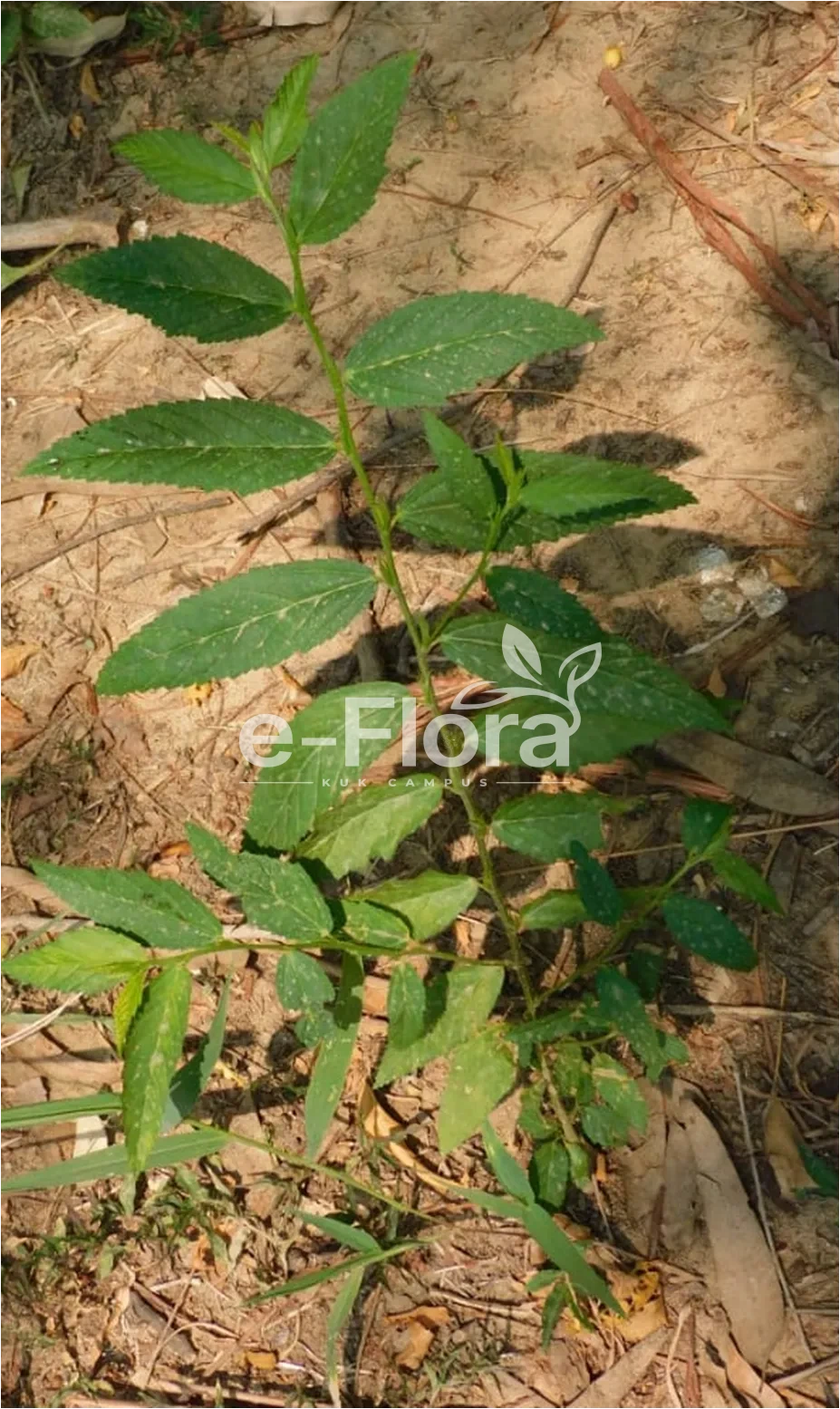
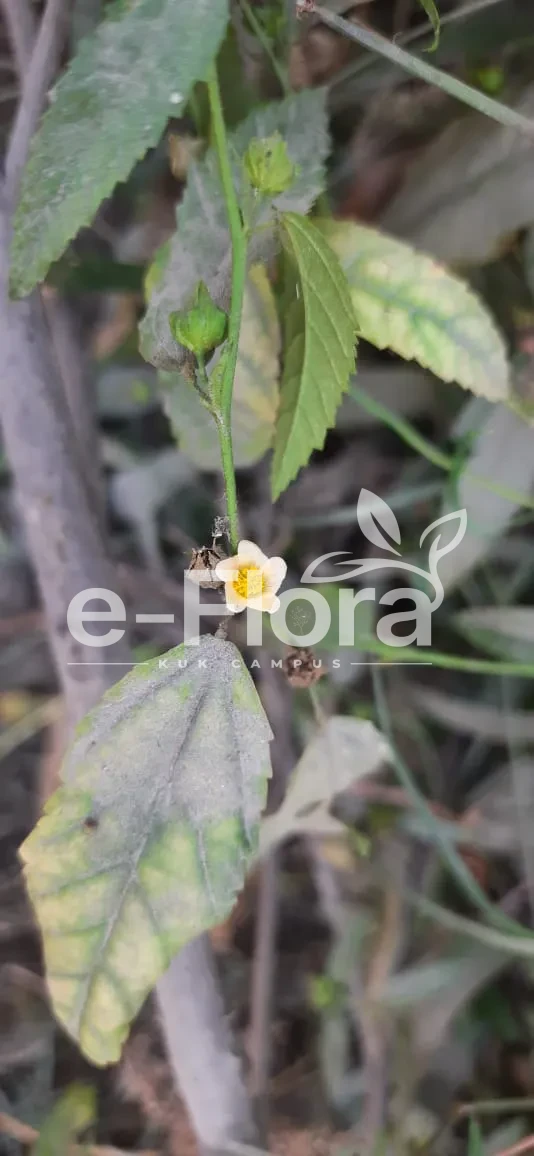
Sida acuta Burm.f.
Vernacular name: Common wireweed, Broomweed (Hindi: बालू पत्थर)
Species Name: Sida acuta Burm.f.
Family: Malvaceae
Habit: Erect annual/perennial undershrub
Stem: Slender, cylindrical, stellate-hairy, branched
Leaf: Alternate, lanceolate-linear, serrate, acute apex, obtuse base
Flowering: Year-round
Flowers: Axillary solitary/paired cymes; small yellow; 5 sepals campanulate gamosepalous, 5 twisted yellow petals, numerous monadelphous stamens on short column, superior 5-loculed ovary
Fruit: Schizocarp of 5 birostrate mericarps
Uses:
- Whole plant has anti-inflammatory, diuretic, antipyretic, analgesic and wound healing properties.
- Leaf decoction are used to treat malaria and various fevers in Ayurveda.
- Leaves and roots are used to help with rheumatism and joint stiffness.
- In traditional medicines, extracts from plant is used to clear mucus and ease asthma and bronchitis symptoms.
- In herbal remedies, fresh root are chewed to alleviate toothaches and leaves are boiled to treat skin sores,
- Extracts are derived from leaves to manage scaly skin and different hair conditions.
- It is a pantropical weed that disturbes waste ground and is drought-tolerant with great allelopathic potential.
- In South India, “Arival Mooku Pachilai” (leaf powder of plant) used in Siddha practices as natural remedy for nervous and urinary issues.
- Plant can act as veterinary fodder.