Saraca asoca (Roxb.) W.J.de Wilde.
Vernacular name: Ashoka, Sita Ashoka (Hindi: अशोक)
Species Name: Saraca asoca (Roxb.) Willd.
Family: Fabaceae
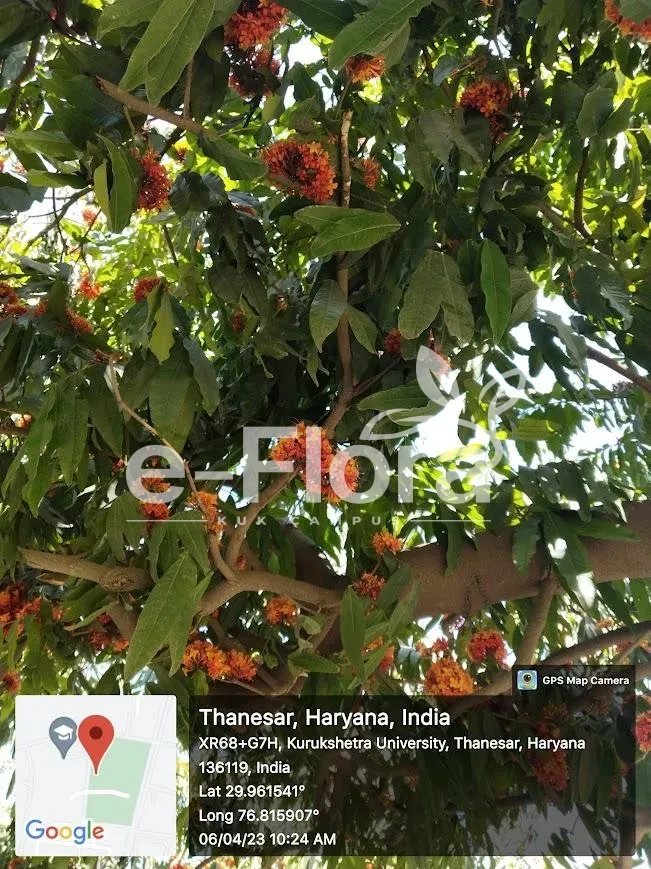
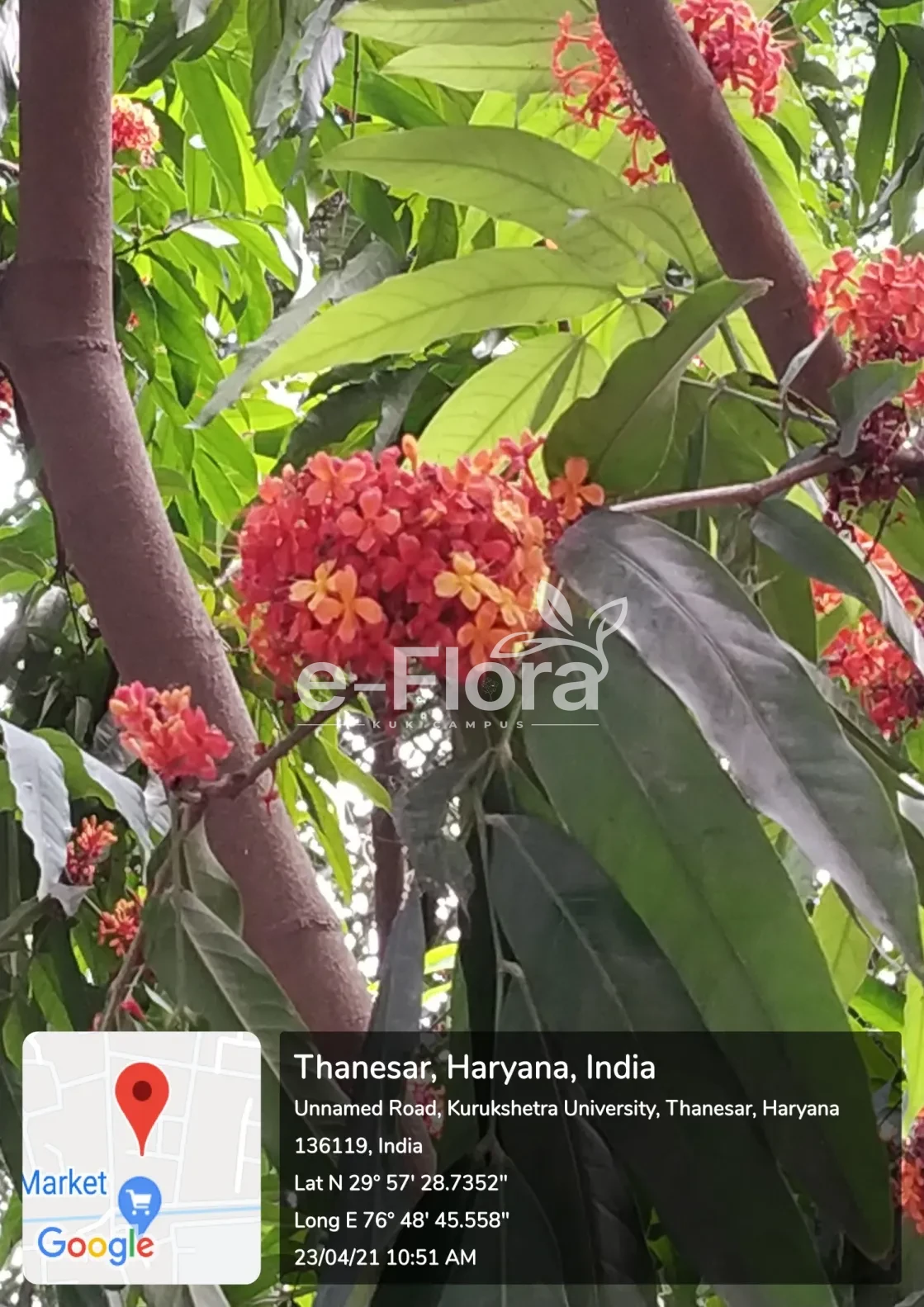
Habit: Small evergreen tree
Stem: Drooping glabrous branches, dark brown-grey warty bark.
Leaf: Paripinnate, 4-6 pairs oblong-lanceolate leaflets.
Flowering: February-April
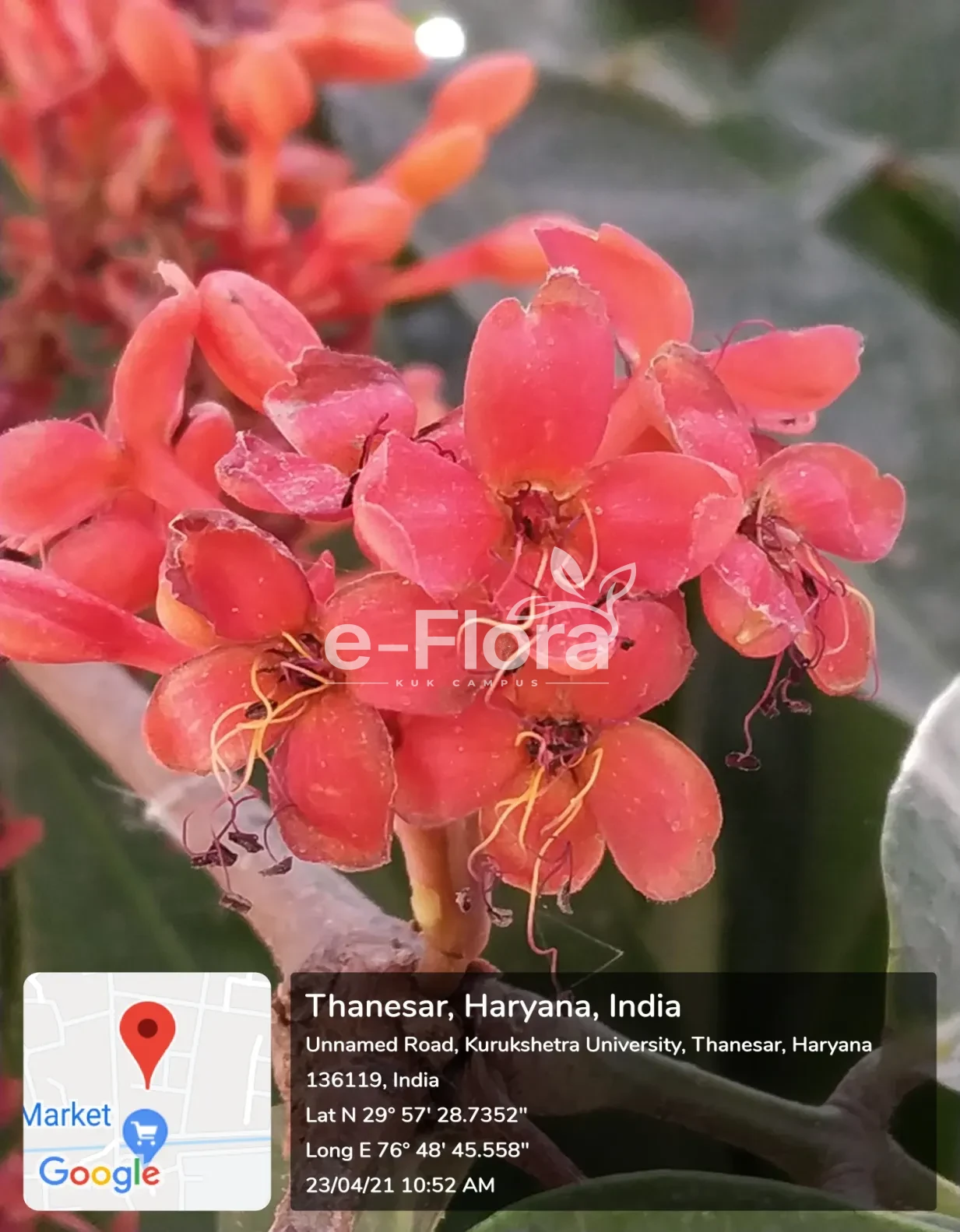
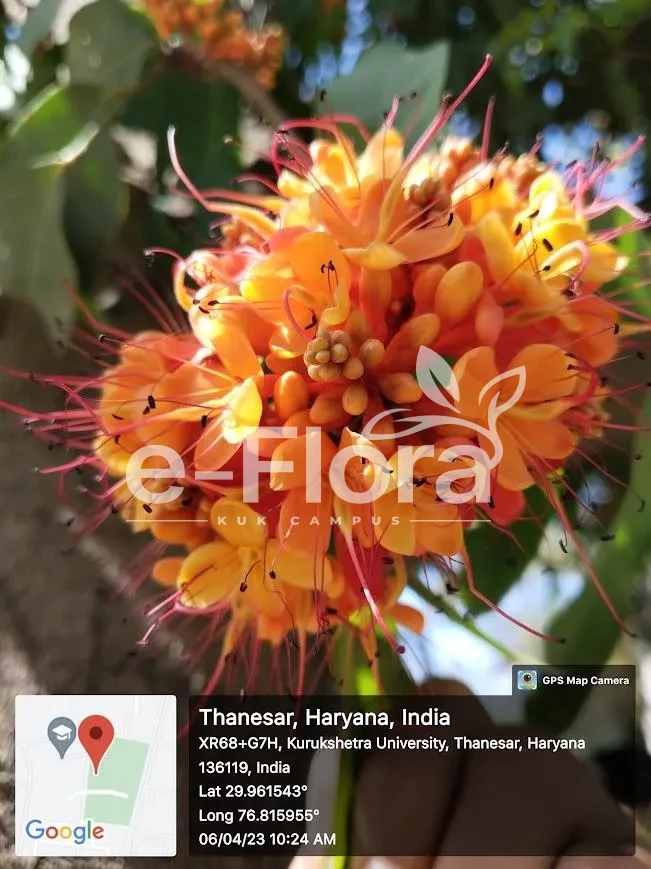
Flowers: Axillary corymbs; fragrant polygamous apetalous flowers; petaloid tubular calyx (yellow-orange turning scarlet), 4 imbricate segments; 7-8 exserted stamens, purple versatile anthers; hairy superior ovary, curved style
Fruit: Linear-oblong compressed woody pods, 4-8 ellipsoid seeds
Uses:
- Flowers have antidiabetic property and seeds have antipyretic applications..
- Uterine tonic extracted from bark in ayurveda acts as uterine stimulant and helps to manage menstrual cycle, dysmenorrhea, menorrhagia and leucorrhoea.
- Bark and leave helps with acne, eczema and skin complexion due to its blood purifying properties.
- Decoctions extracted from bark helps with dysentery, colic and indigestion in traditional medicines.
- Analgesic and anti-inflammatory property of extracts help to heal wound faster and internal bleedings in cases like piles.
- Plant is an evergreen rainforest understory and Western Ghats endemic. It is vulnerable due to overharvesting while is a natural nitrogen-fixer.
- Sita sheltered under Ashoka during exile (Ramayana) and Buddha enlightened under Ashoka making it a sacred temple tree.