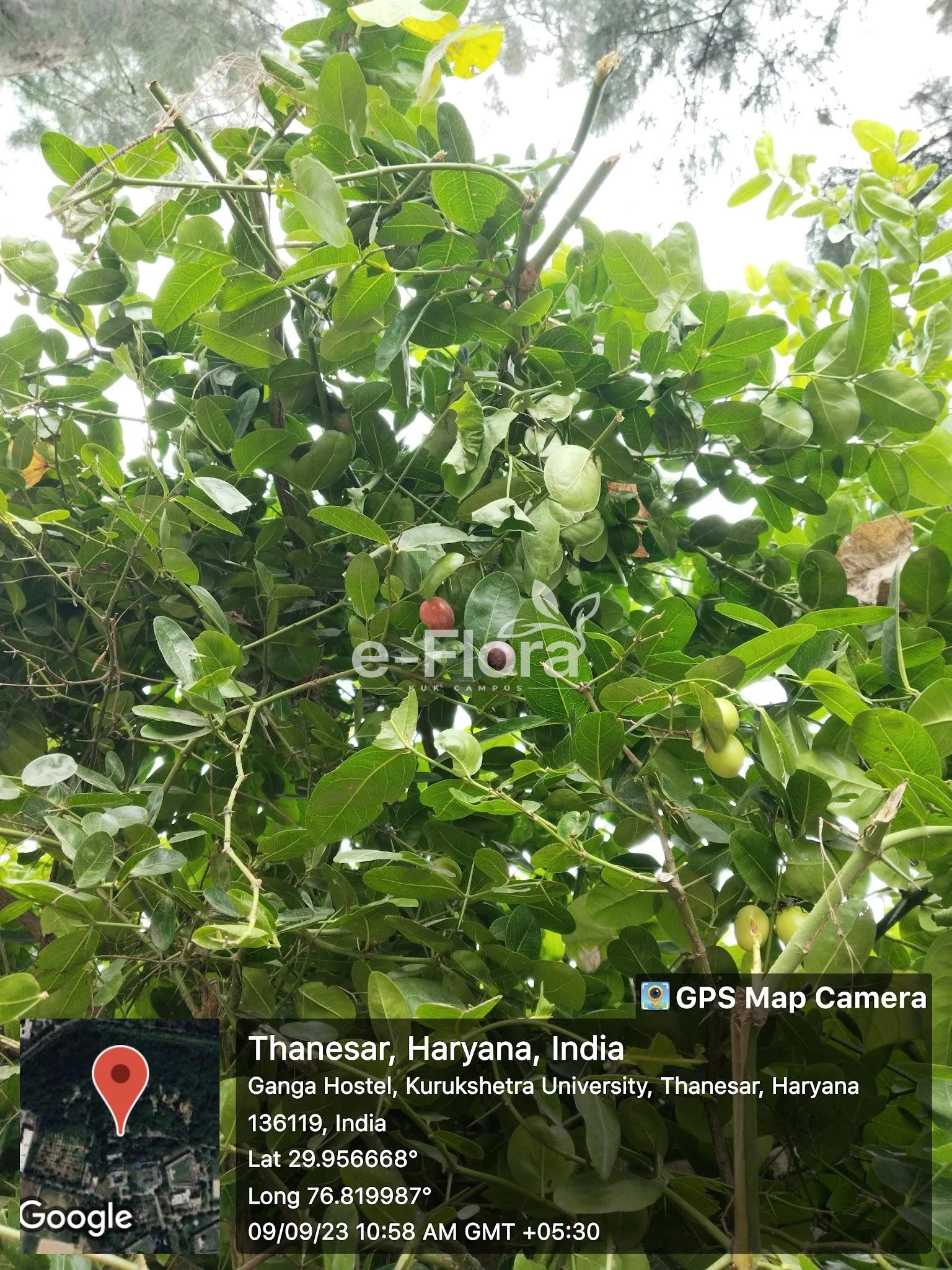
Carissa carandas L.
Vernacular name: Karonda, Christ’s thorn (Hindi: करौंदा)
Species Name: Carissa carandas L.
Family: Apocynaceae
Habit: Thorny evergreen shrub
Stem: Much-branched, spiny branchlets, grey-brown bark, 3-5 m tall.
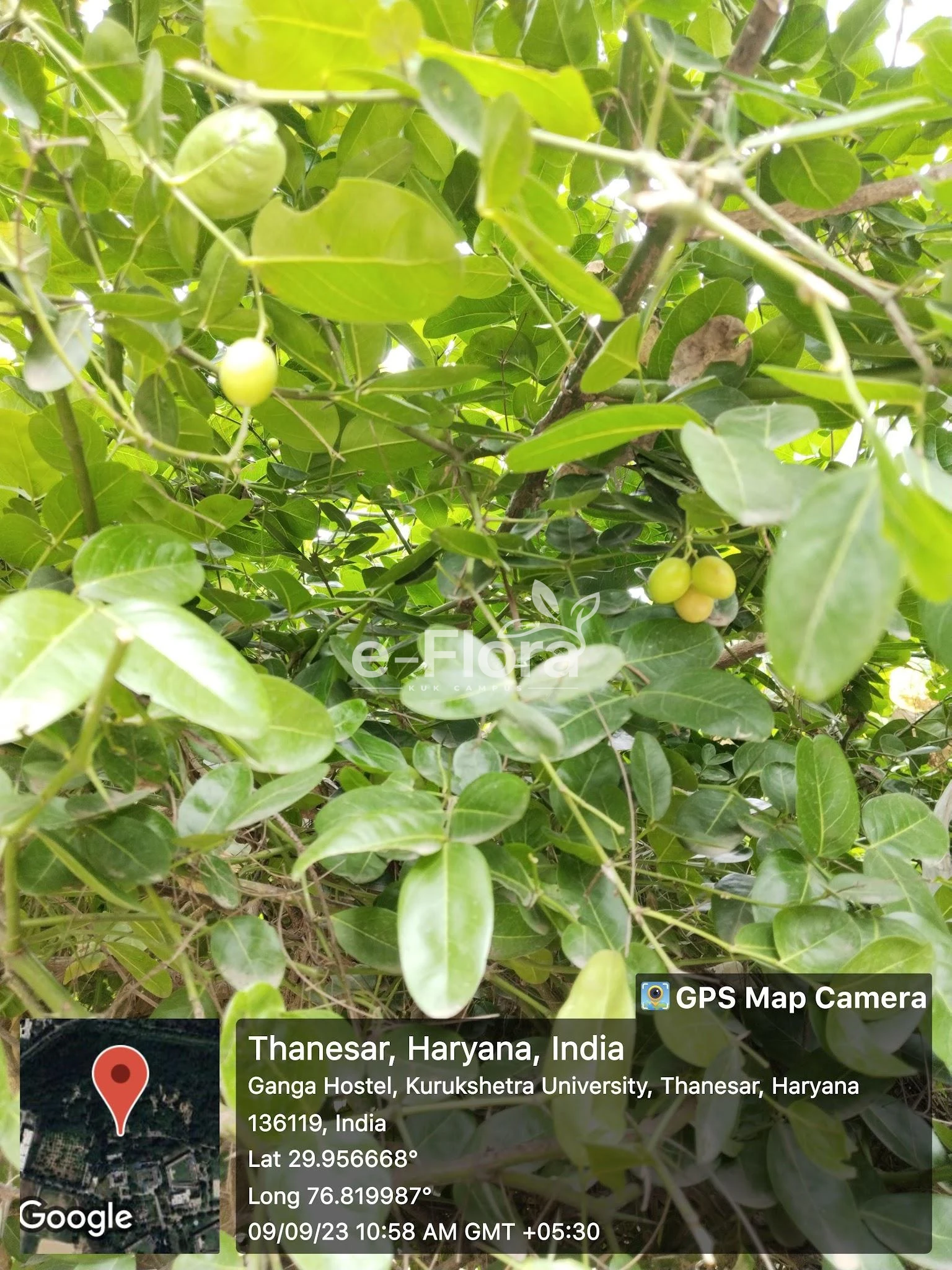
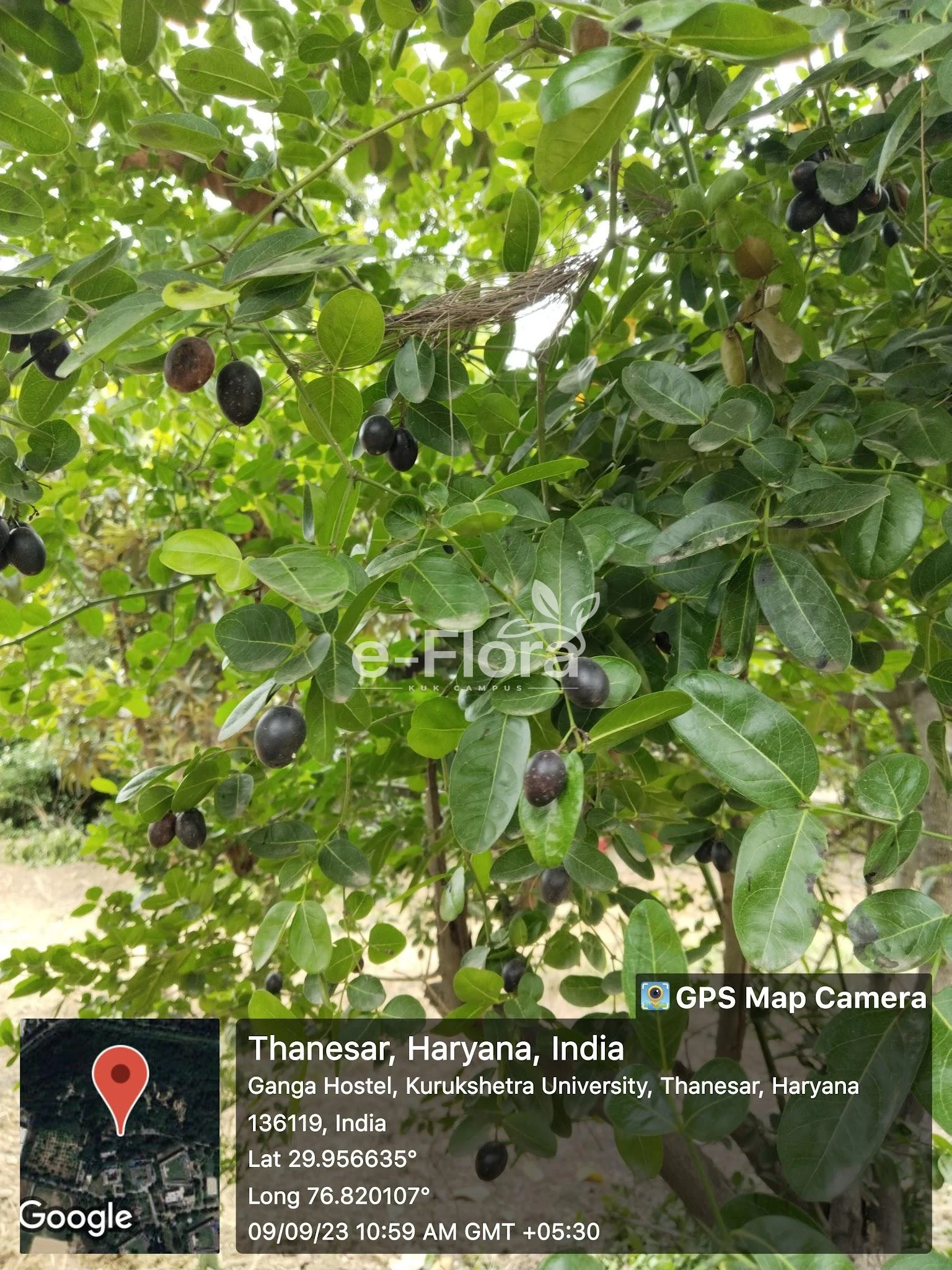
Leaf: Opposite, elliptic-obovate 3-7×2-4 cm, petiolate, glossy green, intra-marginal veins.
Flowering: Monsoon
Flowers: Bracteate corymbose cymes; 5 white petals (salverform 1-2 cm, fragrant), 5 stamens (anthers inserted at throat), superior ovary (2-carpellate).
Fruit: Oblong drupe 1-3×1-1.5 cm green→purple-black, 1-2 stony pyrenes.
Uses:
- Ripe fruits serve as vitamin C-rich tonic for scurvy, appetite loss, liver issues and anemia.
- Root decoction acts as stomachic, anthelmintic, and antidiarrheal remedy.
- Leaf paste treats wounds, fever, skin infections and oral inflammation traditionally.
- In India, unripe fruits are used to make spicy pickles and chutneys due to sour taste where as ripe fruit is sweeter comparatively, so used to make jams, puddings and jellies.
- Juice is used to make cooling summer drinks.
- In semi-arid regions, prevent can help with the prevention of soil erosion, given its extensive root system.
- Ayurvedic Karonda tridosha-balancer; tribal scorpion sting antidote; sacred thorn fence plant.