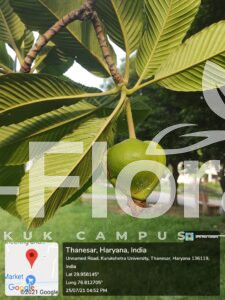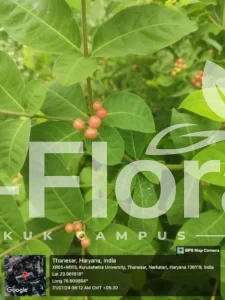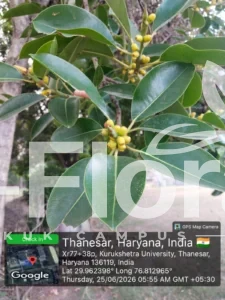
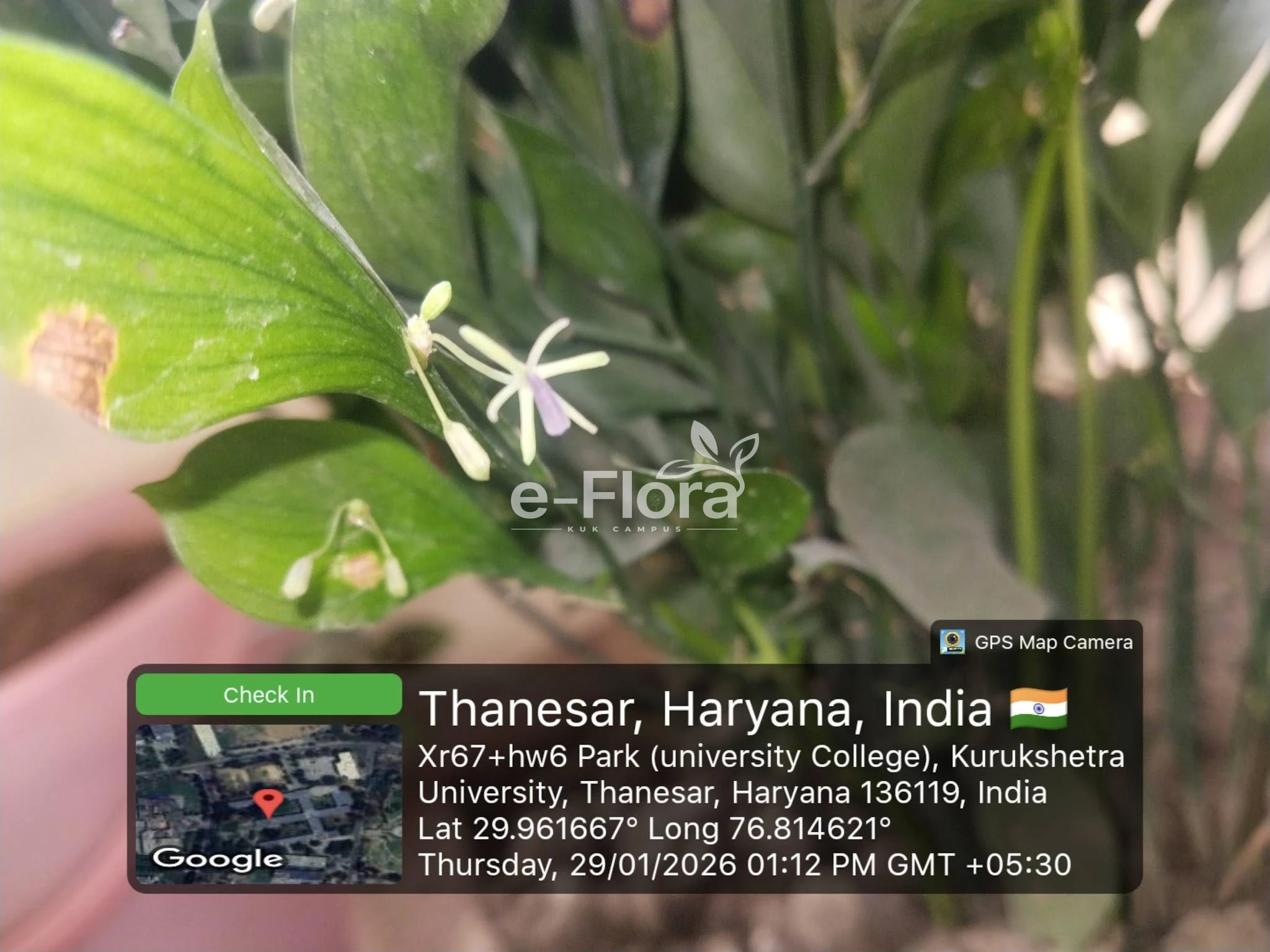
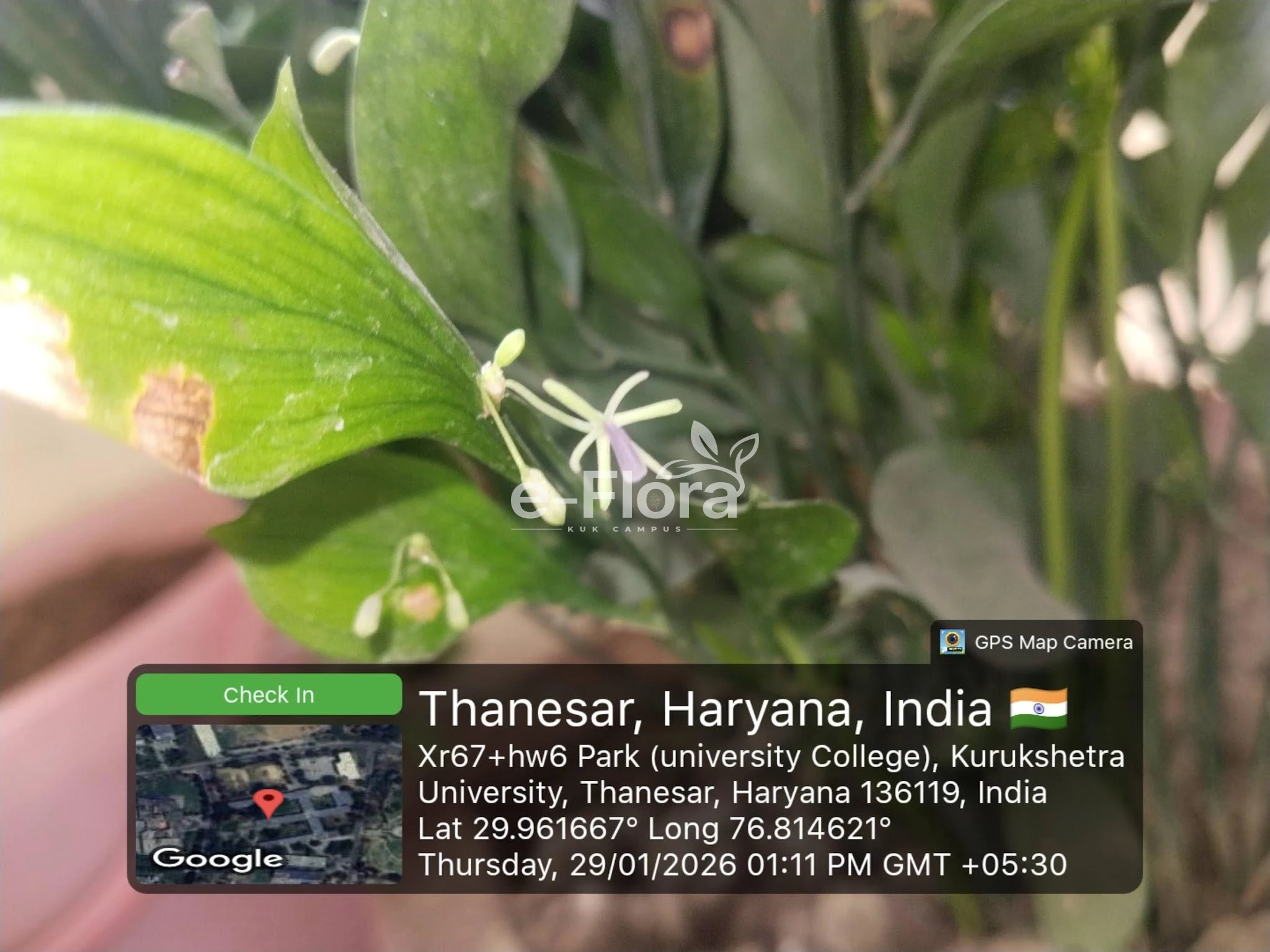
Ruscus aculeatus L.
Vernacular name: Butcher’s broom, Knee holly
Species Name: Ruscus aculeatus L.
Family: Asparagaceae
Habit: Low evergreen rhizomatous subshrub
Stem: Much-branched, rigid, erect to knee height
Leaf: Reduced to scales; flattened leaf-like cladodes (photosynthetic stems)
Flowering: March-May
Flowers: Tiny, axillary on cladode upper surface; 6 pale green tepals; dioecious (separate male/female plants); male flowers 6 stamens; female flowers 3-carpellate superior ovary
Fruit: Bright red spherical berries on female plants
Uses:
- Rhizomes and roots are source of ruscogenins (vasoconstrictors) and saponins that helps with hemorrhoids, orthostatic hypotension and varicose veins (venotonic) owing to its anti-inflammatory property.
- Root extracts are commonly used in under eye creams as it has astringent property that stimulates blood circulation and reduce puffiness and dark circles.
- Plant has diuretic and laxative properties and used in folk remedies.
- Mediterranean maquis and shade understory as drought-tolerant and spreads by rhizomes or bird-dispersed berries.
- “Knee holly” from height; butcher’s brooms for sweeping; Christmas holly substitute
- Shade-tolerant evergreen groundcover and has red berries that seems decorative.