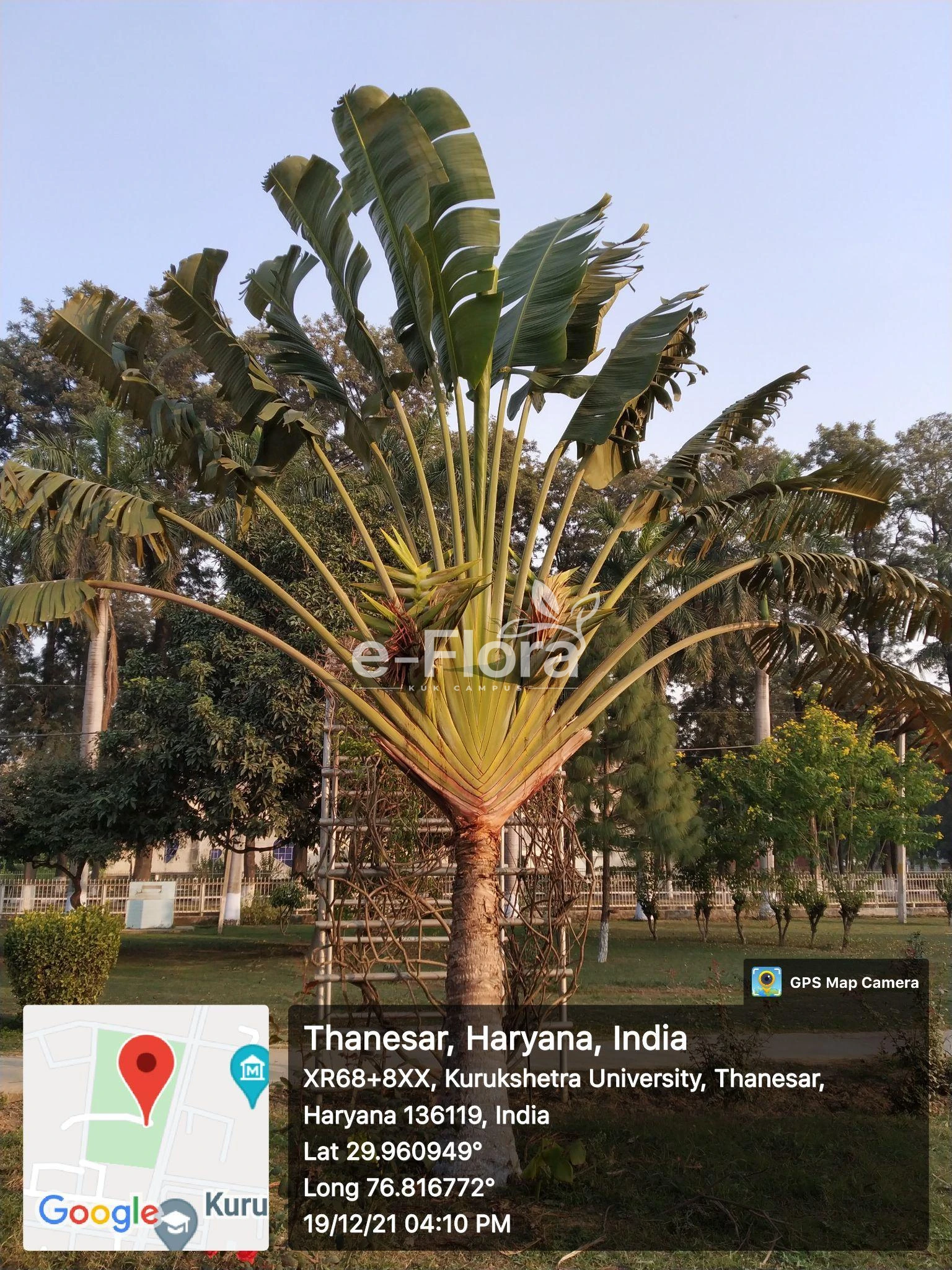
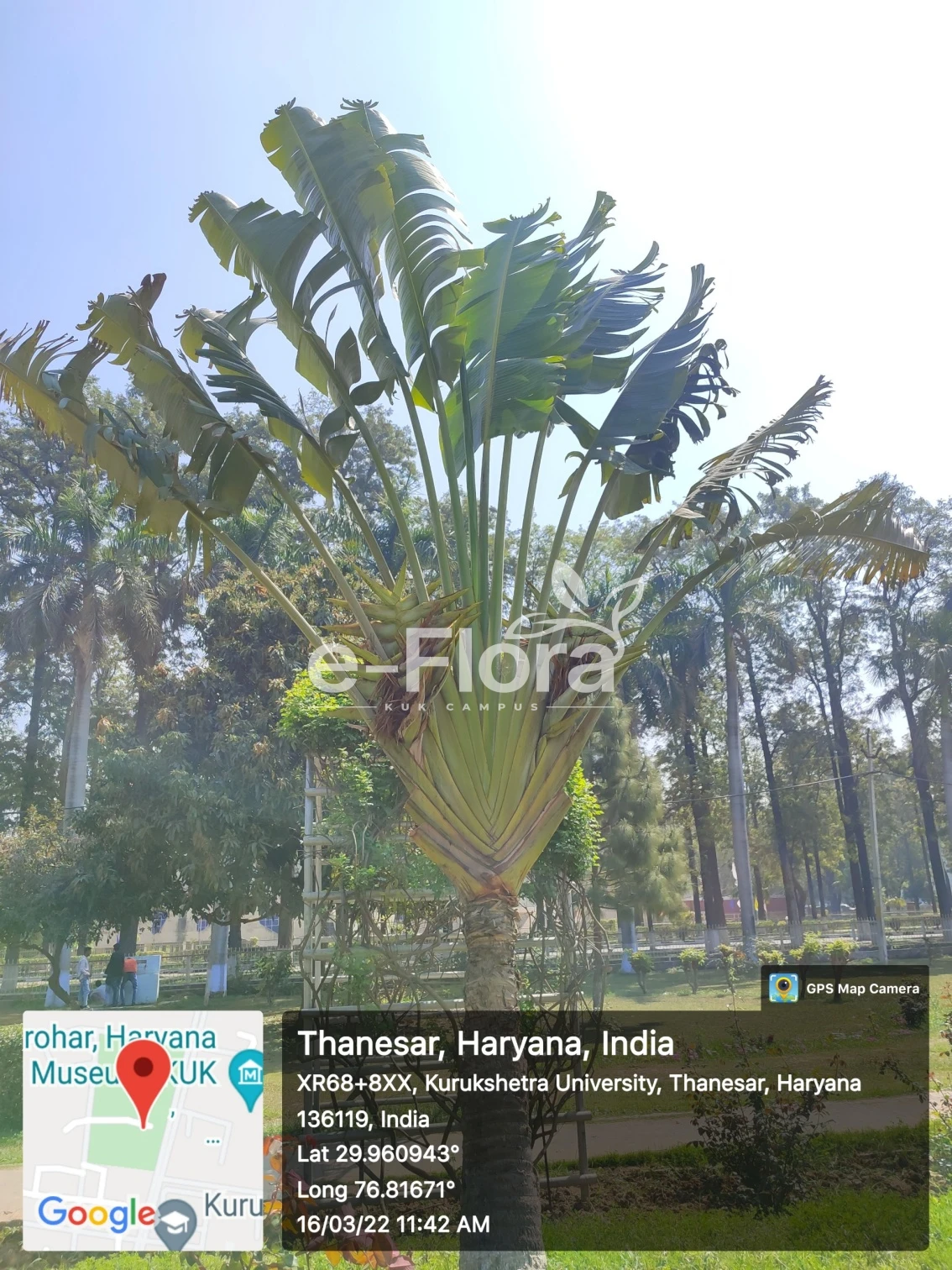
Ravenala madagascariensis Sonn.
Vernacular name: Traveller’s palm, Traveller’s tree (Hindi: सफर का पेड़)
Species Name: Ravenala madagascariensis Sonn.
Family: Strelitziaceae
Habit: Palm-like unbranched tree
Stem: Grey cylindrical trunk marked with leaf scars
Leaf: Huge banana-like leaves in single vertical plane fan, long petioles form water-holding cups
Flowering: June-September
Flowers: Axillary compound racemes on long stalks; large boat-shaped green bracts; numerous small creamy-white bird-pollinated flowers; 3 sepals, 3 petals, 6 stamens with blue anthers, 3-lobed stigma, inferior ovary
Fruit: Woody dehiscent capsules; black seeds encased in bright blue fleshy arils
Uses:
- Roots stimulate insulin secretion (diabetes management).
- Leaves have hypolipidemic and renoprotective properties while fruits are known for antimicrobial and antioxidant properties.
- Rainforest understory; rain storage adaptation; Madagascar endemic.
- It is commonly called Traveller’s Tree because the rainwater that slips along the sheath of the sheets accumulates at their base and makes it possible for the traveller to be refreshed.
- Highly ornamental palm, often cultivated in the centre of a garden.
- Madagascar—petiole water sustained travellers; sacred plantings; arils eaten by lemurs.
- Leaves are used for thatching roofs where as petioles are used for construction of walls and barks are used for flooring, so overall plant act as crucial building material.
- Flowers attracts a variety of pollinators.
- Seeds are edible.
- Extracts have skin hydration property, so are used in cosmetic industry.