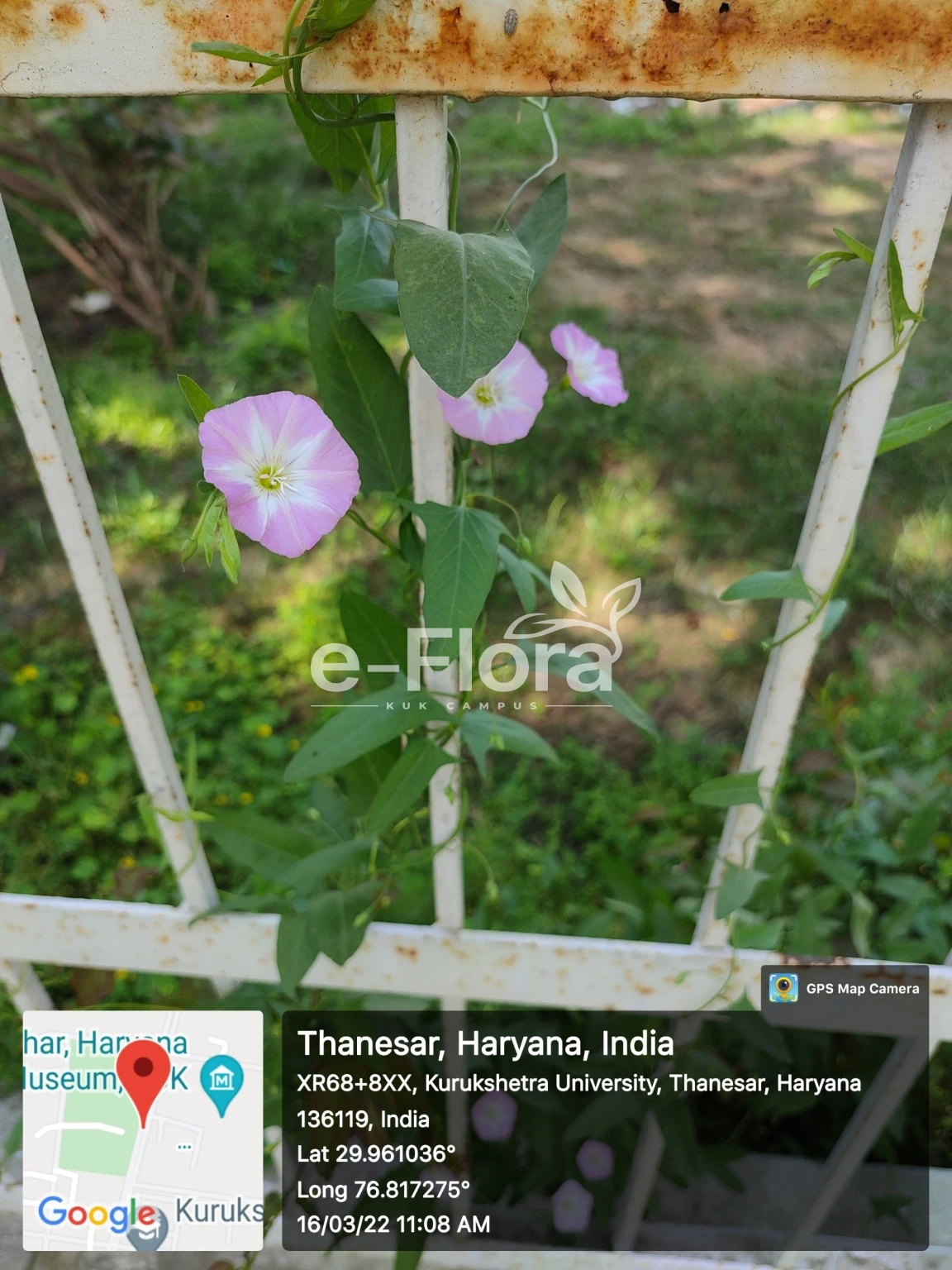
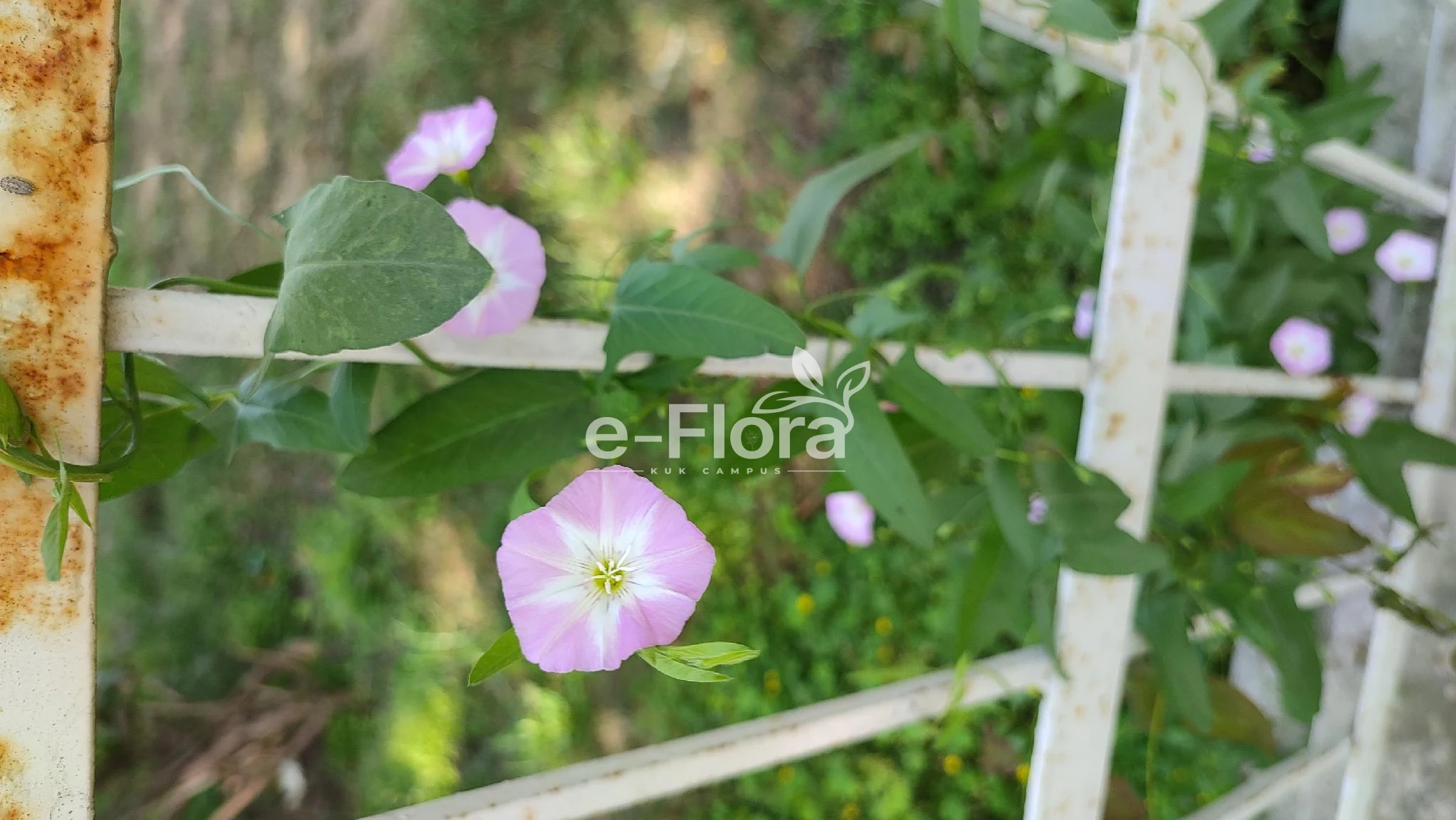
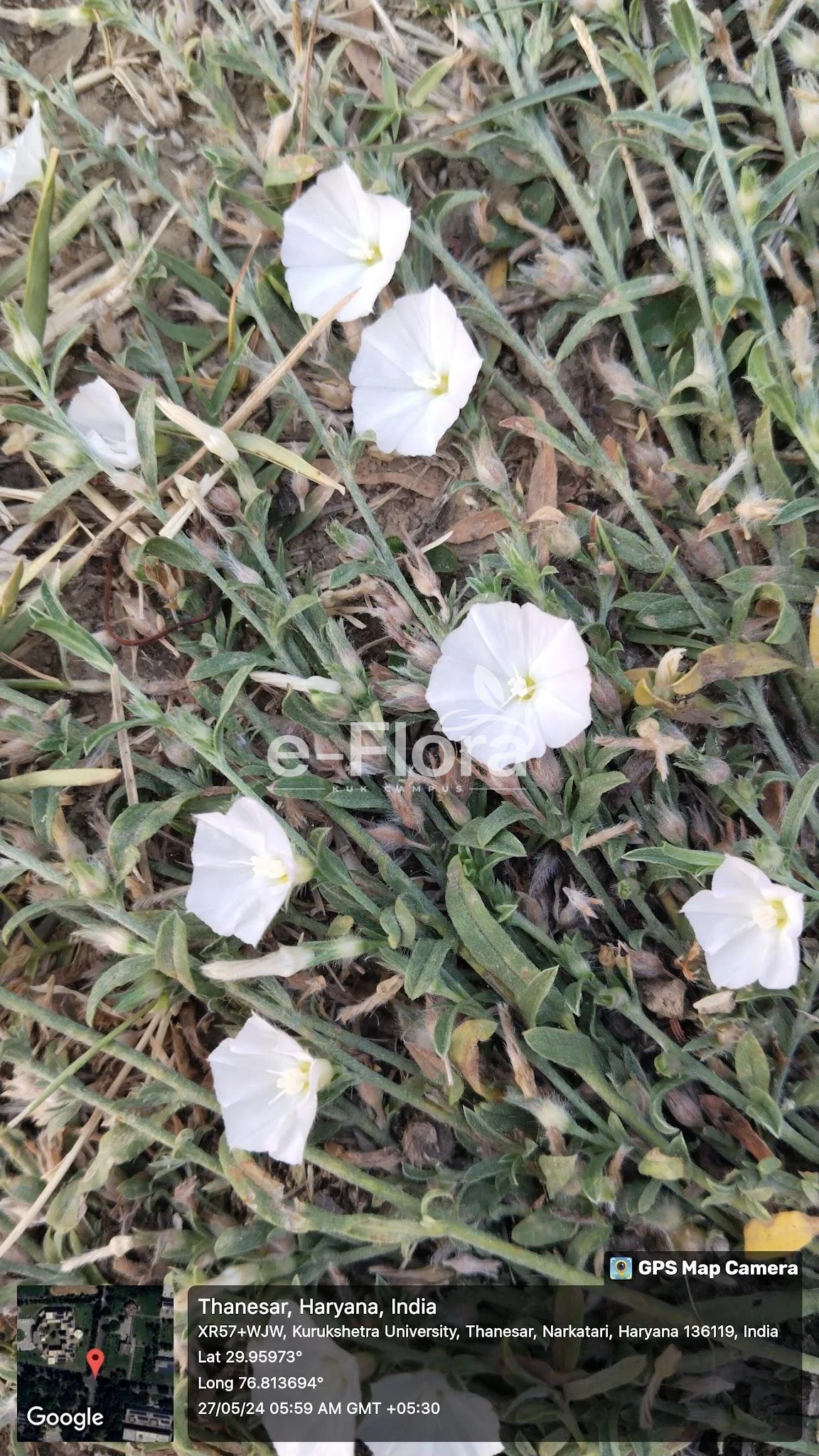
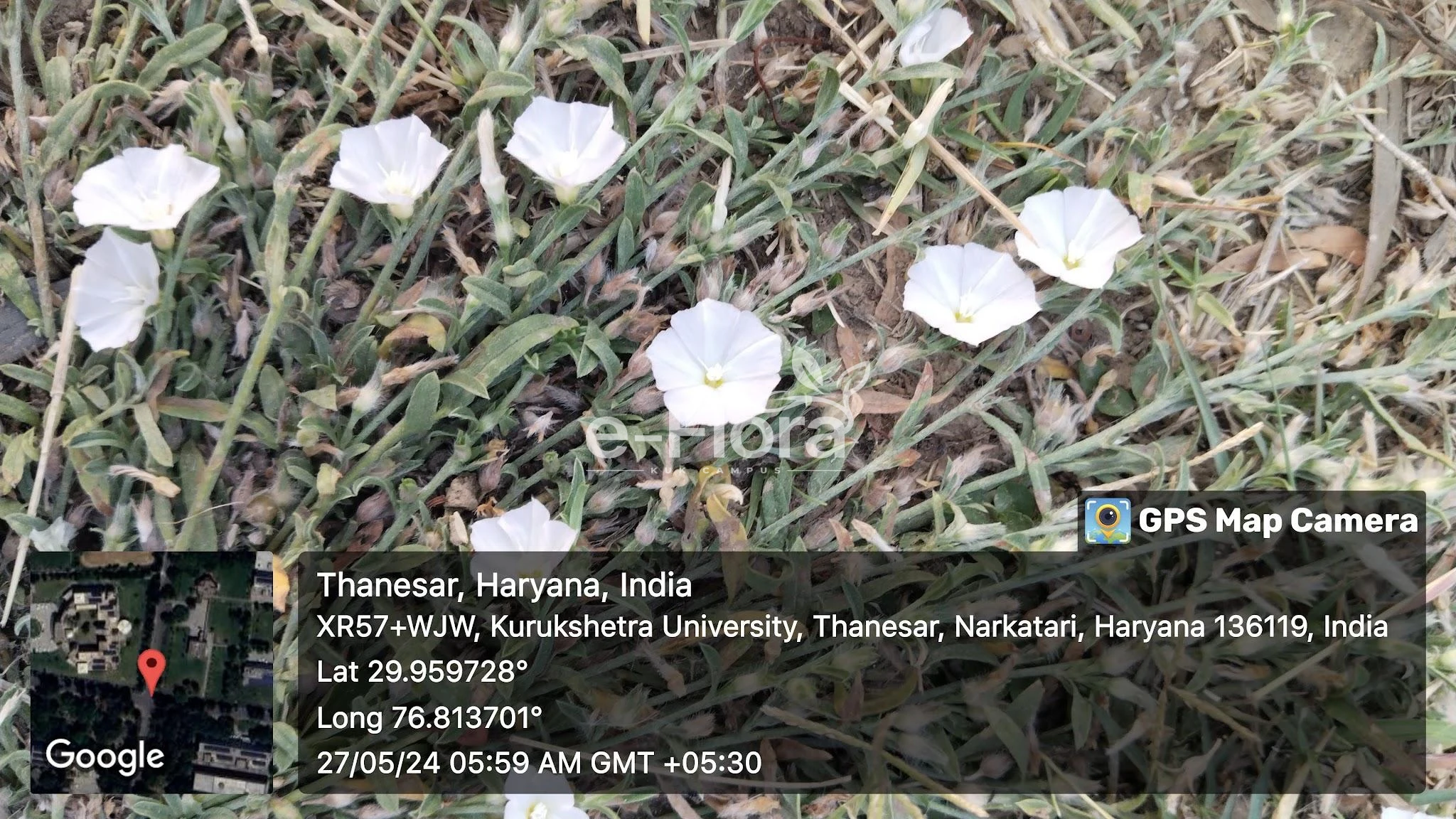
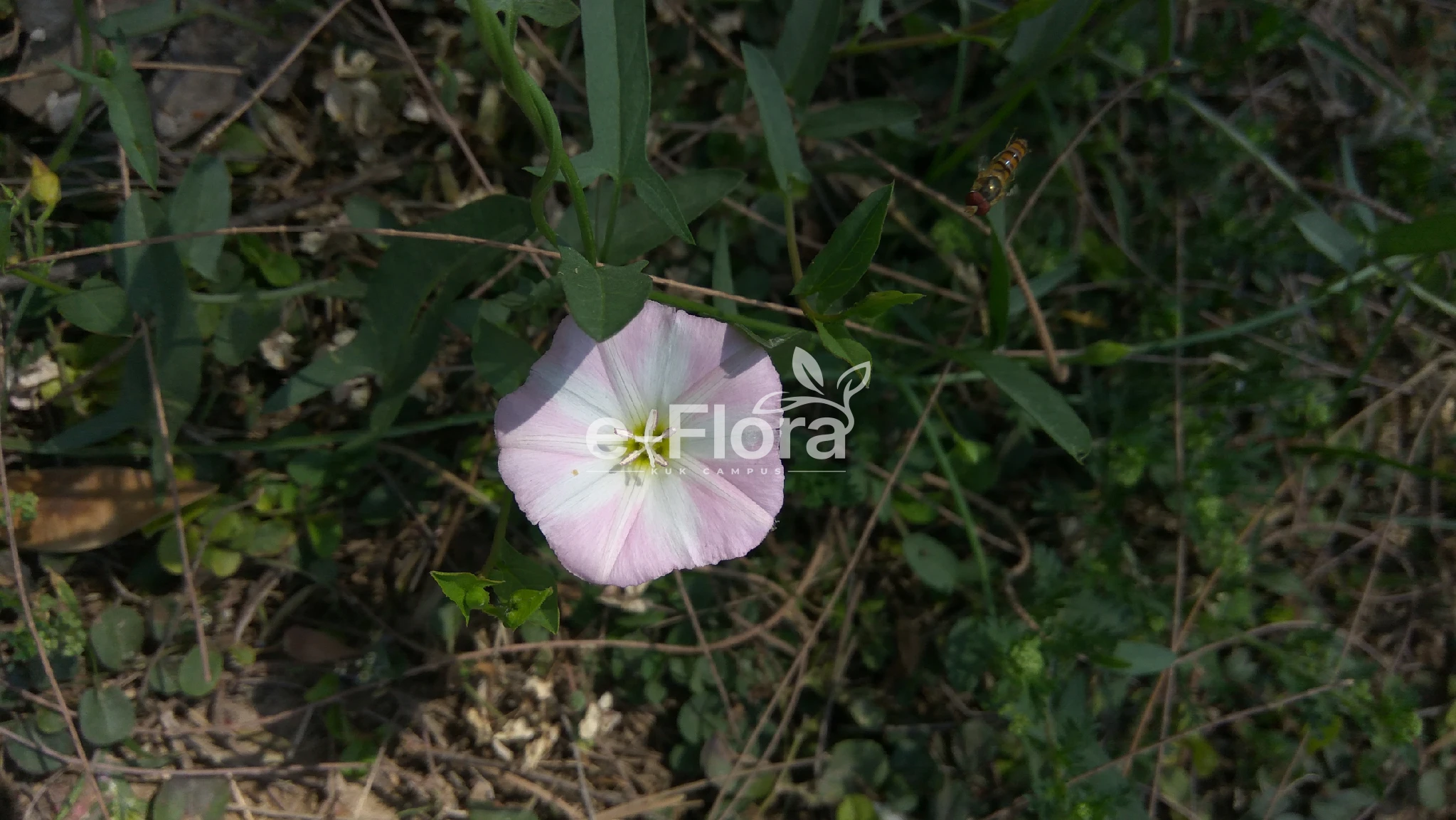
Convolvulus arvensis L.
Vernacular name: Field bindweed, (Hindi: हिरनखुरी)
Species Name: Convolvulus arvensis L.
Family: Convolvulaceae
Habit: Perennial twining vine
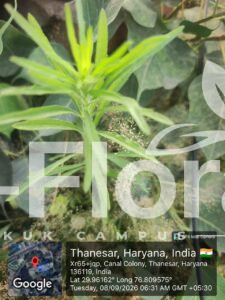
Stem: Slender, trailing/climbing, 0.5-2 m long, glabrous to hairy.
Leaf: Alternate, sagittate-ovate 2-5 cm long, petiolate, entire or wavy margins.
Flowering: Summer
Flowers: Bracteate axillary peduncles (solitary or paired); 5 white/pink petals (funnelform 1-2.5 cm), 5 stamens (anthers included), superior ovary (2-carpellate, 4 ovules).
Fruit: Capsule 4-6 mm, 4 grey-black angular seeds.
Uses:
- Leaves and roots serve as traditional laxative and diuretic remedies.
- Flowers are used in European folk medicine for fevers and inflammation.
- Decoctions of different parts of plant is used in treatment of minor wounds, digestive and skin problems.
- Plant is also promote liver health (hepatoprotective).
- Plant has antibacterial, anti-inflammatory, antispasmodic and antioxidant properties.
- Plant has bioactive compounds that help inhibit tumor angiogenesis.
- Field Bindweed is generally considered a weed.
- It is native to Europe and Asia.
- Also known as “Devil’s guts” in England; witch’s binding spell plant.
- Young leaves are used as salad in some regions.