
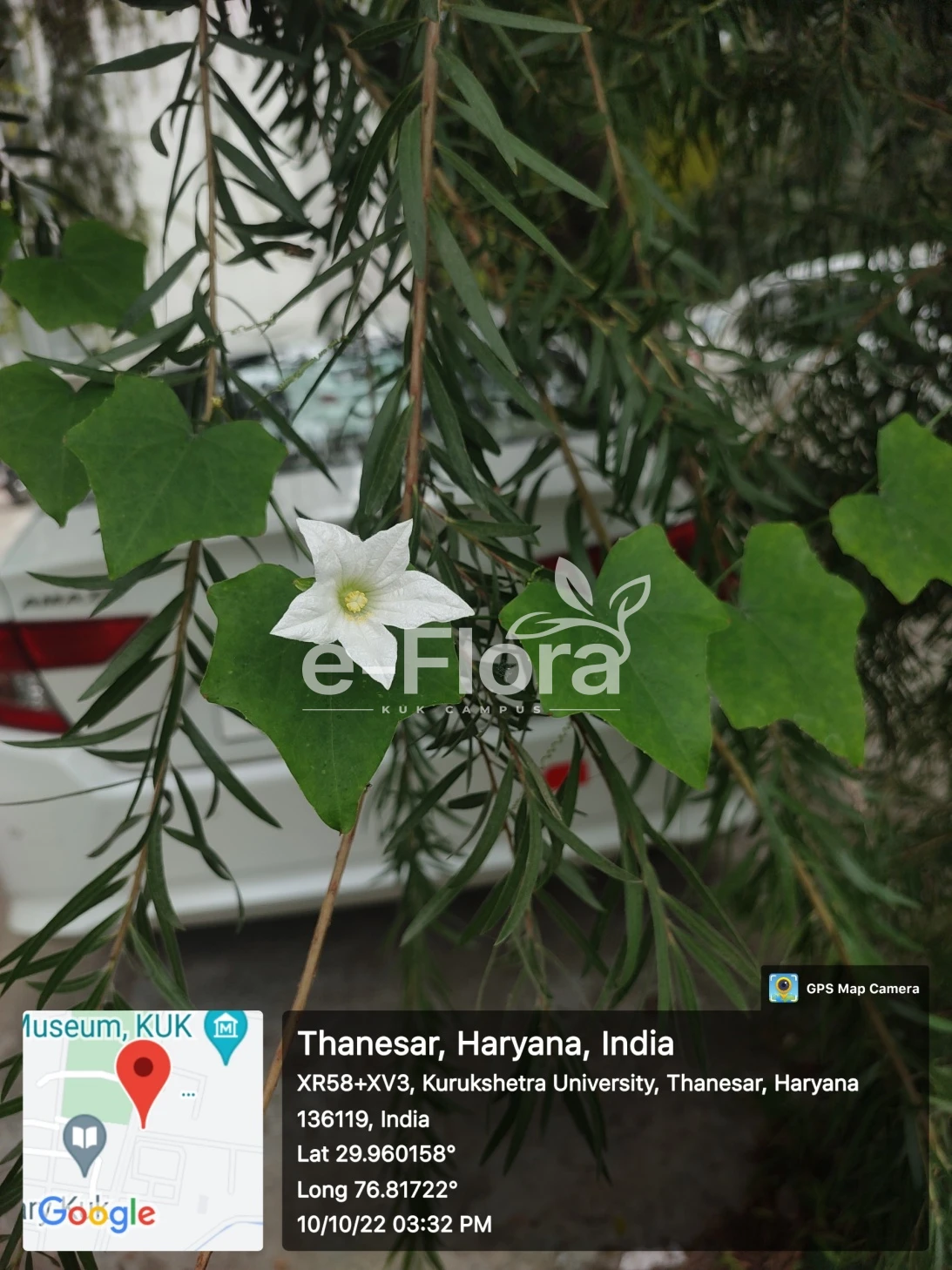
Coccinia grandis (L.) Voigt
Vernacular name: Ivy gourd, Scarlet gourd (Hindi: तिंडोरा / लोबेद बिल्व)
Species Name: Coccinia grandis (L.) Voigt
Family: Cucurbitaceae
Habit: Perennial dioecious climber
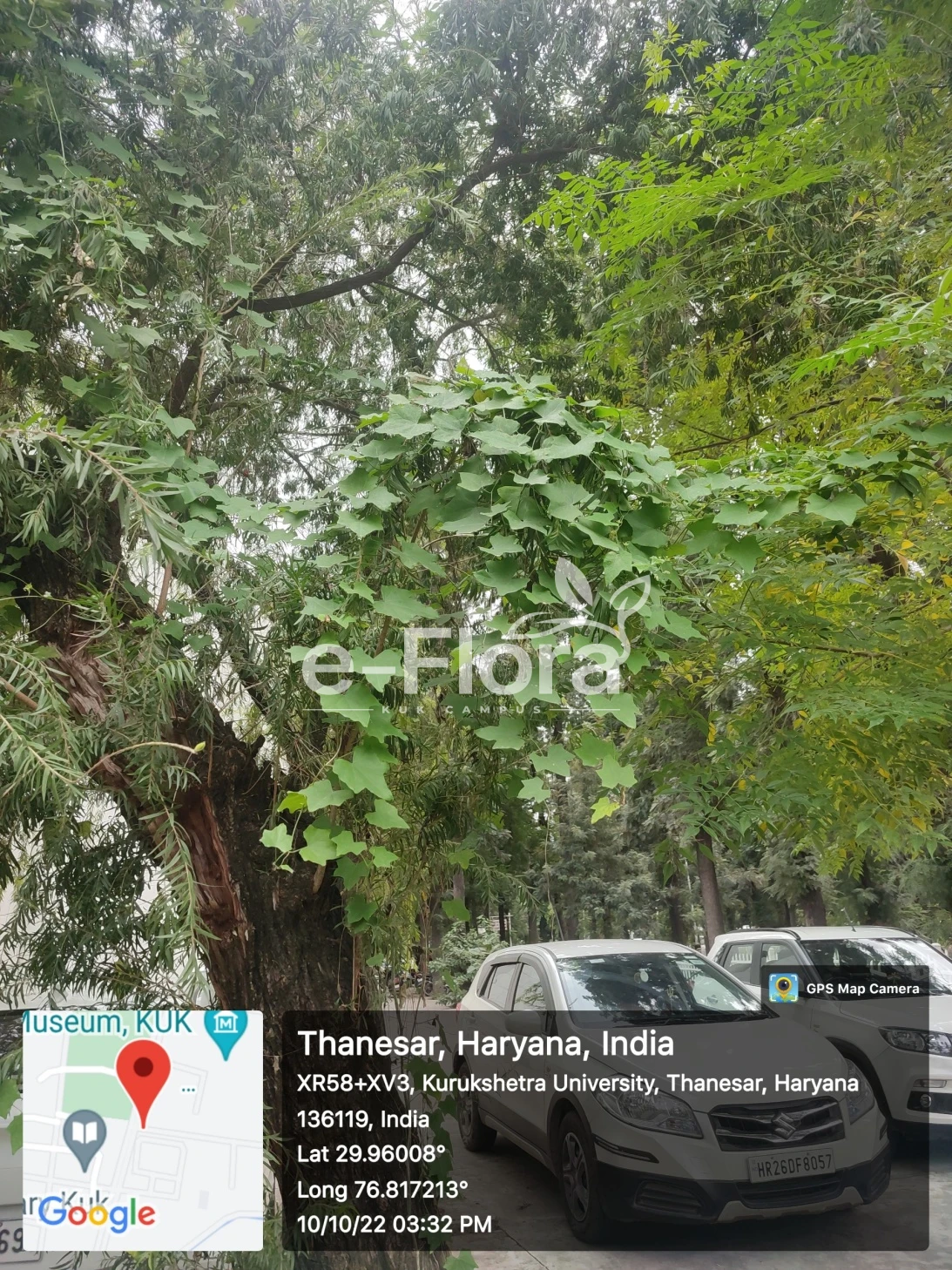
Stem: Slender, tendril-bearing, 5-10 m long, pubescent.
Leaf: Alternate, 5-8-lobed palmate 5-13 cm wide, petiolate, toothed.
Flowering: Monsoon
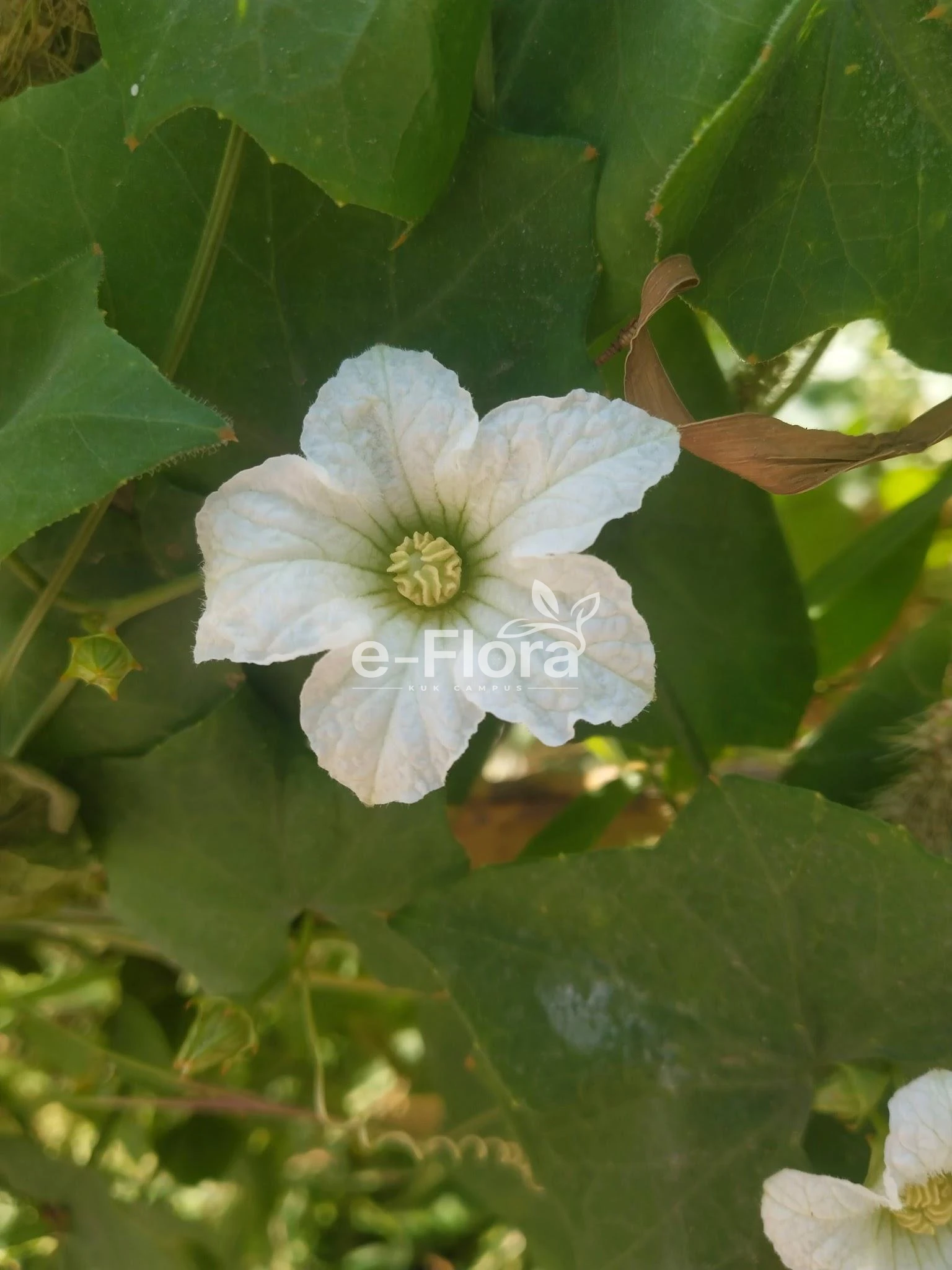
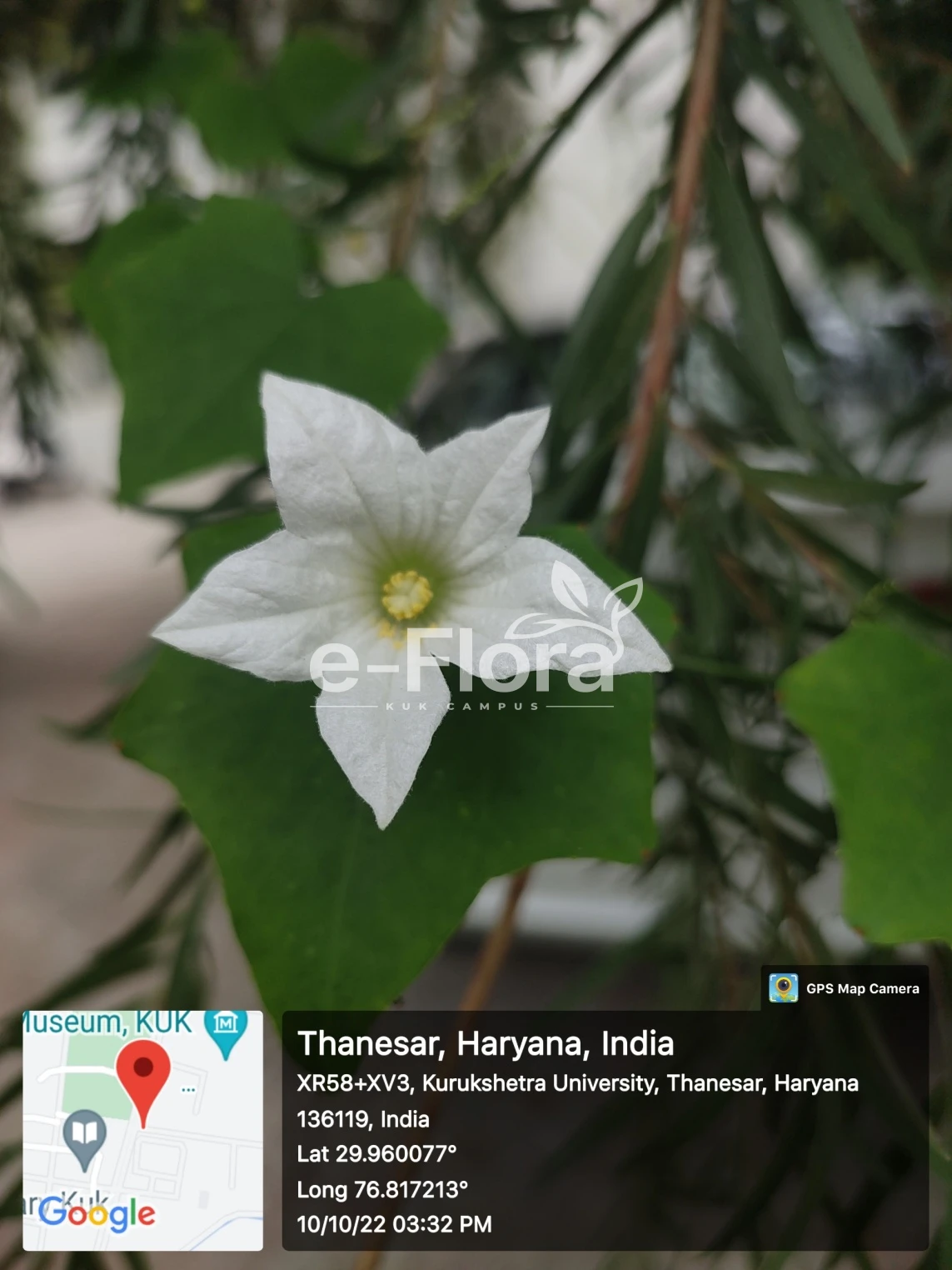
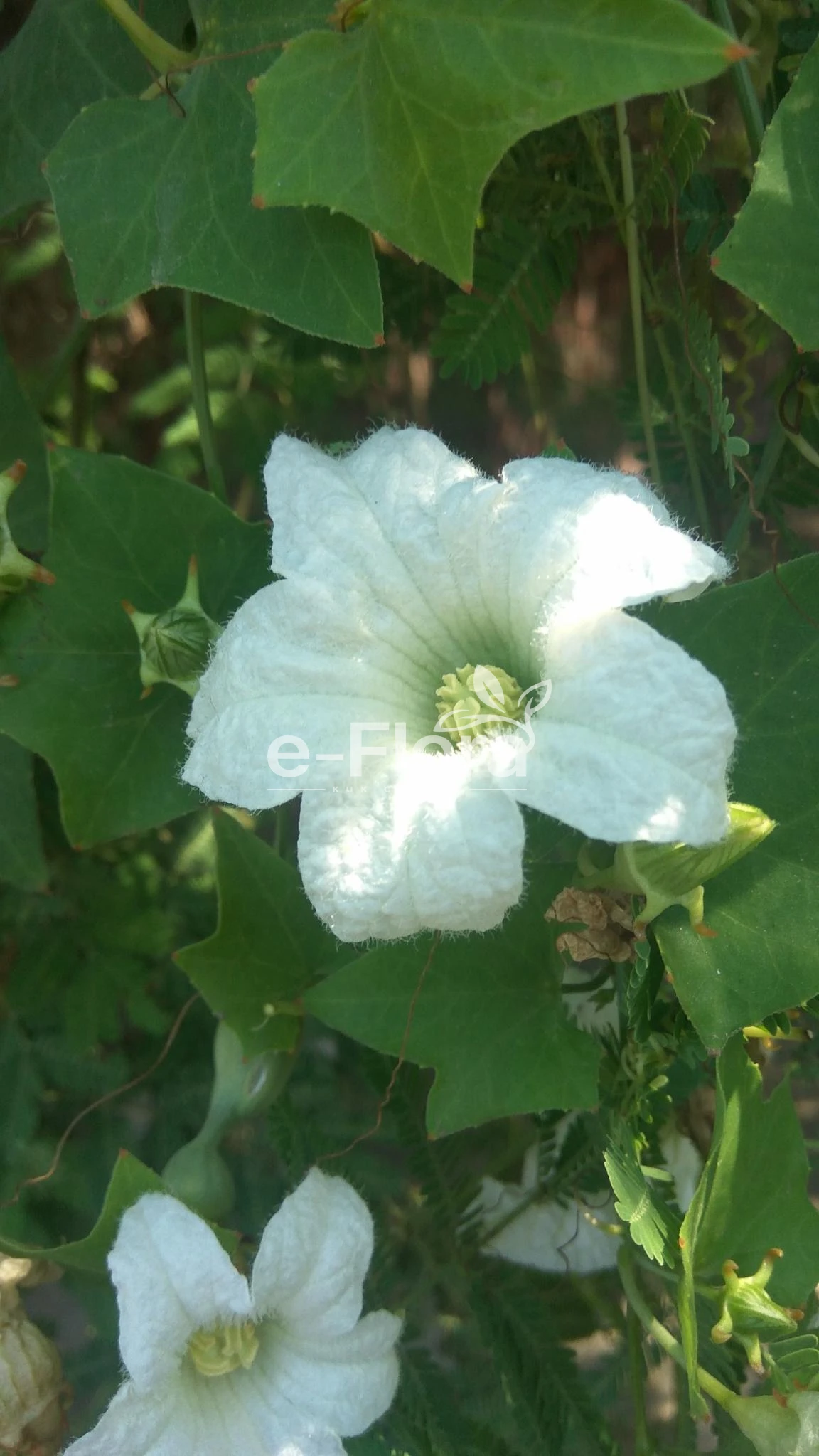
Flowers: Bracteate axillary solitary (male) or fascicled (female); 5 white petals (rotate 1-1.5 cm), 5 stamens (anthers connivent male), inferior ovary 3-carpellate (female).
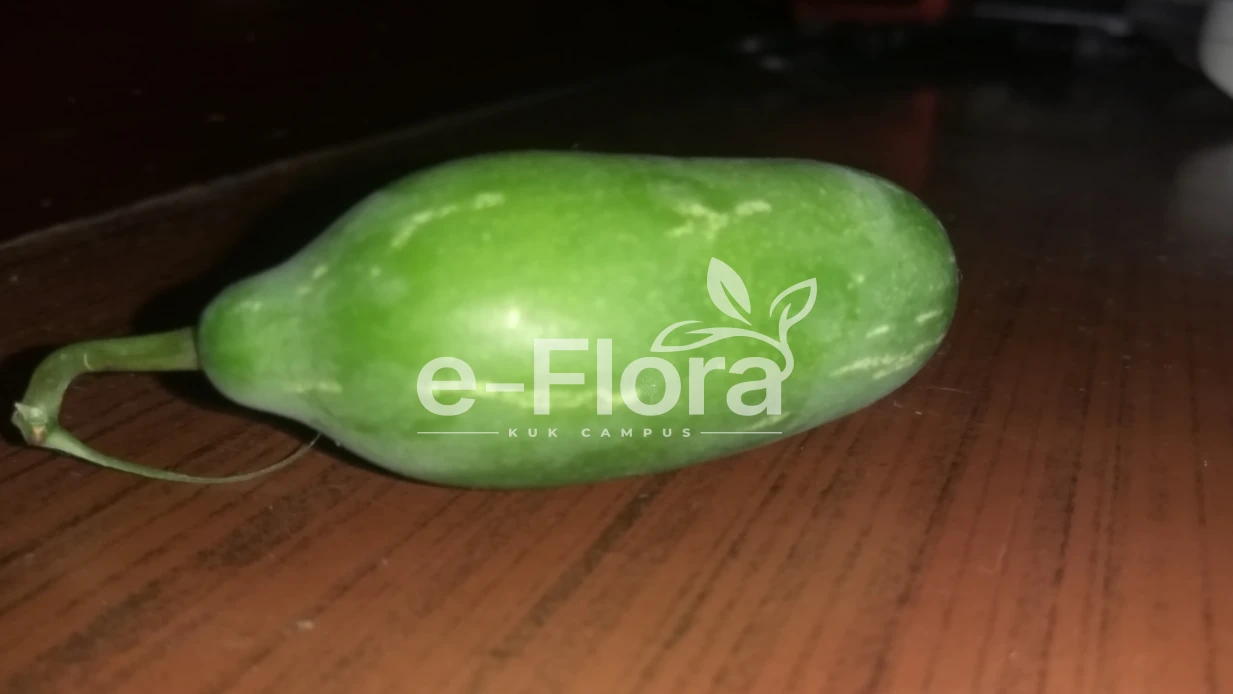
Fruit: Ovoid berries 3-7×1.5-3 cm green→red, many lens-shaped seeds.
Uses:
- Various preparations of roots, stems and leaves of Coccinia grandis have been mentioned in indigenous systems of medicine as being efficacious in the treatment of skin diseases, bronchial catarrh, bronchitis and diabetes.
- Young fruits and leaves serve as antidiabetic vegetable in Indian cuisine.
- Extracts of roots and leaves are used in Ayurveda to manage blood glucose level.
- Leaf juice treats conjunctivitis, and snakebites traditionally.
- Leaf paste is applied externally to treat various skin conditions like ringworm, burns and eczema.
- Leaf poultice are used to treat swellings and rheumatism in traditional practices.
- Root decoction acts as laxative and anthelmintic remedy.
- Plant also has antimicrobial, antioxidant and hepatoprotective properties
- In Ayurvedic, it is used as blood purifier.
- It is also known as tribal contraceptive vine.