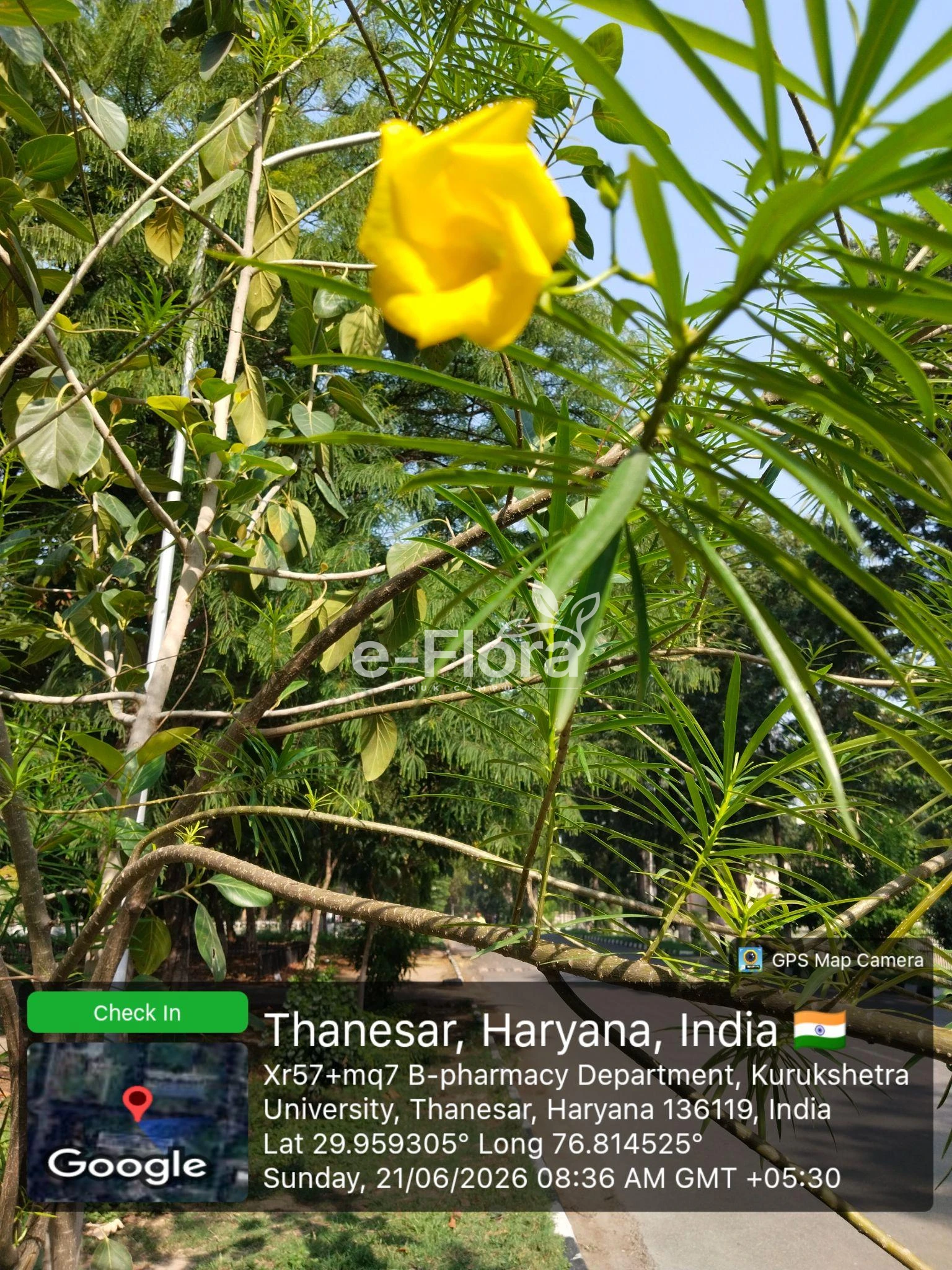
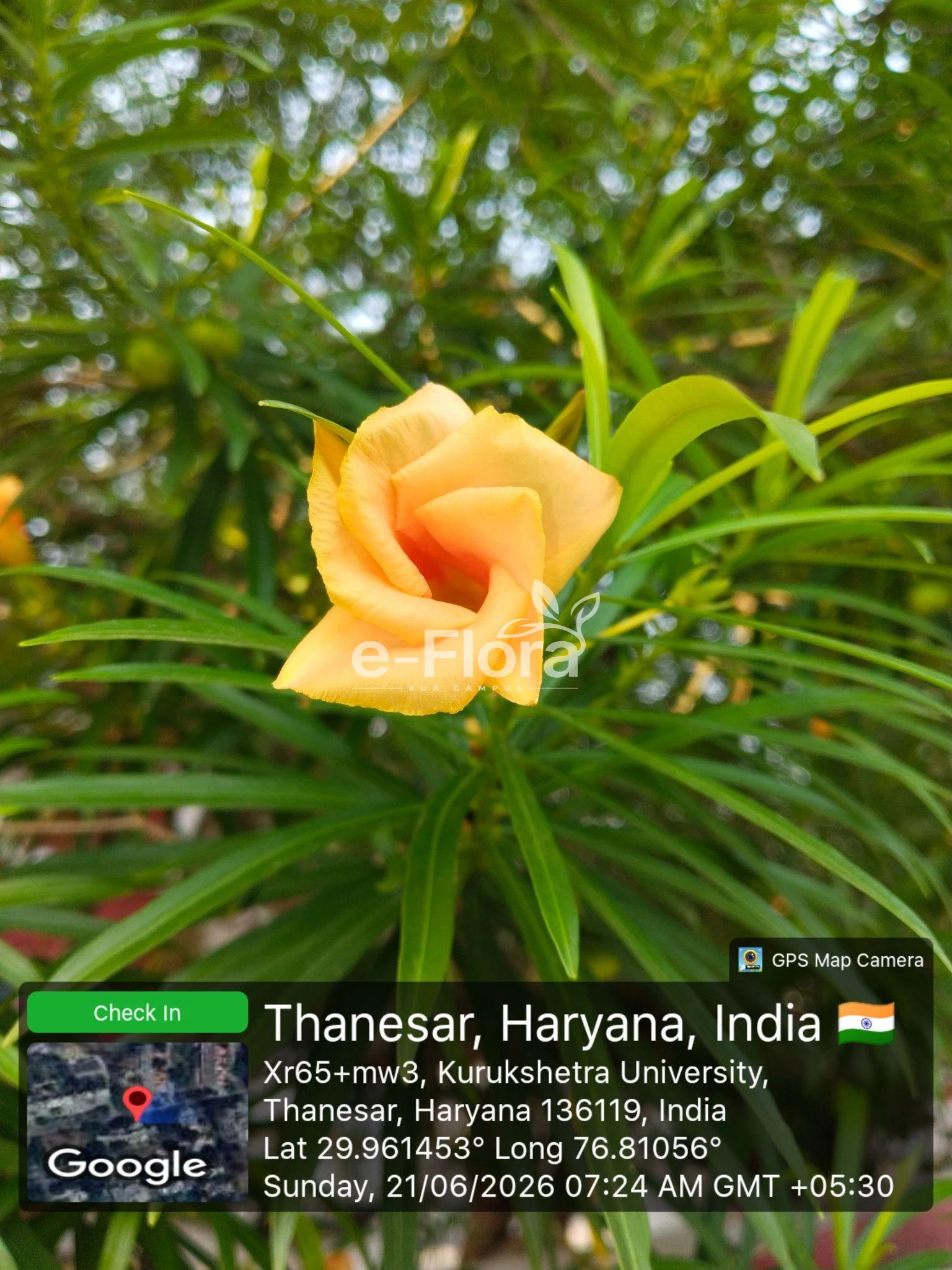
Cascabela thevetia (L.) Lippold
Vernacular name: Yellow oleander, Lucky nut (Hindi: कनेर / बेली)
Species Name: Cascabela thevetia (L.) Lippold
Family: Apocynaceae
Habit: Evergreen shrub/small tree
Stem: Grey bark, milky sap, 3-8 m tall, upright spreading.
Leaf: Spiral, linear-lanceolate 7-15×1-2 cm, petiolate, glossy green, waxy coating.
Flowering: Summer-autumn
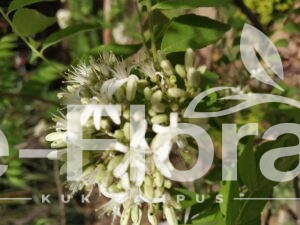
Flowers: Terminal cymes; 5 yellow petals (funnelform 4-7 cm long, twisted bud), 5 stamens (anthers included), superior ovary (2-carpellate).
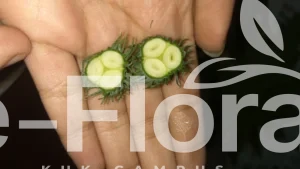
Fruit: Deep red-black ovoid pod 3-5 cm, hard-coated seed (“lucky nut”).
Uses:
- All parts contain cardioactive glycosides used cautiously as heart tonic, emetic, to treat skin problems and joint aches.
- Leaves serve as traditional diuretic and abortifacient (highly toxic).
- It is an ornamental plant, mostly used as hedges.
- Hindu Shivaratri offering; Mexican “good luck” seed.
- Seeds can be used as anti fungal coating, insecticide, termite repellent and Pacific rat poison.
- Wood is used as biofuel and in manufacturing of poles and handles.