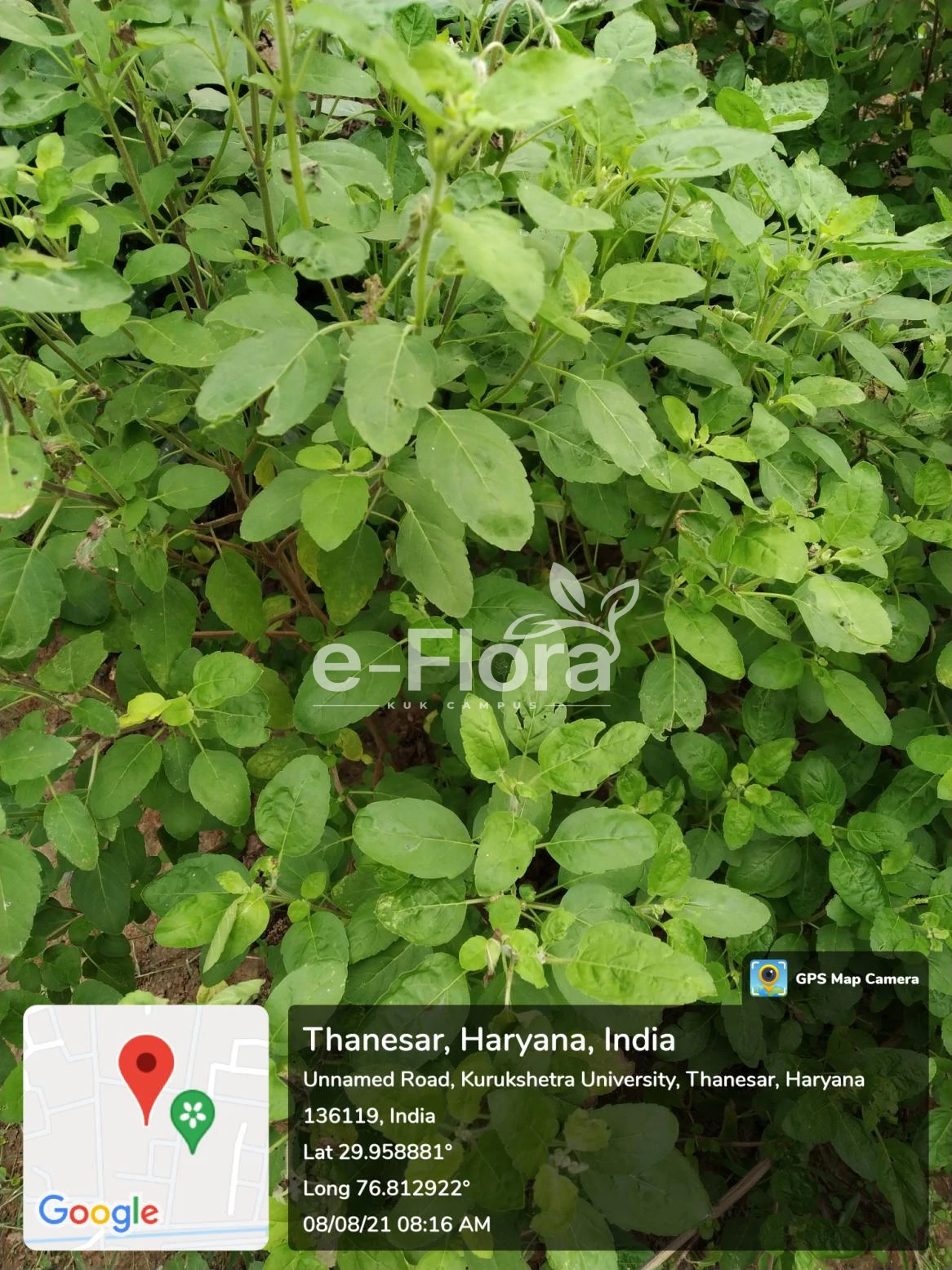
Ocimum tenuiflorum L.
Vernacular name: Tulsi
Species Name: Ocimum sanctum L.
Family: Lamiaceae
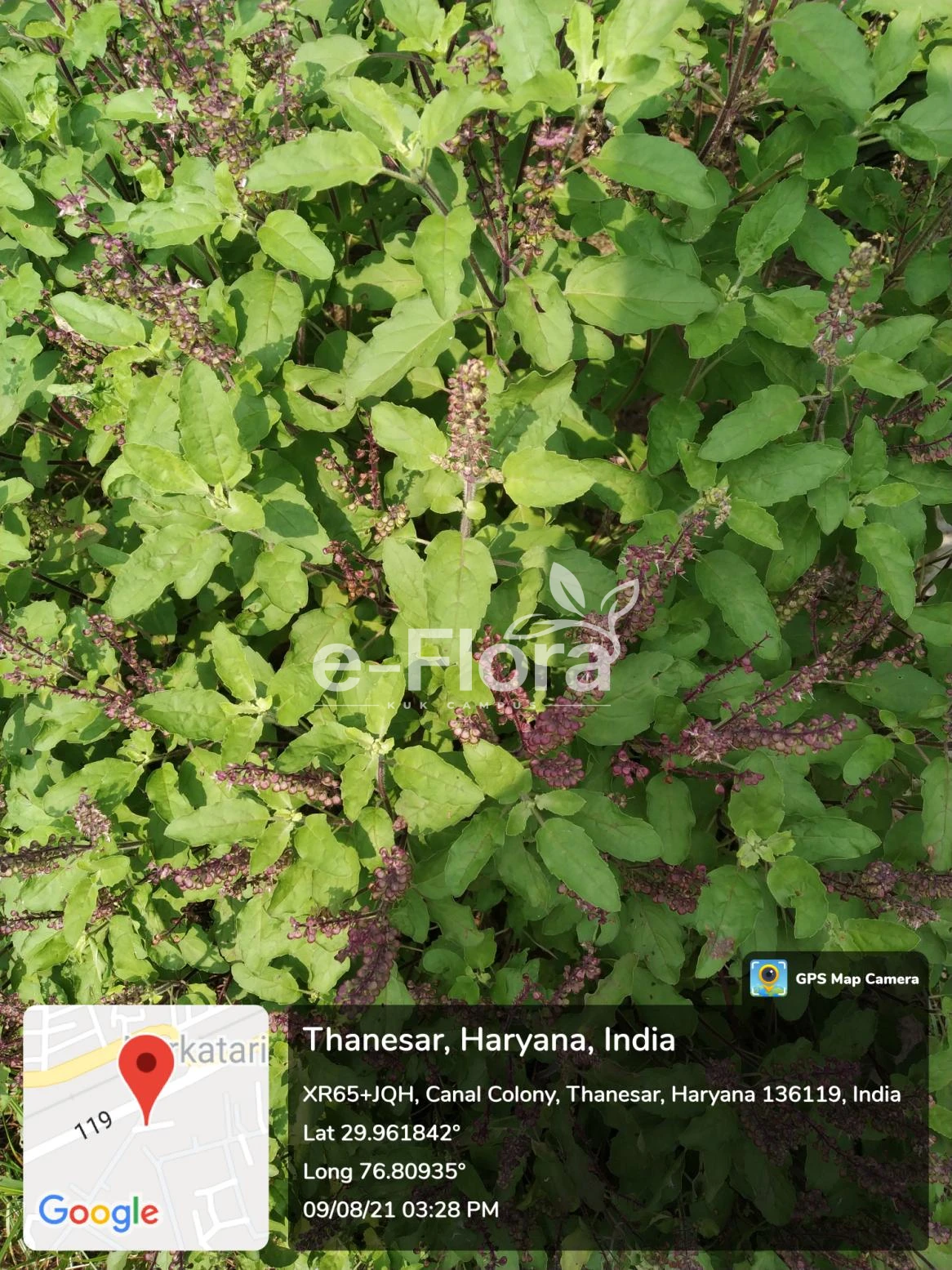
Habit: An erect, much-branched, pungent-odoured perennial herb.
Stem: Subquadrangular, often tinged with purple, somewhat woody at the base, softly and densely hairy.
Leaf: Petiolate, aromatic, ovate or elliptic-oblong, obtuse or subacute at the apex, attenuate or narrowed at the base, shallowly and distantly serrate along the margins, closely gland-dotted, with long hairs on both surfaces.
Flowering: September–March.
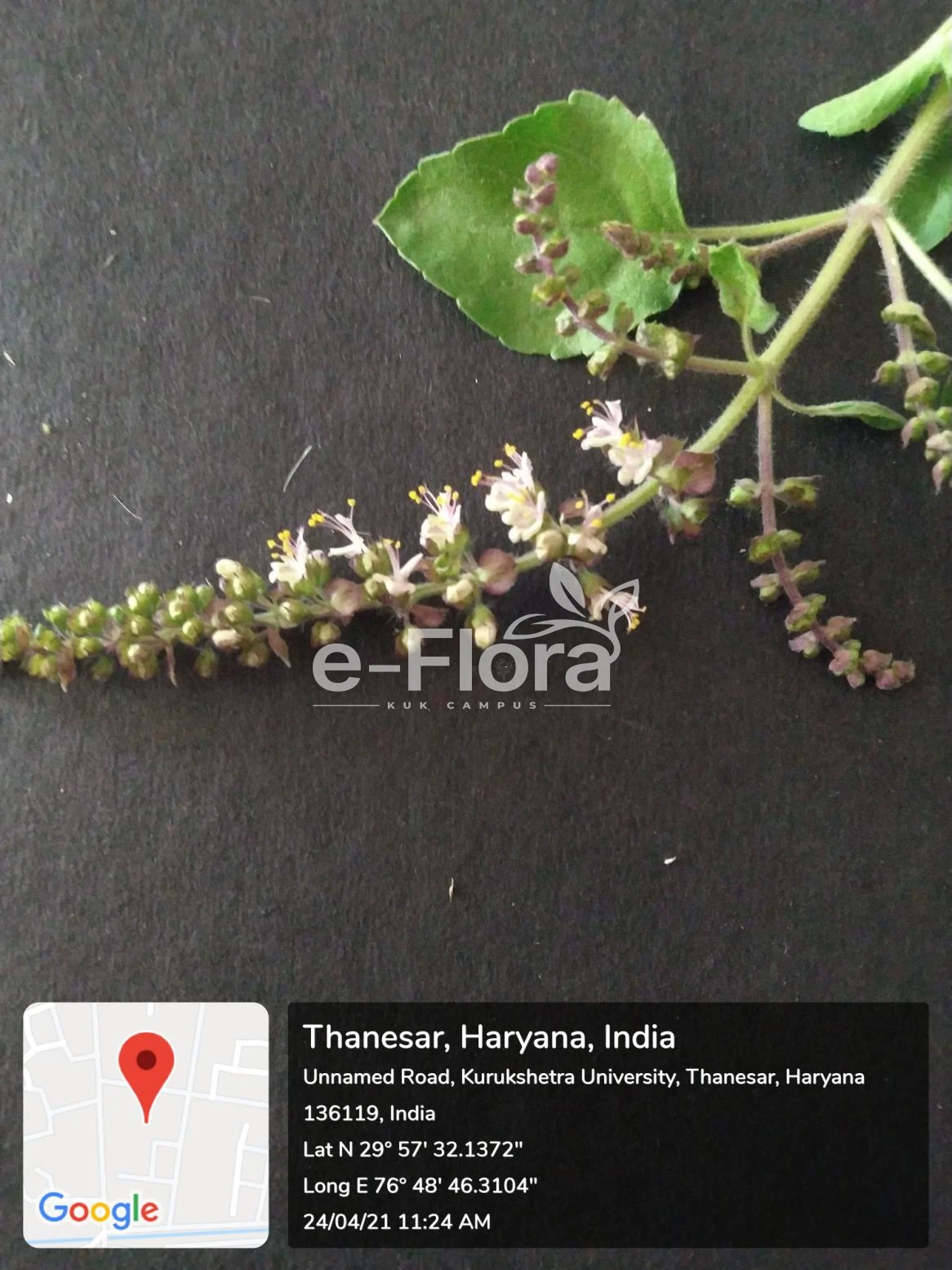
Flowers: Verticillaster inflorescence; bisexual flowers; floral axis as long as the calyx, slender, simple, sometimes branched, occasionally entire; inflorescence purple.
Fruit: Nutlets, 4.
Uses:
- The juice of leaves possesses diaphoretic, antiperiodic, stimulating and expectorant properties.
- It is used in cataract and bronchitis, applied to the skin, in ringworm and other cutaneous diseases and dropped into the ear to relieve earache.
- An infusion of the leaves is used as a stomachic in gastric disorders.
- A decoction of the root is given as a diaphoretic in malarial fevers.
- The seeds are mucilaginous and demulcent, and are given in disorders of genito-urinary systems.
- Plant has holy values too and traditional believes suggests not to chew leaves, instead swallow it whole as leaves contains Iron and Mercury.