
Launaea procumbens (Roxb.) Ramayya & Rajagopal
Vernacular name: Creeping Launaea, Desert Lettuce (Hindi: जंगली सलाद)
Species Name: Launaea procumbens (Roxb.) Ramayya & Rajagopal
Family: Asteraceae
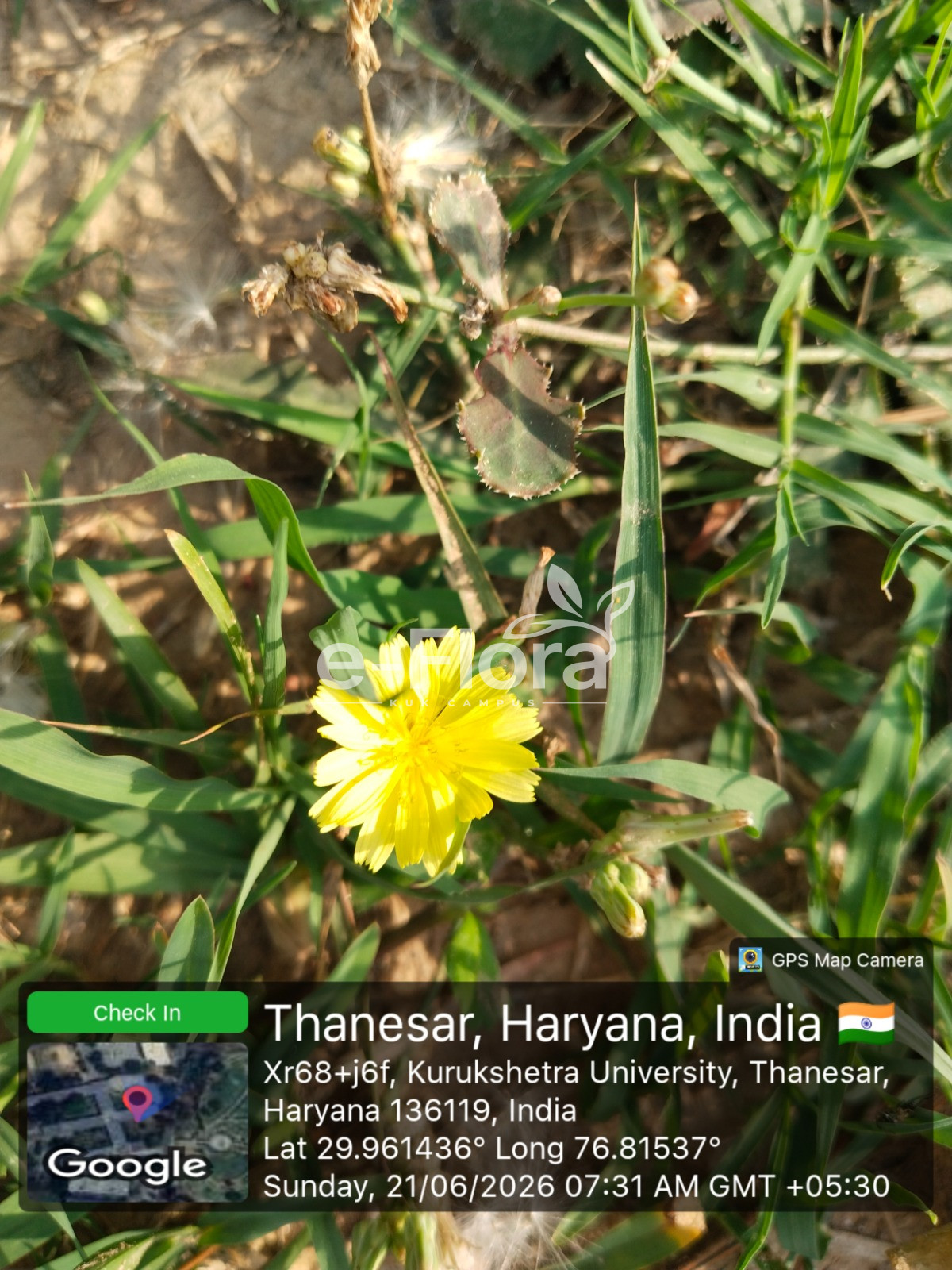
Habit: Prostrate to ascending annual or perennial herb.
Stem: Slender, much-branched, prostrate, glabrous to sparsely hairy, exuding milky latex.
Leaf: Alternate, oblanceolate to lyrate-pinnatifid, 3–12 × 1–5 cm, irregularly toothed or lobed, glabrous, sessile to short-petiolate.
Flowering: Winter–summer.
Flowers: Yellow, all ligulate florets arranged in terminal capitula; involucre cylindrical with several series of phyllaries; ovary inferior.
Fruit: Ribbed cypsela with a white pappus of numerous fine bristles aiding wind dispersal.
Uses:
- Plant contains compounds like phenolic acid (caffeic acid), tannins, sesquiterpene lactones (launaeolide, costunolide) and flavonoids (quercetin, kaempferol) that contributes to mild diuretic, antioxidant, antibacterial, antifungal, immunomodulatory and anti-inflammatory properties.
- Some studies shows that plant provide protection to kidney and lungs against certain toxins.
- Herbal medicines uses pastes and poultices of different parts of plant to treat several dermatological ailments and heal wounds.
- Plant is also used to manage edema and ease painful urination.
- In traditional practices, plant is used to treat dysentery, rheumatism, liver dysfunction, manage fertility issues, kidney, reproductive and digestive ailments.
- Young leaves are eaten as a leafy vegetable in some rural areas. Plant is also used as tonic in Ayurveda for promoting health and longevity.
- It is also grazed by livestock and serves as a fodder herb.