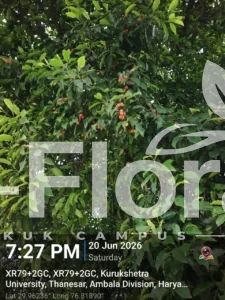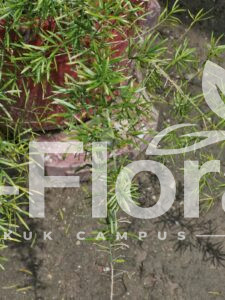
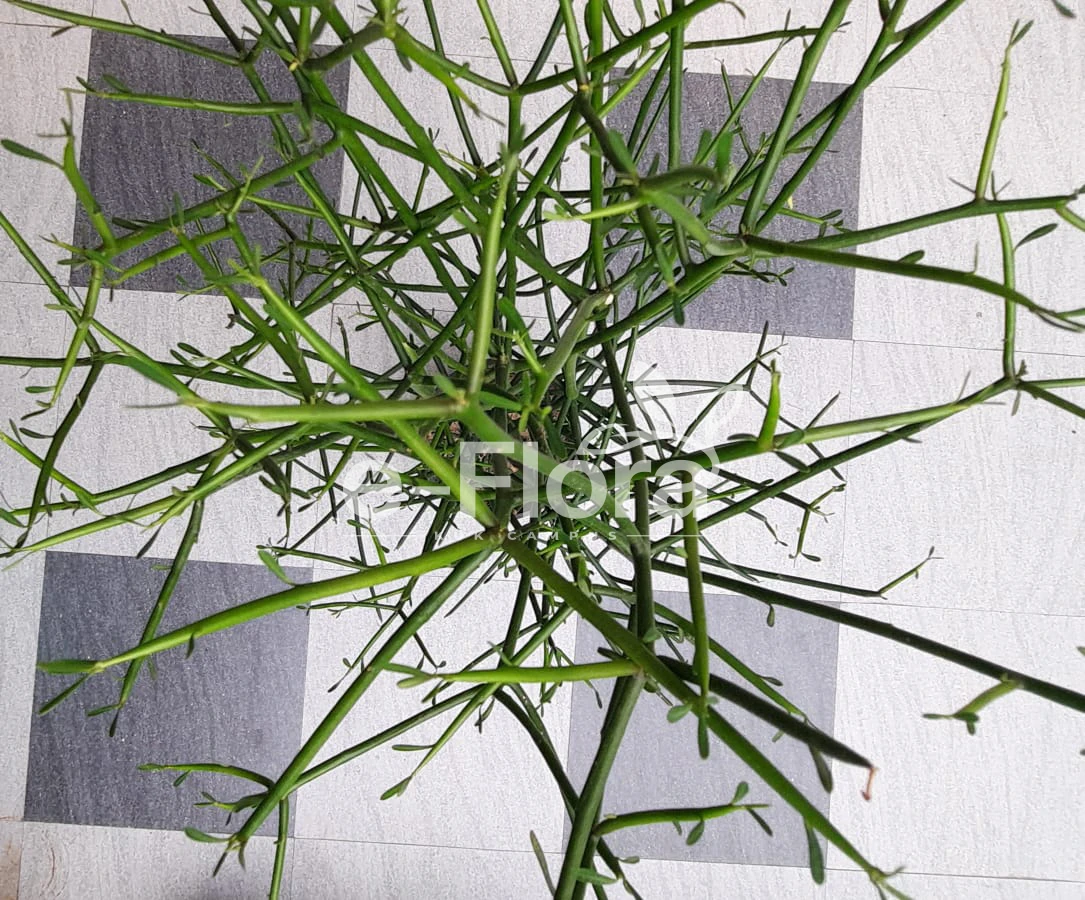
Euphorbia tirucalli L.
Vernacular name: Pencil cactus, Indian tree spurge, Milk bush, Fire stick
Species Name: Euphorbia tirucalli L.
Family: Euphorbiaceae
Habit: Evergreen succulent shrub or tree
Stem: Leafless, smooth, cylindrical, pencil-thick (0.7-1 cm diameter), highly branched, fleshy green turning coral-red/crimson in winter; exudes highly toxic milky latex sap when injured.
Leaf: Caducous (short-lived), narrow-linear when present on young shoots, soon shed; photosynthesis via green stems.
Flowering: Sporadic, mainly summer-autumn.
Flowers: Tiny, yellowish, unisexual in terminal clusters (cyathia); inconspicuous.
Fruit: Small 3-lobed capsule; rarely sets seed in cultivation.
Uses
- In traditional remedy across Africa, India, Brazil, Indonesia, plant is used in treatment of cancer, tumors, warts, asthma, cough, rheumatism, toothache, earache, neuralgia.
- Plant is used as snakebite antidote in Sri Lanka.
- Plant is used to manage skin diseases due to its antifungal property in Karnataka.
- Plant is used to prepare purgatives.
- Plant is also used in impotence cure.
- Stem sap is highly toxic and can causes severe irritation and blindness.
- Named after Euphorbus (1st century physician to King Juba II).
- Plant is mentioned in ancient Sri Lankan Tamil poetry (Akanaṉūṟu); folk tales of animals using sap as glue to trap prey.
- It is planted around African shrines/kraals as protective barrier.
- Known as “miracle tree” in tropics for versatile survival and medicinal lore.
- Latex investigated as hydrocarbon biofuel source (10-50 barrels/acre potential, though commercially unviable).