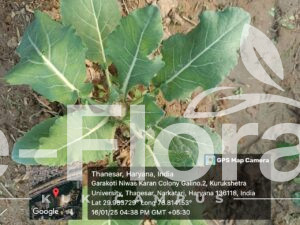

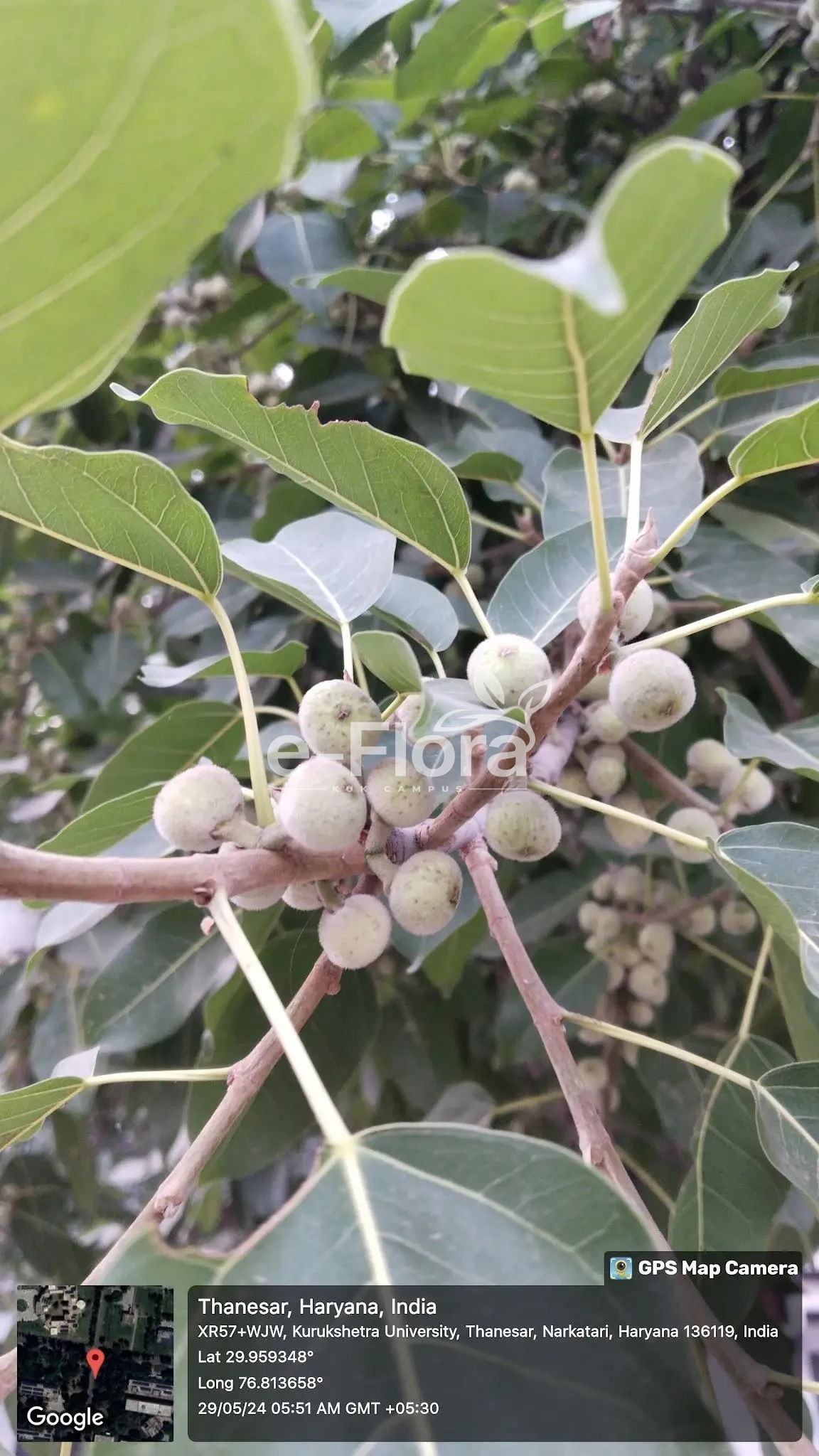
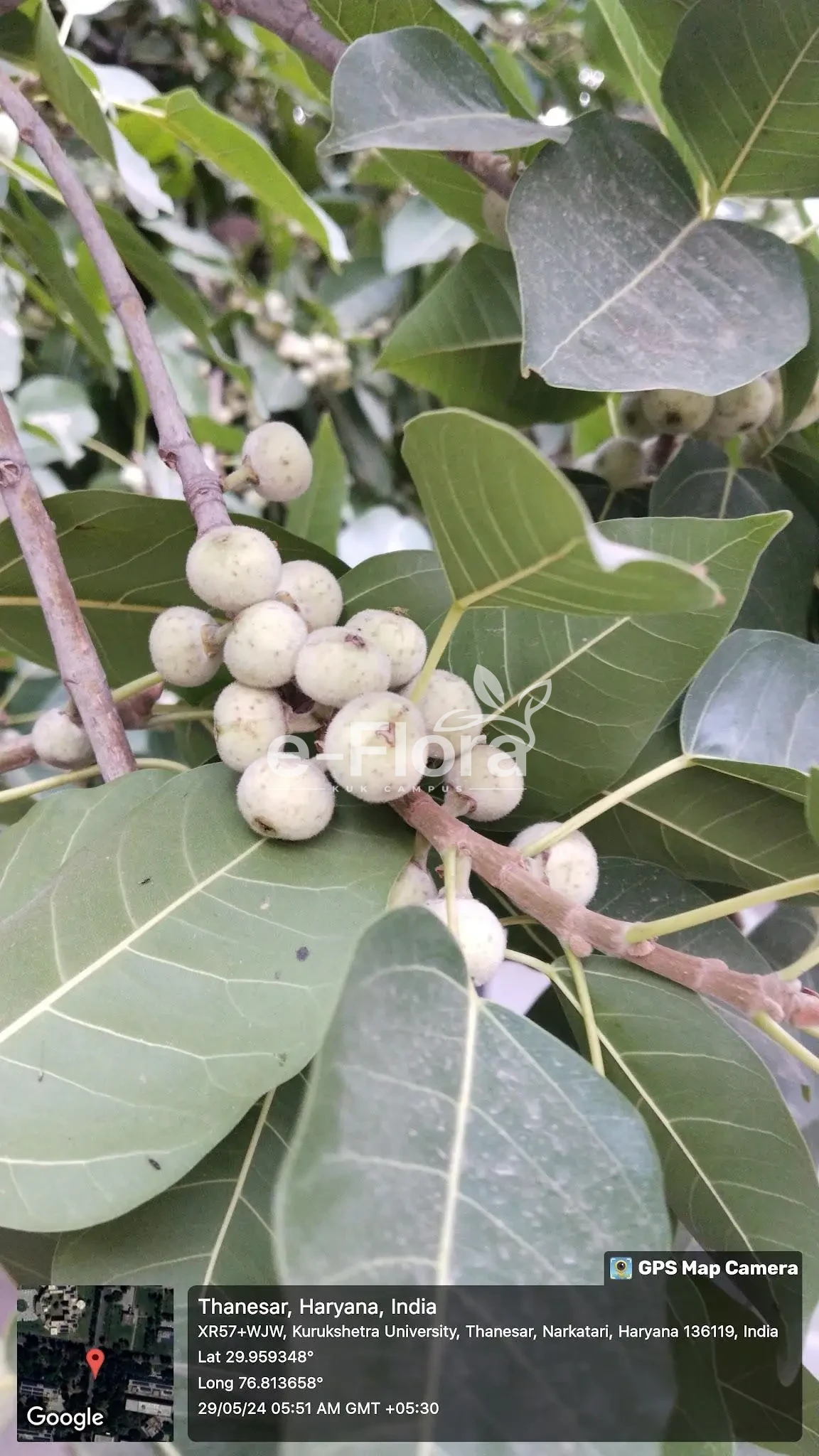
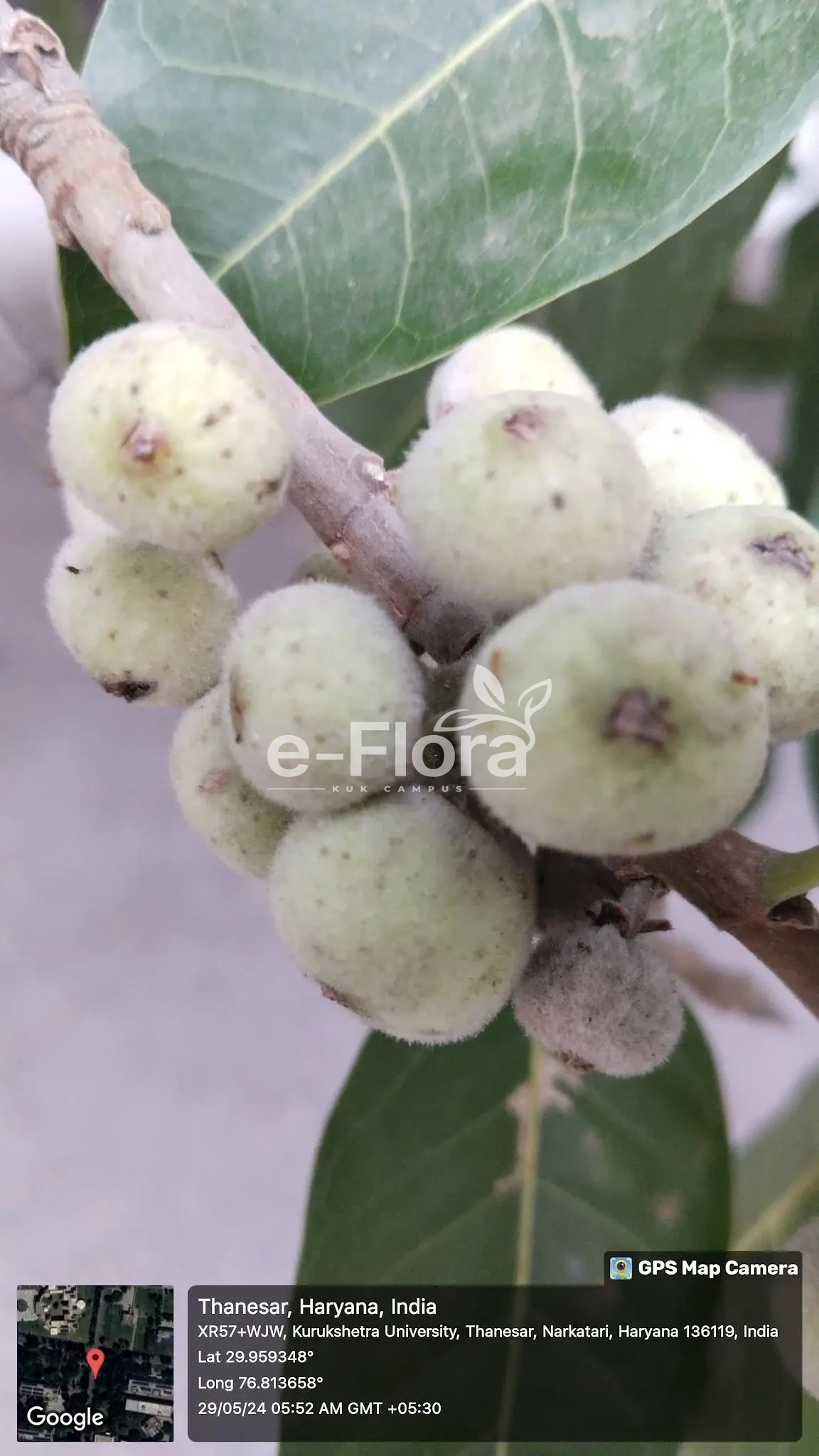
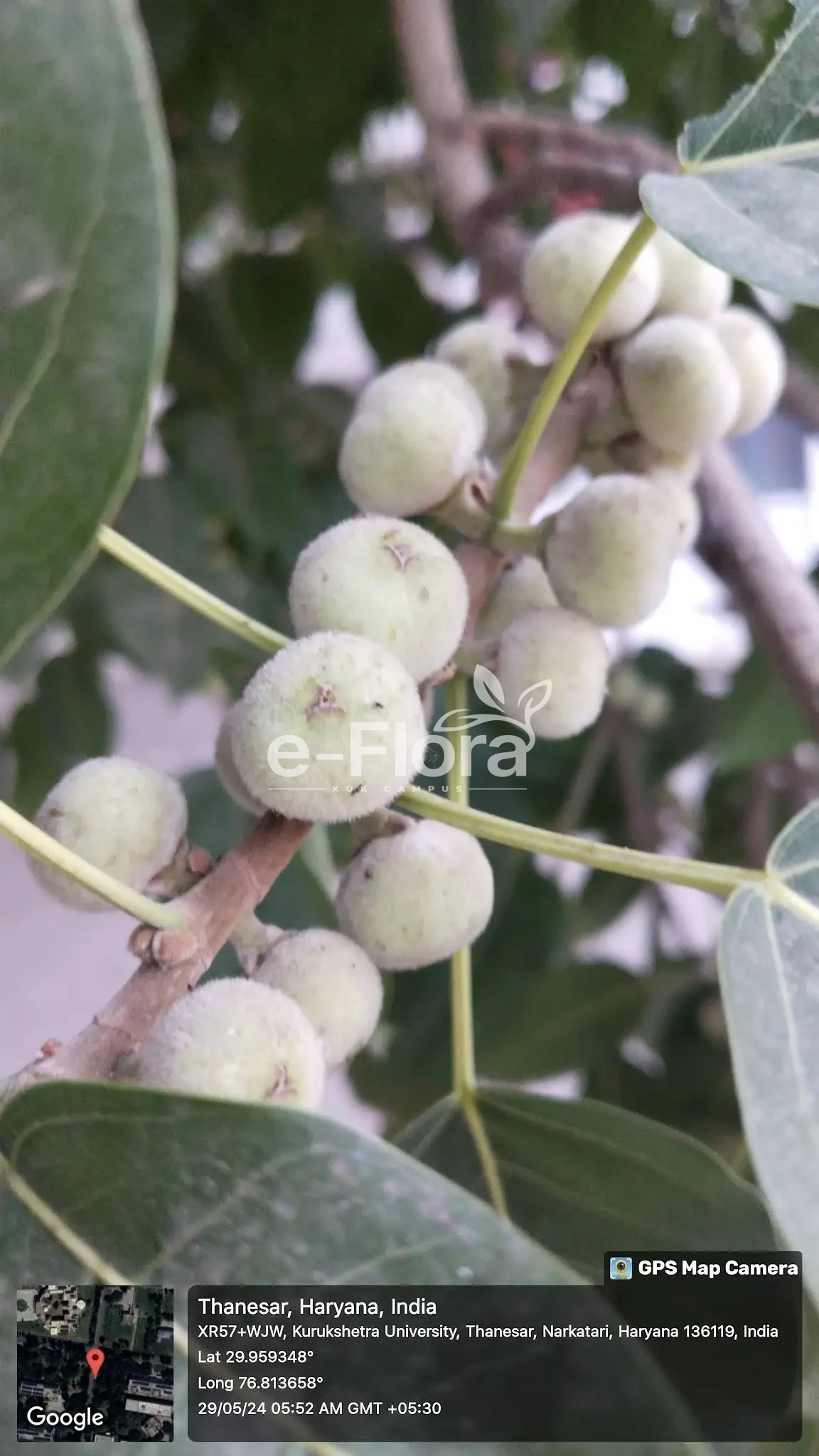
Ficus racemosa L.
Vernacular name: Goolar, Cluster fig
Species Name: Ficus racemosa L. (syn. Ficus glomerata L.)
Family: Moraceae
Habit: Evergreen tree
Stem: Smooth trunk, grey bark, almost no aerial roots
Leaf: Ovate-elliptic to oblong-elliptic, entire, glabrous, stipules 2, imbricate, pubescent, linear-deltoid, deciduous.
Flowering: November-January
Flowers: Hypanthodium inflorescence, pyriform, pubescent, pedunclate, basal bracts 3, sessile florets, Staminate florets sessile, few diandrous, situated near the mouth of the receptacles.; Gall flowers long stalked.; Pistillate florets numerous, subsessile, smaller than the staminate florets.
Fruit: Synconus orange-red, fleshy
Uses
- All parts are cooling, sweet, acrid, vulnerary, anti-dysentric, and are useful in cough, biliousness and diseases of the vagina.
- The root is useful in hydrophobia.
- The bark is cooling, acrid, galactagogue and is good for the gravid uterus.
- The unripe fruit is astringent to bowels.
- Its tonic is styptic and allays thirst.
- Plant is useful in treating coughs, biliousness, leucorrhoea, and blood diseases.
- Bark decoctions are used as mouthwash to treat spongy gums.
- Fruit is helpful in managing heavy menstrual bleeding.
- Latex and sap of tree are used to treat mumps.
- Unripe fruit is used to make pickles and curries while dried fruit is used in the form of flour for baking.
- It’s a shade tree used for soil and water conservation.