Dillenia indica L.
Vernacular name: Chalta/Chulta, Elephant Apple, Mota-Karmal
Species Name: Dillenia indica L.
Family: Dilleniaceae
Habit: Evergreen to semi-evergreen tree, usually medium to large-sized; found mainly in moist tropical forests.
Stem: Woody, stout and branched; bark greyish-brown; trunk often straight and robust.
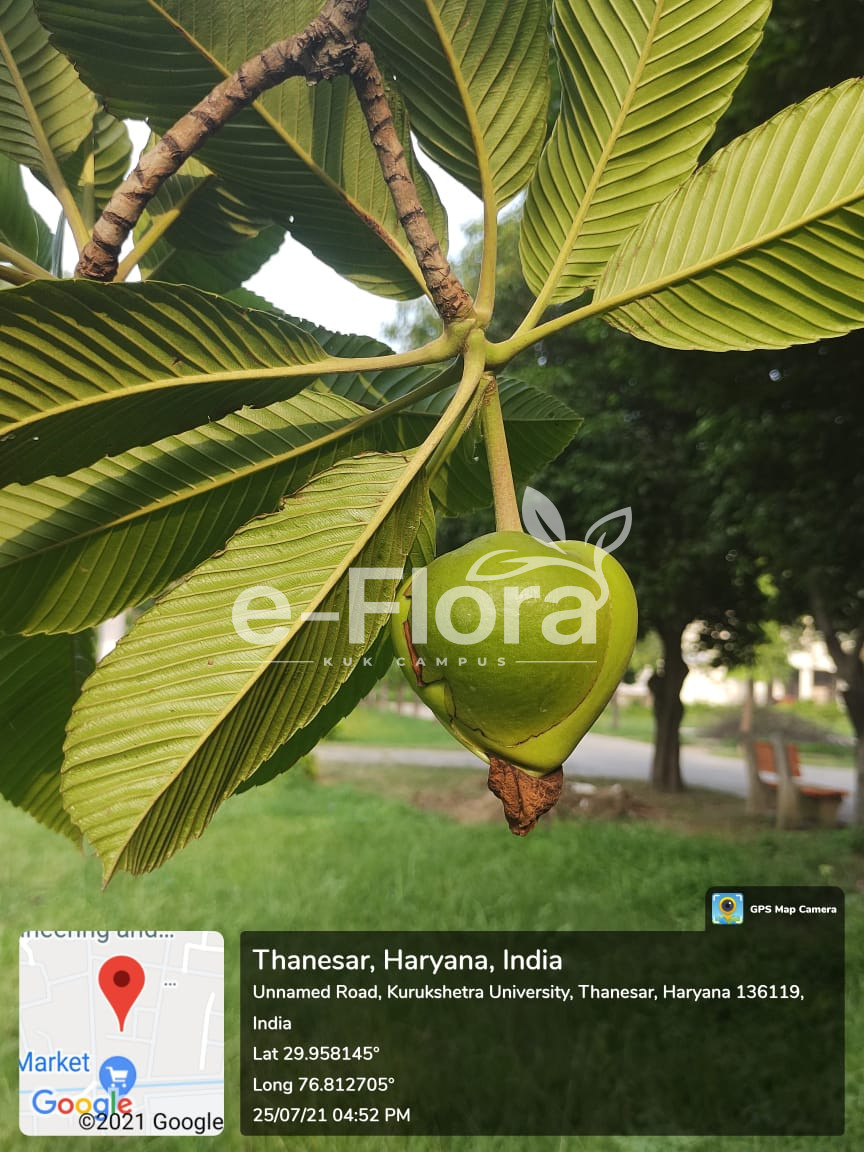
Leaf: Simple, alternate, large, oblong to elliptic-oblong; leathery; margins distinctly serrated; prominent parallel secondary veins; leaves often clustered toward the ends of branches.
Flowering: May–February
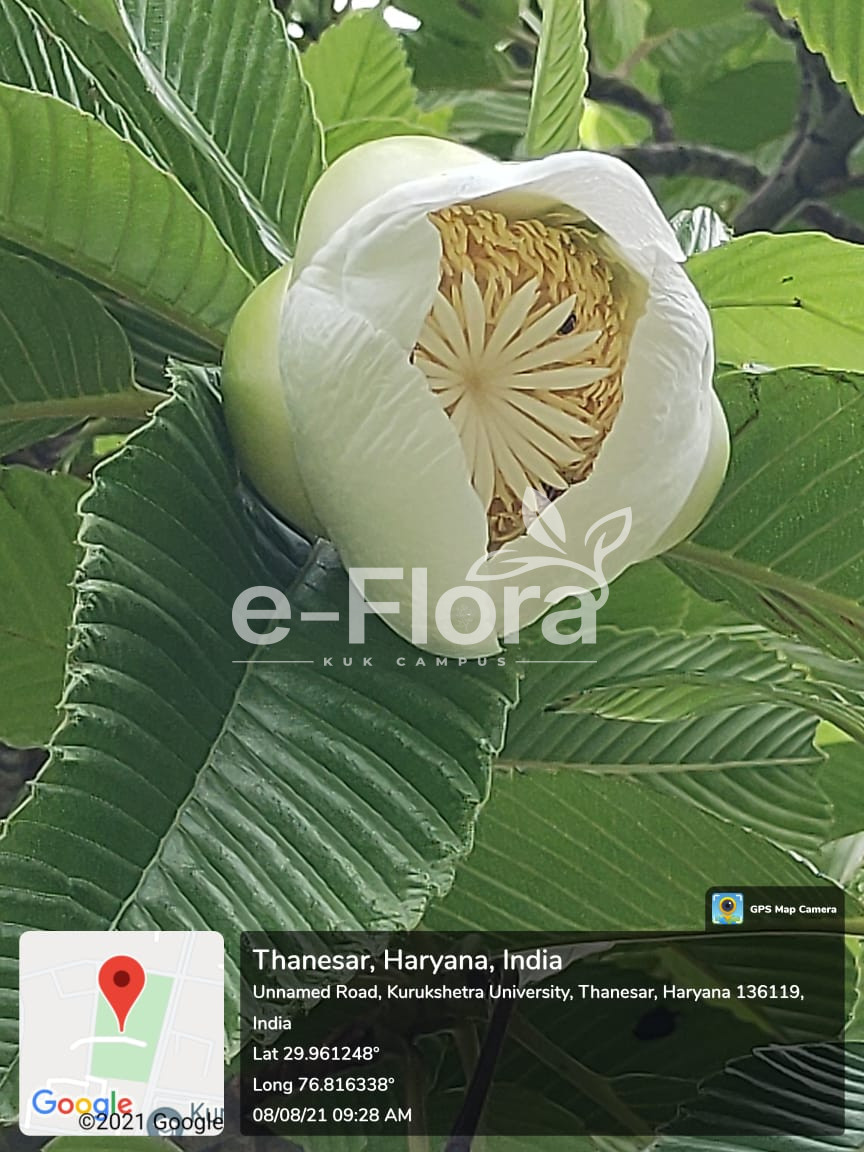
Flowers: Large, showy, solitary, usually terminal or axillary; white petals; numerous yellow stamens; flowers can be conspicuous beneath the foliage. Solitary flowers, sometimes appearing in short terminal/axillary arrangements.
Fruit: Large, globose to depressed-globose, fleshy aggregate fruit enclosed by the enlarged, persistent, fleshy sepals; green when young and yellowish when mature.
Peculiar features: Very large serrated leaves, large white flowers with numerous stamens, and a distinctive large fleshy fruit surrounded by persistent enlarged sepals are the major identification characters. The fruit is popularly known as elephant apple
Uses:
- Traditional medicines made a syrup mixing the fruit juice of elephant apple plant and sugar to alleviate cough, dyspnea and fever symptoms.
- Tropical application of paste of bark and leaves help in healing and treating wounds, skin pigmentation, reduce swelling and calm scabies.
- Herbal remedies made a candy using honey or sugar with fresh fruit juice of chalta that stimulates appetite and improve digestion.
- Decoction of bark is used as gargle to soothe oral thrush and reduce bad breath.
- Fruit used as food and in culinary preparations as pulpy fibrous sepals of fruit adds a tangy sour flavor to curries. Fruit is processed in jam, jellies, pickles and chutneys either ripe or unripe.
- A cooling drink or sherbet is made during summers by mixing fresh fruit juice with water and sugar.
- Mucilaginous fruit pulp when mixed with water creates mild lather and can be used as natural shampoo to clean scalp and hair.
- Fresh fruit juice or cold infusions from fruit are applied on scalp in traditional practice to reduce hair fall and stimulate regeneration of hair.