
Eriobotrya japonica (Thunb.) Lindl.
Vernacular name: Loquat, Lokat
Species Name: Eriobotrya japonica (Thunb.) Lindl.
Family: Rosaceae
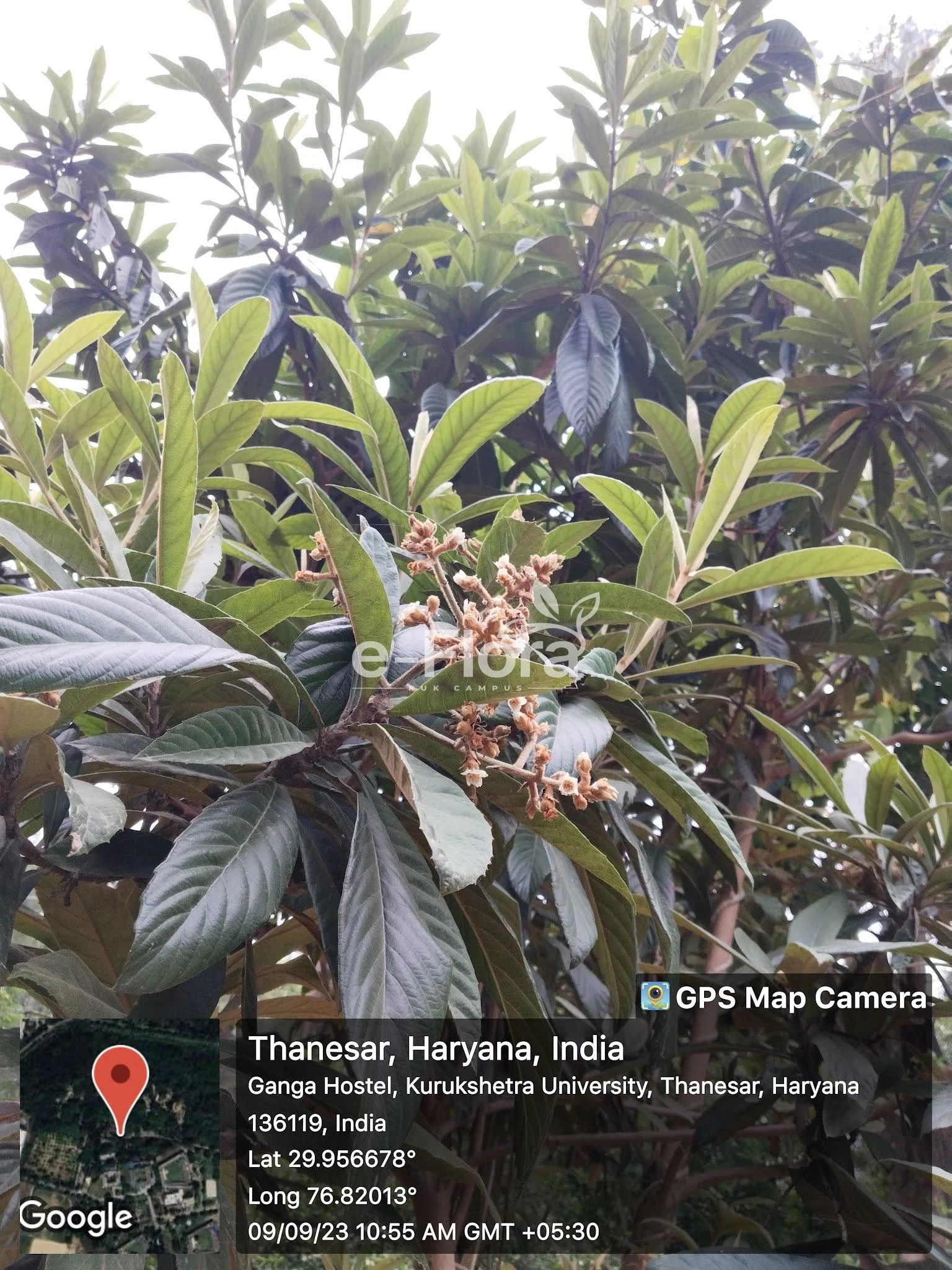
Habit: Evergreen small tree
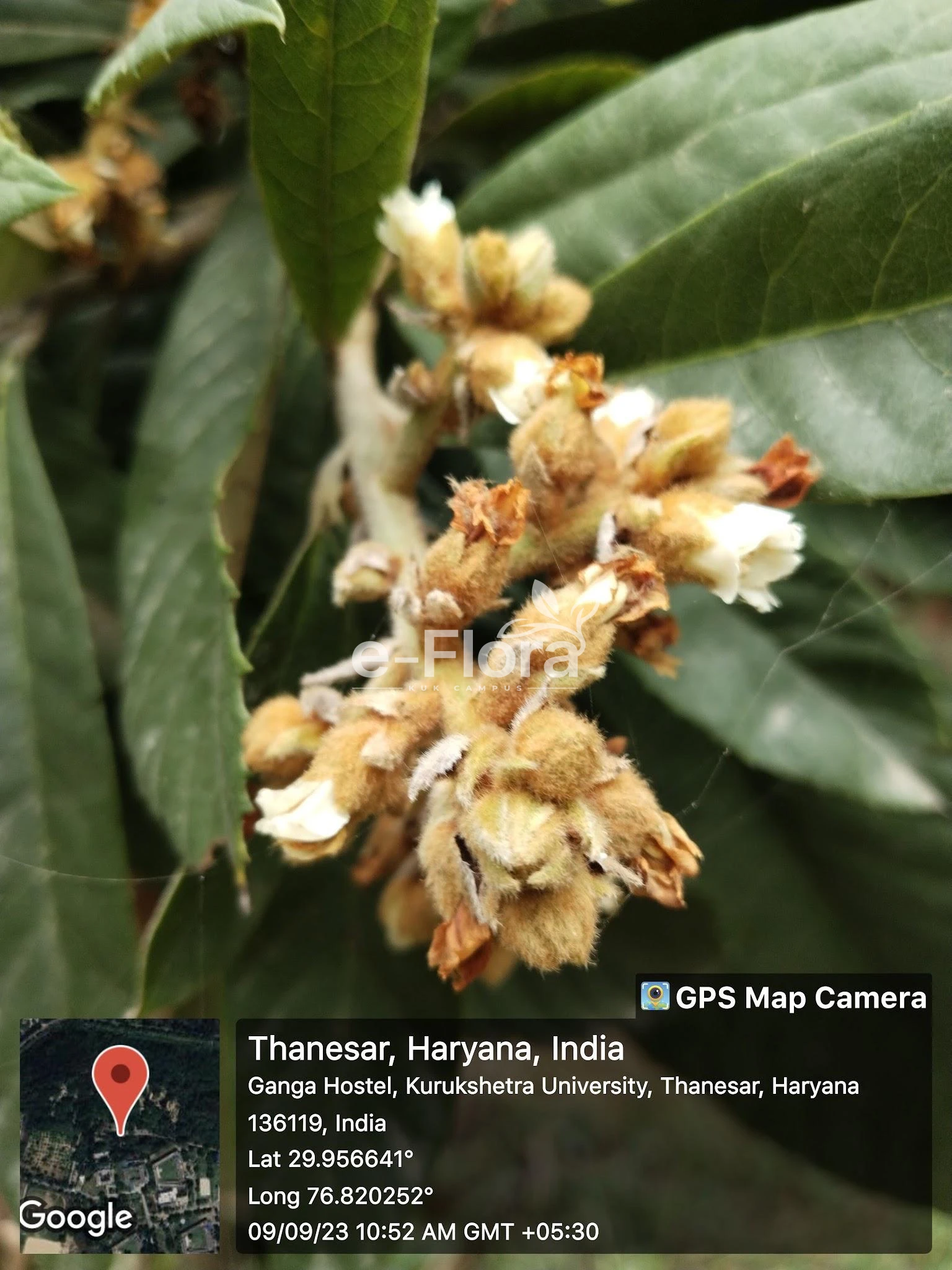
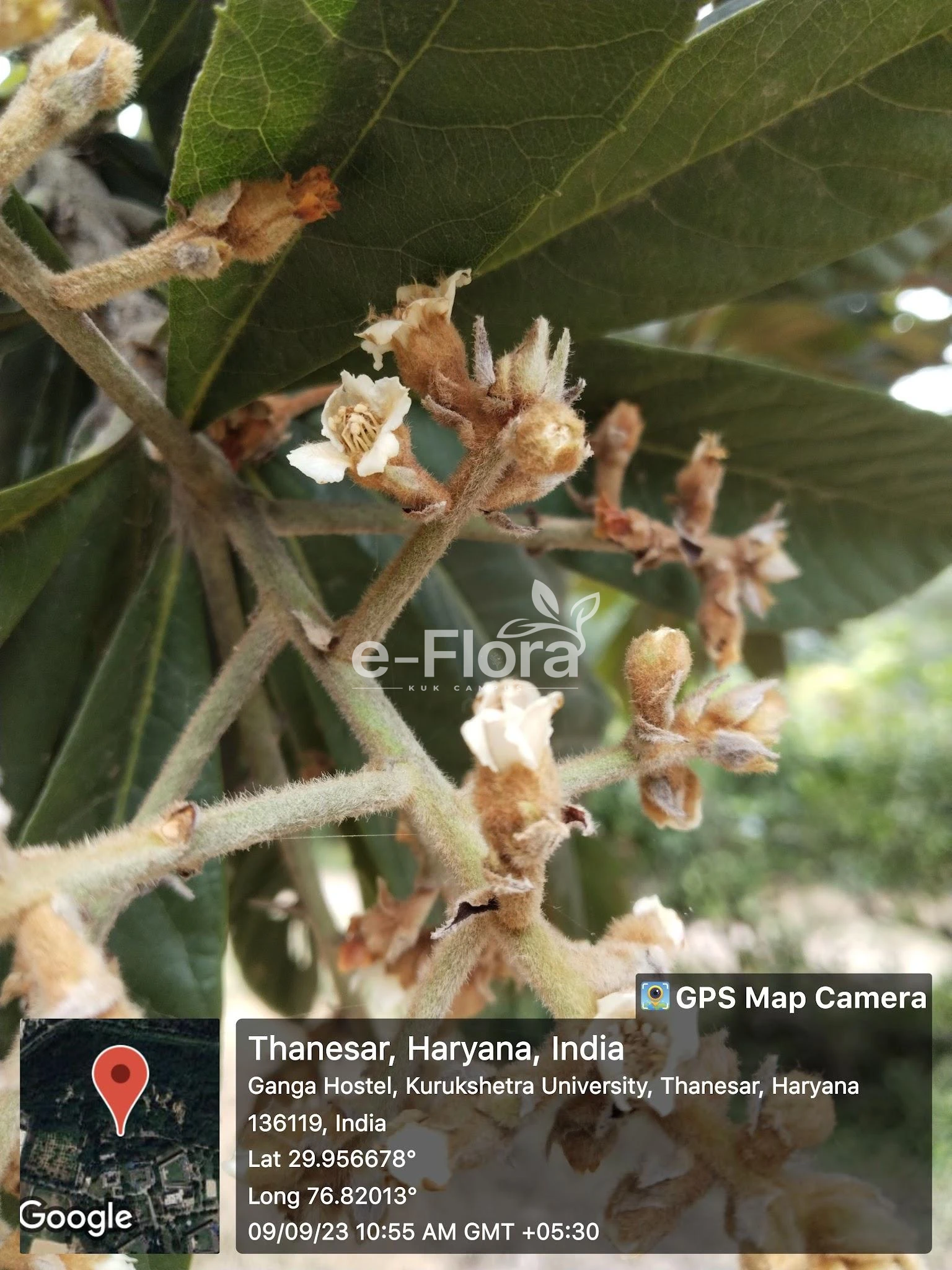
Stem: Young shoots rusty-tomentose, older branches grey-brown, smooth.
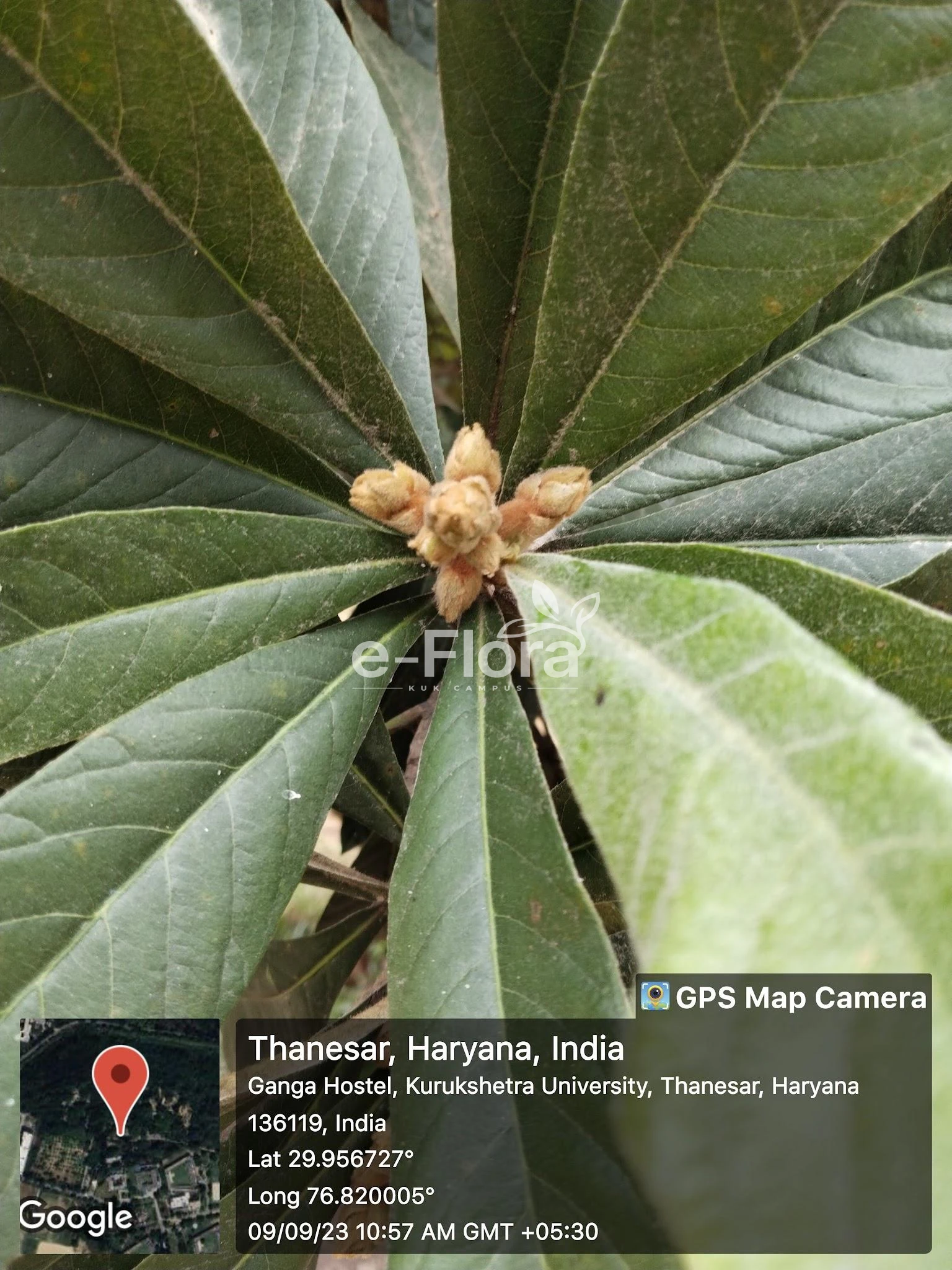
Leaf: Simple, alternate, elliptic-lanceolate, 10-20 cm long, 5-10 cm wide, leathery, glossy green above, rusty-felted below, entire or shallowly serrate.
Flowering: November–February
Flowers: Terminal panicles 10-25 cm, white, fragrant, 5-petalled, hermaphrodite.
Fruit: Pome, pear-shaped, 2-5 cm diameter, yellow-orange, fleshy, 1-10 seeds, edible.
Uses
- Leaf are used to make tea that helps with cough, bronchitis, nausea, vomiting and fever.
- Plant has antidiabetic, anti-inflammatory and antioxidant property.
- Unani medicine calls “Lokat” for nausea and dysentery.
- Ayurvedic use it for pitta balance and asthma management.
- Himachal Pradesh healers use leaf decoction for “lung heat”.
- Fresh fruit is eaten raw due to its sweet tangy taste and nutrition enrichment.
- Fruit can also be used to make salsa, sauce, jam, jellies and juices.
- Leaf extract can be used to manage insulin and blood sugar.
- Plant is an ornamental and shade plant.
- Wood can be used to craft sticks and handles of tools.