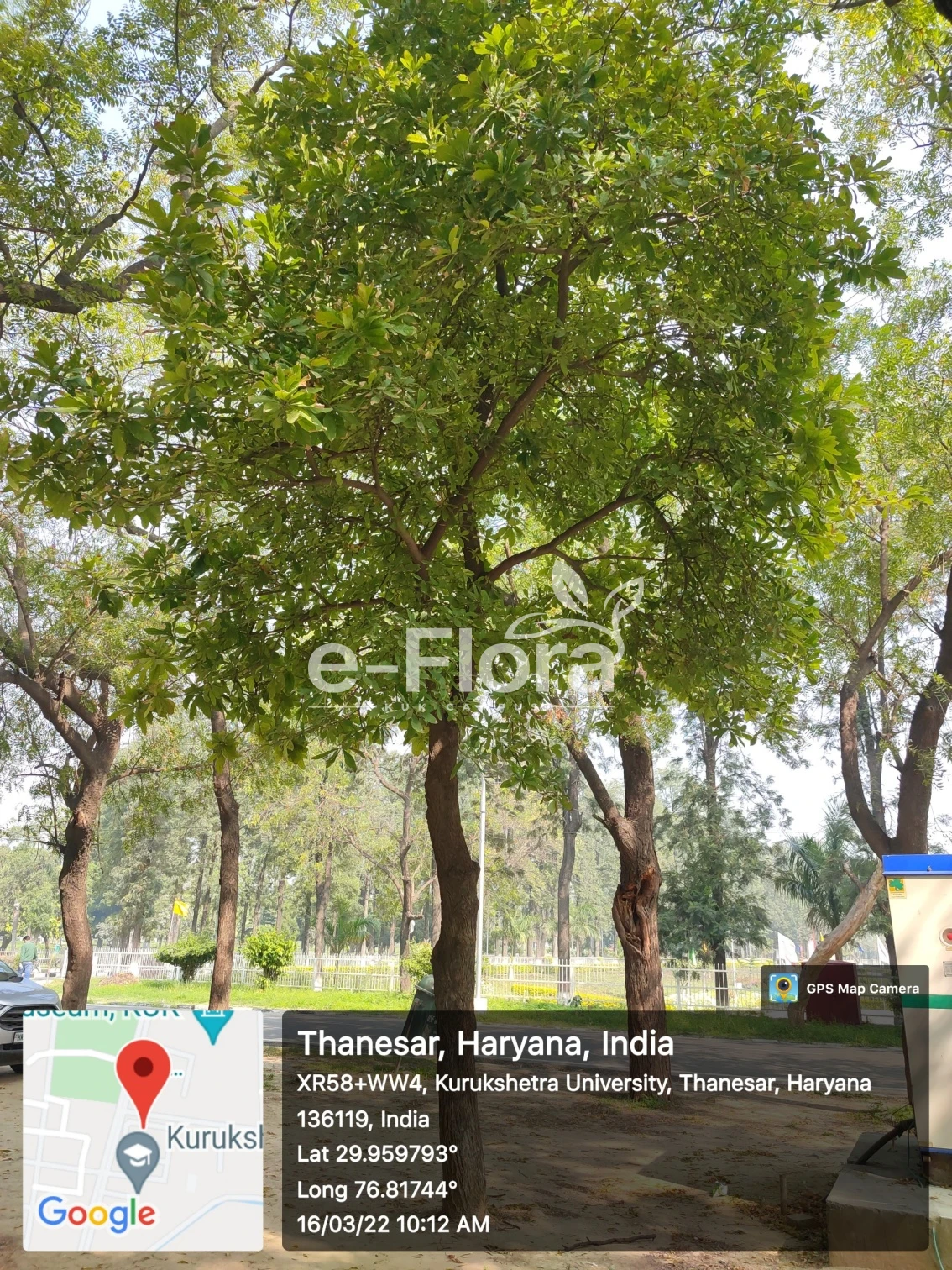
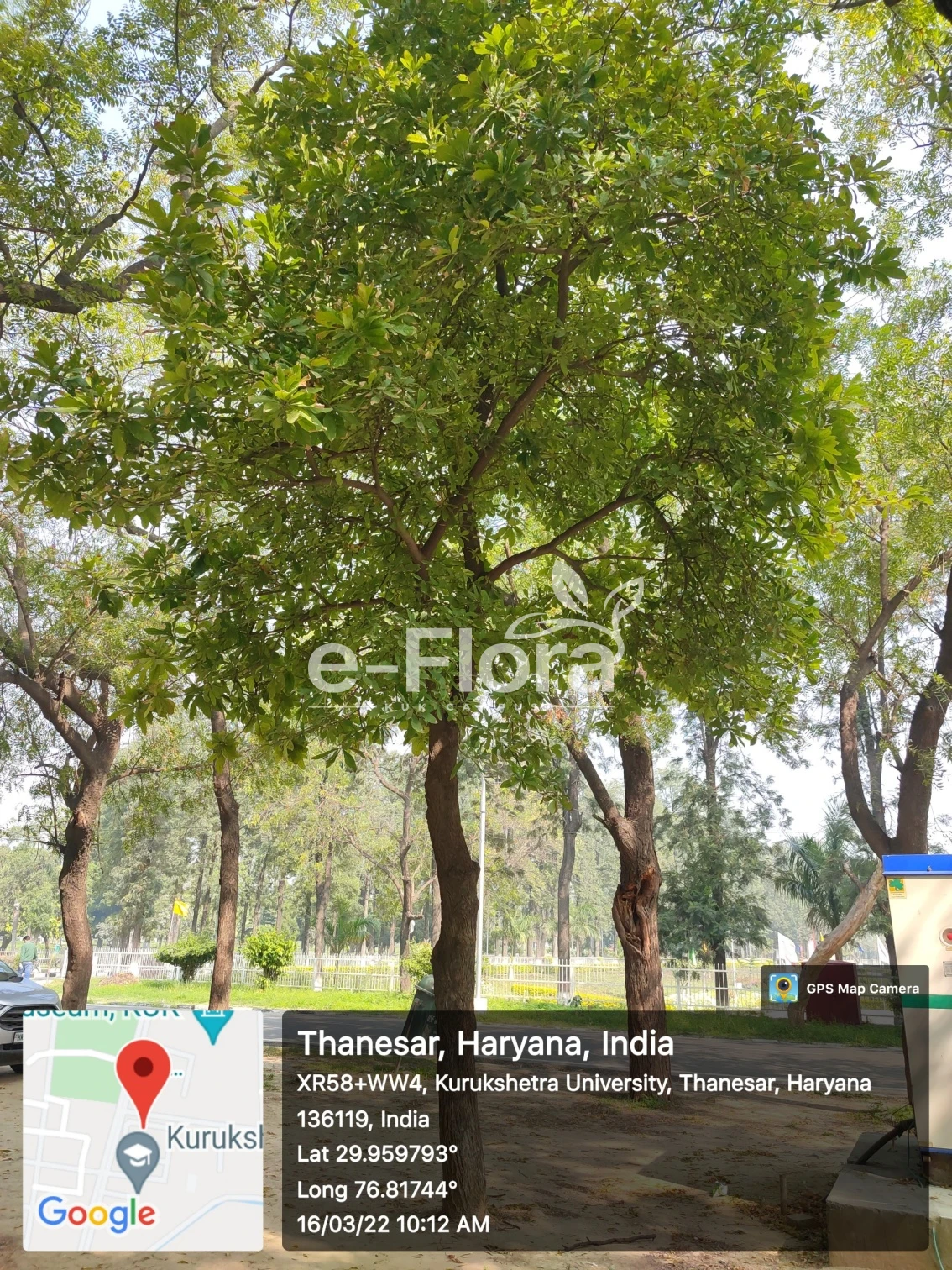
Terminalia catappa L.
Vernacular name: Indian Almond, Tropical Almond, Sea Almond, Badam (Hindi: बड़ाम)
Species Name: Terminalia catappa L.
Family: Combretaceae
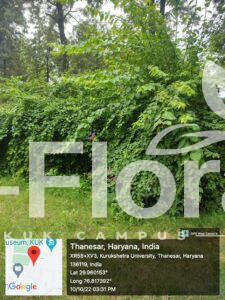
Habit: Large evergreen tree (20-35 m)
Stem: Buttressed trunk (1-2 m diam.); grey-brown rough bark
Leaf: Obovate, spirally clustered at branch tips (15-25 × 10-14 cm); glossy dark green, turning red before abscission
Flowering: April-July
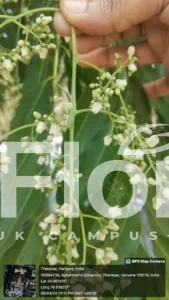
Flowers: Axillary spikes; apetalous greenish-white; 10 stamens; inferior ovary
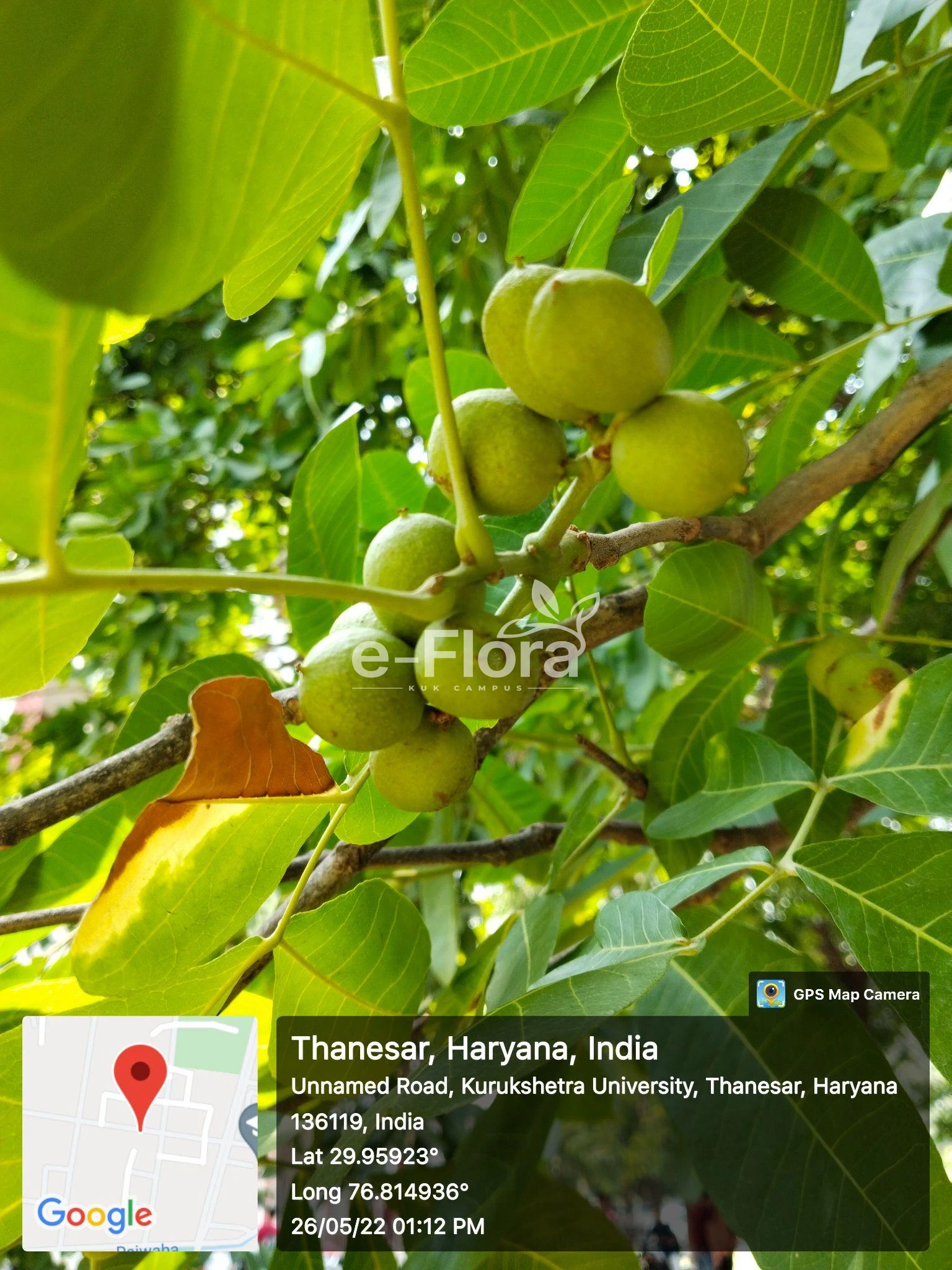
Fruit: Drupe-like, ovoid (4-7 cm); green maturing red-brown; edible almond-like kernel
Uses:
- Traditional medicines uses extracts of bark and leaves to treat dysentery, diarrhea, joint pain and several skin conditions.
- Plant is rich in polyphenols like ellagic acid and punicalagin that attributes to anti-diabetic, anti-inflammatory, antioxidant and antimicrobial properties.
- Juice of the leaves is used in headaches and skin diseases.
- Fruit works as a cooling astringent to bowels.
- Seed yield a kernel oil that is rich in fatty acid and can be used as hair tonic and to treat leprosy when mixed with extracts from other parts of plant. Kernel oil is edible and can also be used in industries for soap-making and biofuel production.
- Nut kernel can be consumed raw or roasted, they tastes like almond, whereas, young leaves are cooked as vegetable
- It is a Pagoda-shaped beach tree also known as “Country Almond” for its edible nuts and a Hindu sacred planting.
- Planted in the gardens and can be used on road-sides as a shade-tree.
- Plant can tolerate pollution and salt spray and used as windbreaker for coastal erosion.
- Plant yield a reddish timber that can be used in manufacturing of furniture, construction and boat building.
- Fruit and bark is used traditional to yield black and yellow dyes.
- Tannins present in leaves can lower the pH of water making it adaptable for tropical fishes.
- Plant can be helpful in preventing fungal and bacterial infections, heal wound and reduce stress for aquarium fishes.
- Biofilm created due to decomposition of leaves can be used as fodder for freshwater shrimps and silkworms.