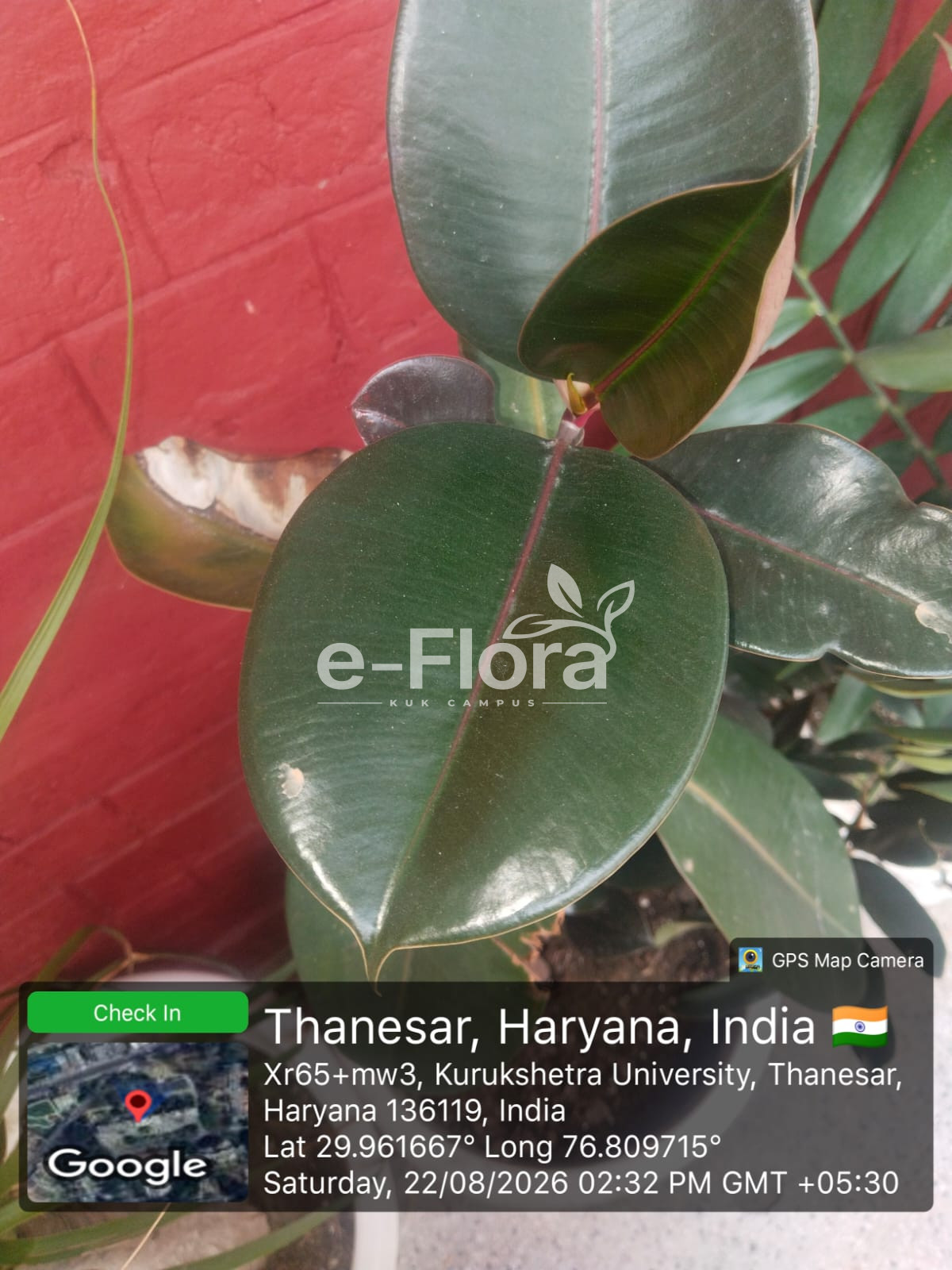
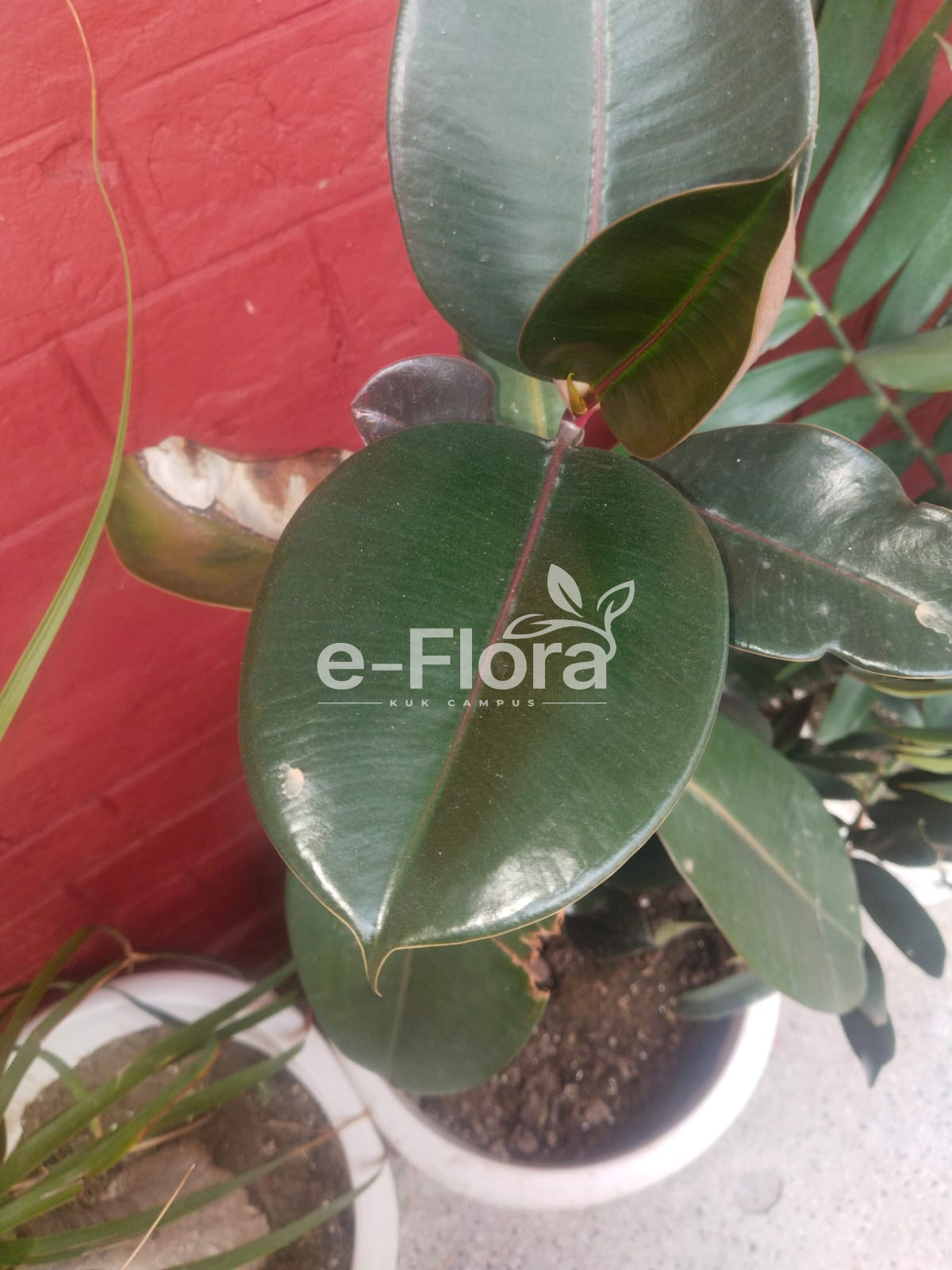
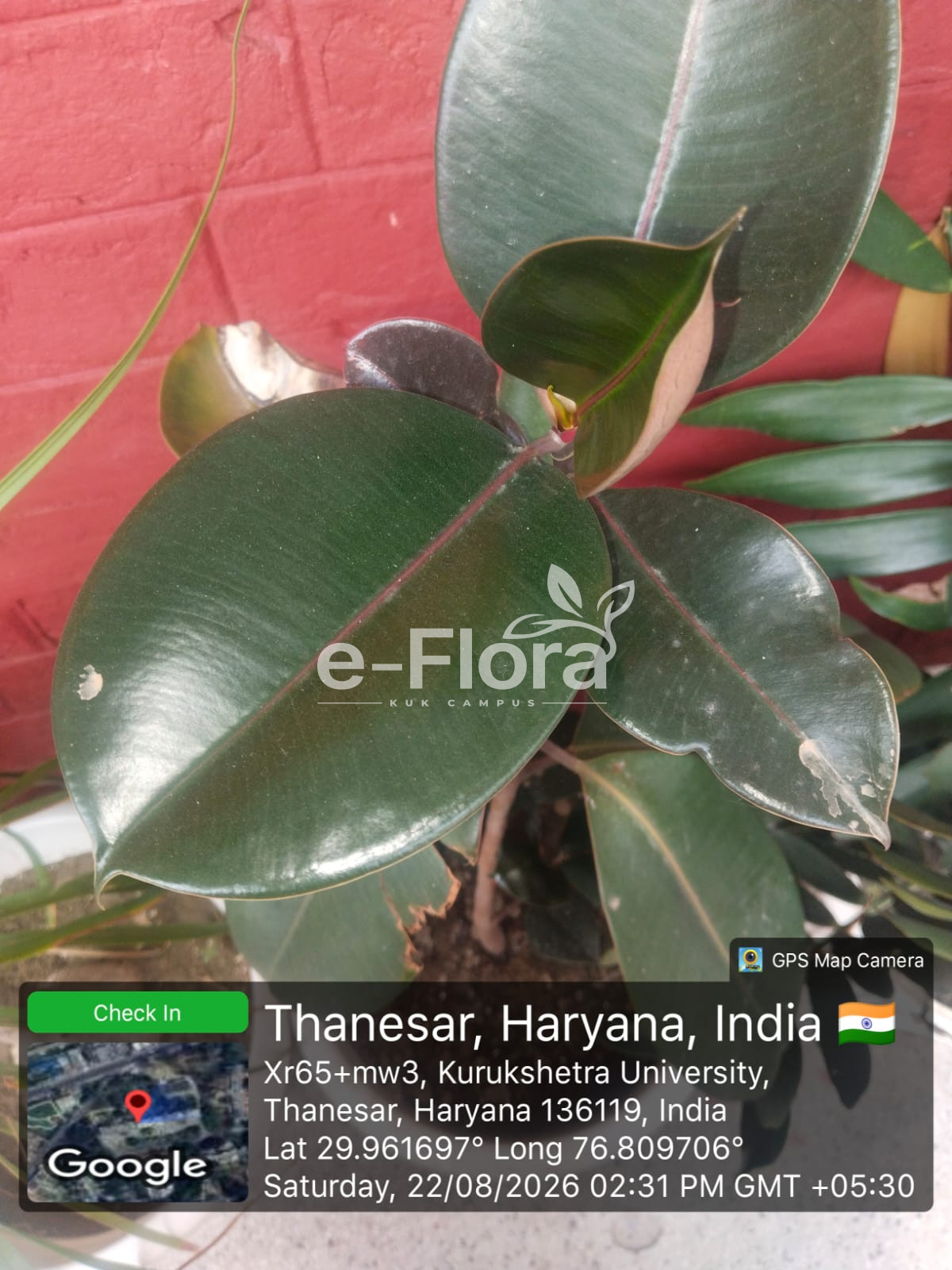
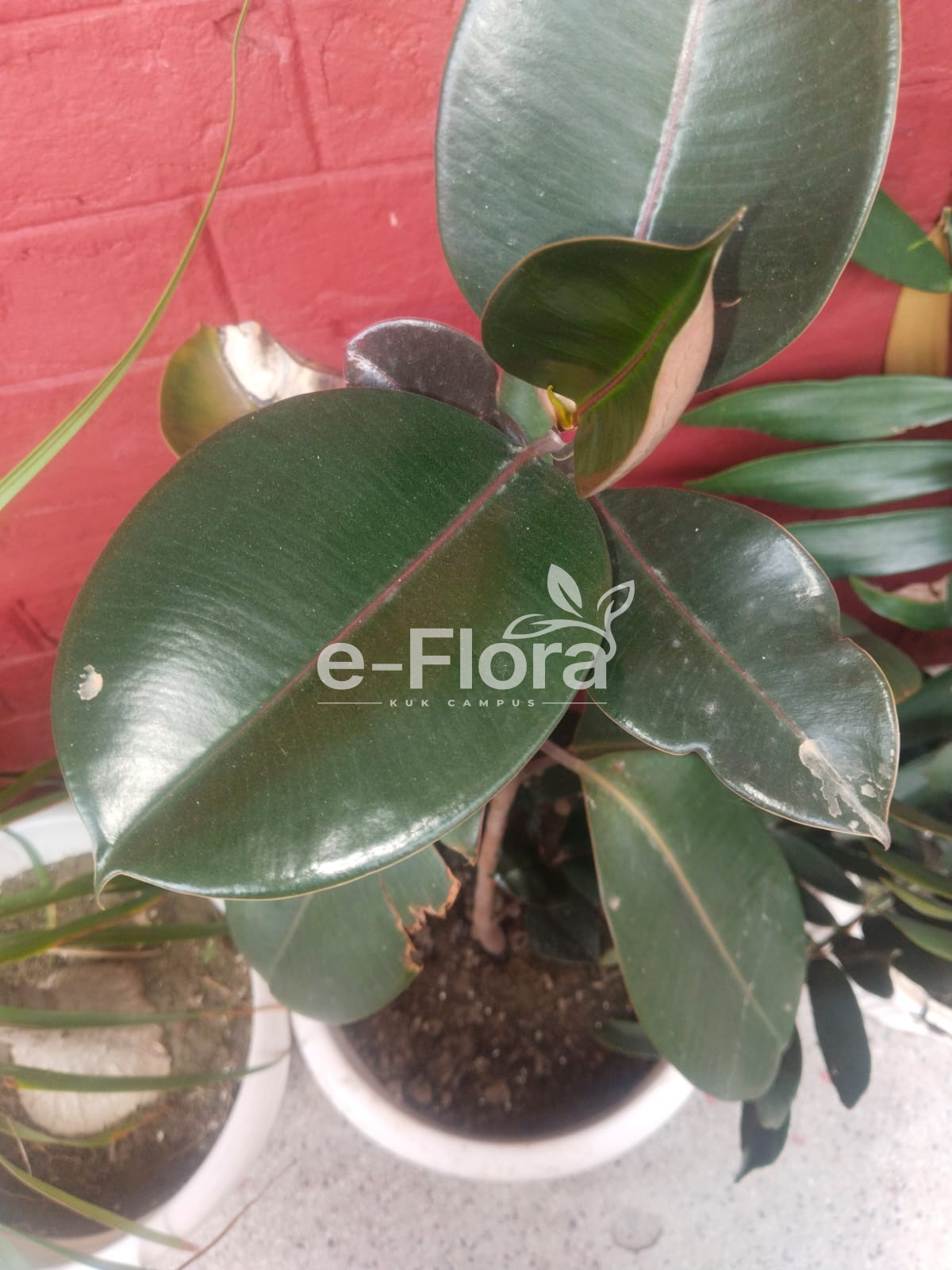
Ficus elastica Roxb. ex Hornem.
Vernacular name: Rubber Plant, Indian Rubber Tree
Species Name: Ficus elastica Roxb. ex Hornem.
Family: Moraceae
Habit: Evergreen large tree, often cultivated as an ornamental indoor or landscape plant.
Stem: Erect, woody, much-branched with age; bark greyish-brown, smooth to slightly rough; exudes abundant milky latex and may produce aerial roots.
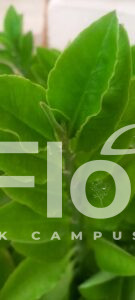
Leaf: Alternate, simple, elliptic to oblong-elliptic, 15–30 × 7–15 cm, entire, thick, leathery, glossy dark green; young leaves enclosed in a reddish stipule.
Flowering: Flowers are enclosed within the syconium and therefore not externally conspicuous.
Flowers: Minute, unisexual, borne inside a hollow fleshy syconium; male flowers occur near the ostiole, while female flowers line the inner wall; pollination is associated with specific fig wasps.
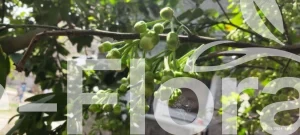
Fruit: Small, ovoid syconium, about 1–2 cm long, greenish-yellow becoming yellowish to orange when mature, containing numerous tiny one-seeded achenes.
Uses:
- Traditional remedies uses different parts of plant to treat skin conditions, digestive ailments and relieve joint pain.
- Widely cultivated as an ornamental foliage plant indoors and in tropical landscapes for its large glossy attractive leaves. Large specimens also provide shade and can contribute to urban greenery.
- Plant can absorb toxins like formaldehyde from indoor air and purify room air.
- The milky latex was historically investigated as a potential source of rubber, although it is not commercially important compared with Hevea brasiliensis.
- Young leaves are consumed as vegetables.
- Fibrous bark can be used in textile industry to make clothes and ropes.
- Wood is of poor quality but can be used for boats and fuels.