Caryota urens L.
Vernacular name: Fish-tail Palm, Toddy Palm, Jaggery Palm (Hindi: बन खजूर, माड़ी)
Species Name: Caryota urens L.
Family: Arecaceae
Habit: Solitary evergreen palm tree
Stem: Unbranched, erect trunk 10–20 m tall, grey, ringed with prominent leaf scars.
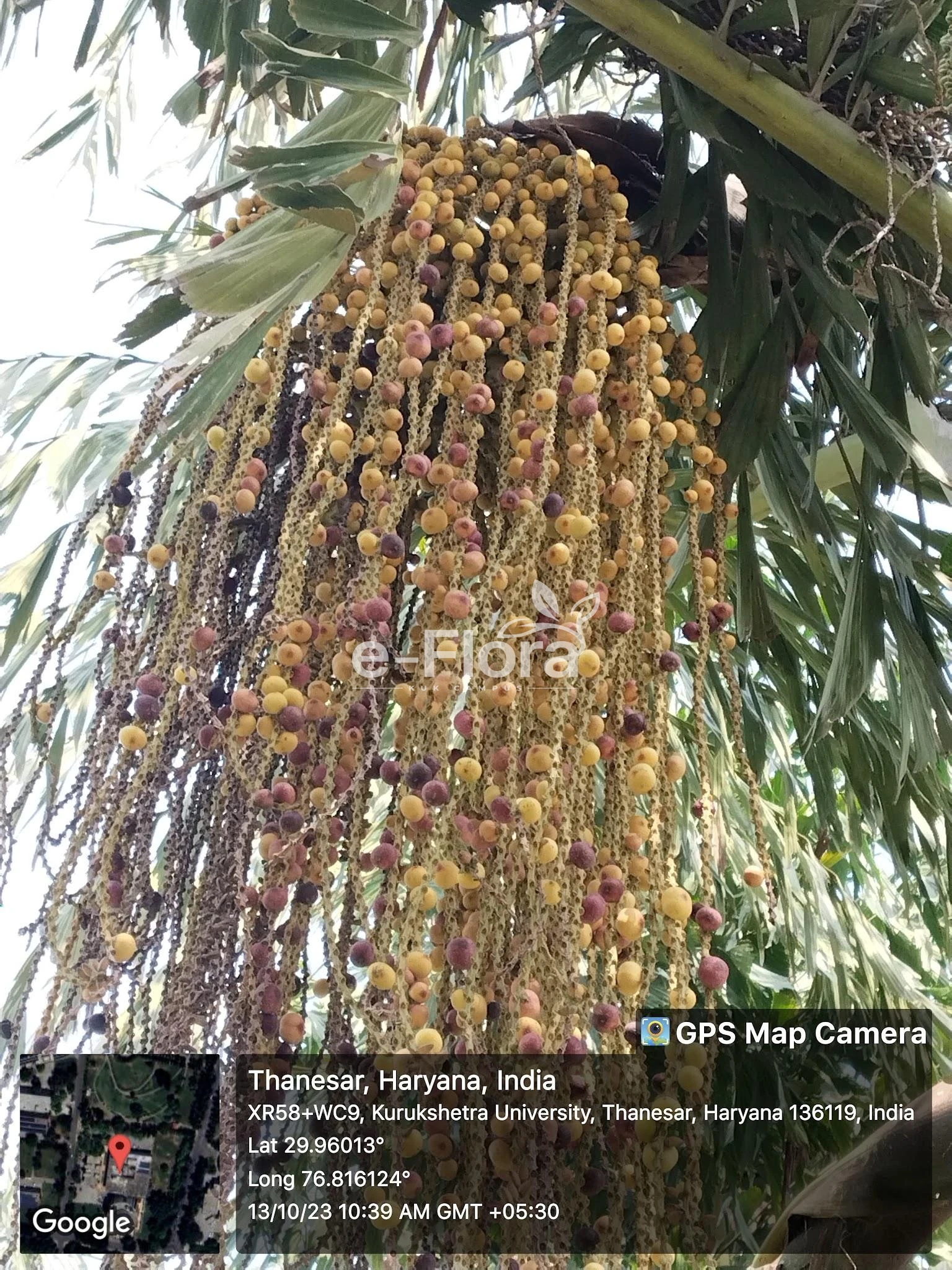
Leaf: Alternate, bipinnate, 3–6 m long; leaflets wedge-shaped, obliquely truncate, fishtail-like with jagged apices.
Flowering: Mature trees flower successively from top to bottom, usually after 10–15 years.
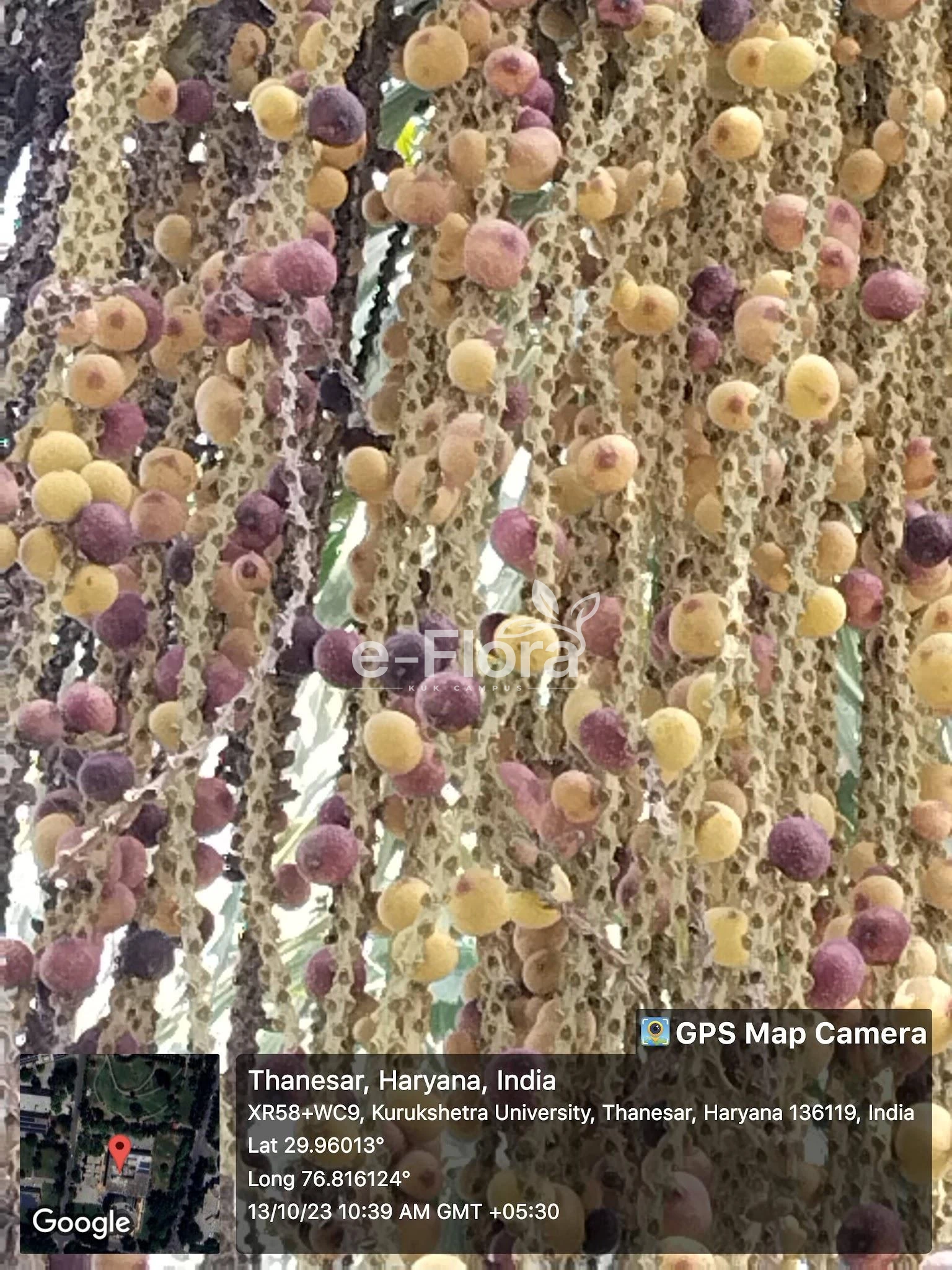
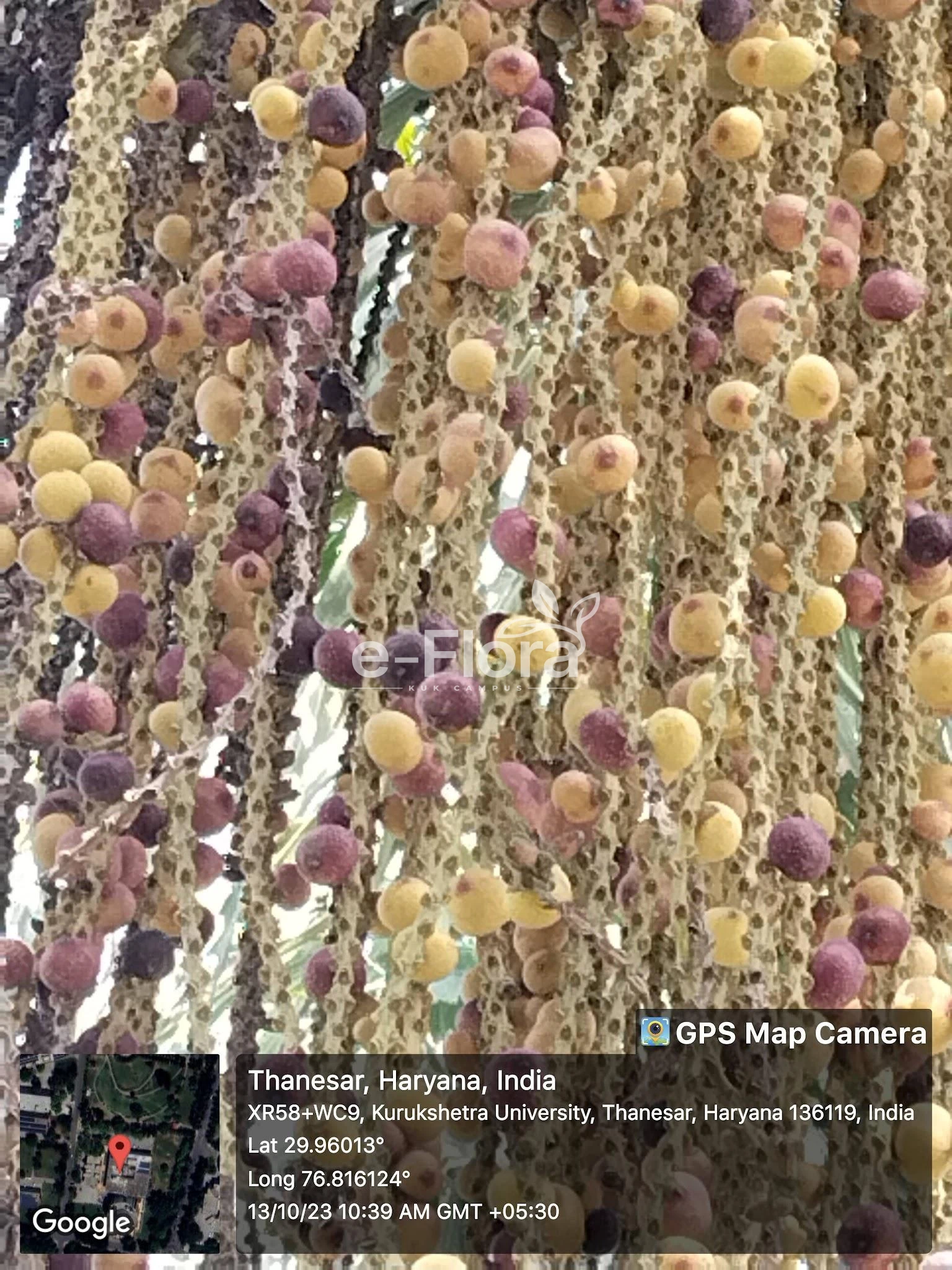
Flowers: Unisexual, creamy-white to yellowish, borne in long pendulous spadices; male and female flowers on the same inflorescence; ovary superior, tricarpellary.
Fruit: Globose drupe, red to purplish at maturity, 1–2 seeded; fruit pulp contains calcium oxalate crystals causing irritation.
Uses:
- Important source of palm sap (Kithul) used for toddy (alcoholic), jaggery, syrup, and sugar.
- The pith yields sago-like starch used to prepare traditional food.
- Leaves fibres are used for manufacturing of brooms, baskets, brushes, ropes, and handicrafts while leaves are used for thatching and caulking boats.
- Wood yields a strong timber used for the manufacturing of roof rafters, flooring and fencing.
- It is cultivated as an ornamental plant.
- Ayurveda used extracts of different parts to treat migraines, gastric ulcers and rheumatic swellings.
- Plant has antimicrobial, antioxidant and anti-inflammatory properties.