Asparagus racemosus Willd.
Vernacular name: Shatavari, Wild asparagus, Satavar (Hindi: शतावरी)
Species Name: Asparagus racemosus Willd.
Family: Asparagaceae
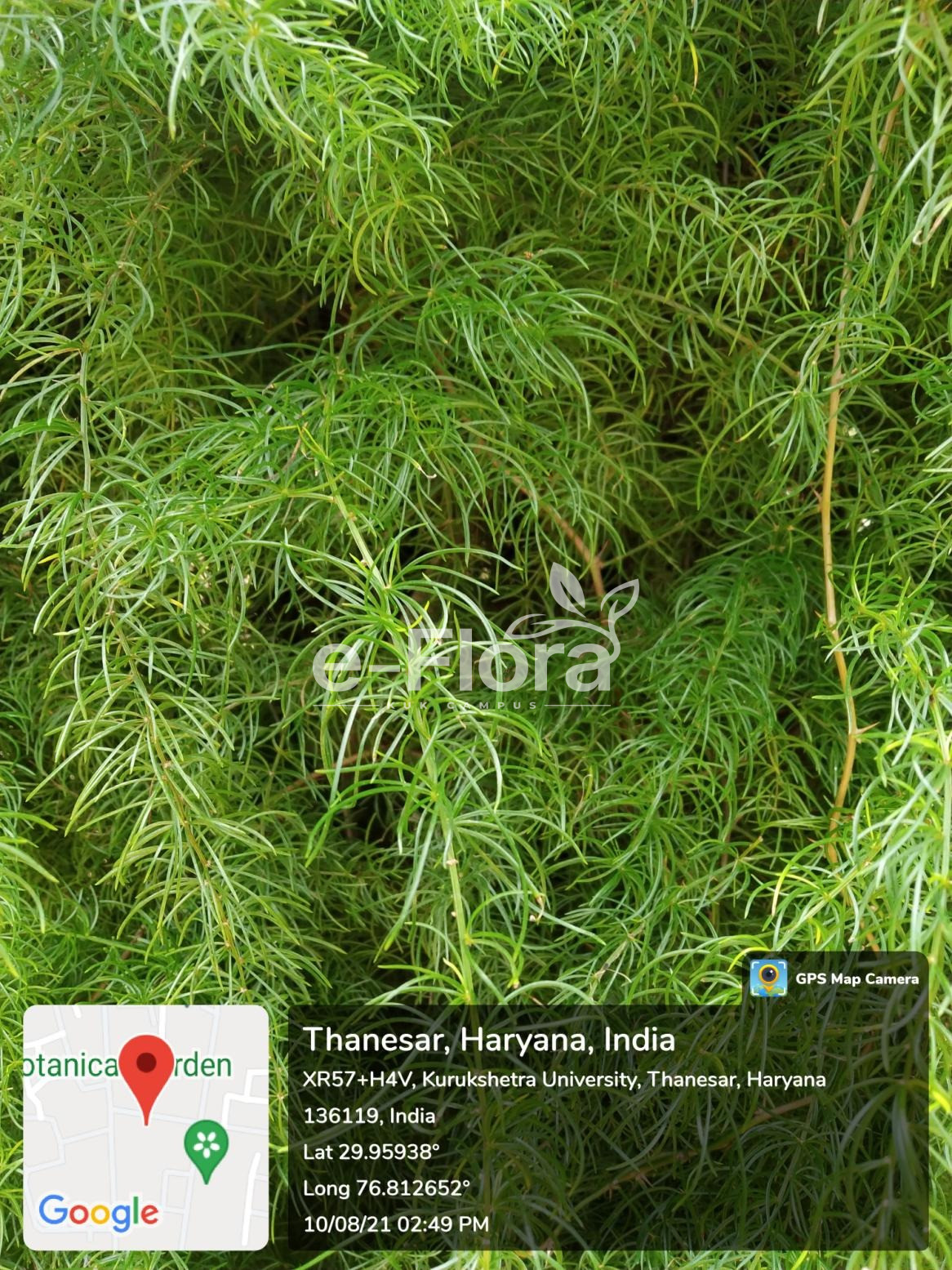
Habit: High-climbing shrubby vine
Stem: Slender, scandent, 1-5 m long, aerial roots, spiny at nodes.
Leaf: Reduced to scales; cladodes terete, 0.5-1.5 cm long.
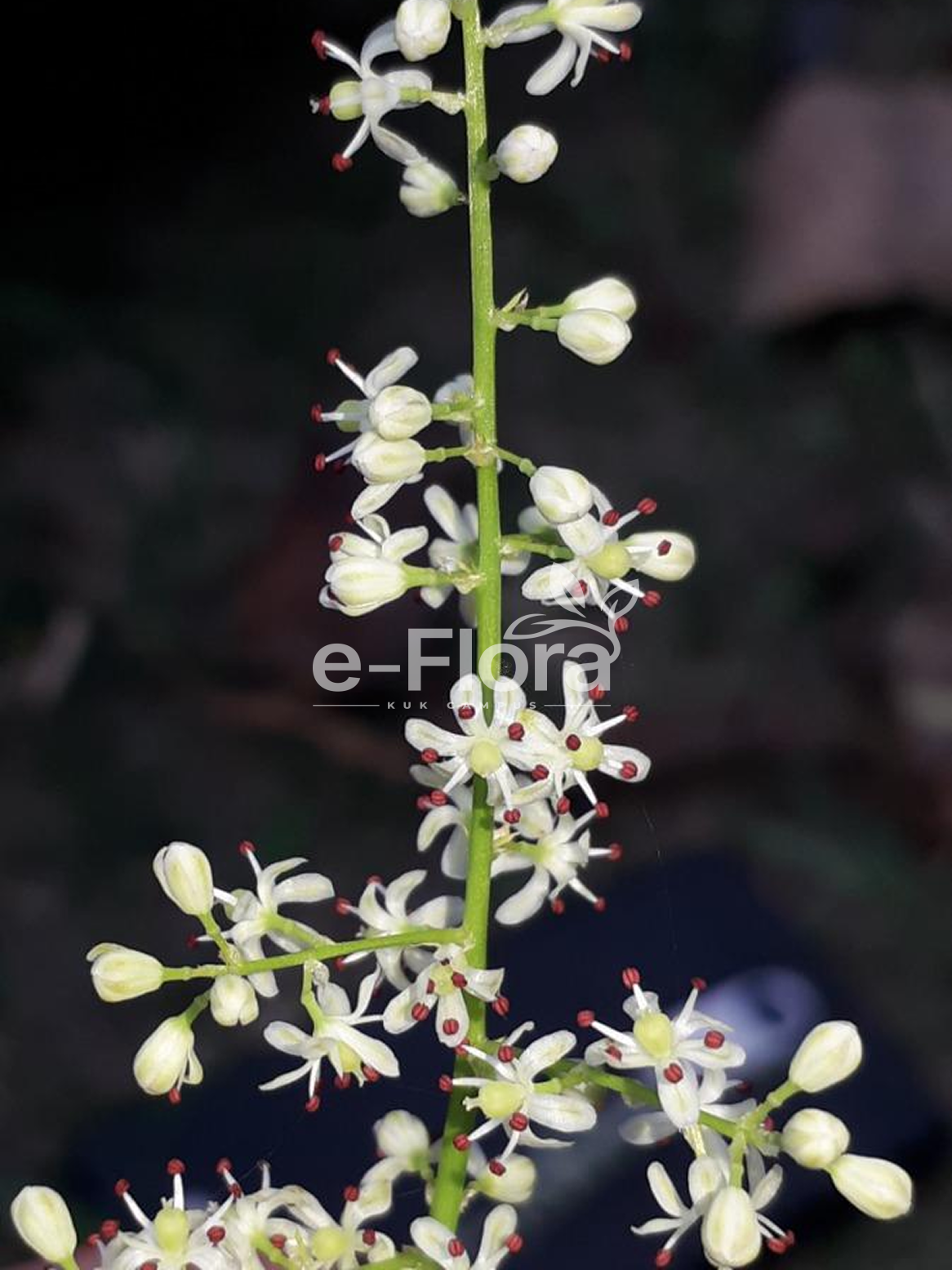
Flowering: June – October
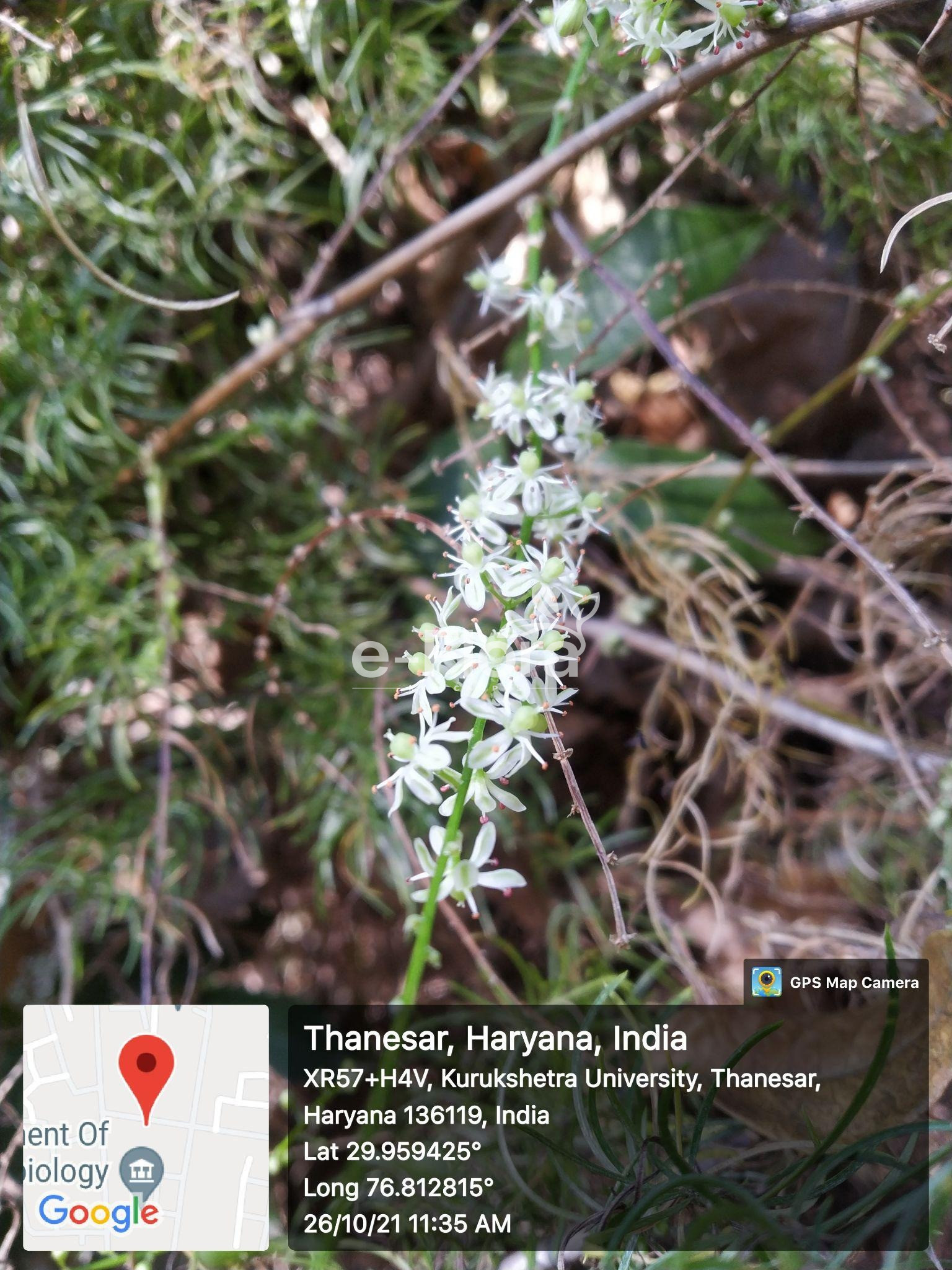
Flowers: Axillary racemes 2-6 cm long (racemose inflorescence – pedicellate bisexual flowers on unbranched rachis); white, fragrant, 3-4 mm, 6 tepals.
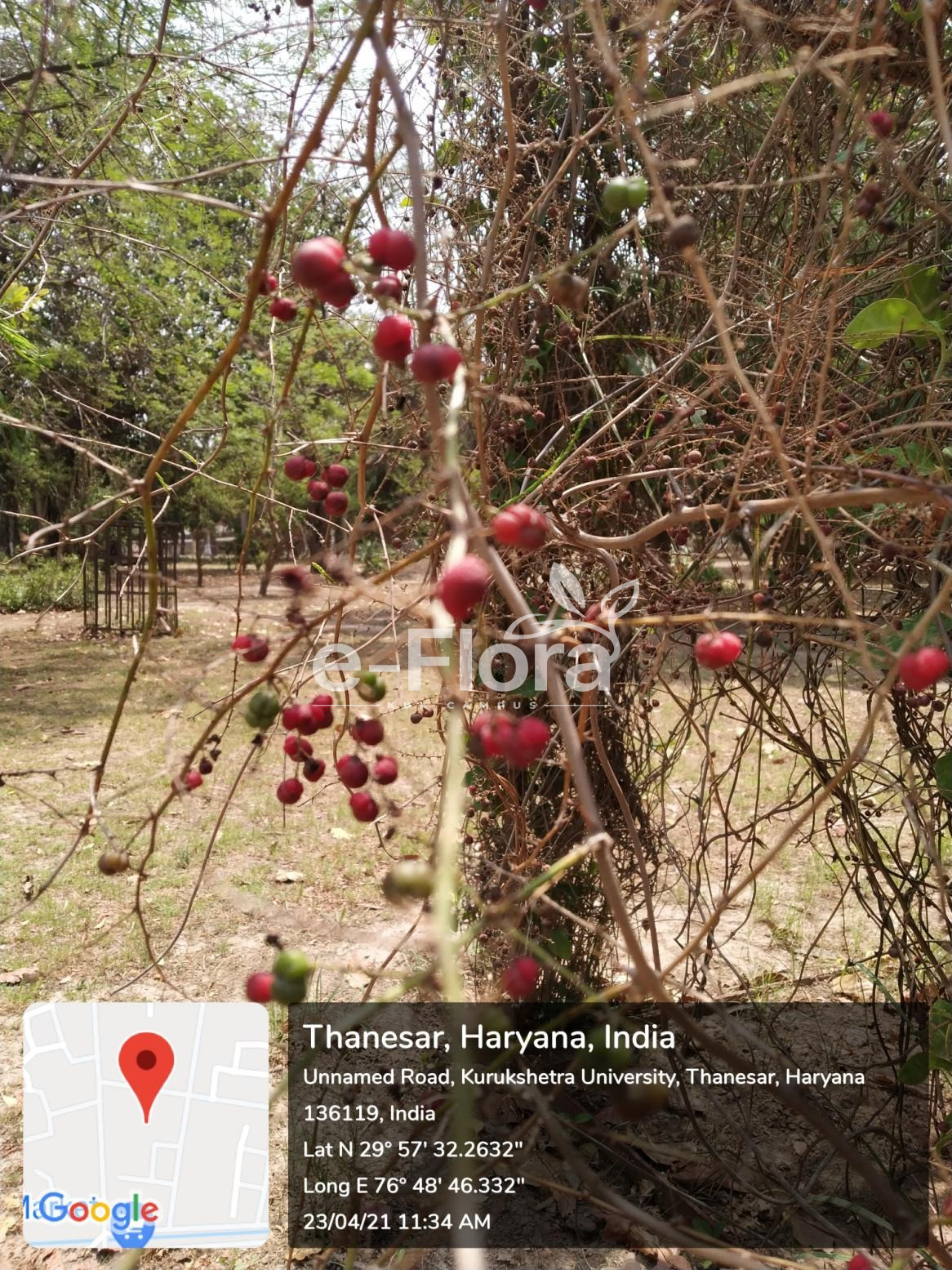
Fruit: Globose berry 5-8 mm, red when ripe, 1-6 seeds.
Uses:
- Root is useful in the treatment of dysentery and convulsion, to reduce stress and improve immunity.
- Roots are also used to increase production of breast milk.
- It is also given in impotency.
- In Ayurvedic medicine, the root of Satavari is used in the form of juice, paste, decoction and powder to treat intrinsic haemorrhage, diarrhoea, piles, hoarseness of voice, cough, arthritis, poisoning, diseases of female genital tract, erysipelas, fever, as aphrodisiac and as rejuvinative.
- Plant also useful in managing female hormones and menopause symptoms.
- Plant is used for detoxification and helpful with kidney stones and urinary tract problems.
- Plant contain sapogenins and has antioxidant properties and useful with anxiety and stress related issues.