Abrus precatorius L.
Vernacular name: Rosary Pea, Ratti, Gunja (Hindi: गुंजा, रत्ती)
Species Name: Abrus precatorius L.
Habit: Perennial twining climber.
Stem: Slender, woody, much-branched climber with twining stems.
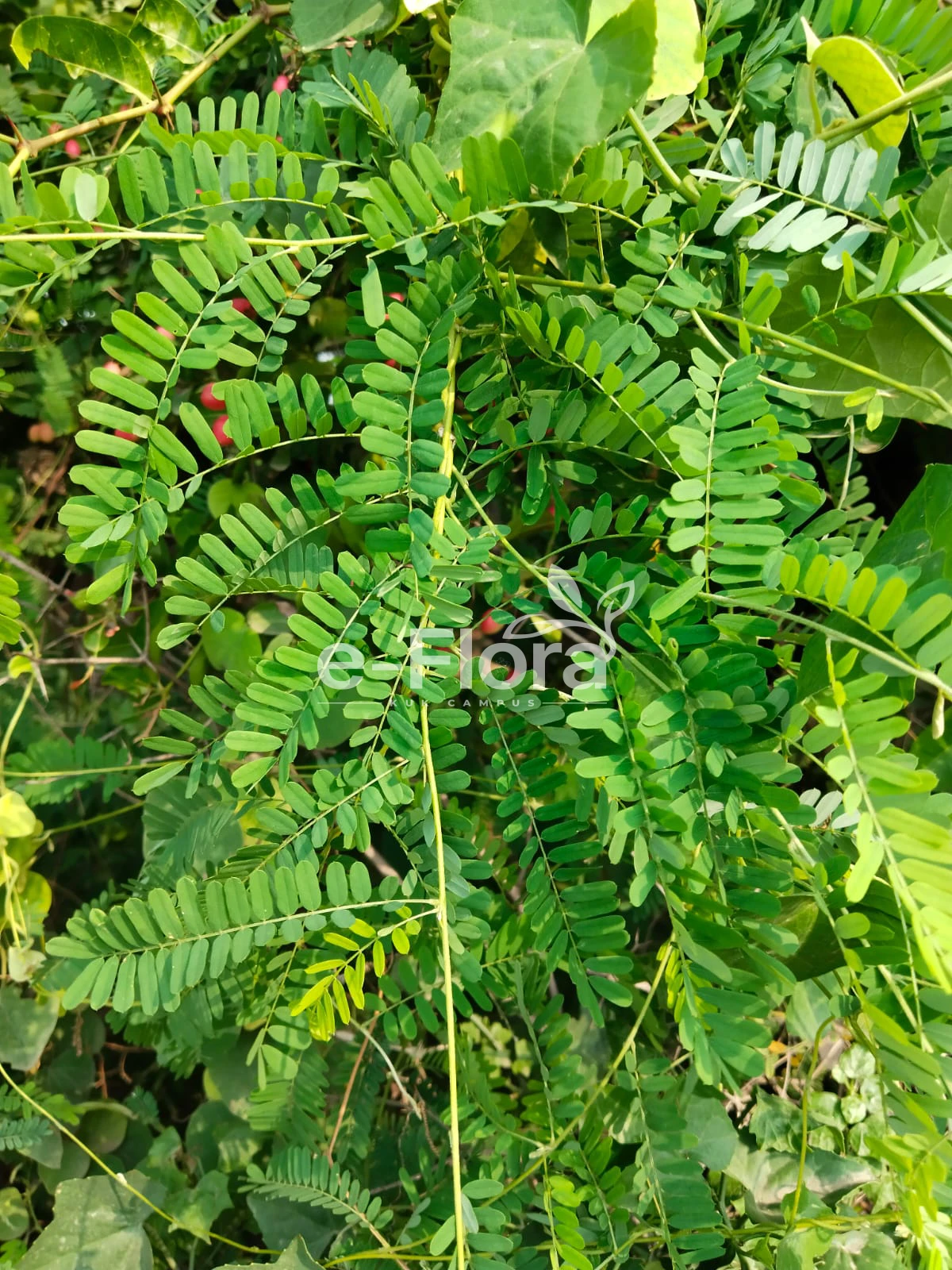
Leaf: Alternate, abruptly pinnate, 5–15 cm long; leaflets 10–20 pairs, oblong, 0.5–2 × 0.3–0.8 cm, entire, glabrous.
Flowering: Rainy season–winter.
Flowers: Small, pink to pale purple or whitish, papilionaceous, borne in axillary racemes; calyx 5-lobed; stamens 9+1 (diadelphous); ovary superior, monocarpellary.
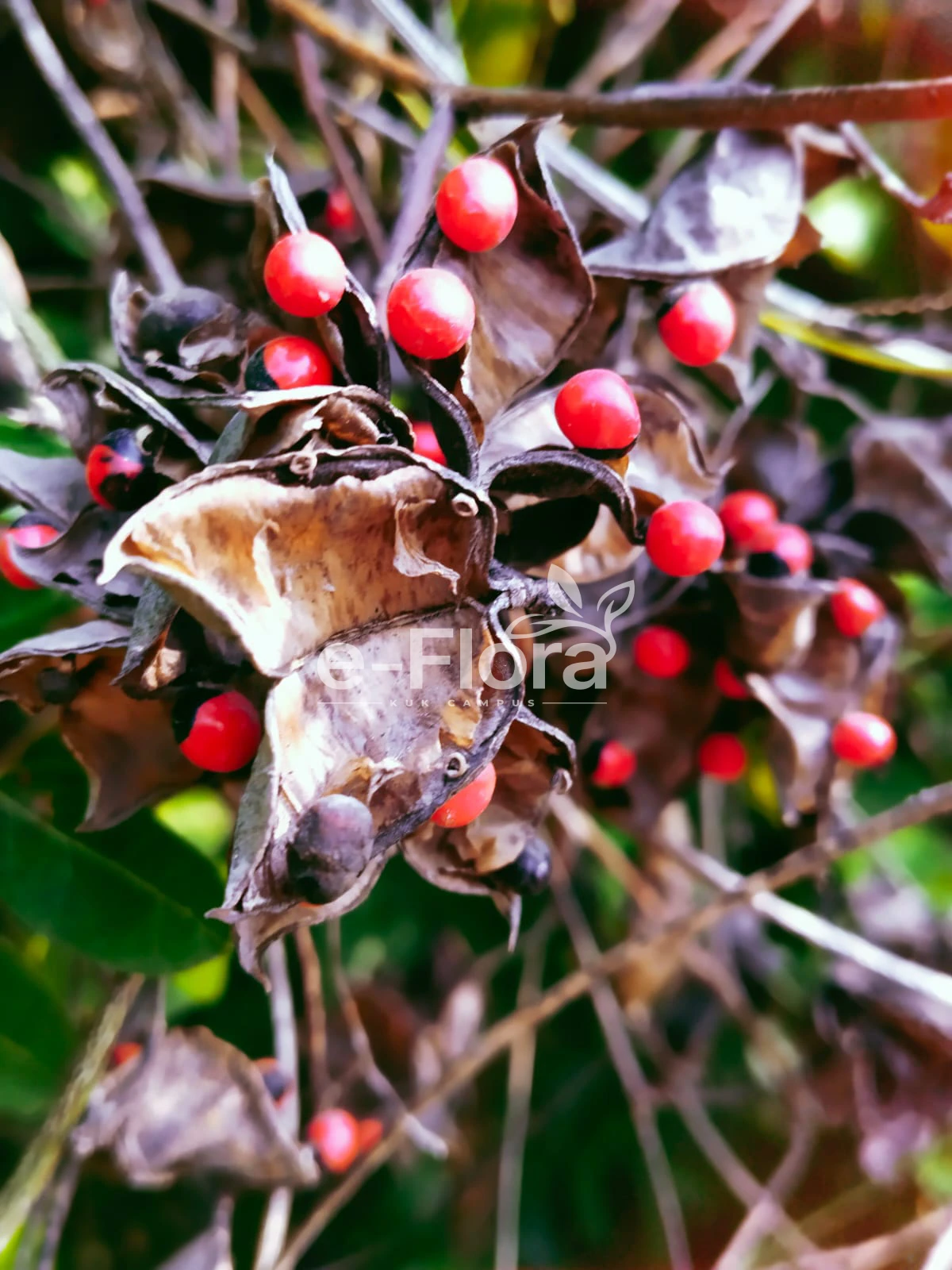
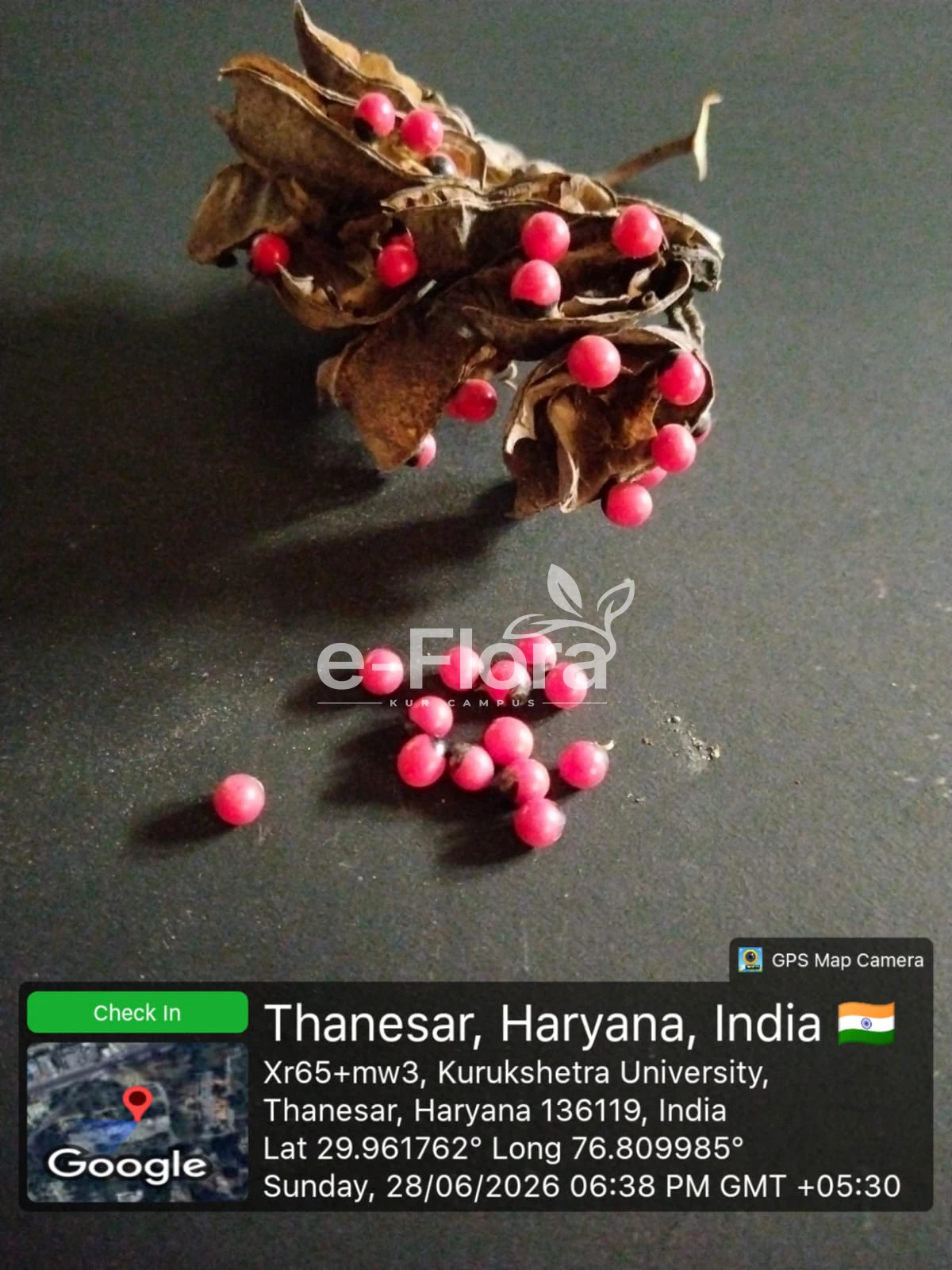
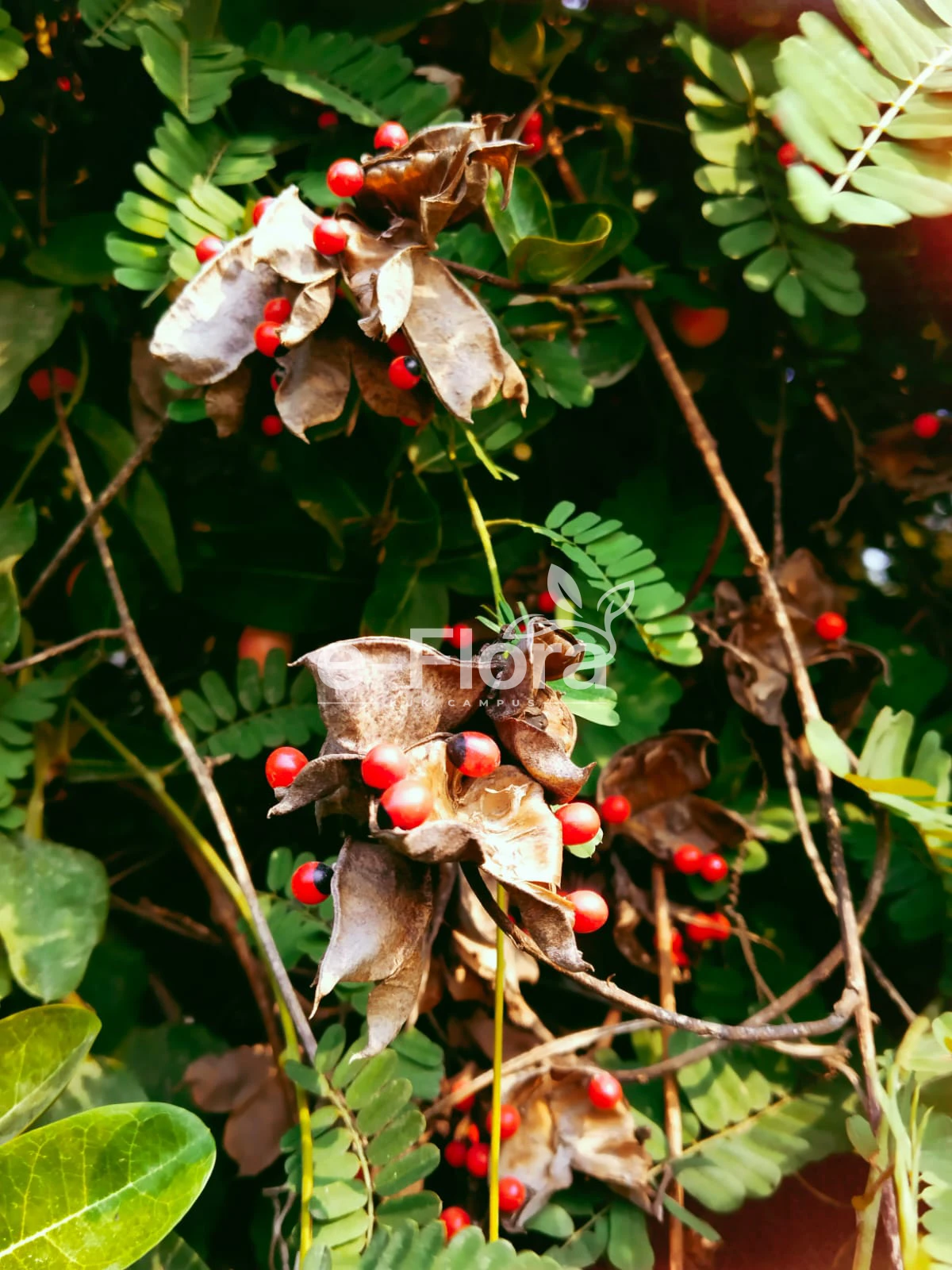
Fruit: Oblong, flattened pod 2–5 cm long, dehiscent; seeds 3–8, bright scarlet with a black spot at the hilum.
Uses:
- Cultivated as an ornamental climber and its brightly coloured seeds are traditionally used for rosaries, jewellery, and as the historical “ratti” unit of weight.
- Seeds are highly toxic due to the presence of abrin and must not be ingested.
- Decoction of leaves and roots are used to soothe coughs, sore throat band bronchitis.
- Seed paste mixed water is externally applied to relieve sciatica, joint pain and alopecia.
- In Ayurveda, seeds are used for its detoxification properties to treat impotence, promote production and act as aphrodisiac.
- In folkfare remedies, plant root extracts are used to treat snakebites, abdominal and colic pains.