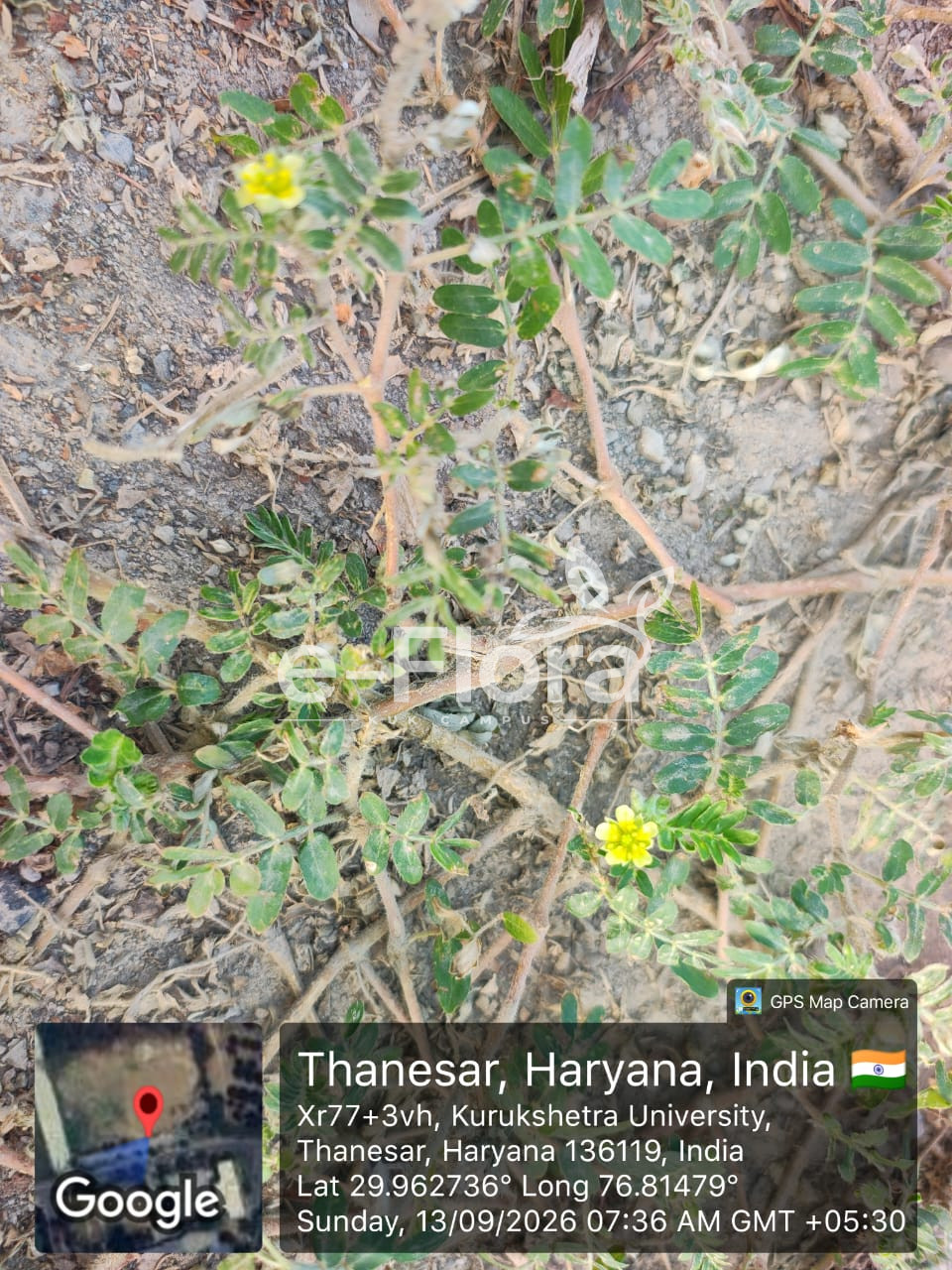
Tribulus terrestris L.
Vernacular name: Gokhru, Gokshura (Hindi: गोखरू / गोक्षुर), Chhota Gokhru; Puncture vine, Land caltrops, Devil’s thorn
Species Name: Tribulus terrestris L.
Family: Zygophyllaceae
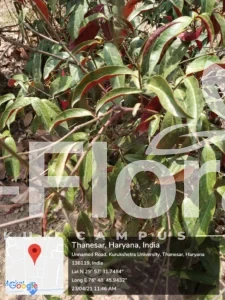
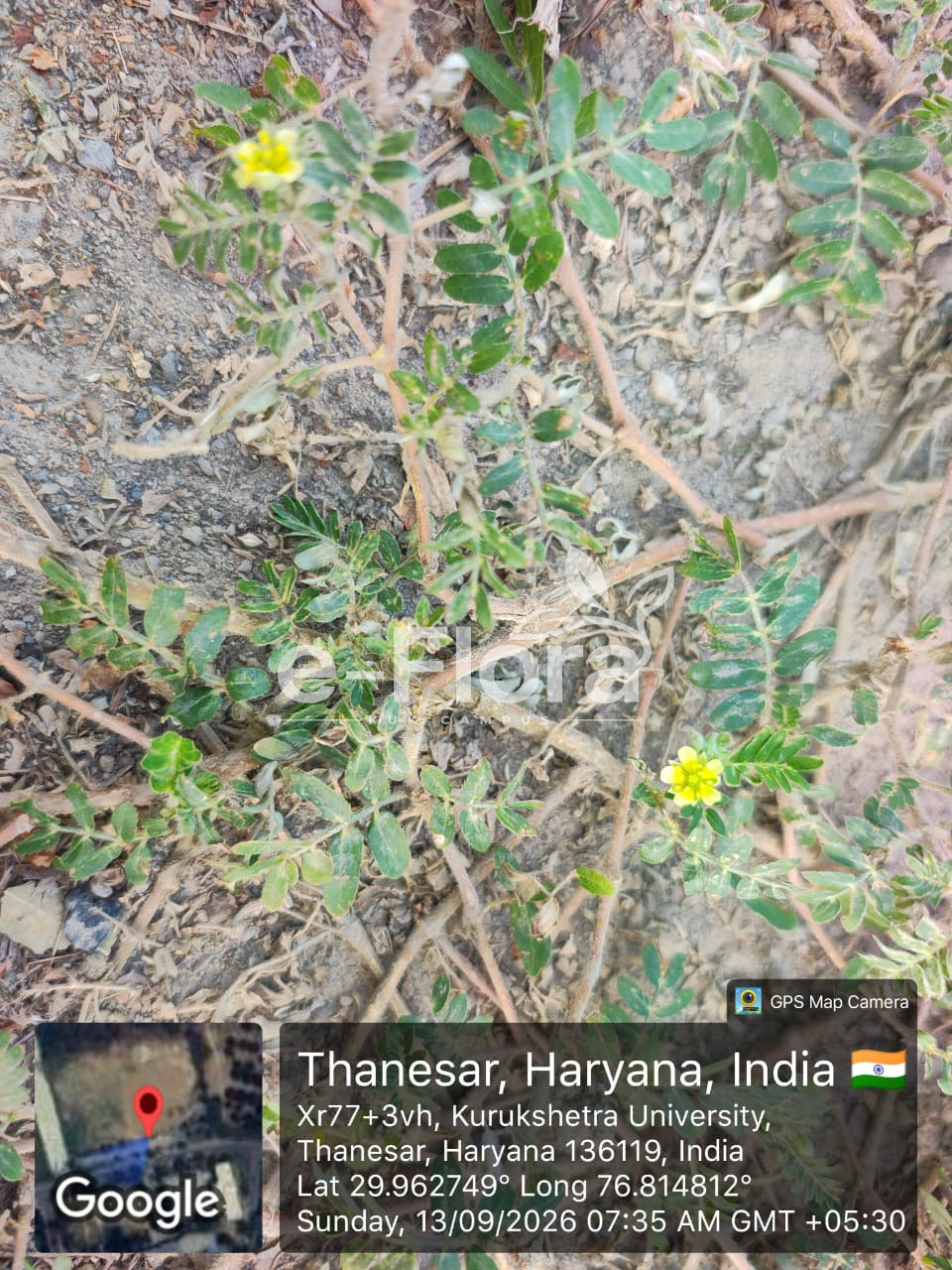
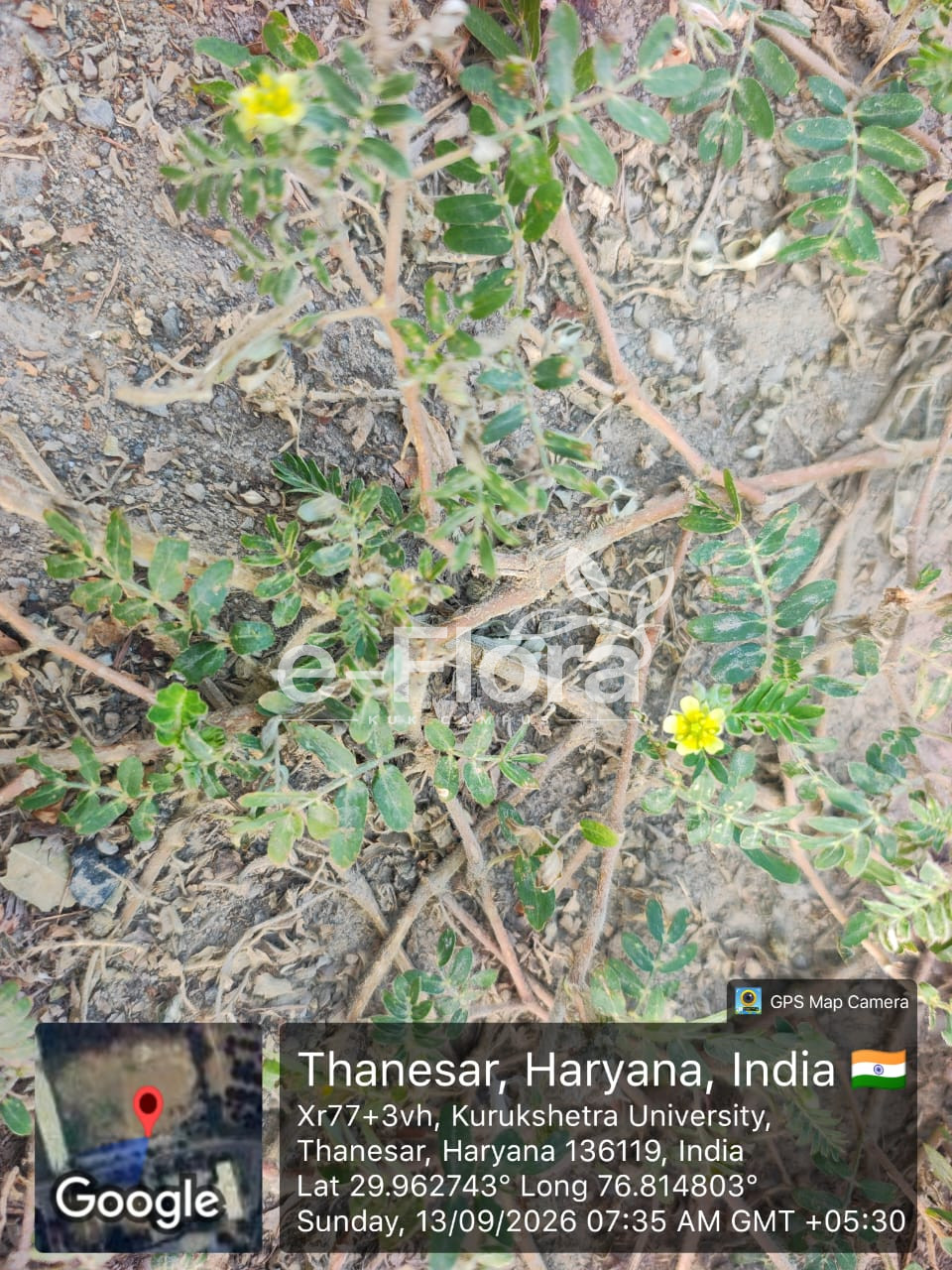
Habit: Annual or biennial, prostrate, much-branched herb, commonly occurring as a weed of roadsides, fallow land, sandy ground and other disturbed habitats. It is recorded throughout India, including Haryana.
Stem: Slender, prostrate to trailing, branched, green to reddish and usually hairy; branches may extend considerably along the ground.
Leaf: Leaves opposite, abruptly pinnate, with several pairs of small, unequal, oblong to lanceolate leaflets; stipules present.
Flowering: May–October
Flowers: Small, bright yellow, solitary in the leaf axils, about 7–15 mm across; petals usually 5 and stamens generally 10.
Fruit: Characteristic hard, flattened, deeply divided fruit composed of spiny segments; each segment bears two pairs of unequal spines, producing the very distinctive “caltrop” appearance.
Uses:
- Widely used in traditional Ayurvedic medicine, particularly under the name Gokshura and in Chinese traditional medicines as aphrodisiac to enhance libido, improve sexual satisfaction and treat erectile dysfunction.
- Traditional practices uses the plant to manage and regulate blood sugar level, cholesterol levels, relieve pain, treat inflammations, heart ailments, support kidney and urinary tract health.
- It is used to boost muscle mass, increase testosterone levels and enhance exercise performance by athletes and bodybuilders.
- Plant has antioxidant, anti-inflammatory and anti-cancer properties.
- Cautious should be practice with the dosage amount as high dose of this can cause toxicity or can negatively influence diabetes medications or treatments of prostrate ailments. Pregnant and breasting feeding women should completely avoid this.
- Plant can thrive in dry, sandy, degraded and disturbed soil and also helps in controlling the soil erosion.
- Desert herbivores domestic or wild consumes foliage and seeds of this plant.
- Plant uses epizoochory for seed dispersal.