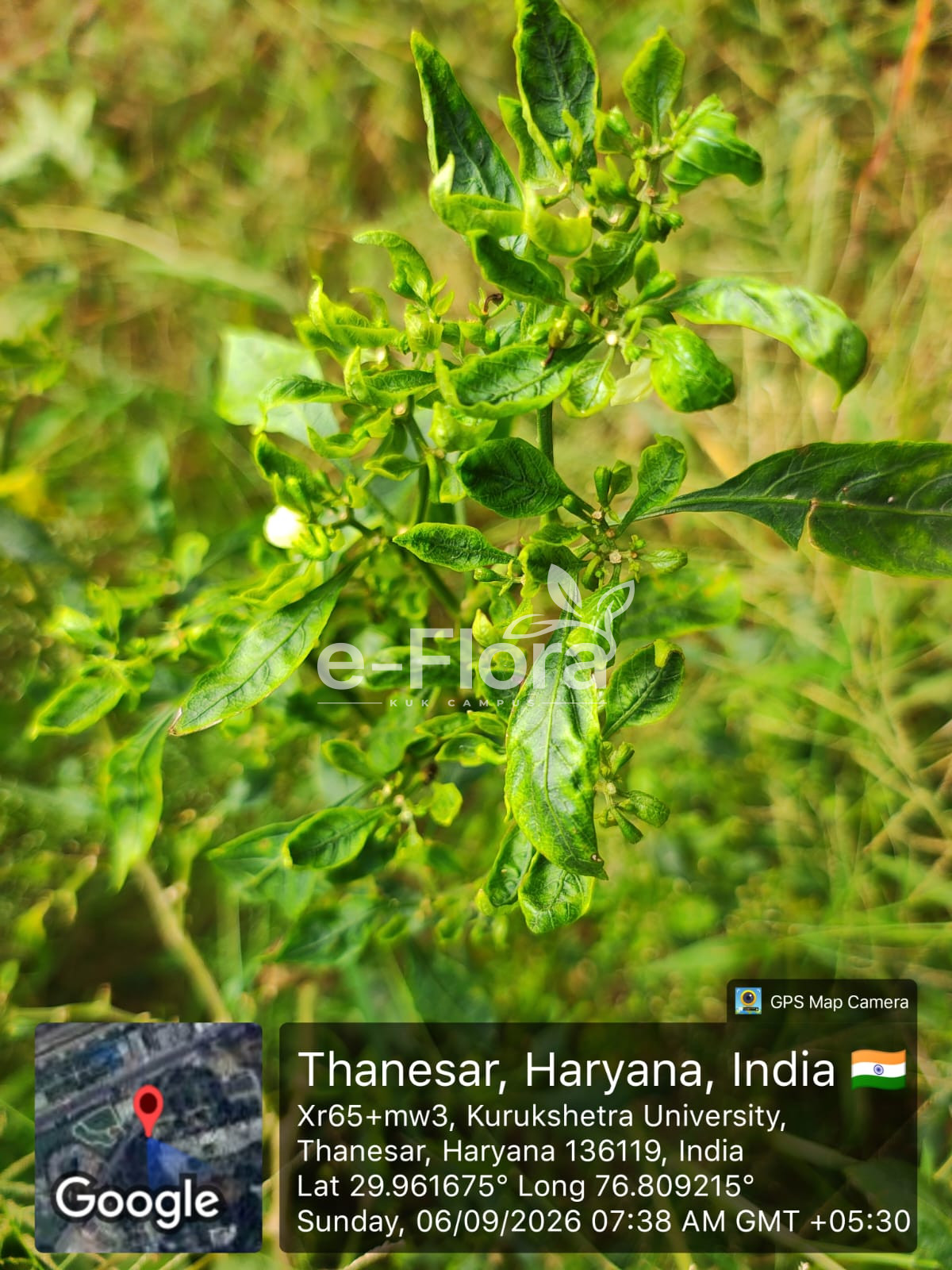
Capsicum annuum L.
Vernacular name: Mirchi, Chilli, Lal mirch (Hindi: मिर्च, लाल मिर्च)
Species Name: Capsicum annuum L.
Family: Solanaceae
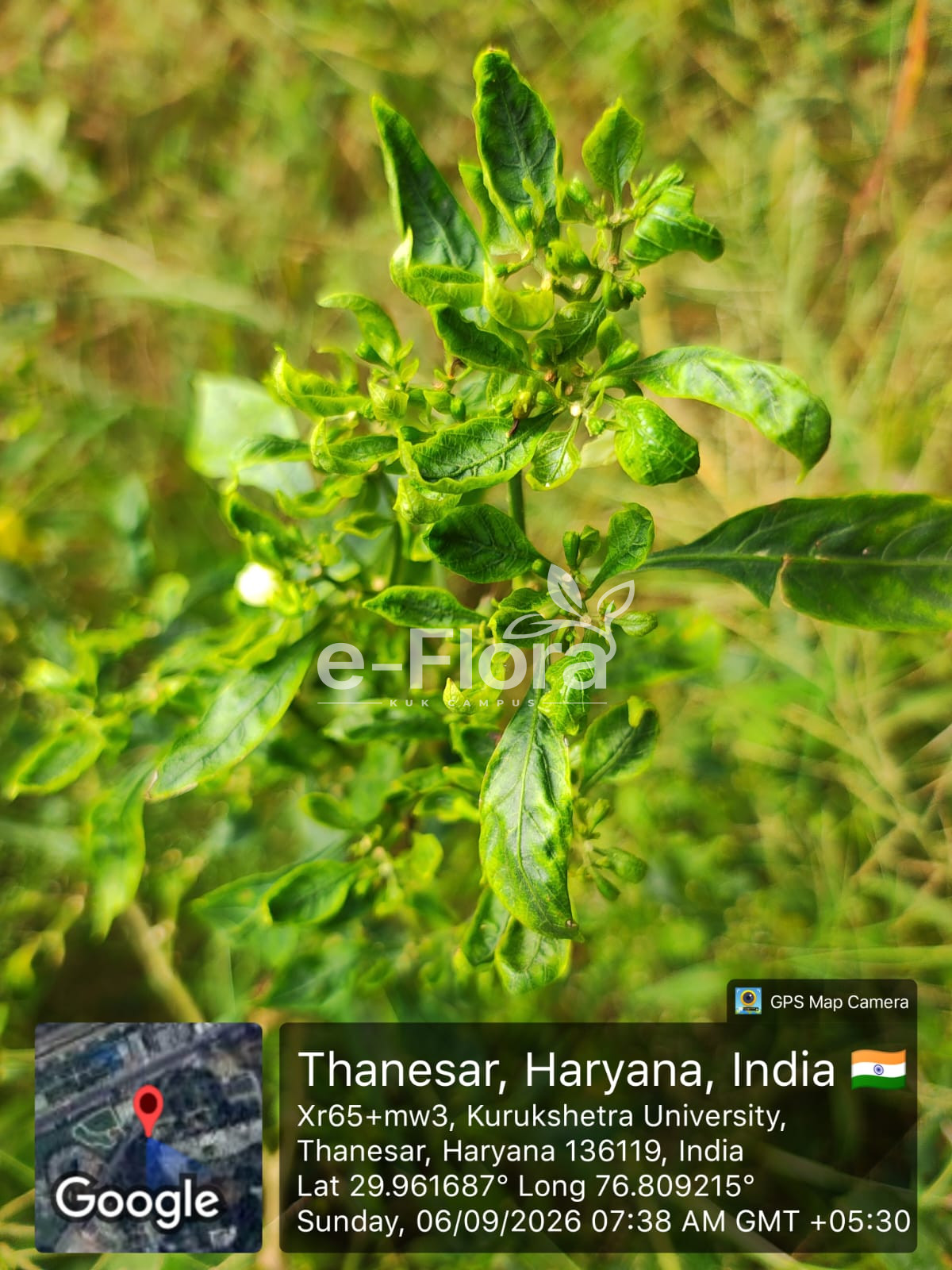
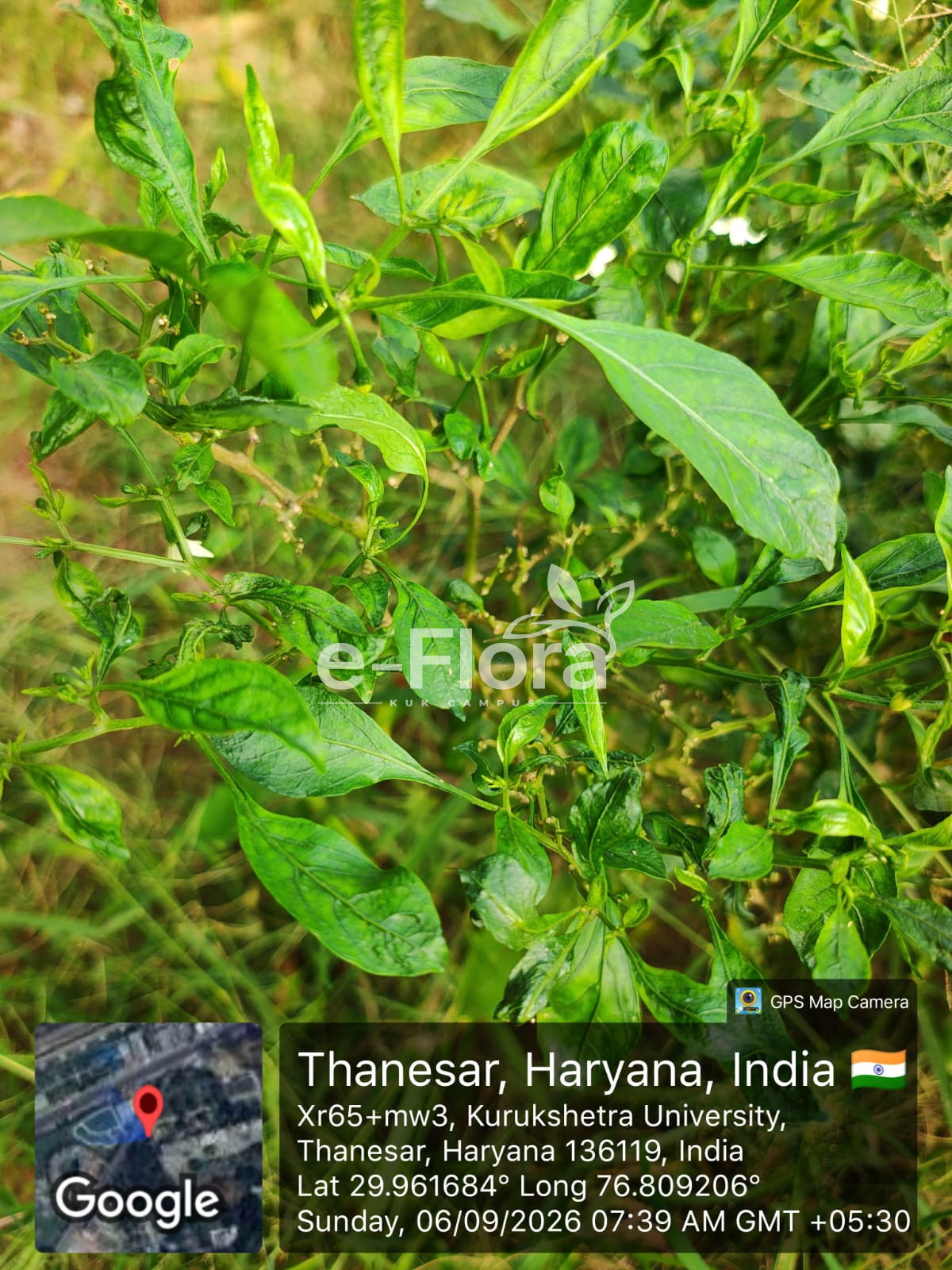
Habit: Annual herb or subshrub, erect, much-branched.
Stem: Erect, branched, somewhat woody below, glabrous to sparsely hairy.
Leaf: Alternate, simple, ovate to lanceolate, entire, glabrous, petiolate.
Flowering: Throughout the warm season.
Flowers: Solitary or few in axils; white, rotate, 5-lobed; stamens 5, inserted in corolla throat; ovary superior, 2–3-locular.
Fruit: Fleshy berry, highly variable in shape and size, green when immature, becoming red, yellow or orange at maturity; many-seeded.
Uses:
- Chilli contains capsaicin, that is used analgesic creams and gel and topical application of these creams or gels on skin helps to ease pain from shingles, osteoarthritis and diabetic neuropathy.
- Capsaicinoids present in chilli helps with the weight management and support metabolic thermogenesis.
- Traditional practices used oral consumption of extracts to stimulate the secretion of saliva, digestive enzymes, relieve upset stomach, regulates circulation and healthy blood lipid levels.
- Fruits are widely used as a spice and vegetable, fresh or dried in dishes, as pickles to give colour and burning sensation to food and are the source of the pungent compound capsaicin in hot cultivars. Different cultivars of Capsicum annuum include chilli peppers, paprika and sweet peppers.
- Fruits contains oleoresins and carotenoids that are extracted to be processed as color food products.
- Extracts are highly concentrated and used in pepper spray.
- Cosmetic industry uses the extracts of the plant in skin care and hair care products, in treatment of hair loss.