
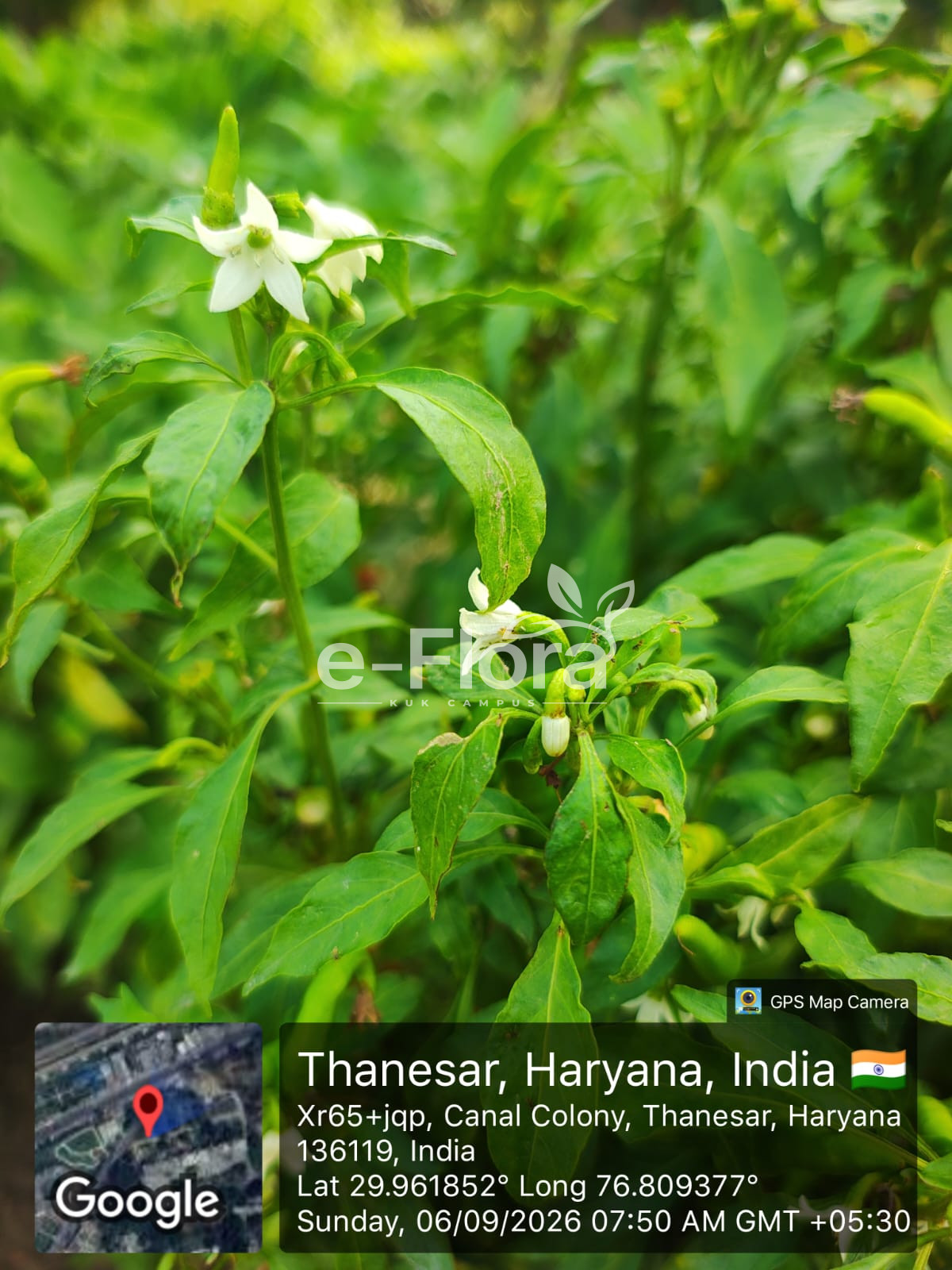
Solanum melongena L..
Vernacular name: Brinjal, Eggplant, Aubergine (Hindi: बैंगन)
Species Name: Solanum melongena L.
Family: Solanaceae
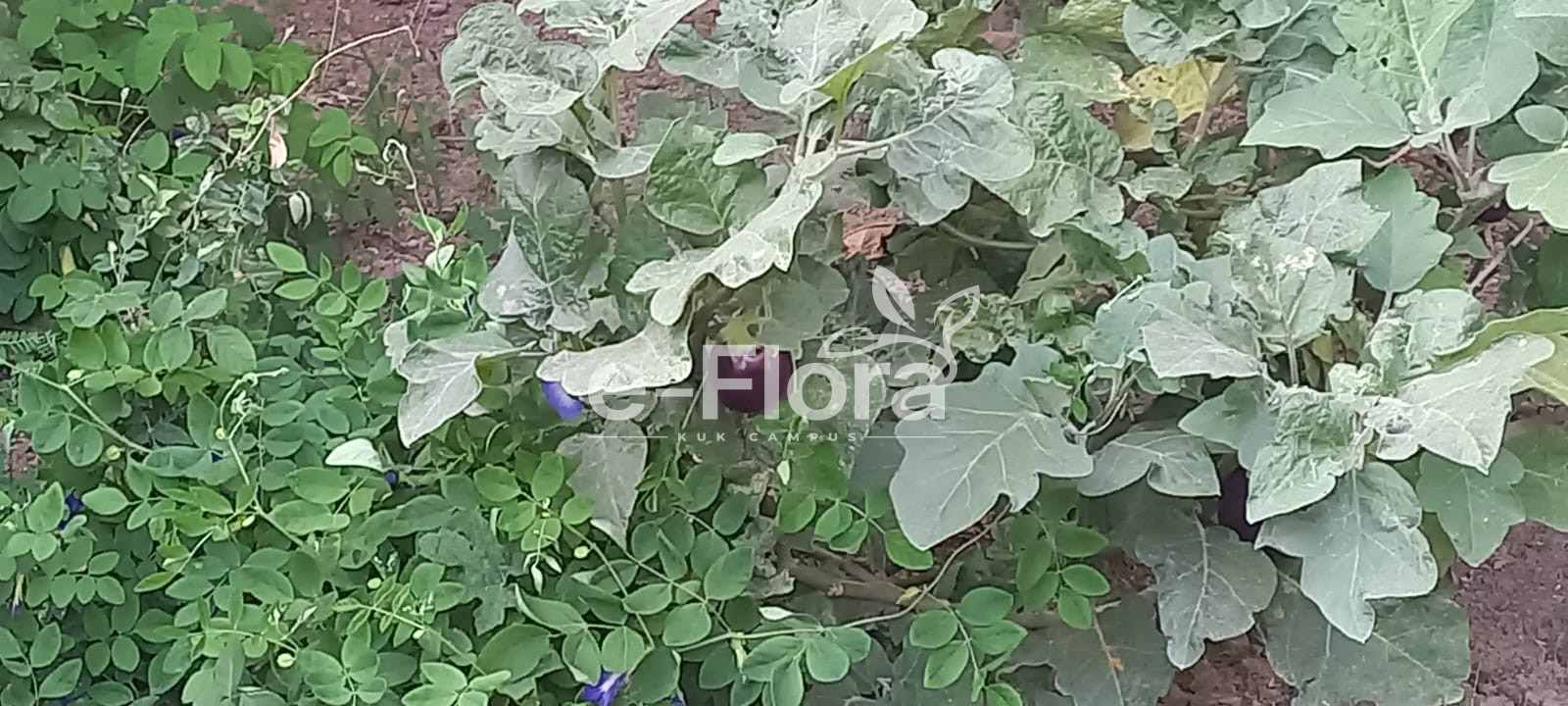
Habit: Annual to short-lived perennial herb or shrub.
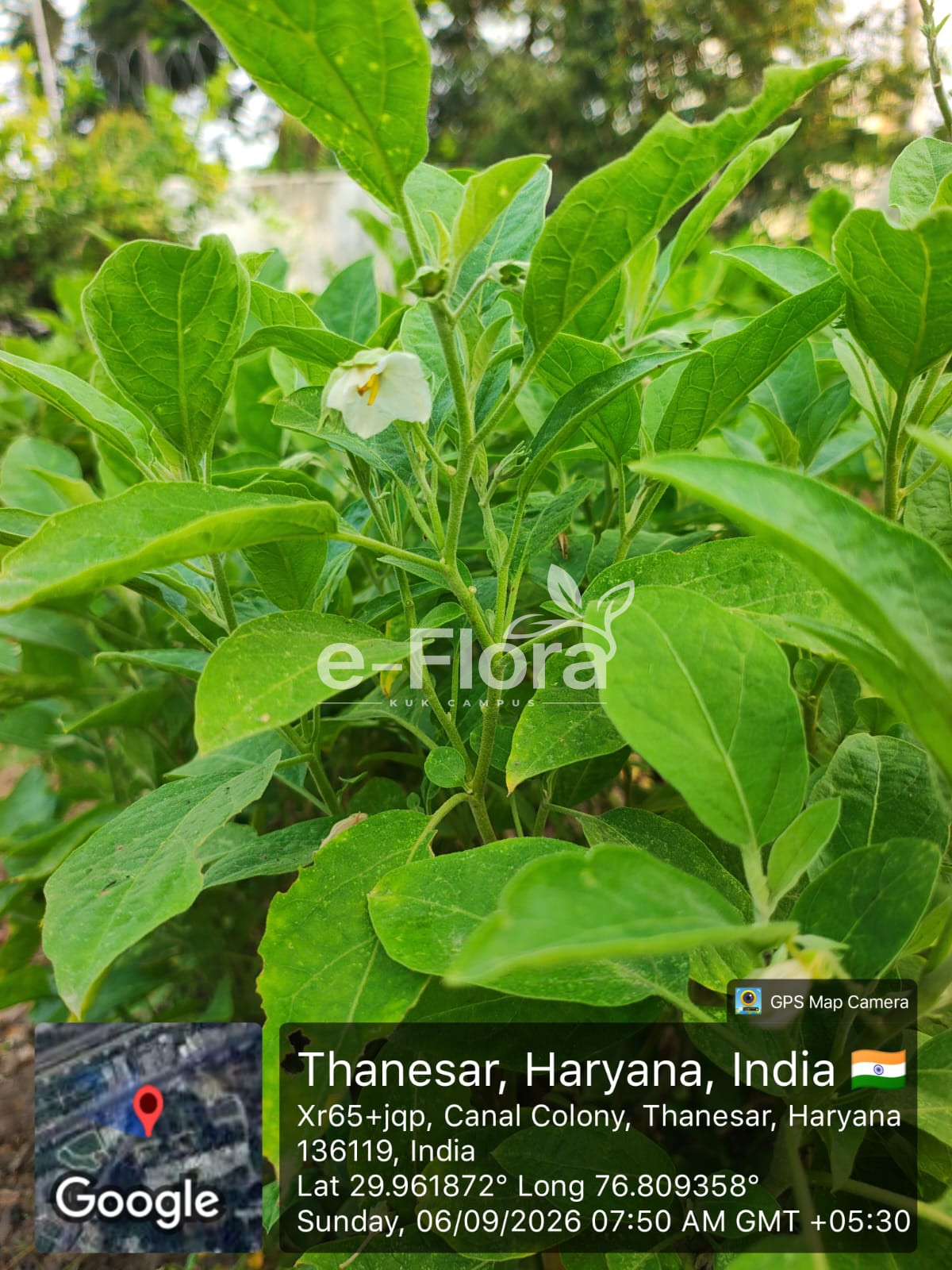
Stem: Erect, much-branched, 0.5–2 m tall, green to purplish, often sparsely hairy and sometimes prickly.
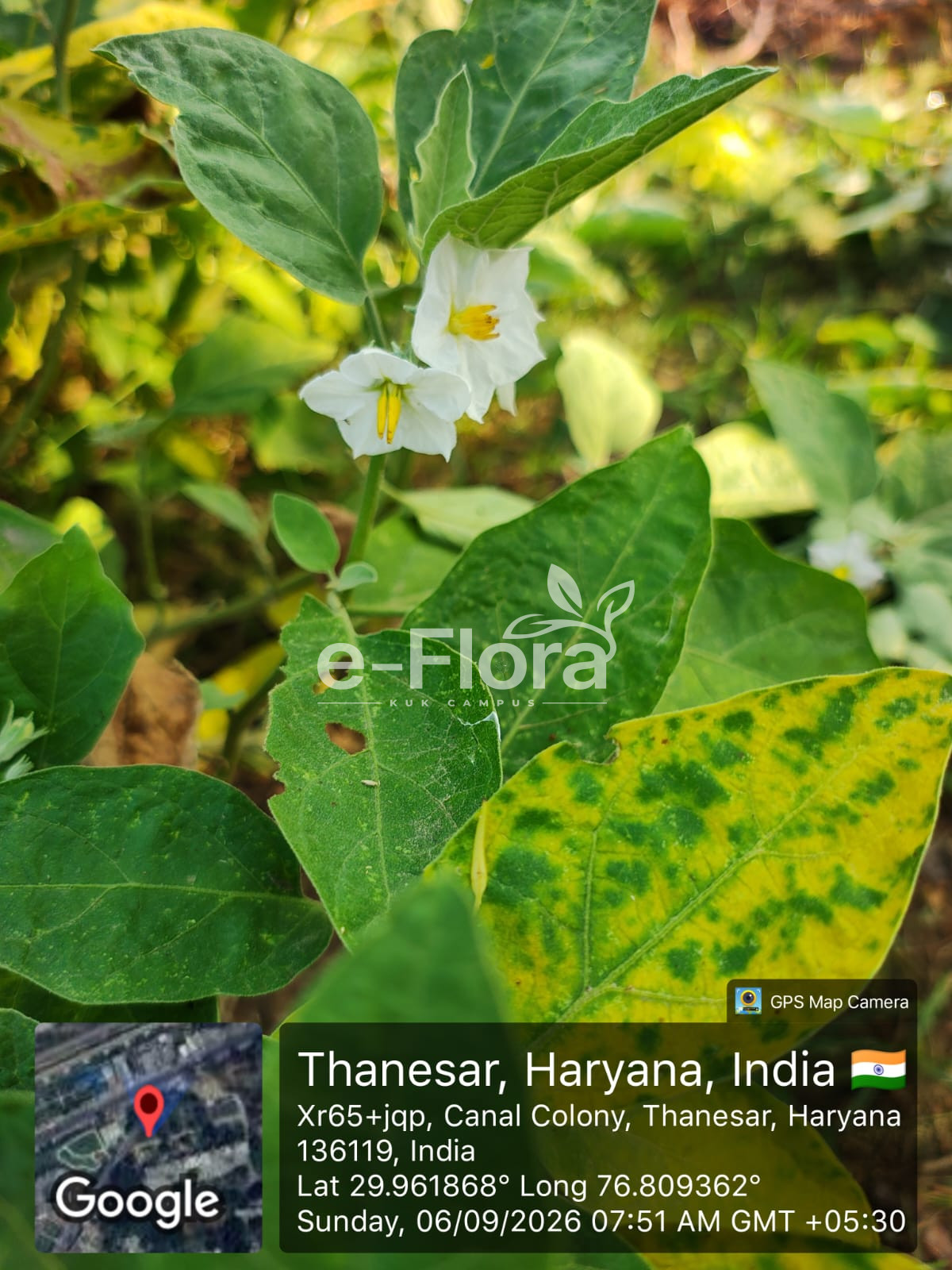
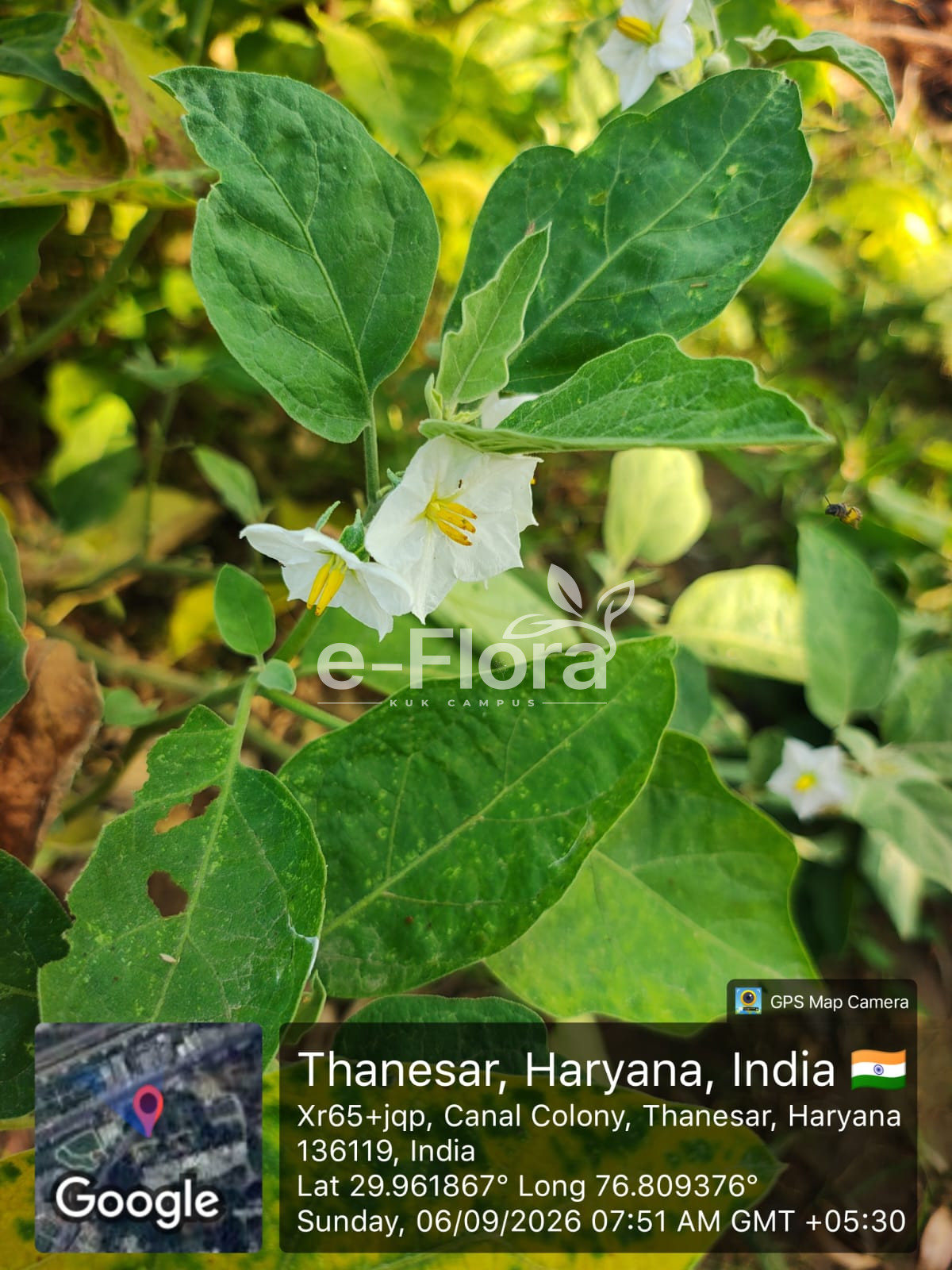
Leaf: Alternate, large, ovate to elliptic, 10–30 × 5–20 cm, entire to shallowly lobed, pubescent, long-petiolate.
Flowering: Throughout the year under favourable conditions.
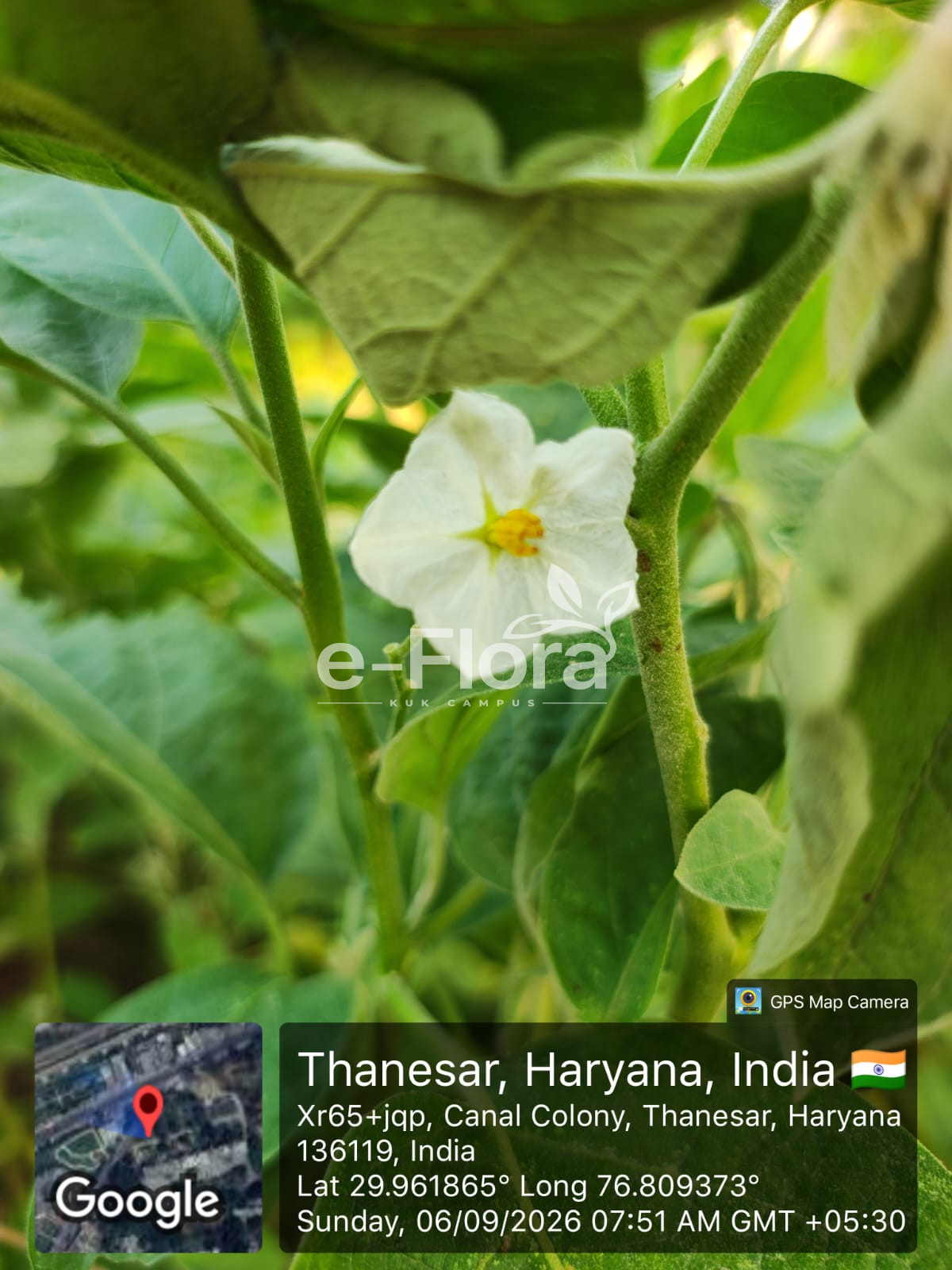
Flowers: Solitary or in small cymes, violet to purple or occasionally white; corolla 5-lobed, rotate; stamens 5 with prominent yellow anthers; ovary superior, bicarpellary.
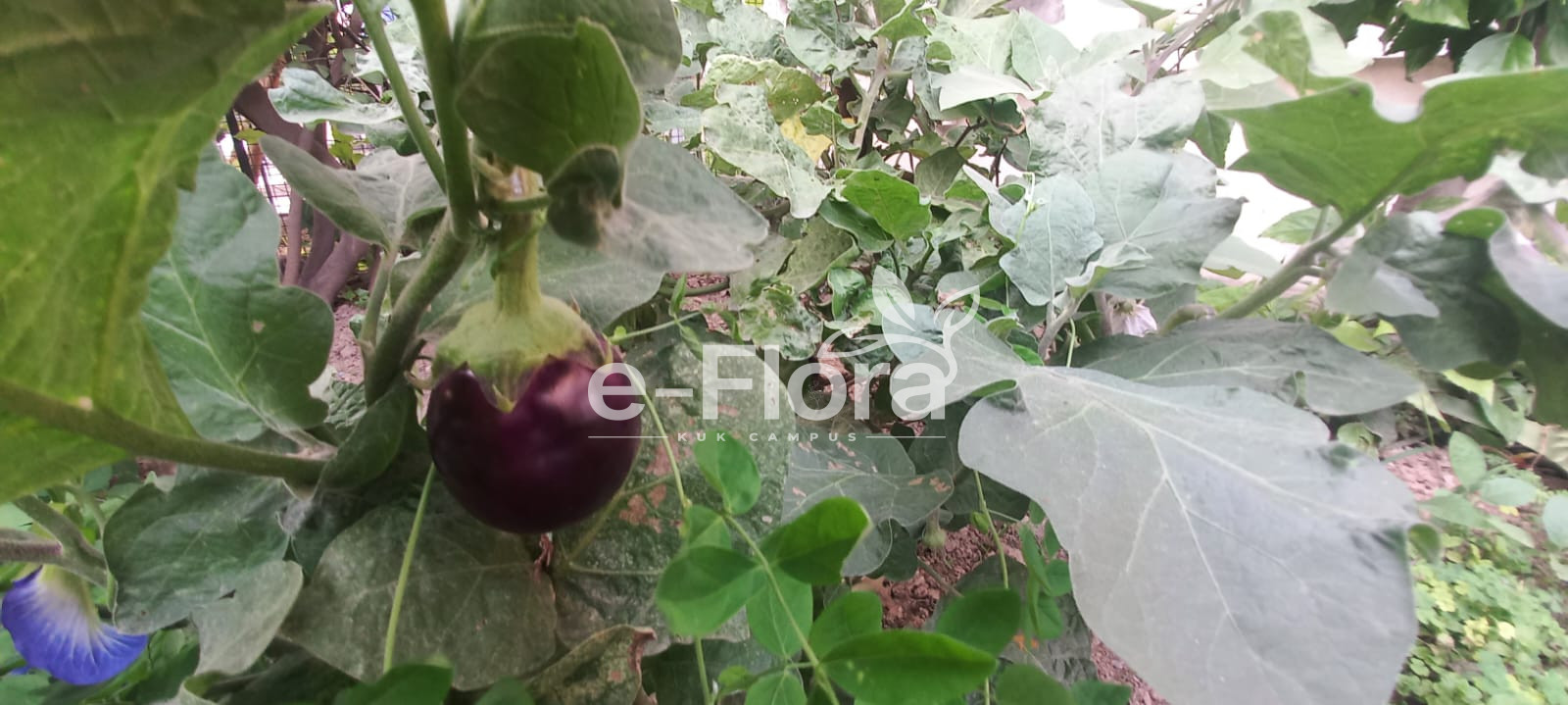
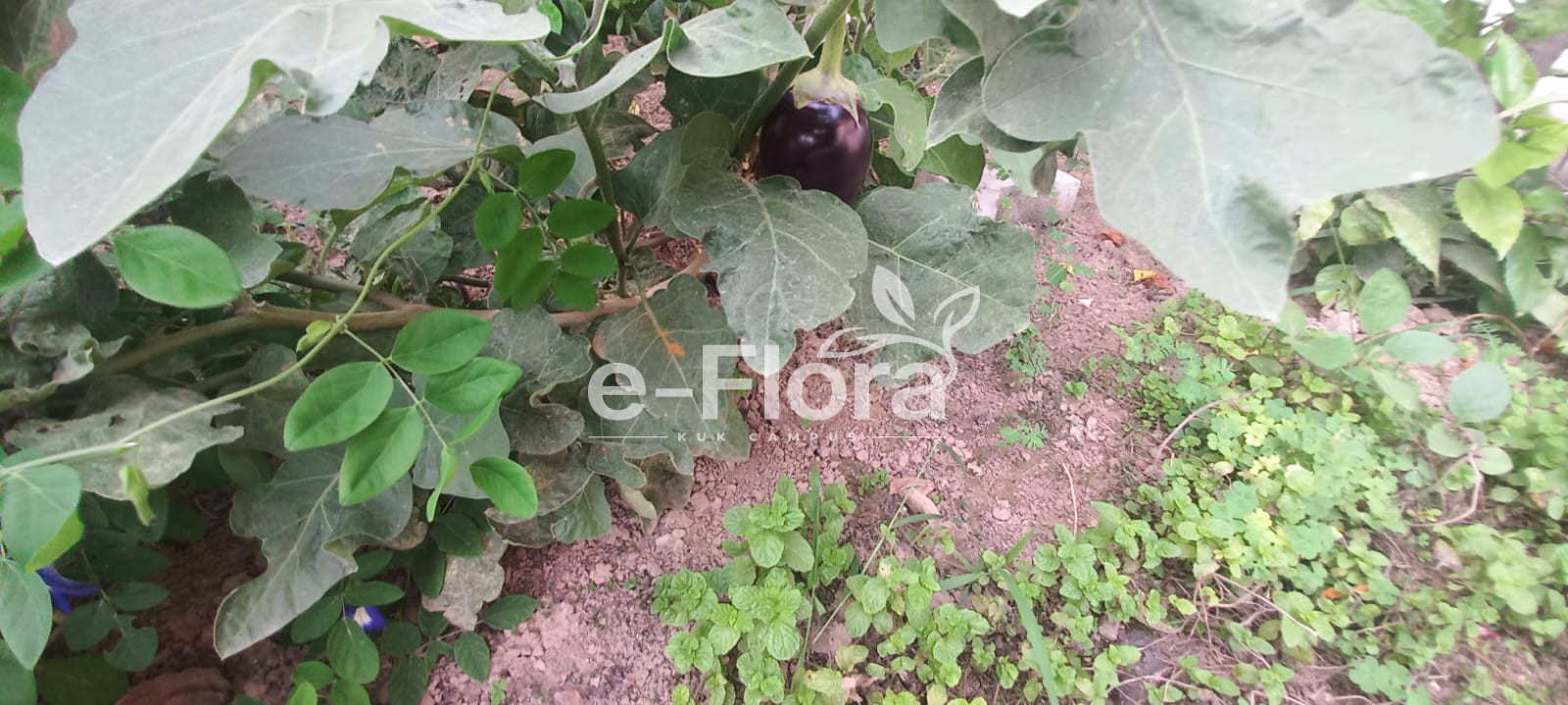
Fruit: Large, fleshy berry, variable in shape and colour—globose, ovoid, oblong or elongated; green, white, purple or blackish at maturity, containing numerous flattened seeds.
Uses:
- Traditional practices uses plant to manage digestive issues, inflammatory conditions, regulates blood glucose levels and blood pressure, lower blood cholesterol levels, suppress carbohydrates metabolizing enzymes and provide cardiovascular support.
- Plant can be used as antidote against mushroom poisoning.
- A poultice of plant extracts with vinegar is used to treat cracked nipples, haemorrhoids and abscesses.
- Plant has antiasthmatic and astringent properties and can be used to treat toothaches, haemorrhages and piles.
- The immature and mature fruits are widely cultivated and eaten as a vegetable. It is an important food crop and is prepared by cooking, roasting, grilling, frying, pickling and in curries. POWO also records food, medicinal and other traditional uses for the species.
- Eggplant is a good source of potassium, vitamin C, magnesium, copper, vitamin B-complex, dietary fibers and antioxidant pigments like chlorogenic acid and nasunin.
- Cosmetic industry uses extracts of fruits and roots to prepare skin conditioners.