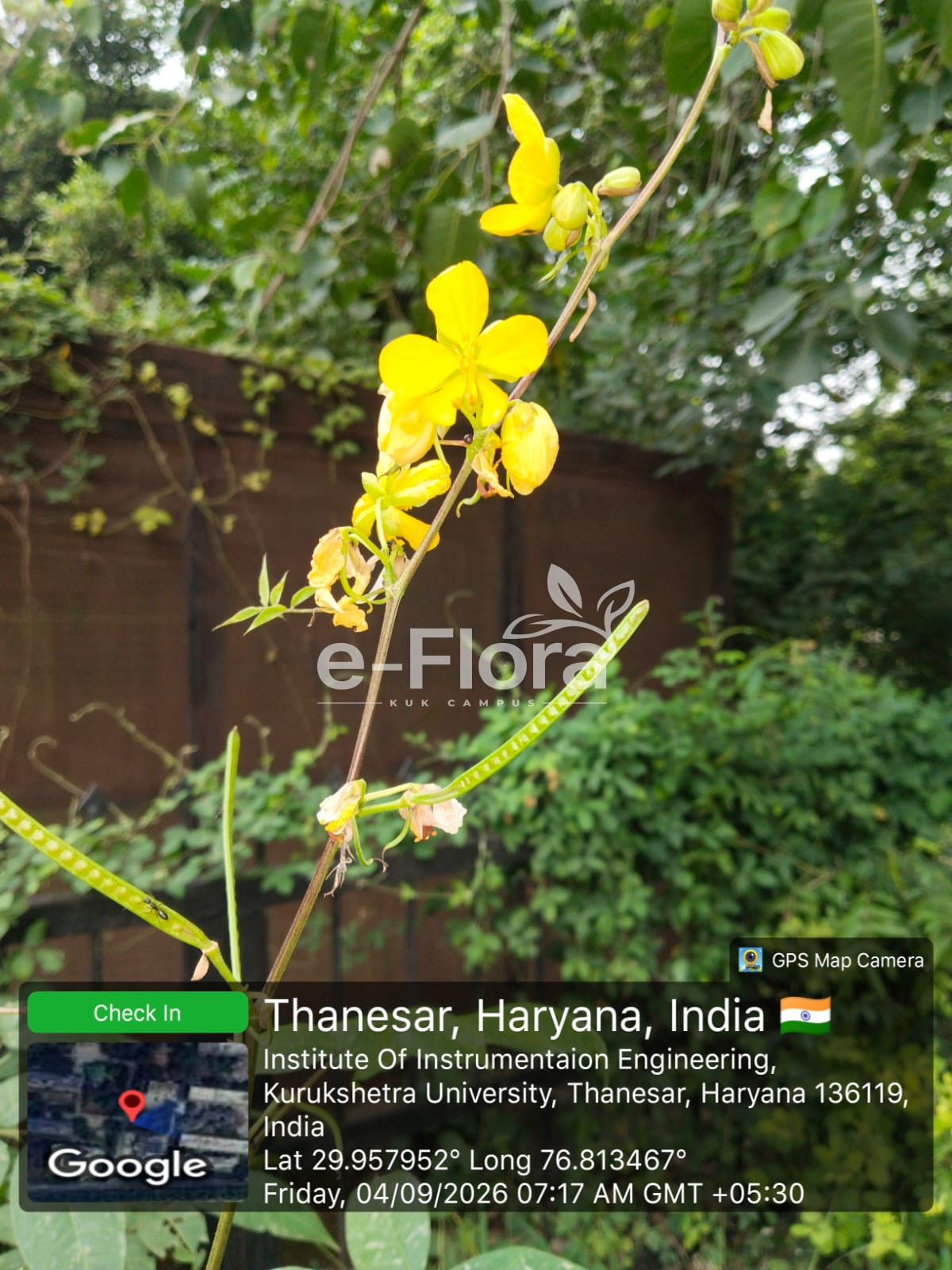
Senna occidentalis (L.) Link
Vernacular name: Kasondi, Kasinda, Chakunda, Kasamarda (Hindi: कसौंदी / कसोंदा); Coffee Senna, Stinking Weed, Negro Coffee
Species Name: Senna occidentalis (L.) Link (syn. Cassia occidentalis L.)
Family: Fabaceae (Caesalpinioideae)
Habit: Annual to short-lived perennial undershrub, usually growing in disturbed places, roadsides, scrub forests and cultivated areas; sometimes occurring as a weed.
Stem: Erect, branched and somewhat woody towards the base; young branches green and may become reddish or purplish; the plant has a characteristic foetid odour when bruised or broken.
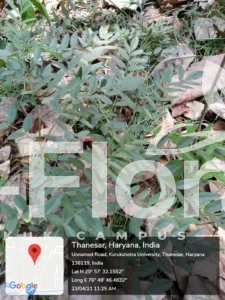
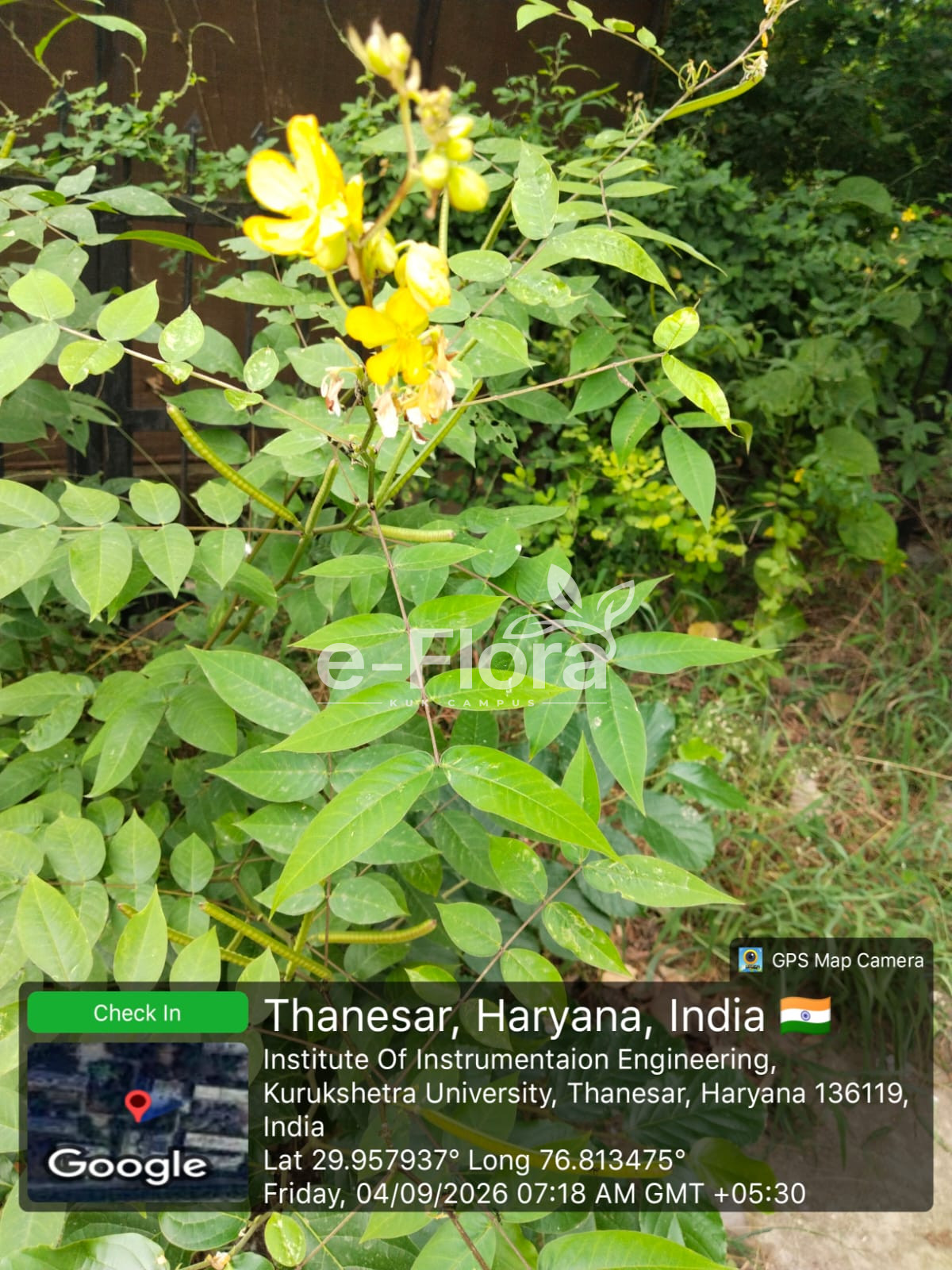
Leaf: Alternate, paripinnately compound, with usually 4–6 pairs of leaflets; leaflets ovate to elliptic, entire, with an acute to rounded apex; a conspicuous sessile, hemispherical gland occurs at the base of the petiole.
Flowering: July–February
Flowers: Yellow, showy, bisexual, about 2–3 cm across; usually 5 petals, 5 sepals and 10 stamens of unequal length; ovary superior and elongated. Inflorescence short axillary racemes, usually containing only a few flowers; notes: acute bracts and 2–4 flowers are useful characters for distinguishing it from Senna sophera.
Fruit: Long, flattened, slightly curved pod, about 10–13 cm long, glabrous, compressed and containing numerous seeds; mature pods may become somewhat torulose between the seeds
Uses:
- In Ayurveda, plant is known as kasamarda and decoction of its root and flower or paste of leaf is mixed with honey and used to treat asthma, cough and chronic bronchial issues.
- Mild laxative properties of seeds due to presence of anthraquinones are used to relieve constipation and hydrate large intestine.
- Paste of seeds, roots or leaves are topically applied to treat ulcers, eczema, psoriatic and ringworms.
- Traditional practices uses extracts of leaves and root infusions for its antipyretic activities and to treat microbial infections.
- Young leaves and pods are traditional consumed as vegetables, where as, mature seeds are brewed to make a caffeine-free beverage, giving the plant coffee senna.
- Excessive consumption of plant can be toxic and cause damage to liver and neurological functions in humans as well as livestock animals.