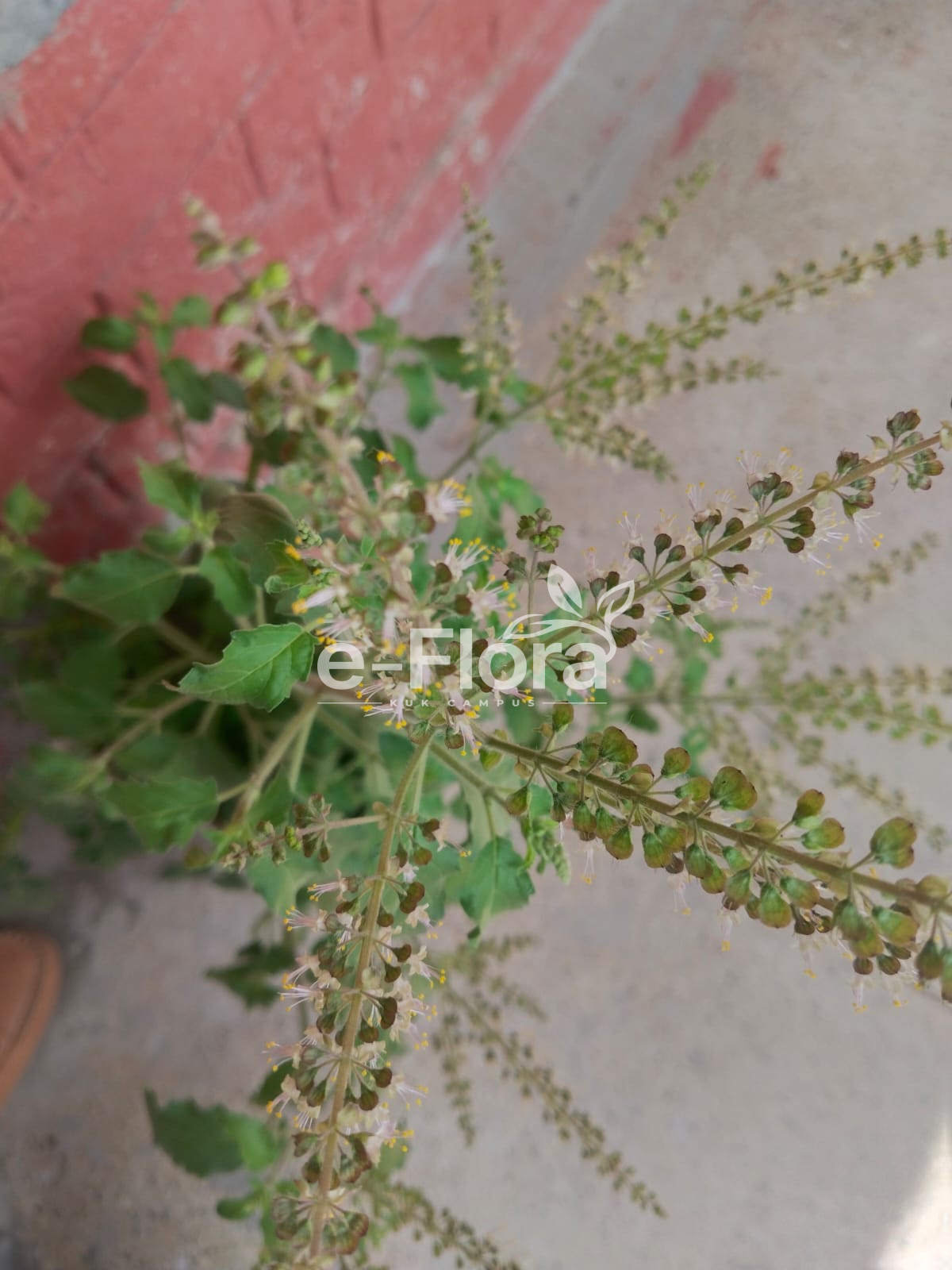
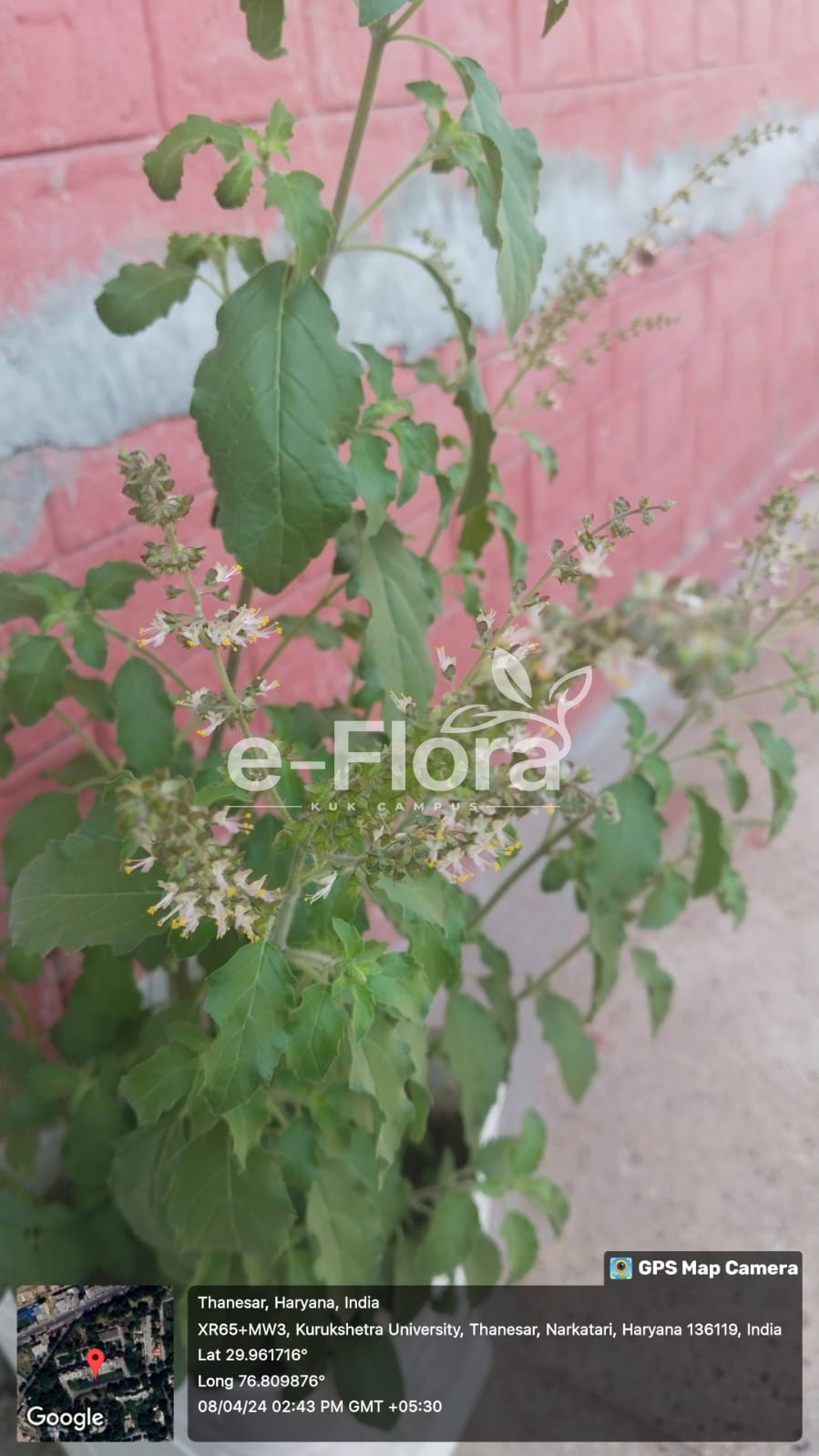
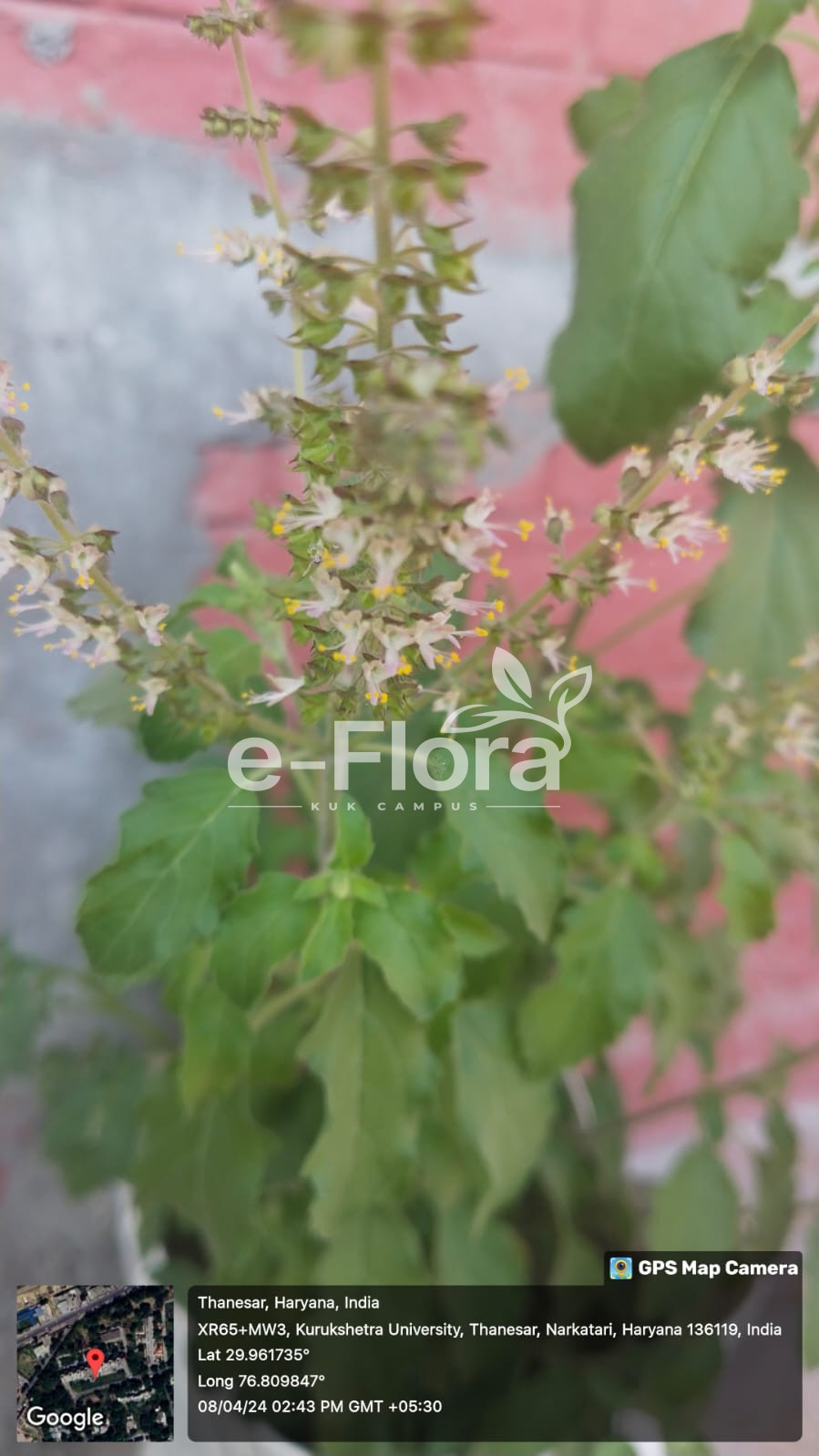
Ocimum gratissimum L.
Vernacular name: Ban Tulsi, Van Tulsi, Ram Tulsi; Wild Basil, Shrubby Basil, Lemon Basil, Tea Bush
Species Name: Ocimum gratissimum L.
Family: Lamiaceae
Habit: Aromatic perennial herb to undershrub/shrub, usually much branched and sometimes reaching about 2–3 m; commonly found in wastelands, dry deciduous forests and around habitations.
Stem: Erect, much-branched, quadrangular to rounded-quadrangular, grooved/striate and aromatic; often becoming woody towards the base. Young branches may be hairy, while older portions can become comparatively glabrous.
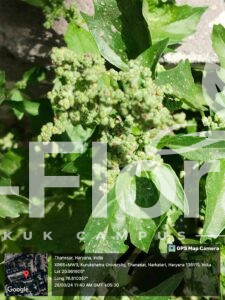
Leaf: Opposite, simple, ovate to elliptic or broadly ovate, petiolate, with serrate margins; leaves may be hairy, particularly along the veins, and are strongly aromatic when crushed.
Flowering: Throughout the year
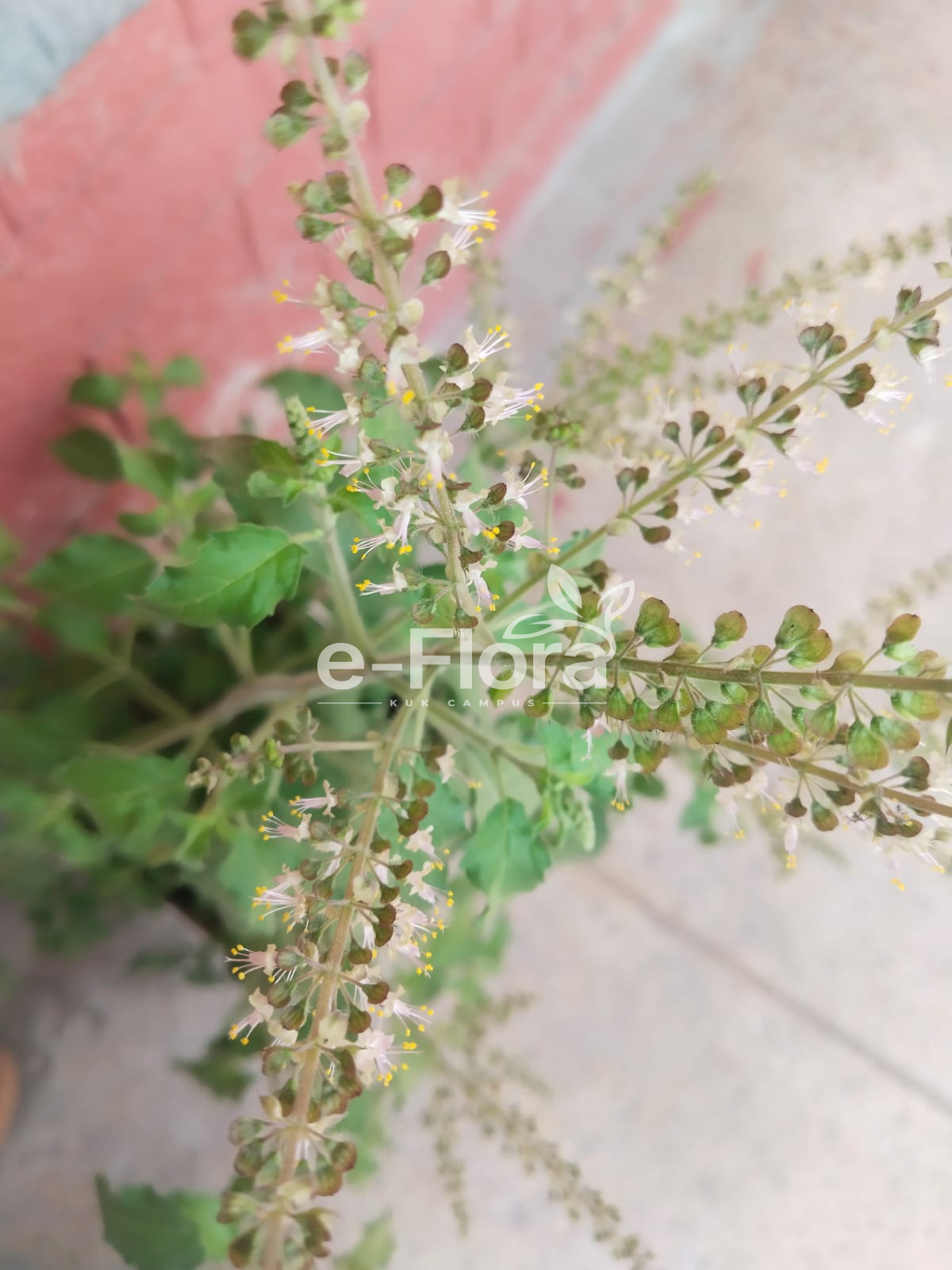
Flowers: Small, bisexual, generally white to dull white or pale yellow, with a bilabiate corolla; stamens 4; stigma bifid. The flowers are considerably less showy. Inflorescence long terminal racemes/spikes, composed of closely arranged verticillasters, commonly with about 6 flowers per whorl. The flowering axes are often hairy.
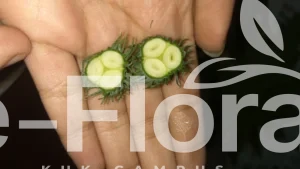
Fruit: Four small yellowish-brown, subglobose nutlets, minutely warty/verrucose, enclosed within the persistent calyx
Uses:
- Decoction and juices of leaves are used by traditional healers to treat diarrhea, stomach aches and indigestion due to presence of linalool and limonene.
- Leaves and roots preparation helps to relieve fever, flu, cough and catarrh.
- Essential oils and leaf extracts of Ram Tulsi contains high quantity of thymol and eugenol that can help in treatment of fungal and bacterial infections, minor wounds and skin diseases.
- Ram Tulsi also contains β-caryophyllene and flavonoids like luteolin and apigenin that provides antioxidant and analgesic properties.
- Smell of Ram Tulsi can help to repel pests like thrips, so make it useful natural pesticide for farmers.
- World Health Organization acknowledged that burning or placing fresh plant near living areas repels mosquitoes.
- Leaves are dried and grounded into powder and used to add flavor in local flours, food mixtures and beverages.
- West African dishes uses fresh and dried leaves as spice due to its strong clove-like aroma.