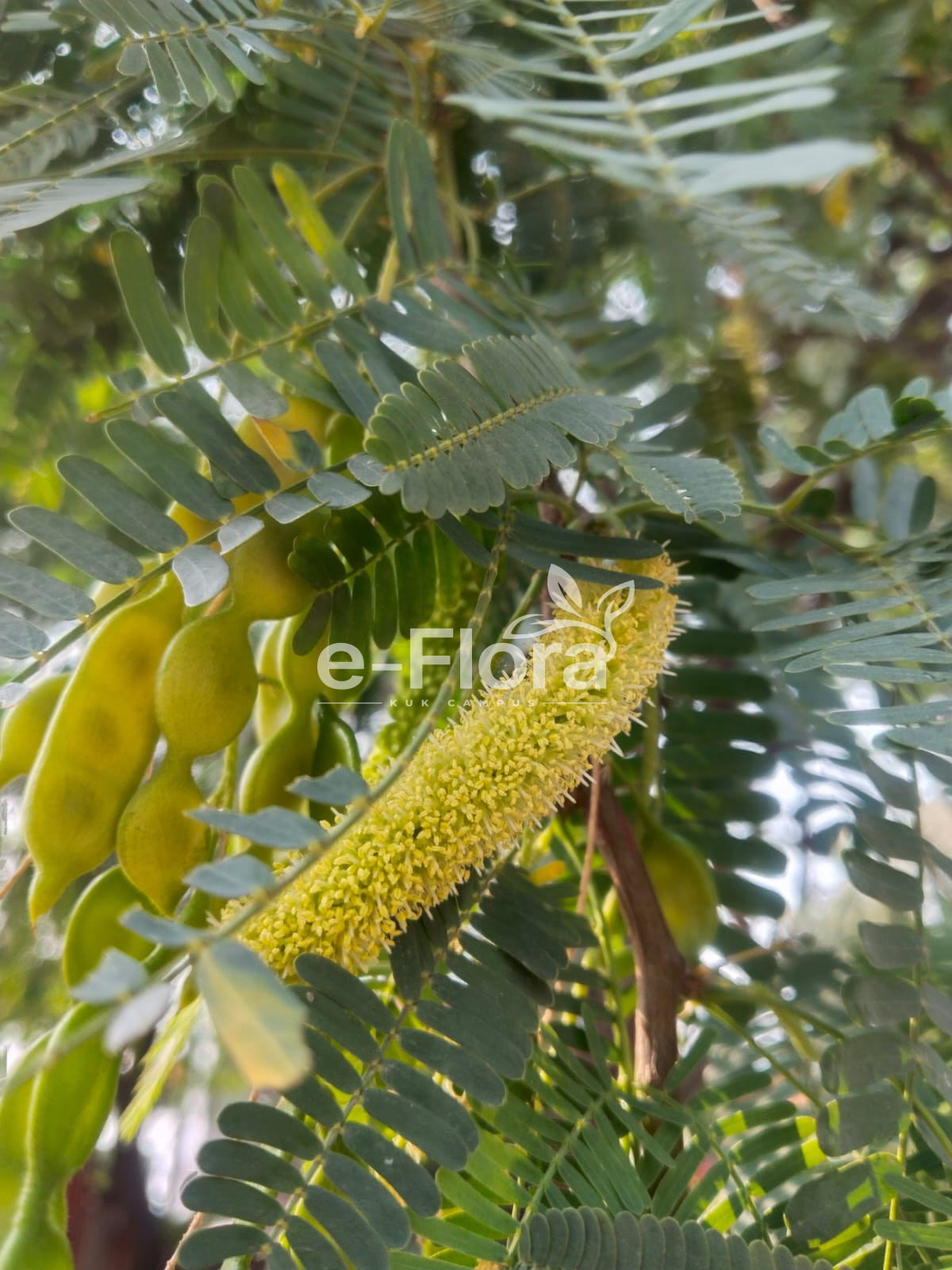
Neltuma juliflora (Sw.) Raf.
Vernacular name: Vilayati Kikar, Vilayati Khejri, Babul/Seemai Karuvelam, Mesquite
Species Name: Neltuma juliflora (Sw.) Raf. (syn. Prosopis juliflora (Sw.) DC.)
Family: Fabaceae
Habit: Evergreen or semi-evergreen, thorny shrub or moderate-sized tree; commonly forms dense thickets in dry and disturbed areas and wastelands.
Stem: Woody, much-branched, with grey to brown bark; branches armed with paired, strong stipular spines up to about 1 cm long.
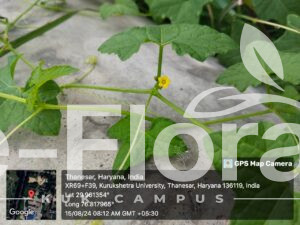
Leaf: Alternate, bipinnate, with usually 1–3 pairs of pinnae; each pinna bears numerous small, opposite, oblong and unequal-sided leaflets; rachis may extend beyond the last pair as a soft bristle.
Flowering: September–May, with the exact period varying by region
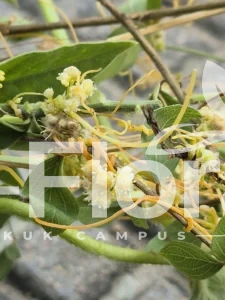
Flowers: Very small, greenish-yellow to pale yellow, bisexual; calyx 5-toothed; petals about 3 mm long; 10 free stamens, exserted, with glandular anthers. Inflorescence dense, elongated cylindrical spikes/catkins, up to about 10 cm long, usually arising from the leaf axils; the dense pale-yellow to creamy spikes give the tree a characteristic appearance.
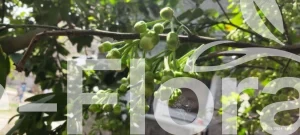
Fruit: Long, slender, cylindrical to slightly flattened pod, straight or curved, pale yellow to brown, up to about 25 cm long and containing numerous seeds, sometimes up to 20.
Uses:
- Inner bark of plant is used by traditional healers to treat minor ailments.
- Dried pods are grounded to make a syrup that can help with retarding motor development and weight deficiency in children, and increase lactation in nursing mothers.
- Various preparations of leaves can be used differently to tend to different ailments like oral infection, painful and frequent urination, eyes irritations, swellings and conjunctivitis as leaves have antibiotic, antibacterial, astringent and antispasmodic properties.
- Wood is widely used as fuel and for agricultural implements. Wood can be used to make high-quality charcoal. Hard wood can be used to make fences, stakes, posts and railway ties. Wood has high potential to be used as a good source of fiber for paper production.
- The tree has also been planted for land reclamation due to its tolerance for harsh, salty and damaged soil and ability to prevent soil erosion. However, it is a highly invasive plant in many parts of India, where dense thickets can suppress native vegetation.
- Foliage and pods of plant may be used as fodder for livestock as its sweet and nutritious.
- Flowers are good source of honey as it attracts bees.
- Some indigenous groups processed dried pods into flour that can be used in making bread or ferment dried pods into drinks. Flowers can also be brewed into a sweet tea.
- Sap from trunk is stick and can used as natural glue or mucilage.