Lablab purpureus (L.) Sweet
Vernacular name: Sem, Hyacinth bean, Indian bean (Hindi: सेम)
Species Name: Lablab purpureus (L.) Sweet
Family: Fabaceae
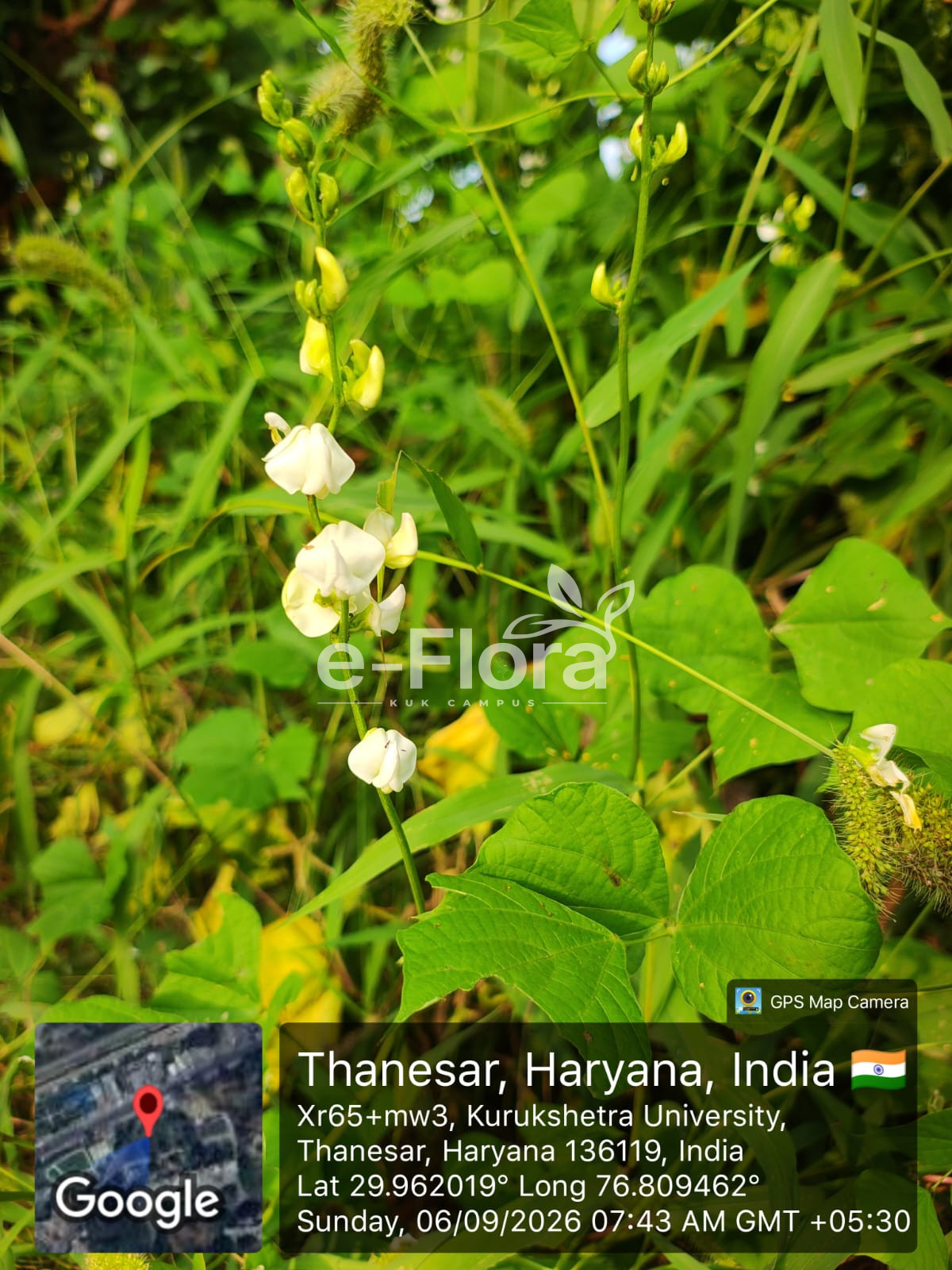
Habit: Annual or perennial twining herb, climbing or scrambling.
Stem: Slender, branched, glabrous or pubescent, twining.
Leaf: Alternate, trifoliate; leaflets broadly ovate to triangular, entire, acute to acuminate.
Flowering: Mainly rainy season to winter.
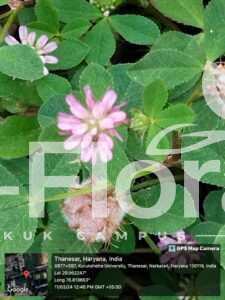
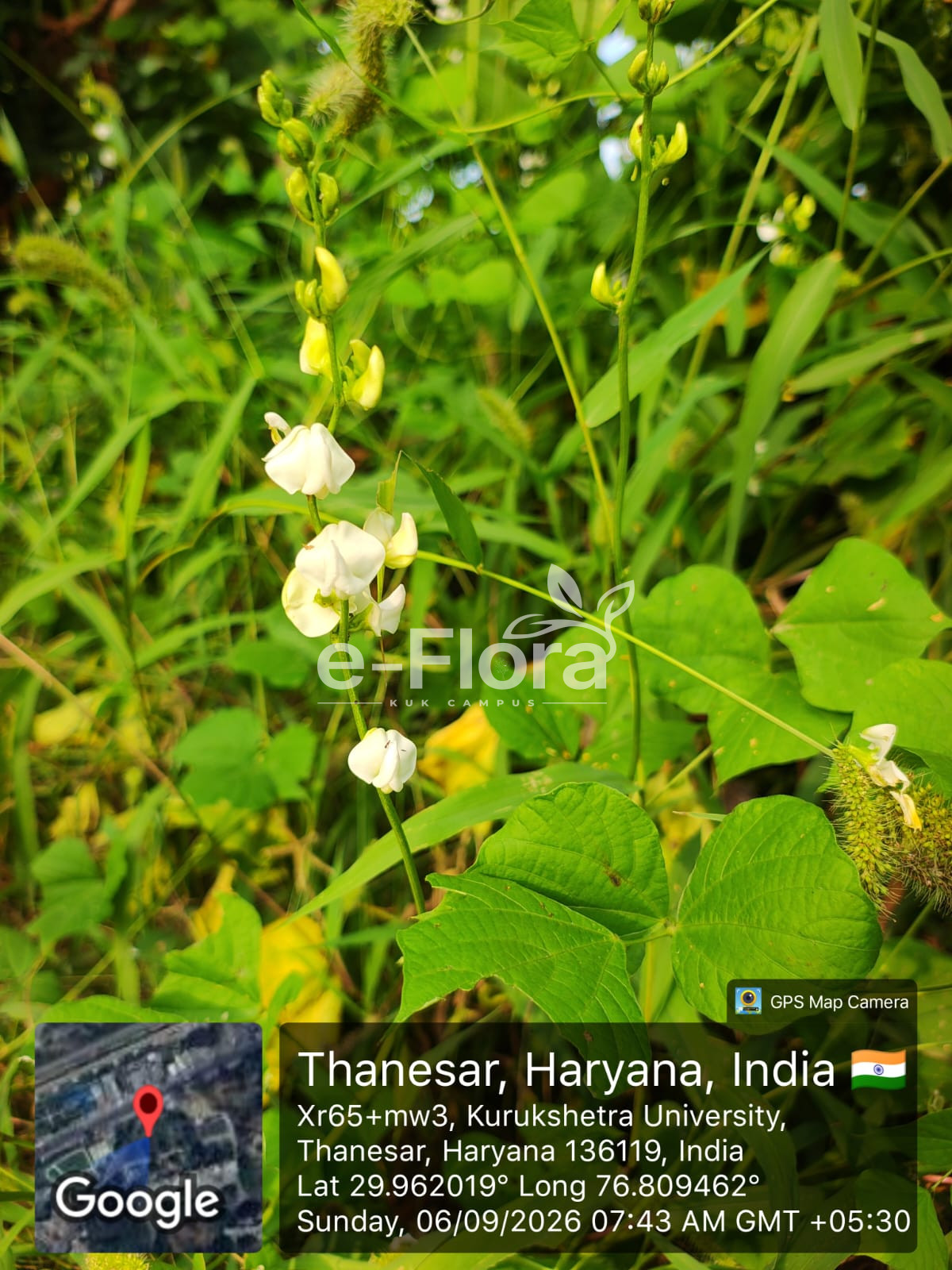
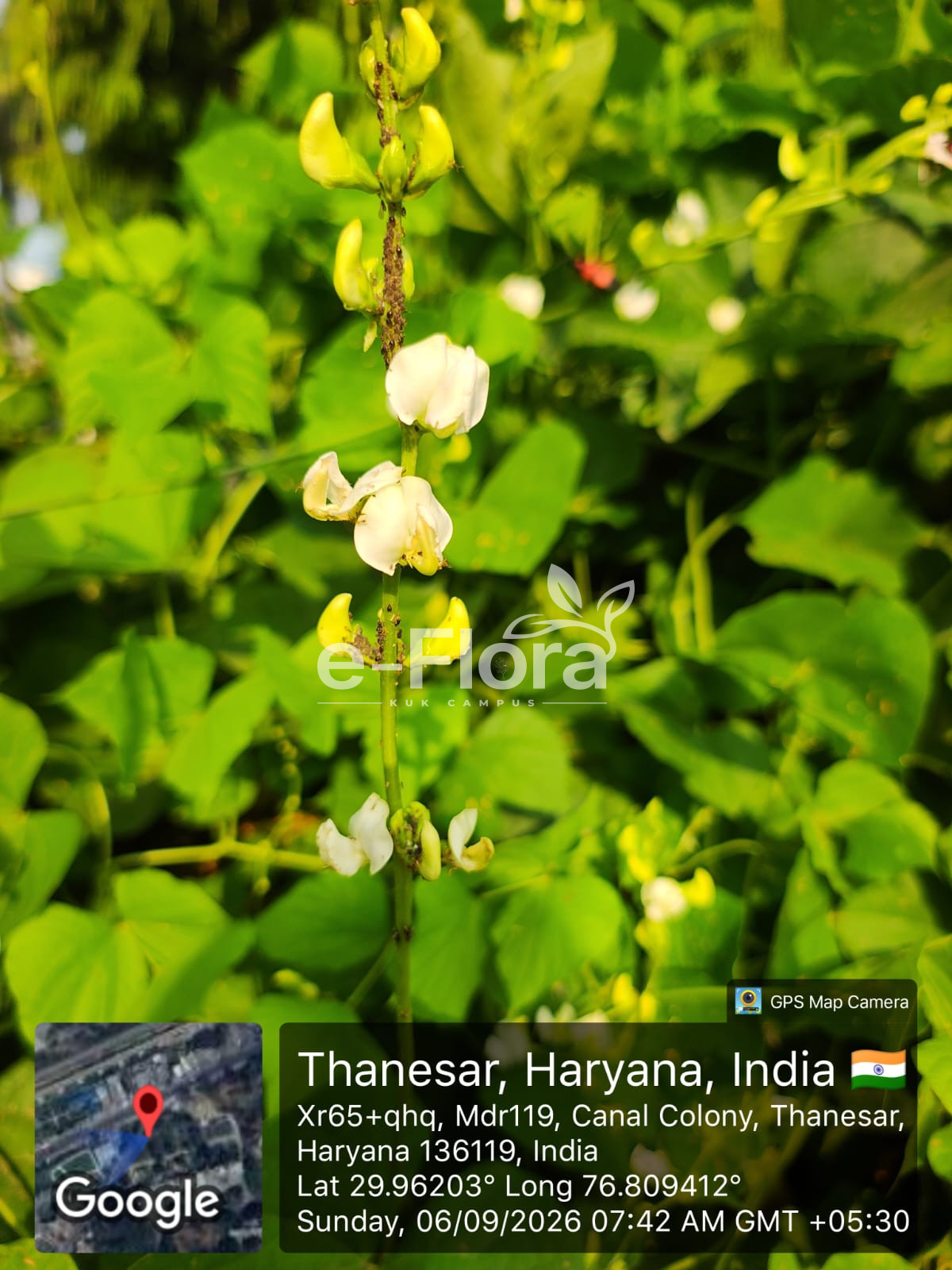
Flowers: Axillary racemes; white, papilionaceous; standard rounded, wings white, keel pale; stamens 10, vexillary stamen free or loosely joined.
Fruit: Flattened, oblong to falcate pod, pointed at both ends, usually 2–5-seeded.
Uses:
- In Asian and African traditional practices, plant is used to reduce fevers, treat cholera, digestive issues, diarrhea and support and stimulate digestion.
- In traditional remedies, plant is applied as antidote against specific plant and fish poisonings.
- Plant is found to have anticholesterolemic, carminative, alexiteric, anthelmintic, astringent, antispasmodic, febrifuge and aphrodisiac properties.
- Young pods, tender leaves, flowers, young shoot and seeds are widely used as a vegetable, while mature seeds are dried and may be used as a pulse after appropriate preparation.
- The plant is also cultivated as fodder for livestock for its rich protein content and ability of drought tolerance.
- Plant acts as a green manure and ground cover as it’s a natural nitrogen fixer that improves soil fertility, suppress weeds and prevent soil erosion.
- Leaves are used to extract a green colour dye.