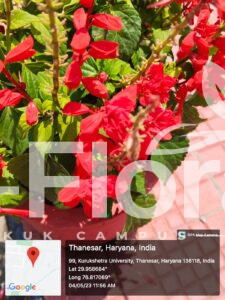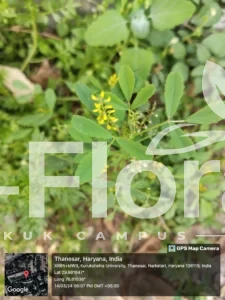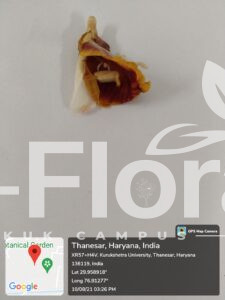
Ipomoea hederacea Jacq.
Vernacular name: Kaladana, Ivy-leaved morning glory (Hindi: कलादाना)
Species Name: Ipomoea hederacea Jacq.
Family: Convolvulaceae
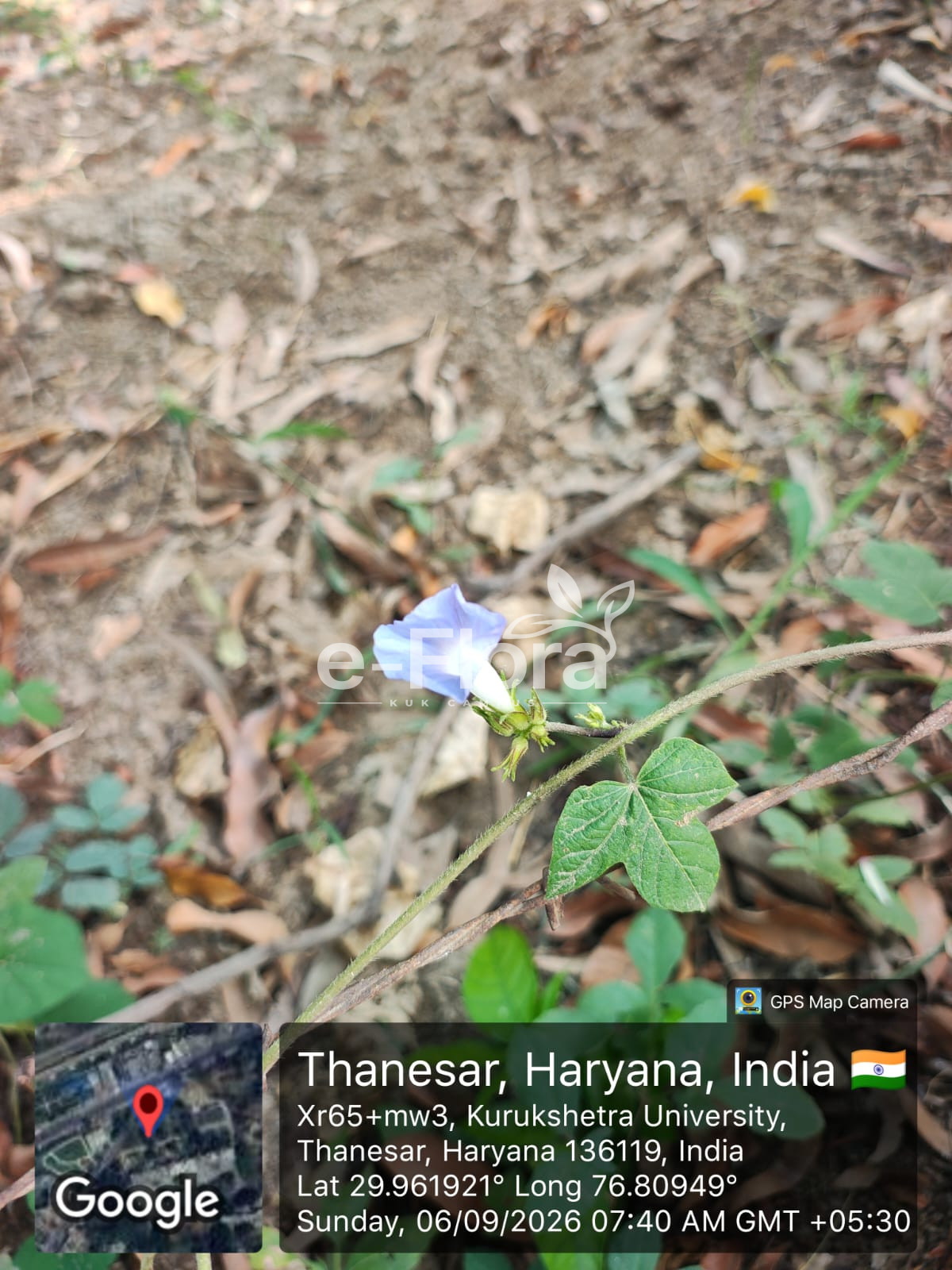
Habit: Annual twining climber, densely pubescent.
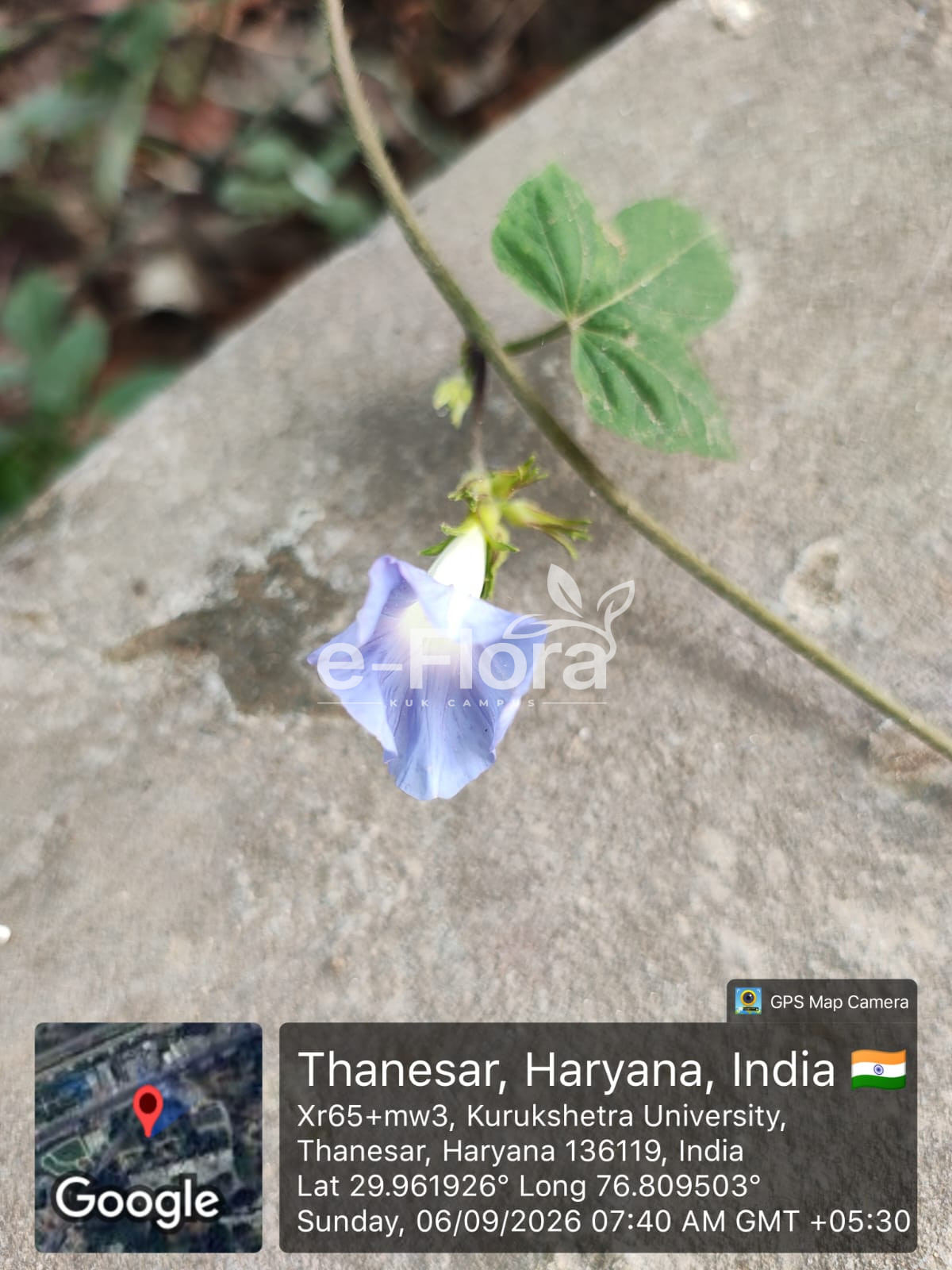
Stem: Slender, branched, twining, hairy.
Leaf: Alternate, cordate-ovate, entire to 3-lobed, long-petiolate, pubescent.
Flowering: Summer–autumn.
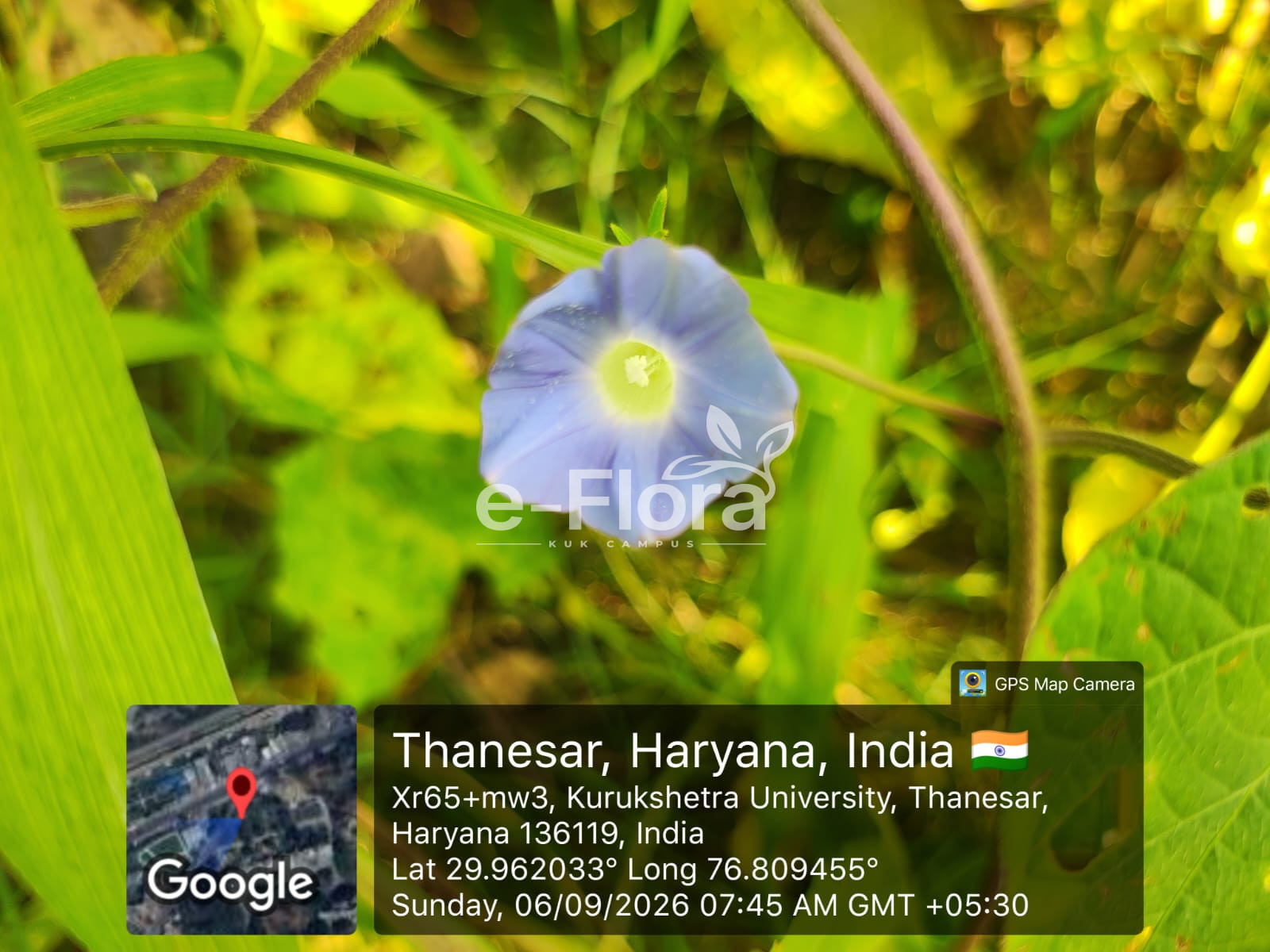
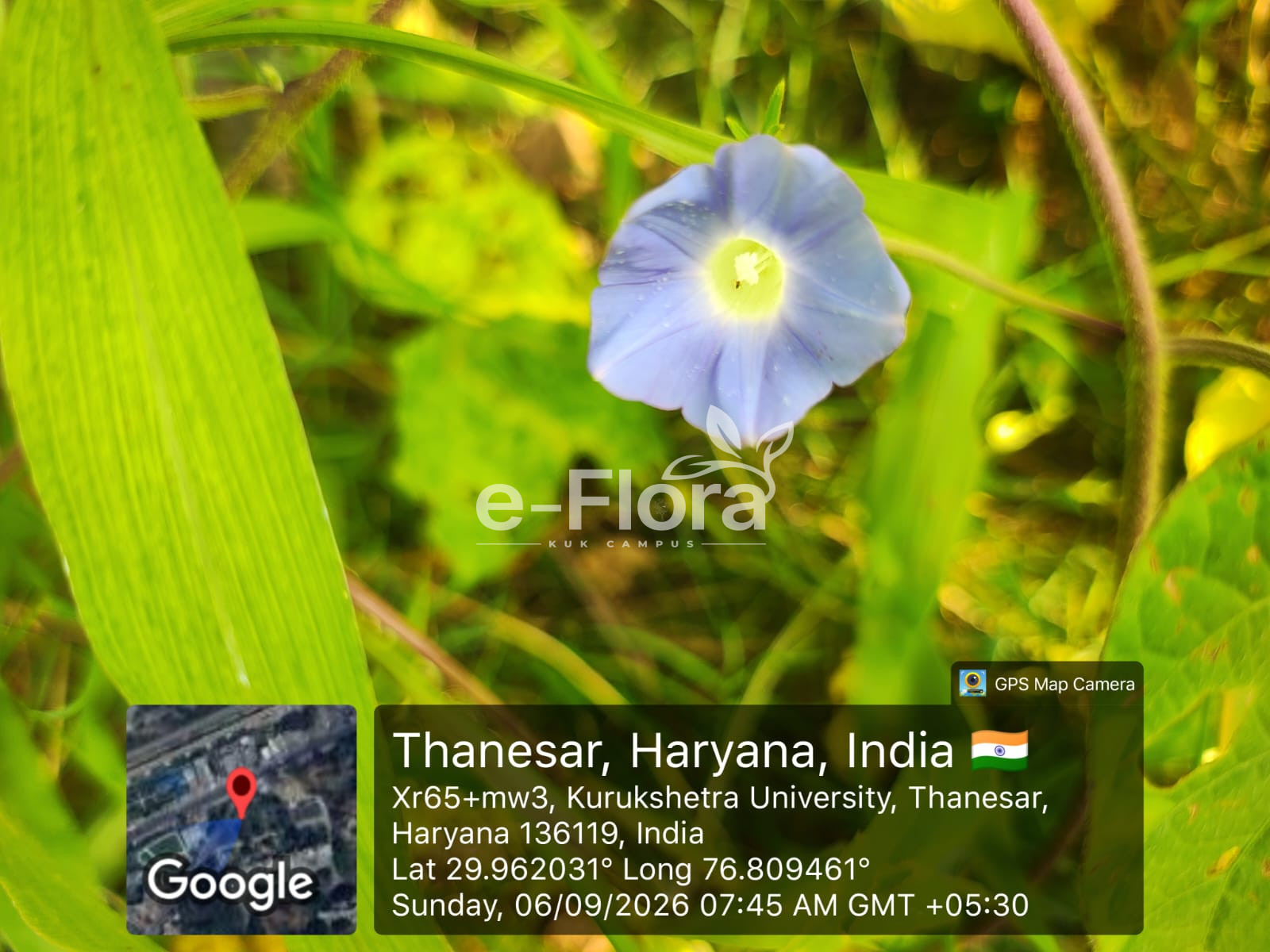
Flowers: Axillary clusters, usually 1–3-flowered; funnel-shaped, blue to violet or purplish, 2.5–4.5 cm across; stamens 5, ovary superior.
Fruit: Globose to ovoid capsule, 3–4-valved; seeds dark, 4–6 per capsule.
Uses:
- Seeds are known as Krishnabeeja or Kaladana and have been used in traditional medicine, particularly as a purgative.
- Seed powders act as strong purgatives and helps to relieve severe constipation and clear intestinal worms.
- Plant contains active biochemical compounds like ergoline alkaloids (lysergol) that can affect serotonin receptors and mood; flavonoids (quercetin) that exhibit antioxidant and anti-inflammatory action; resin glycosides (convolvulin, pharbitisin) that has laxative effect and stimulates the intestinal lining. Plant also exhibits diuretic, anthelmintic, carminative and blood purifying properties.
- Tropical application of seed pastes helps to alleviates headaches, joint pain and swellings.
- External application of seed paste or powder help to manage and treat various fungal infections, skin infections like ringworm, eczema, leucoderma and scabies.
- Decoctions of seeds are used to reduce fevers and treat bronchitis.
- Traditional practices uses the various parts of the plant for managing and regulating high blood pressure, blood glucose levels and improving lipid profiles.
- The species is also cultivated occasionally as an ornamental climber.
- In Central America and Cuba, plant is used as a valuable source of nectar for honey production.