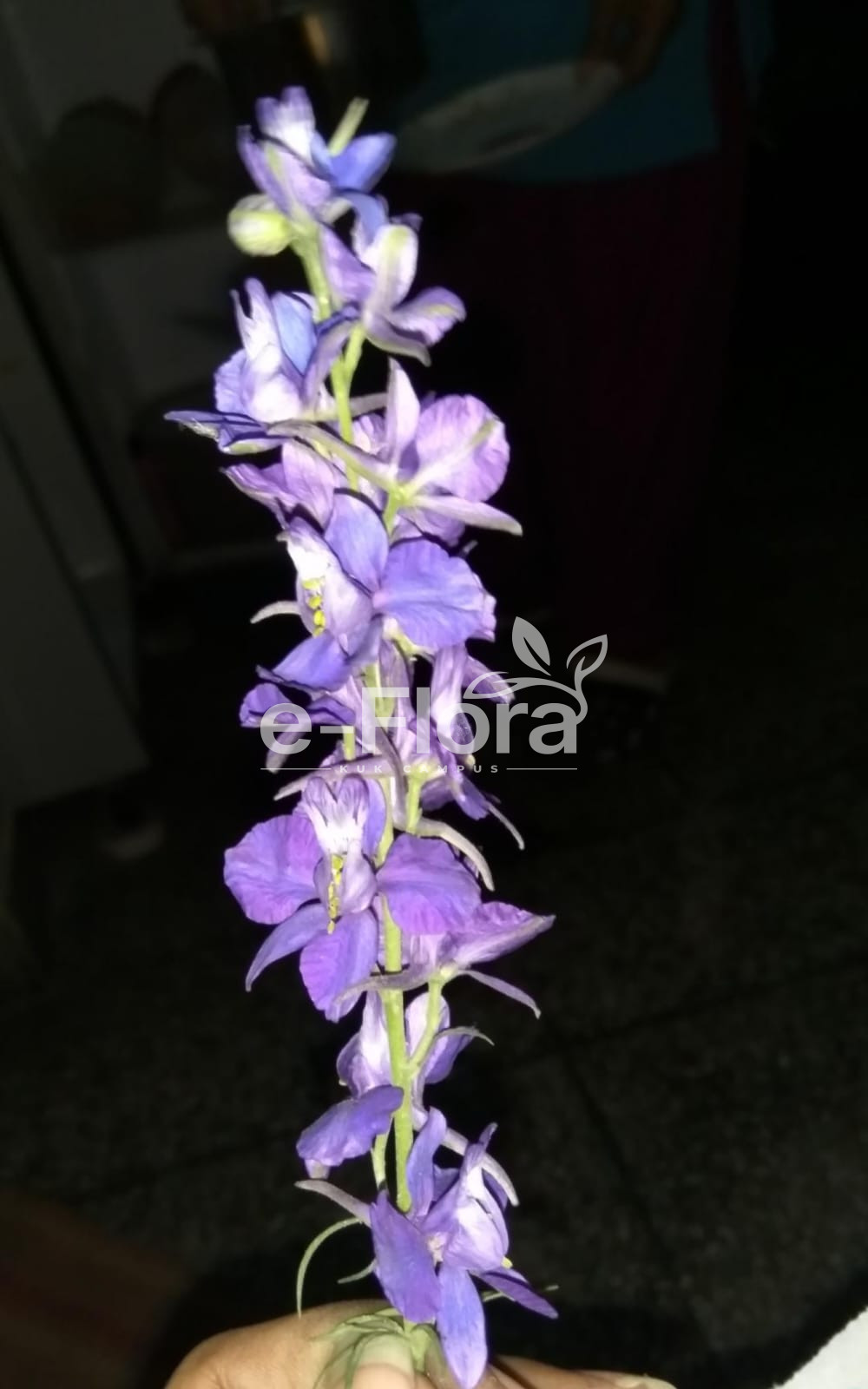
Delphinium ajacis L.
Vernacular name: Rocket Larkspur, Larkspur
Species Name: Delphinium ajacis L.
Family: Ranunculaceae
Habit: Annual herb, commonly cultivated as a garden ornamental.
Stem: Erect, slender, branched, herbaceous and generally smooth to sparsely hairy.
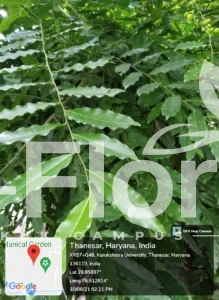
Leaf: Alternate, deeply divided into narrow linear segments; lower leaves more developed and upper leaves progressively reduced, giving the foliage a finely dissected appearance.
Flowering: October–February according to India Flora Online.
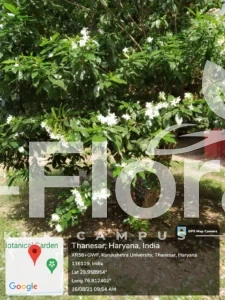
Flowers: Showy, usually blue, violet, pink or white; borne on elongated flowering shoots; flowers with 5 petaloid sepals, the upper sepal prolonged into a conspicuous spur; petals much smaller and partly enclosed within the sepals. Inflorescence elongated terminal raceme, bearing numerous flowers along the flowering stem.
Fruit: A cluster of follicles; follicles mature and split open to release numerous seeds.
Uses:
- Traditional practices uses tropical application of plant extracts, juices, pastes or infusions for its insecticide property and to kill or prevent infestation of human lice, mites and other external parasites.
- Plant contain active alkaloids like delphinine that gives plant anti-inflammatory and analgesic properties. Cultural practices used a controlled dose or tropical application of plant to ease toothaches, soothe mild inflammation and treat rheumatism.
- Folk remedies uses extracts of plants for their sedative and diuretic properties or to treat respiratory wheezing and hair loss.
- Mainly cultivated as a showy ornamental garden plant for its colourful vibrant pink, purple, blue or white flower spikes. POWO also records food, environmental and medicinal uses.
- Flowers are widely used in floral arrangements and bouquets owing to its striking vertical form.
- Plants contains diterpenoid alkaloids such as ajacine that can cause poisoning, respiratory failure, low blood pressure and muscle paralysis, if ingested or not carefull with tropical application.