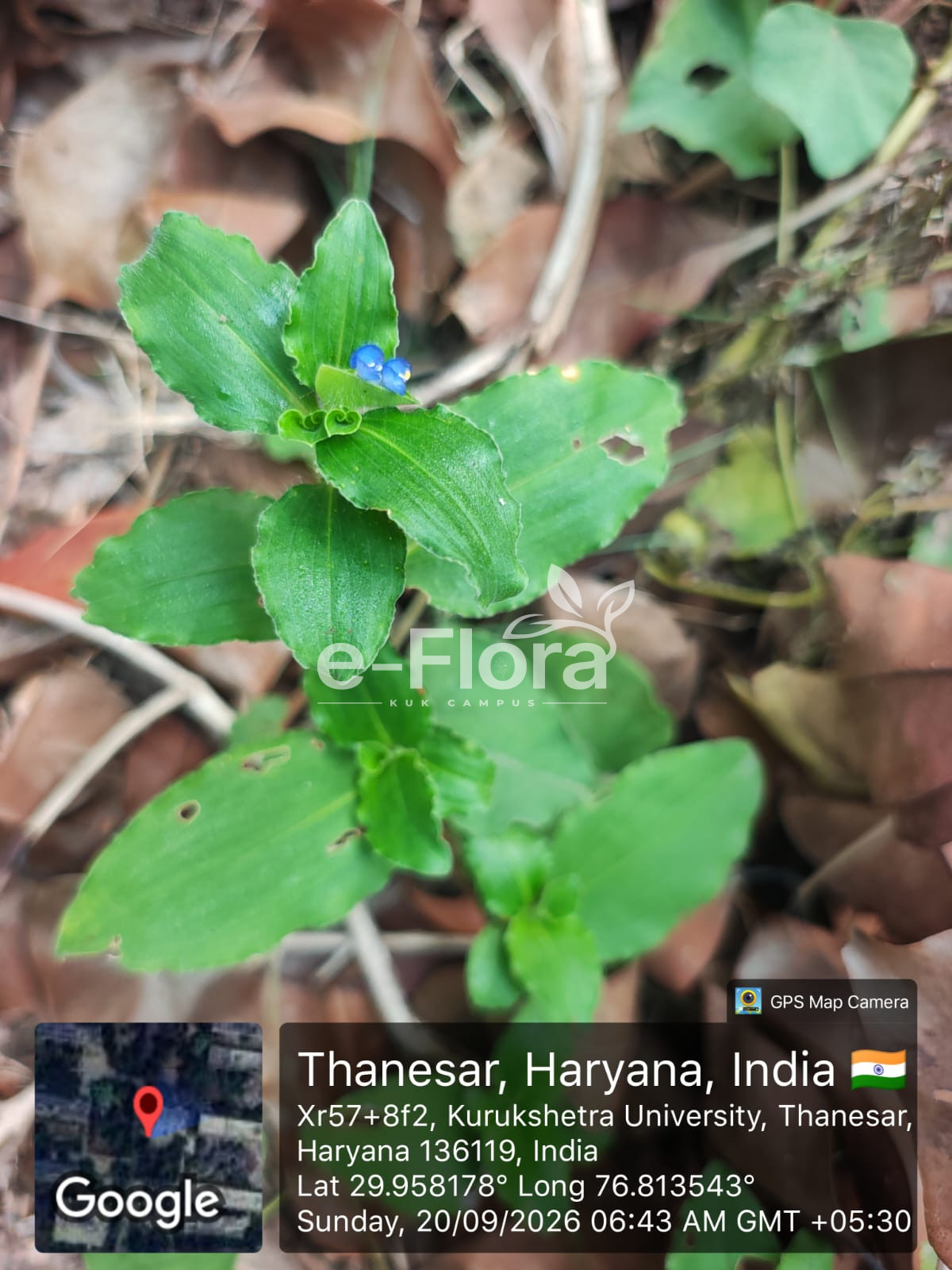
Commelina benghalensis L.
Vernacular name: Kanchara, Kanchata, Kena, Khet Papra; Benghal Dayflower, Indian Dayflower
Species Name: Commelina benghalensis L.
Family: Commelinaceae
Habit: Annual, succulent herb, usually spreading or ascending; commonly found in wastelands, cultivated fields, roadsides and moist or shaded places.
Stem: Soft, succulent, green and branched; generally creeping or ascending, with rooting at the lower nodes. The plant can form dense patches during the rainy season.
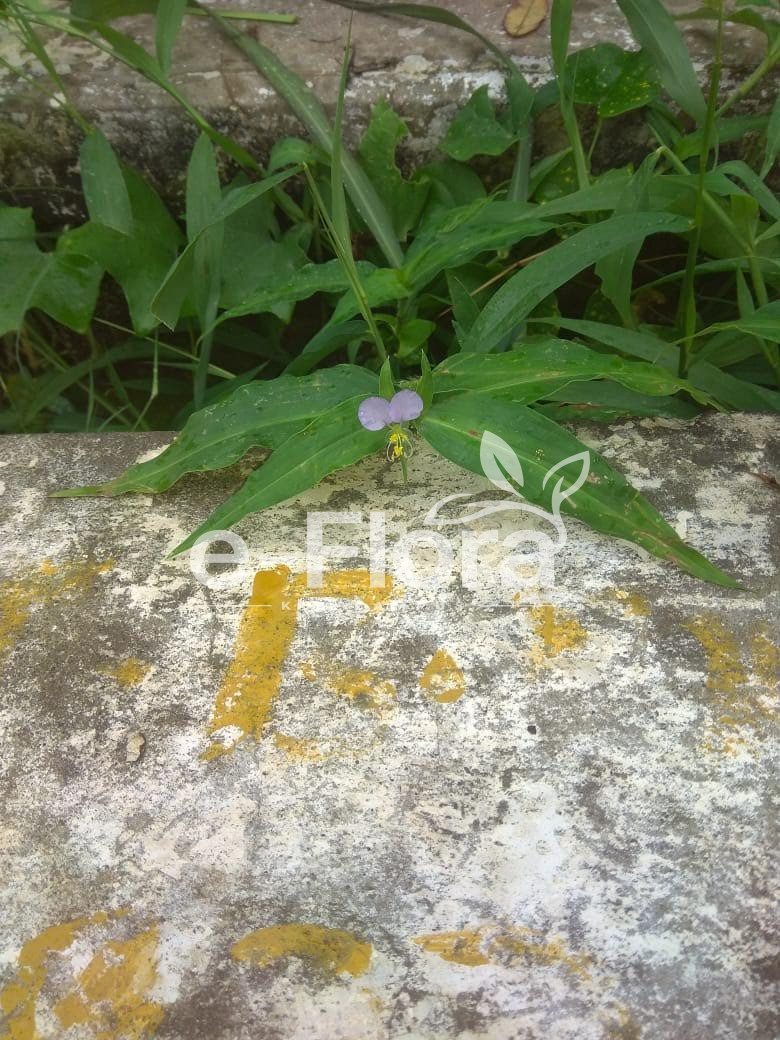
Leaf: Alternate, simple, sessile to shortly petiolate, broadly ovate to lanceolate, somewhat fleshy, with entire margins; leaf sheaths clasp the stem and are characteristically hairy.
Flowering: Mainly during the rainy season; July–November.
Flowers: Small but conspicuous, usually bright blue, with 3 petals; two petals are large and showy while the third is much smaller. Flowers have 6 stamens, with some stamens fertile and others reduced/staminodal. Flowers occur in small, enclosed or partly enclosed clusters within boat-shaped leaf sheaths (spathaceous bracts). A particularly distinctive feature is the production of aerial flowers as well as inconspicuous underground flowers near the base of the plant.
Fruit: A small capsule, developing from the aerial flowers; seeds are relatively small and characteristic of the species.
Peculiar features: The most remarkable feature is its dual reproductive strategy- it produces conspicuous blue aerial flowers but also cleistogamous underground flowers, which self-pollinate and produce seeds below the soil surface. The creeping stems can root at nodes, helping it spread rapidly. This combination makes C. benghalensis a persistent weed in cultivated land.
Uses:
- Traditional practices uses plant extracts, pastes and juices to treat conjunctivitis, soothe sore eyes, heals burns, rashes and ulcers.
- Folk remedies uses plant to treat sore throats, jaundices, leprosy, fevers and snakebites.
- In some traditional cultures, plant is used to treat female infertility.
- Root decoctions are used to treat stomach problems like diarrhea.
- Plant is found to have laxative, demulcent, diuretic and refrigerant properties.
- Young shoots and leaves are eaten as a vegetable in some regions, particularly during scarcity, and the rhizomes are also reported as edible.
- Plant can be used as fodder for livestock and cattle.
- A dye is obtained from the sap in the flowers.